Herbal & Flower Teas
Asparagus Root, Ophiopogon Root, and Loquat Leaf Tea
Traditionally associated with nourishing lung yin, clearing heat, and soothing respiratory mucous membranes
Why people make this tea
Following his earlier recommendation of a green olive and radish soup for those affected by airborne irritants, Bro Niu suggested this second recipe — a simpler herbal tea — for anyone wanting to support and protect the lungs from the inside. It draws on three ingredients with well-established reputations in Chinese herbal food therapy: asparagus root (tian dong), ophiopogon (mai dong), and loquat leaf (pi pa ye). Together they form a cooling, moistening, and calming brew that supports the respiratory mucous membranes and helps the body resist heat-related lung damage.
Who it suits / who should be cautious
- Suitable for those with a dry cough, irritated or dry throat, or lung dryness from heat-related or environmental causes
- Helpful in dry autumn and winter weather
- Not suitable for people with a cold constitution or those with a cold-type cough (pale watery phlegm, worse at night, relieved by warmth) — the tea is cooling in nature and would worsen those conditions
- Spleen and stomach weakness (bloating, loose stools) is also a reason to limit use
Why these ingredients (the food-therapy logic)
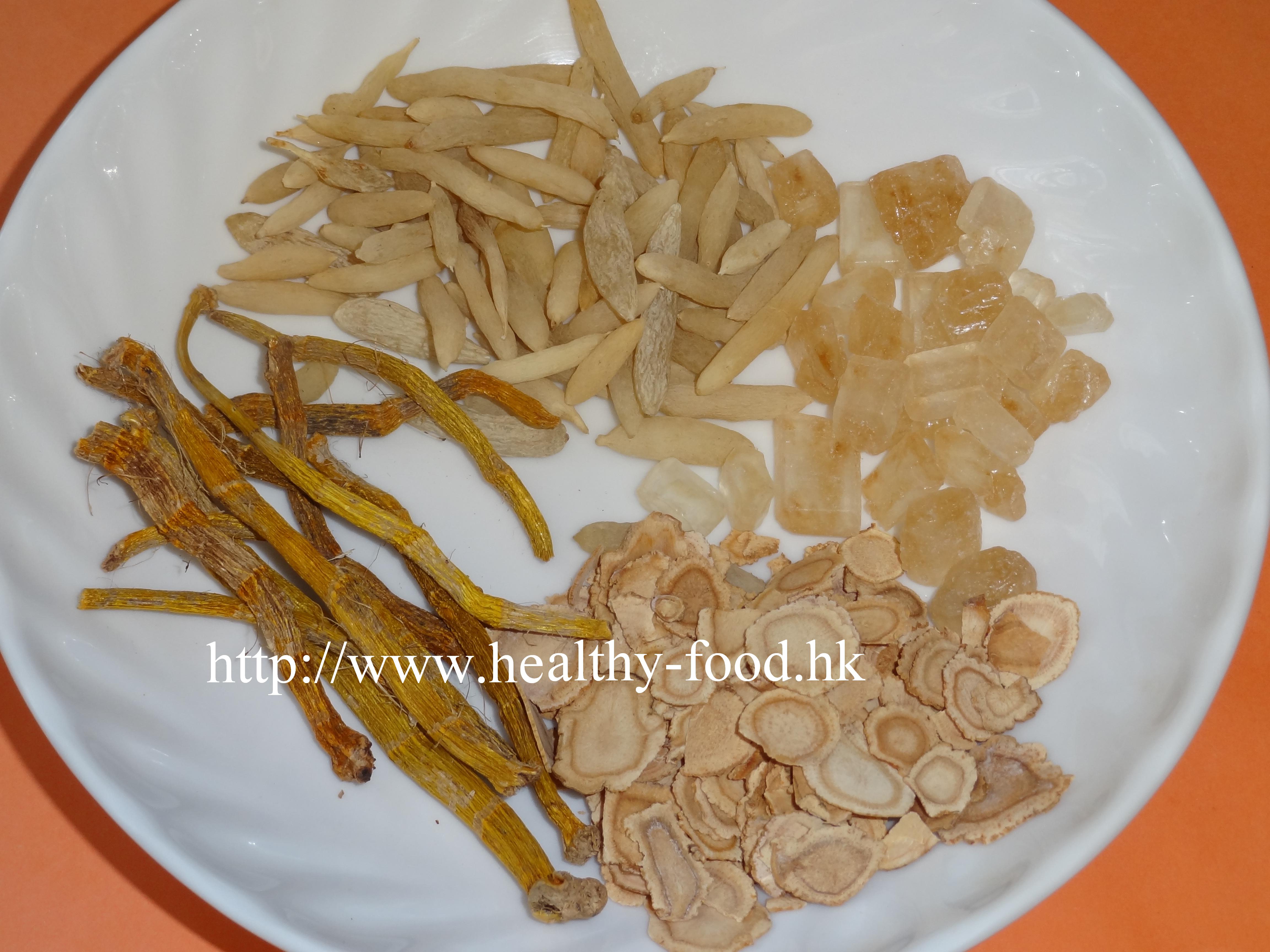
- Asparagus root (tian dong, Asparagus cochinchinensis): Sweet, bitter, and very cold; one of the classic yin-nourishing herbs in Chinese medicine. Traditionally used to nourish lung and kidney yin, clear deficiency heat, and support the body in conditions of bronchitis, pneumonia, and persistent phlegmy cough. Also has traditionally recognised antimicrobial properties.
- Ophiopogon root (mai dong, Ophiopogon japonicus): Sweet and slightly cold; excels at nourishing lung yin and clearing heat. Commonly used for dry, yin-deficient coughs and is associated with broad antimicrobial activity in traditional texts.
- Loquat leaf (pi pa ye, Eriobotrya japonica): Bitter and slightly cold; traditionally used to clear lung heat, redirect stomach qi downward (helpful for nausea and hiccups), and dissolve phlegm.
- Rock sugar: A small amount to temper the bitterness and make the tea more pleasant to drink.
Ingredients (3 bowls)
| Ingredient | Amount | Notes |
|---|---|---|
| Asparagus root (tian dong) | ~19 g (5 qian) | Soak briefly and rinse |
| Ophiopogon root (mai dong) | ~19 g (5 qian) | Rinse |
| Loquat leaves (pi pa ye) | ~38 g (1 liang) | Rinse; use dried leaves from a herbalist |
| Rock sugar | To taste | Add at the end |
| Water | 5 bowls (~1.25 L) | Reduce to 3 bowls |
Method
- Soak and rinse all three ingredients.
- Place in a pot with 5 bowls of water. Bring to a boil, then reduce heat and simmer for about 30 minutes until the liquid reduces to 3 bowls.
- Stir in rock sugar and dissolve.
- Serve warm. Drink in portions throughout the day.
Bro Niu’s tips
This tea is particularly suited to people with a dry cough related to lung dryness. It is not suitable for those with a cold constitution or a cold-type cough — if your cough produces pale, watery phlegm and tends to worsen in cold conditions, this is not the right tea for you. People with weak digestion (spleen-stomach deficiency) should also be cautious, as the herbs are cold in nature.
Community questions answered (selected)
-
Q (Miffy): My son is 2 years old and has been getting sick very easily since starting childcare — bronchitis almost every month. After recovering, how should I strengthen his body? Bro Niu: Young children’s immune systems need time to build up natural resistance after meeting new germs at school. The most important habit is thorough hand-washing before touching food. After he recovers, you can prepare a soup of tiger milk mushroom (hu ru ling zhi), snow fungus, sweet and bitter almonds, dried figs, red dates, and dried tangerine peel, simmered with quail or partridge. The whole family can drink it — two servings per week. This combination is traditionally used to strengthen lung qi.
-
Q (芬): I had a gastroscopy and the doctor said my stomach is very bloated. I have constant burping that only stops when I sleep, and I feel full and distended every day. I have seen many doctors without improvement for over a year. Bro Niu: Persistent stomach bloating and gas is worth investigating for H. pylori infection — it is a known cause of this kind of chronic irritation and should be treated with medication if found. If it is not H. pylori, avoid gas-producing foods like potatoes and legumes. You can also try Xiang Sha Yang Wei Wan (a traditional Chinese patent formula for spleen-qi regulation) from a reputable Chinese medicine pharmacy — it is quite gentle.
Published November 17, 2019 · Adapted and translated for Nourilo from a traditional home-kitchen recipe. Approx. 4 min read.