Herbal & Flower Teas
Red Date, Goji and Roasted Black Rice Tea
traditionally associated with nourishing blood, supporting the liver and kidneys, and promoting healthy hair and vision
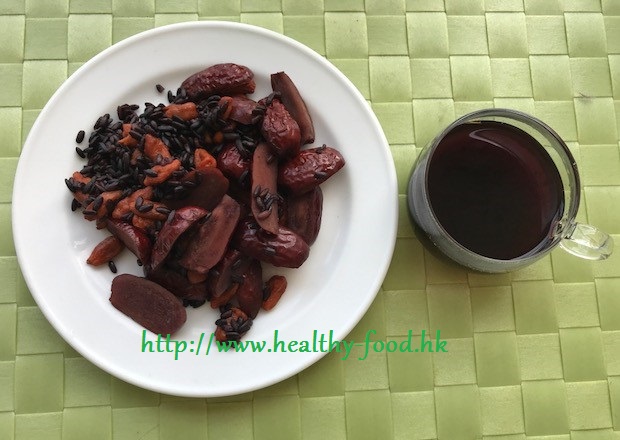
Why people make this tea
Anaemia is more common than many people realise, particularly among older adults — Bro Niu notes that roughly 3 or 4 out of every 10 elderly people may be affected. The causes range from iron deficiency to low folate or B12, and persistent pallor, cold limbs, fatigue, dizziness on exertion, or breathlessness after climbing stairs can all be early signs worth investigating with a doctor. This tea is not a cure, but it is a practical, pleasant daily habit that supports the body’s blood-building processes. Black rice (the brown, unpolished variety) is one of the most nutrient-dense whole grains available — rich in anthocyanins, B vitamins, iron, and zinc. When dry-roasted before use, it develops a warm, nutty fragrance that makes the tea genuinely enjoyable to drink. Combined with red dates (a classic blood-nourishing food in Chinese cuisine) and goji berries (for liver and kidney support), this tea works well as a gentle everyday tonic.
Who it suits / who should be cautious
- Suits people with mild anaemia, pallor, fatigue, hair that greys or falls early, or blurry vision that may be related to blood deficiency.
- Suitable for pregnant women (confirmed safe at 26 weeks and beyond in Q&A).
- Can also be made as a congee for a more substantial meal.
- Those with diabetes should be mindful that black rice contains starch — consume in moderate amounts.
- If anaemia symptoms are persistent or severe, please consult a doctor to identify the underlying cause.
Why these ingredients (the food-therapy logic)
- Black glutinous / black brown rice (hei zao mi): A whole grain with a deep purple-black bran layer rich in anthocyanins (antioxidant pigments), iron, zinc, B vitamins, and fibre. In traditional food therapy black rice is associated with nourishing the kidneys, supporting the spleen, brightening the eyes, and activating blood circulation. It is used for conditions linked to blood deficiency including anaemia, premature greying, and blurred vision. Dry-roasting it before use removes excess moisture, extends its shelf life, and develops its nutty fragrance.
- Red dates / jujube (hong zao): One of the most widely used blood-nourishing foods in Chinese food therapy. Rich in vitamin C (which enhances iron absorption), polysaccharides, and flavonoids. Associated with supporting the spleen, nourishing blood, and calming the mind.
- Goji berries (gou qi zi): Nourish the liver and kidneys, support vision, and are rich in zeaxanthin, betaine, and polysaccharides. They contribute to the tea’s overall blood and kidney-supporting profile.
Ingredients (1 pot / 1–2 cups)
| Ingredient | Amount | Notes |
|---|---|---|
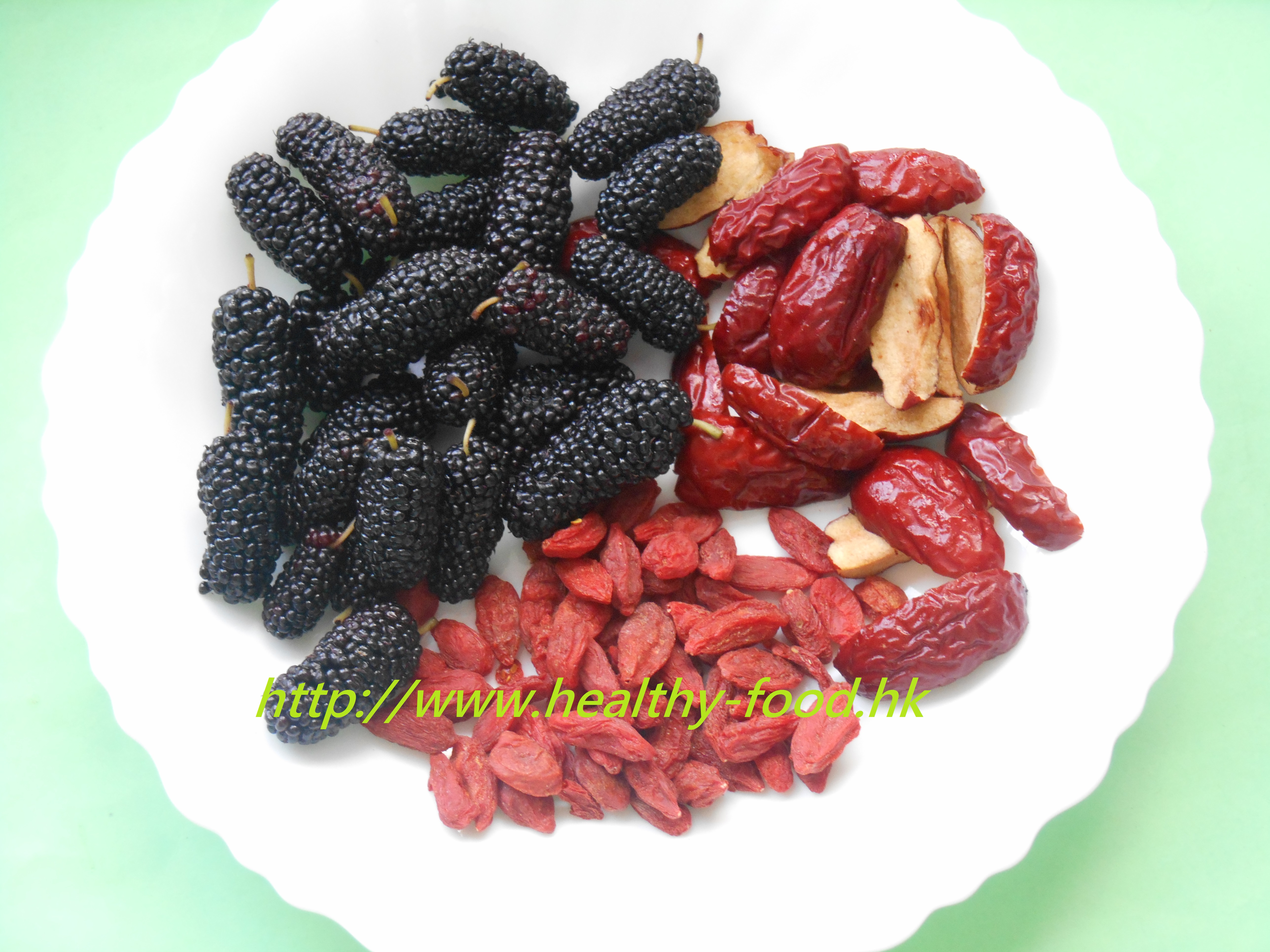
| Red dates / jujube, pitted and sliced | 6 pieces | Slicing releases the flavour and nutrients more readily |
| Goji berries | 1 tablespoon | |
| Roasted black rice | 2 tablespoons | Dry-roast raw black rice in a dry pan over medium heat for 7 minutes; cool and store in a glass jar |
Method
- Prepare the roasted black rice in advance: heat a dry (oil-free) pan or wok over medium heat. Add raw black rice and stir continuously for 7 minutes until fragrant and the colour deepens slightly. Remove from heat, cool, and store in a glass jar. This can be made in larger batches for regular use.
- Remove the pits from the red dates and slice them.
- Place red dates, goji berries, and roasted black rice in a teapot or heatproof cup.
- Pour a small amount of boiling water over the ingredients and immediately discard this first rinse.
- Refill with boiling water and steep for 15 minutes before drinking.
- The same ingredients can be re-steeped until the flavour fades.
- For a more nourishing option: soak the black rice overnight, then simmer all three ingredients together for 1 hour to make a congee.
Bro Niu’s tips
Do not wash the black rice before dry-roasting — modern rice is generally clean, and washing it before roasting may leave residual moisture that can cause the stored rice to mould. Once roasted and cooled, store in a sealed glass jar and use as needed. Making a batch of roasted black rice is a small time investment that pays off for weeks of daily use. If you have time to spare, turning this into a congee by simmering rather than steeping produces an even more nourishing meal. If a person is also qi-deficient (low energy, breathlessness), Bro Niu suggests adding 3 qian of dang shen (codonopsis root) and simmering for 15 minutes for a more fortifying brew.
Community questions answered (selected)
-
Q (大肚婆, 26 weeks pregnant): Can this tea be drunk during pregnancy? Bro Niu: This tea is safe to drink at 26 weeks of pregnancy.
-
Q (Agnes): My husband has blood deficiency, qi deficiency, and kidney deficiency — is this tea suitable? Bro Niu: This tea suits him well. If qi is also depleted, add 3 qian of dang shen (codonopsis) and simmer together for 15 minutes for a more complete tonic.
-
Q (Sally): Should the black rice be washed before roasting? Bro Niu: Generally, no need to wash it first. Modern rice is very clean, and washing before roasting — if not dried sufficiently — could cause the stored rice to go mouldy. Just roast it dry and store.
Published October 28, 2018 · Adapted and translated for Nourilo from a traditional home-kitchen recipe. Approx. 4 min read.