Soups
American Ginseng, Dendrobium & Polygonatum Soup
Traditionally used to nourish stomach yin, generate fluids, and support blood sugar management
Why people make this soup
Many people living with diabetes experience what Chinese medicine calls “stomach yin deficiency” — a persistent pattern of excessive thirst, dry mouth, hunger that doesn’t feel satisfied despite eating, and gradual weight loss despite good appetite. Modern research on dendrobium (shi hu) suggests it may support gastric acid secretion, blood sugar regulation, immune function, and has antioxidant activity. This soup was designed with that pattern in mind.
Bro Niu notes that the herbs here — American ginseng, dendrobium, polygonatum root, and goji berries — each have documented interest in blood sugar research or in supporting the systems stressed by long-term diabetes management. Rather than a single “magic” herb, this soup brings them together in a broth that is genuinely pleasant, slightly sweet, and easy to prepare regularly. It is also good for people without diabetes who simply experience dry mouth, dry throat, poor energy, or post-illness fatigue.
Who it suits / who should be cautious
- Primarily designed for people with diabetes experiencing dry mouth, excessive thirst, fatigue, and gradual weight loss
- Also suitable for people with lung and spleen weakness, post-tuberculosis recovery, or general dry-mouth complaints
- People currently taking prescribed blood sugar medication should be aware that some of these herbs may have additive effects — mention it to your doctor
- Suitable for people with high blood pressure taking medication
- People with uterine fibroids can use this soup
- Healthy people can also drink it as a general wellness tonic
Why these ingredients (the food-therapy logic)
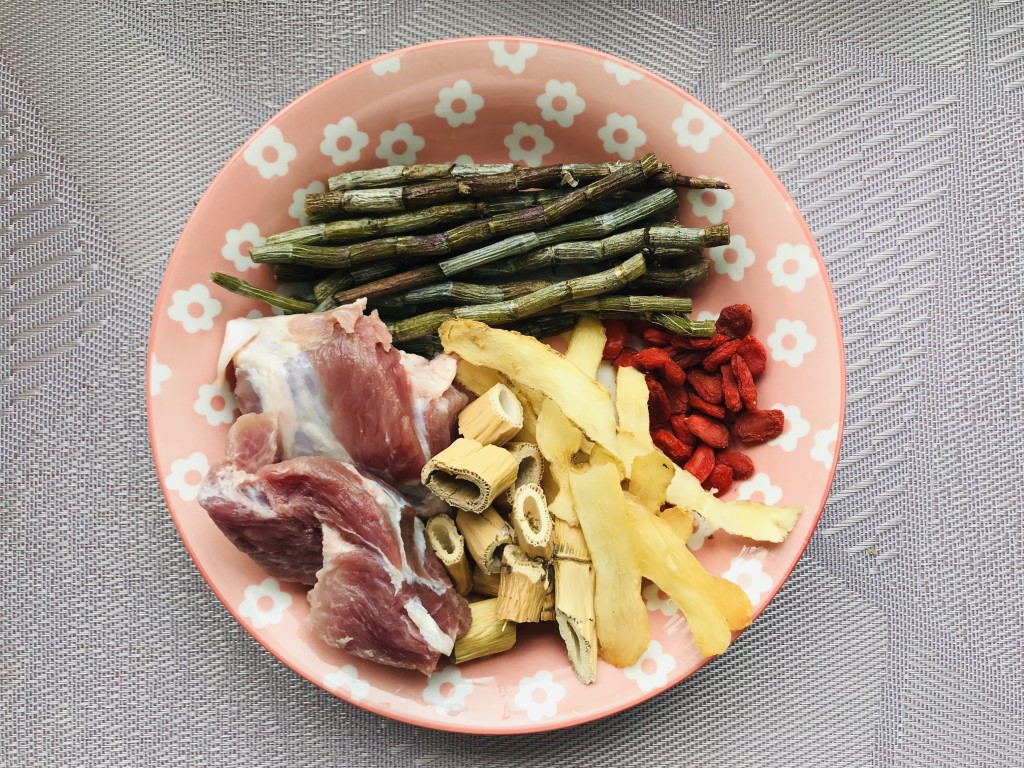
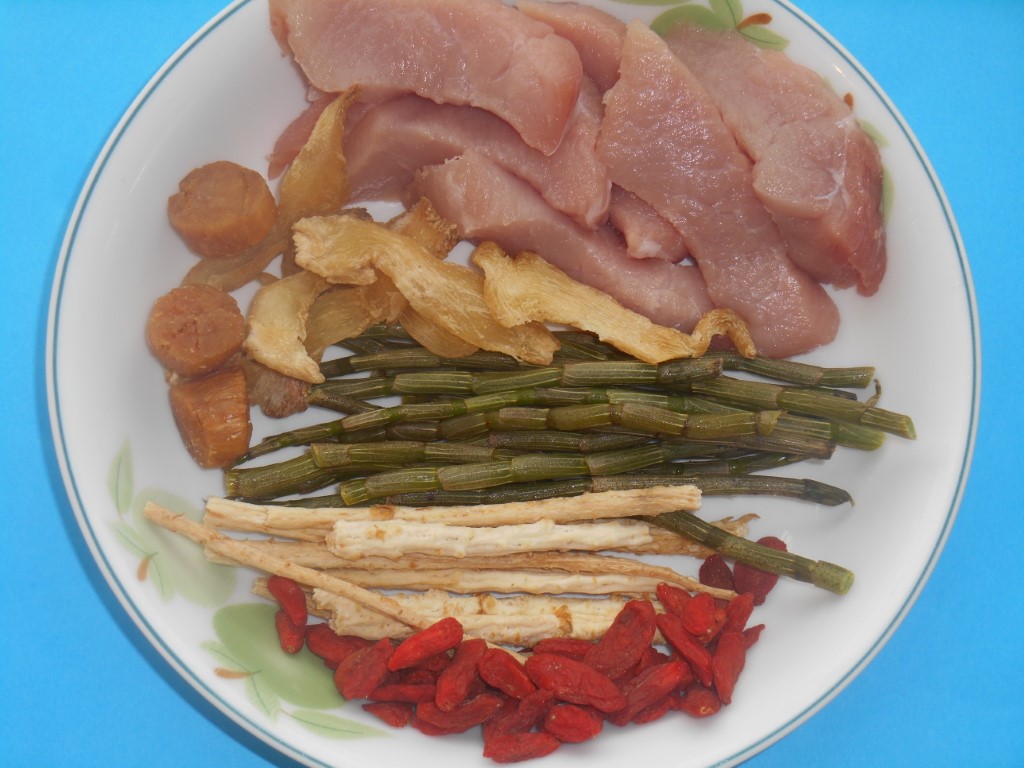
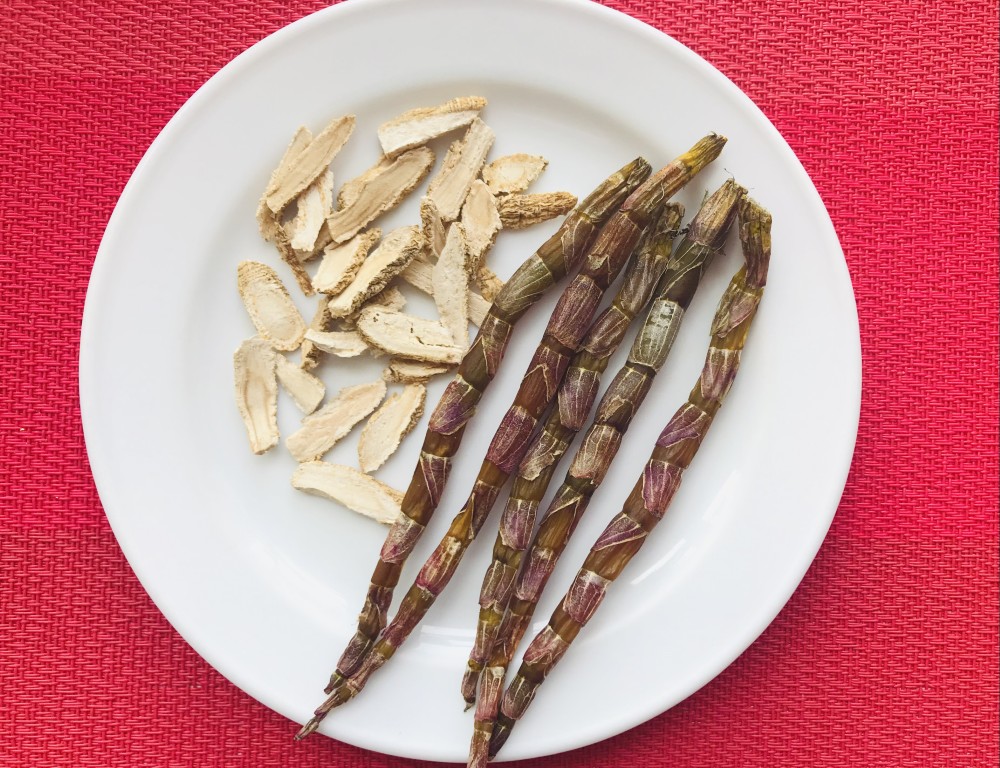
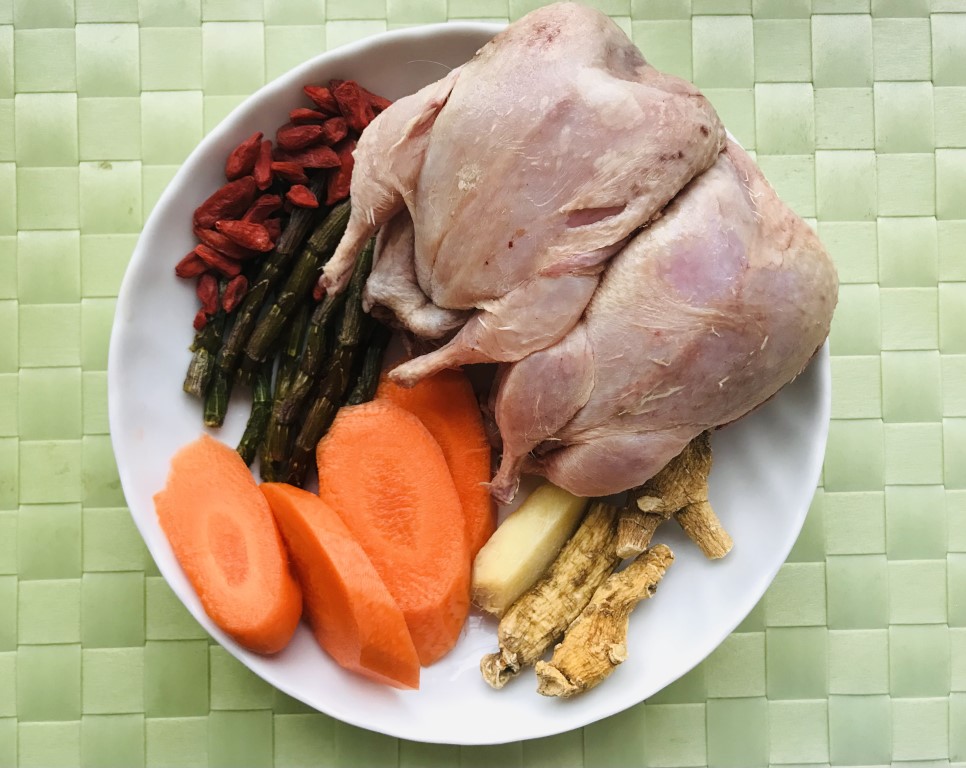
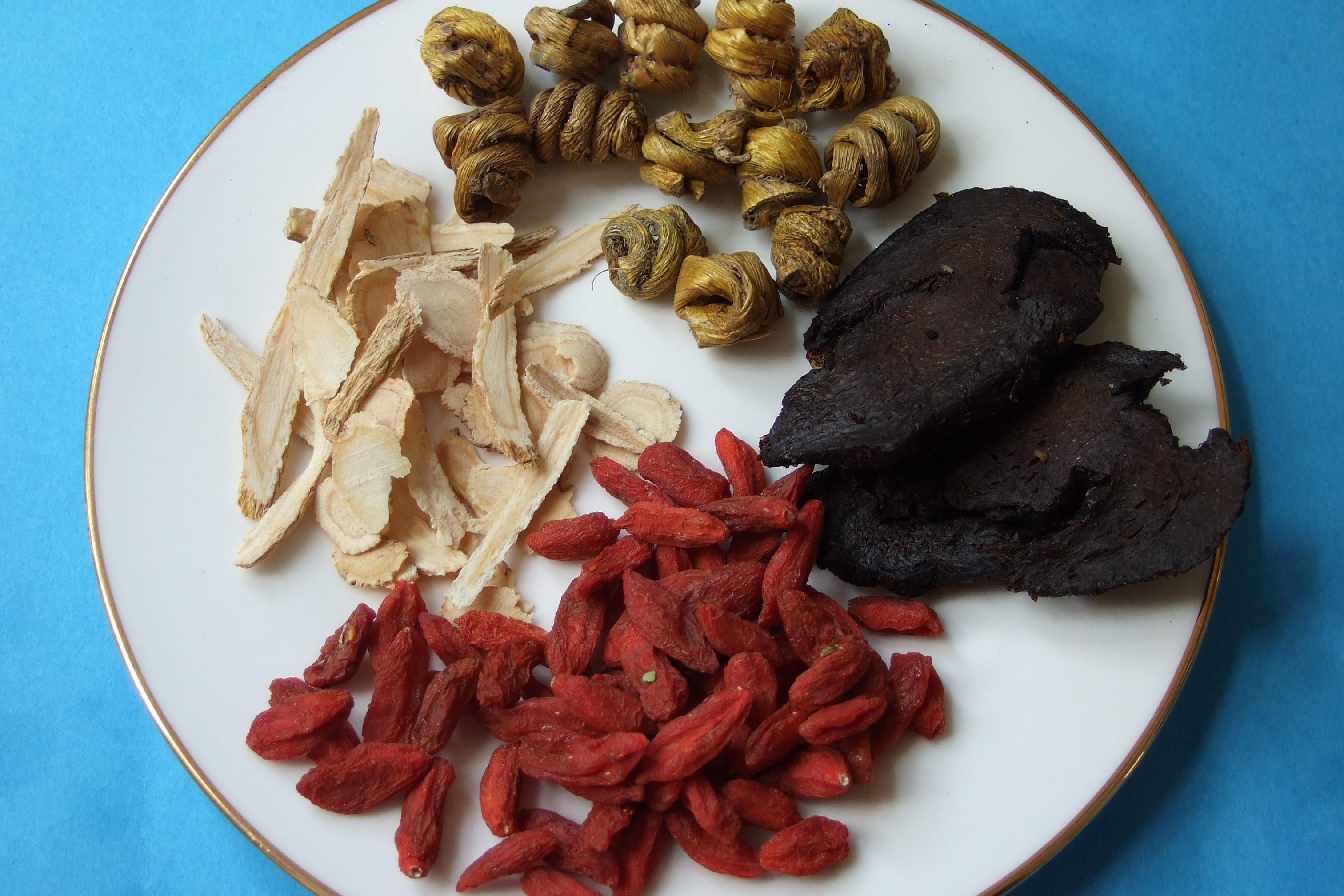
- American ginseng (yang shen / hua qi shen): Cooler in nature than Asian ginseng; associated with tonifying heart qi, nourishing heart yin, and generating fluids; research interest in its potential role in blood sugar modulation; because it is volatile, add it only after the soup is finished and steep for 5 minutes off the heat
- Dendrobium (huo shan shi hu): Among the most researched herbs for nourishing stomach yin; modern studies suggest it may support gastric secretion, blood sugar regulation, antioxidant activity, and immune modulation; notably associated with supporting vision in diabetic patients
- Polygonatum root (huang jing): A deeply nourishing herb for the lungs, spleen, and kidneys; associated with lowering blood sugar; if unavailable, sea Solomon’s seal (hai yu zhu) is a lighter-tasting substitute
- Goji berries (gou qi zi): Rich in antioxidants and zeaxanthin; associated with nourishing the liver and kidneys, supporting eye health, and blood sugar modulation — relevant as diabetic retinopathy is a common concern
Ingredients (3 bowls)
| Ingredient | Amount | Notes |
|---|---|---|
| American ginseng slices (yang shen) | ~11 g (3 qian) | Add after cooking, steep off heat; do not boil |
| Dendrobium (huo shan shi hu) | ~19 g (5 qian) | Soak 30 minutes first; soak water can also be used. Cheaper substitute: common shi hu (chuan shi hu) |
| Goji berries (gou qi zi) | ~15 g (4 qian) | Soak and rinse |
| Polygonatum root (huang jing) | ~37 g (1 liang) | Soak and rinse; substitute sea Solomon’s seal (hai yu zhu) if unavailable |
| Lean pork or chicken breast | ~100–150 g | Blanch briefly |
| Water | 6 bowls (~1.2 L) |
Method
- Soak the dendrobium, goji berries, and polygonatum in water for at least 30 minutes; drain and rinse. (Soaking removes potential sulphur residue from the drying process.)
- Blanch the pork or chicken briefly in boiling water; drain and rinse.
- Combine dendrobium, goji berries, polygonatum, and meat in a pot with 6 bowls of water.
- Bring to a boil over high heat, then reduce to a low simmer.
- Cook for about 40 minutes, until liquid reduces to about 3 bowls.
- Turn off the heat. Add the American ginseng slices. Cover the pot and steep for 5 minutes — do not boil the ginseng.
- Serve and drink warm. Eat some of the cooked ingredients.
Bro Niu’s tips
The reason American ginseng is added after cooking is that it contains volatile aromatic compounds that evaporate when boiled — steeping it in the hot (but off-heat) soup preserves its benefit. If using ginseng pellets rather than slices, steep them in the hot soup for 15 minutes. Soak all Chinese herbs for at least 30 minutes before cooking — many dried herbs on the market have been treated with sulphur as a preservative, and sulphur dissolves readily in water, making the pre-soak an easy way to remove it. This soup can be made several times a week for ongoing wellness support.
Community questions answered (selected)
-
Q (小肥): Can I use dendrobium flowers instead of dendrobium stems? Can I use American ginseng pellets instead of slices? Bro Niu: You can use the common Chuan shi hu (Sichuan dendrobium) instead of Huo shan shi hu — it is much cheaper and the effects are not too different. American ginseng contains volatile oils, so slices are best added after the soup is finished and steeped. If using pellets, soak in the hot soup for 15 minutes.
-
Q (Fiona): Can polygonatum be replaced with something else? Bro Niu: Sea Solomon’s seal (hai yu zhu) is a variety of polygonatum — light yellow in colour, mildly sweet, and makes a delicious soup. It is a good substitute.
-
Q (fans): Can healthy people drink this soup too? Bro Niu: Yes, healthy people can drink it as a preventive wellness tonic. It is also very suitable for people with lung and kidney weakness.
Published May 26, 2010 · Adapted and translated for Nourilo from a traditional home-kitchen recipe. Approx. 4 min read.