Herbal & Flower Teas
White Peony and Cinnamon Twig Tea
Traditionally used to support relief from allergic rhinitis symptoms and harmonise the body's defences
Why people make this tea
Chronic allergic rhinitis — the morning sneezes, the runny nose triggered by cold air, dust, or season changes — is something many people simply learn to live with. In TCM, this kind of sensitivity often points to a weakness in what is called “wei qi” (defensive energy), and a lack of harmony between the body’s outer defences and internal warmth. This tea draws on the principles of the classical Gui Zhi Tang formula, one of the most well-known prescriptions in the Shang Han Lun (a foundational TCM text over 1,800 years old). Bro Niu recommends taking it regularly over several weeks — it is not an instant fix, but many people find that consistent use noticeably reduces how often and how severely the rhinitis flares.
White peony root (bai shao) is an ingredient Bro Niu admits he does not often use in cooking because of its bitter-sour taste — but its therapeutic profile is impressive. It is traditionally associated with nourishing blood, calming the liver, relieving spasms, supporting skin health, and helping with conditions from menstrual pain to night sweats.
Who it suits / who should be cautious
- Adults with chronic allergic rhinitis, especially triggered by cold or wind
- Also traditionally associated with supporting gut-related cold sensitivity (diarrhoea from catching cold) and restless legs at night
- Adding 2 qian (8 g) of honey-fried licorice (zhi gan cao) strengthens the effect
- Not suitable during pregnancy
- Those with yin-deficiency heat (internal heat, hot flashes) should use with caution
Why these ingredients (the food-therapy logic)
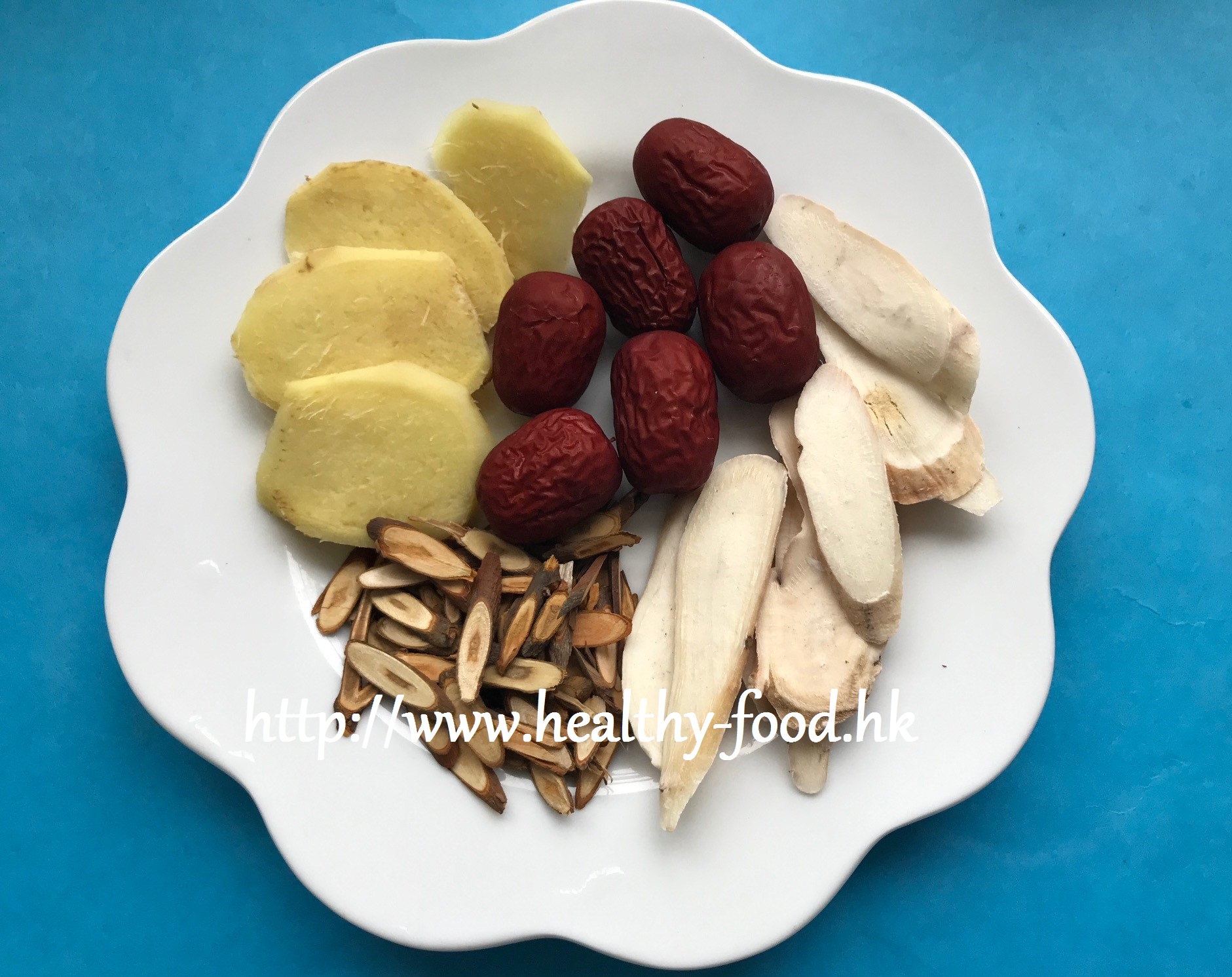
- White peony root (bai shao): Traditionally nourishes blood, softens the liver, relieves cramping and spasm; also associated with skin health, reducing excessive sweating, and supporting bile function
- Cinnamon twig (gui zhi): Warms and opens the surface channels; traditionally used to resolve wind-cold invasion and warm the limbs
- Fresh ginger (sheng jiang): Strengthens the warming effect; supports digestion
- Red dates (hong zao): Traditionally nourishes spleen qi and blood; also considered to harmonise the other herbs in the formula
- Honey-fried licorice (zhi gan cao): Tonifies the middle and harmonises all the other ingredients; strengthens the overall formula
Ingredients (2 bowls — one day’s serving)
| Ingredient | Amount | Notes |
|---|---|---|
| White peony root (bai shao) | 19 g (5 qian) | Rinse and soak briefly |
| Cinnamon twig (gui zhi) | 11 g (3 qian) | Rinse and soak briefly |
| Fresh ginger | 3–4 slices | |
| Red dates, pitted | 6 pieces | |
| Honey-fried licorice (zhi gan cao) | 8 g (2 qian), optional | Enhances the formula significantly |
Method
- Rinse the white peony and cinnamon twig; pit the red dates.
- Combine all ingredients in a pot with 5 bowls of water.
- Bring to a boil, then simmer gently for 45 minutes until reduced to about 2 bowls.
- Divide into two portions and drink over the course of the day — ideally warm.
- Take two to three servings per week. You can also prepare three days’ worth at once and reheat as needed.
Bro Niu’s tips
Consistency matters most with this tea — it is the kind of formula that rewards patience rather than urgency. If you cannot find honey-fried licorice (zhi gan cao), ordinary dried licorice (gan cao) works too: zhi gan cao tonifies more while plain gan cao mainly harmonises and clears. Red dates can be swapped for black dates (nan zao) for those who prefer a more nourishing, less sweet result. This tea is also traditionally useful for digestive sensitivity after catching a cold, and can support restless leg syndrome at night.
Community questions answered (selected)
-
Q (BJ): Would red dates make this too heating? Can I use black dates (nan zao) instead? Bro Niu: Black dates are nourishing and beneficial — yes, you can use them. I just personally prefer the flavour of red dates.
-
Q (Jess): Can I make a larger batch and drink it over a few days? Bro Niu: Yes, you can brew three days’ worth at once. Just be sure to drink it warm each time.
-
Q (Bobby): I only have regular licorice, not honey-fried licorice. Is that okay? Can this tea also be used for post-period uterine support? Bro Niu: Regular licorice is fine — it tonifies qi and harmonises the herbs. After your period is a good time to take it; two servings a week is appropriate.
Published May 24, 2019 · Adapted and translated for Nourilo from a traditional home-kitchen recipe. Approx. 3 min read.