Soups
Fresh Yam, Bamboo Fungus, Wolfberry and Quail Soup
Traditionally used to support spleen and lung function, and boost overall vitality

Why people make this soup
Bamboo fungus (zhu sheng) is a strikingly beautiful fungus with an almost lacy, net-like skirt. In traditional Chinese food therapy, it has long been valued for supporting lung function, clearing heat and dampness, and providing a rich, umami depth to soups. Interestingly, it has a traditional reputation for helping reduce excess fat accumulation in the belly — thought to be because it helps the body handle oily substances more efficiently. For people who are a little heavier around the middle, or who have elevated blood lipids, it shows up frequently in recommended soups. Traditional medicine also held that “white foods enter the lungs” — a broad category that includes ingredients like snow fungus, lily bulb, almonds, pine nuts, Chinese yam and bamboo fungus. Combined with protein-rich quail and goji berries, this is a warm, sustaining soup suitable for most of the year.
Who it suits / who should be cautious
- Well suited for people recovering from illness or surgery, those with chronically low energy or weak immunity, and anyone with elevated blood pressure or cholesterol.
- Particularly recommended for people who tend toward the heavier side or have high blood lipids, as bamboo fungus is traditionally regarded as supportive for lipid metabolism.
- Generally gentle and suitable for all ages. If there is heavy dampness in the body, Bro Niu suggests adding Fu Ling (poria) and Bai Zhu each around 11 g, plus a little dried tangerine peel.
Why these ingredients (the food-therapy logic)
- Fresh Chinese yam (xian huai shan): Neutral and sweet; one of the most used food-therapy ingredients for supporting the spleen, stomach and lung. Easy to digest.
- Bamboo fungus (zhu sheng, Dictyophora indusiata): Rich in amino acids; traditionally thought to nourish qi and yin, support the lungs, clear damp-heat and help with lipid management. Choose pieces with an intact shape, meaty texture and a pale yellow colour — avoid overly white specimens that may have been bleached.
- Wolfberries / goji berries (gou qi zi): Nourish liver and kidney yin, support eye health; widely used and gentle.
- Red dates (hong zao): Warm, sweet; support qi and blood; help round out the flavour.
- Quail (an chun): Leaner than chicken and rich in protein; quail is considered a gently nourishing meat that supports recovery without being heavy.
Ingredients (3–4 bowls)
| Ingredient | Amount | Notes |
|---|---|---|
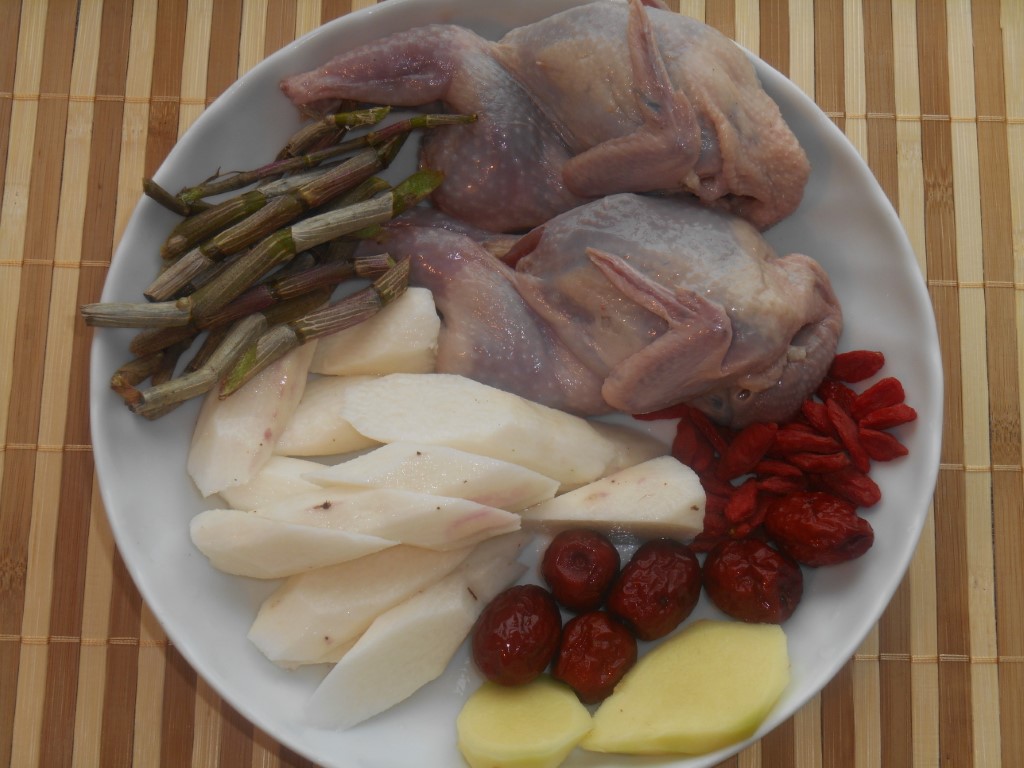
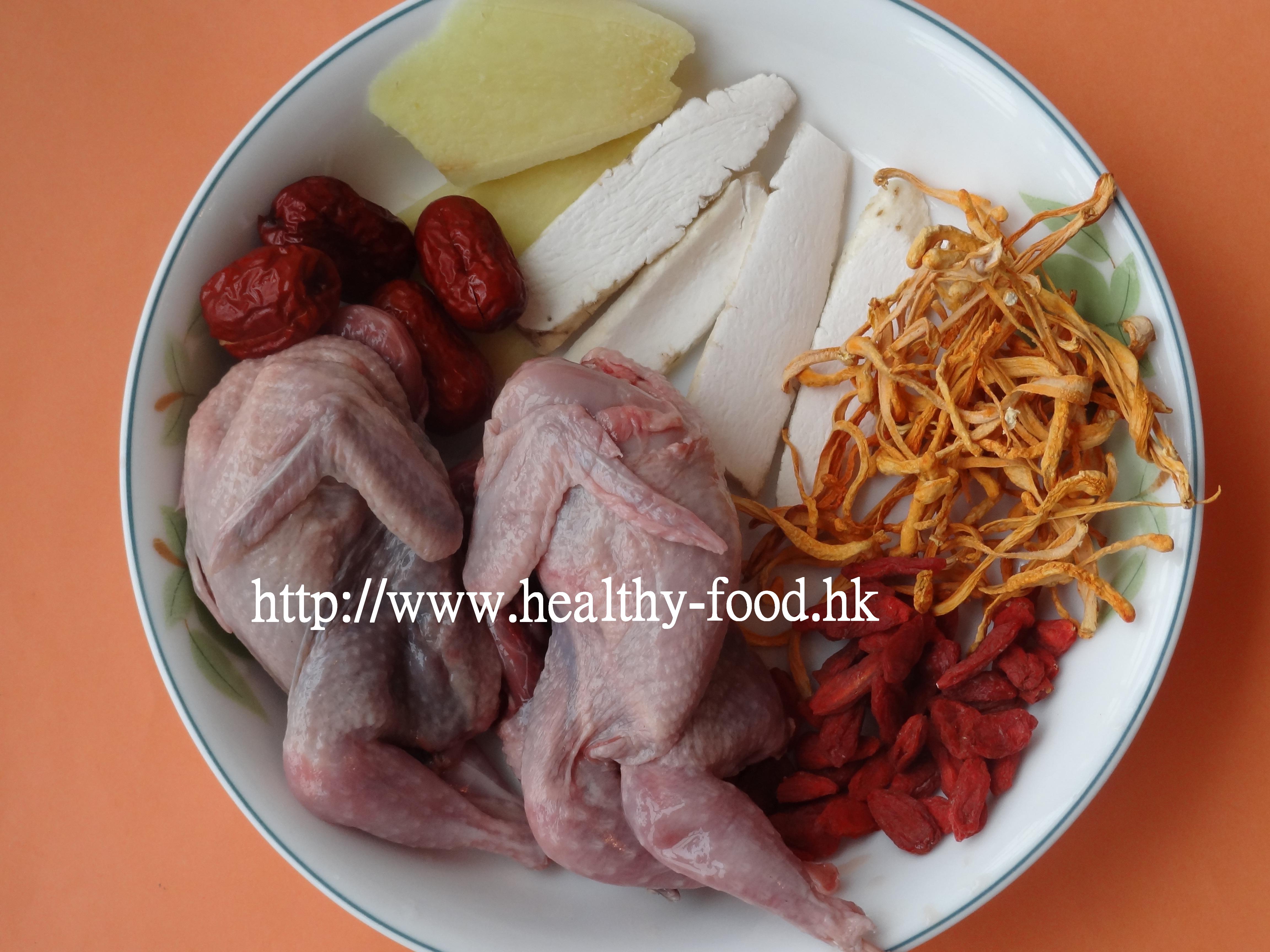
| Fresh Chinese yam | 150–225 g (4–6 liang) | Peel, rinse, cut into sections |
| Dried bamboo fungus | 6 pieces | Soak in lightly salted water, rinse, remove the cap top |
| Wolfberries (goji) | ~11 g (3 qian) | Rinse gently |
| Red dates | 5 pieces | Remove pits |
| Ginger | 2 slices | |
| Frozen quail | 2 birds | Clean thoroughly; blanch in boiling water alongside bamboo fungus before using |
Method
- Peel, rinse and cut the fresh Chinese yam into sections.
- Soak the bamboo fungus in lightly salted water, rinse well and remove the umbrella-shaped cap.
- Rinse the goji berries. Pit the red dates.
- Blanch the quail (and bamboo fungus) briefly in boiling water; drain and discard the water.
- Place all ingredients into a pot with 8 bowls of water. Bring to a boil, then reduce to a gentle simmer for 1.5 hours.
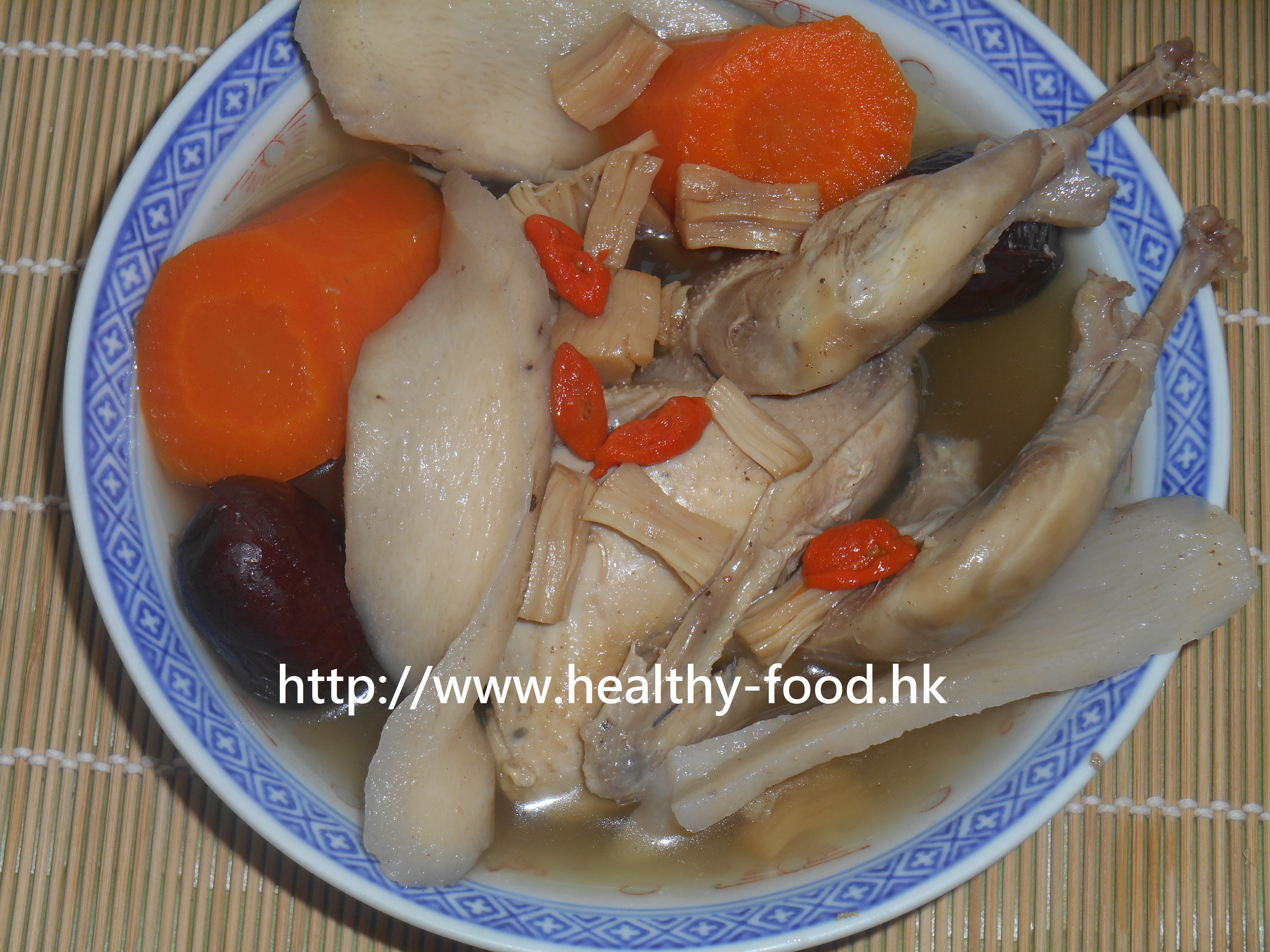
- Serve hot, eating the soup and solids together.
Bro Niu’s tips
When choosing bamboo fungus, look for pieces with an intact, whole shape, a meaty texture and a natural pale-yellow colour. Pieces that are very white may have been treated to remove colour — not ideal. This soup is gentle enough for all ages and is especially valuable for those managing high blood pressure, high cholesterol or excess weight.
Community questions answered (selected)
-
Q (May): The person I’m making this for tends to have a lot of dampness — rain brings on headaches. Would it help to add some damp-clearing herbs to this soup? Bro Niu: For dampness, you can add fu ling (poria) and bai zhu, about 11 g each, and some dried tangerine peel — cook them in together.
-
Q (May): Can salmon head be used instead of large fish head in other soups you recommend? Bro Niu: Yes, salmon head works fine.
Published May 19, 2021 · Adapted and translated for Nourilo from a traditional home-kitchen recipe. Approx. 3 min read.