Soups
Adzuki Bean, Longan, Ginger, and Red Date Soup
traditionally associated with strengthening the spleen, nourishing blood, and supporting water metabolism after childbirth
Why people make this soup
Some degree of puffiness is normal in the days and weeks after giving birth — the body redistributes the extra fluid accumulated during pregnancy. But when a new mother is visibly swollen, pale, exhausted, eating poorly, and experiencing heart palpitations or a heavy, bloated feeling, traditional Chinese food therapy sees this as a pattern of blood and qi deficiency combined with fluid accumulation. The spleen — which in Chinese medicine governs fluid metabolism and the production of qi and blood from food — has been strained by the demands of pregnancy and labor.
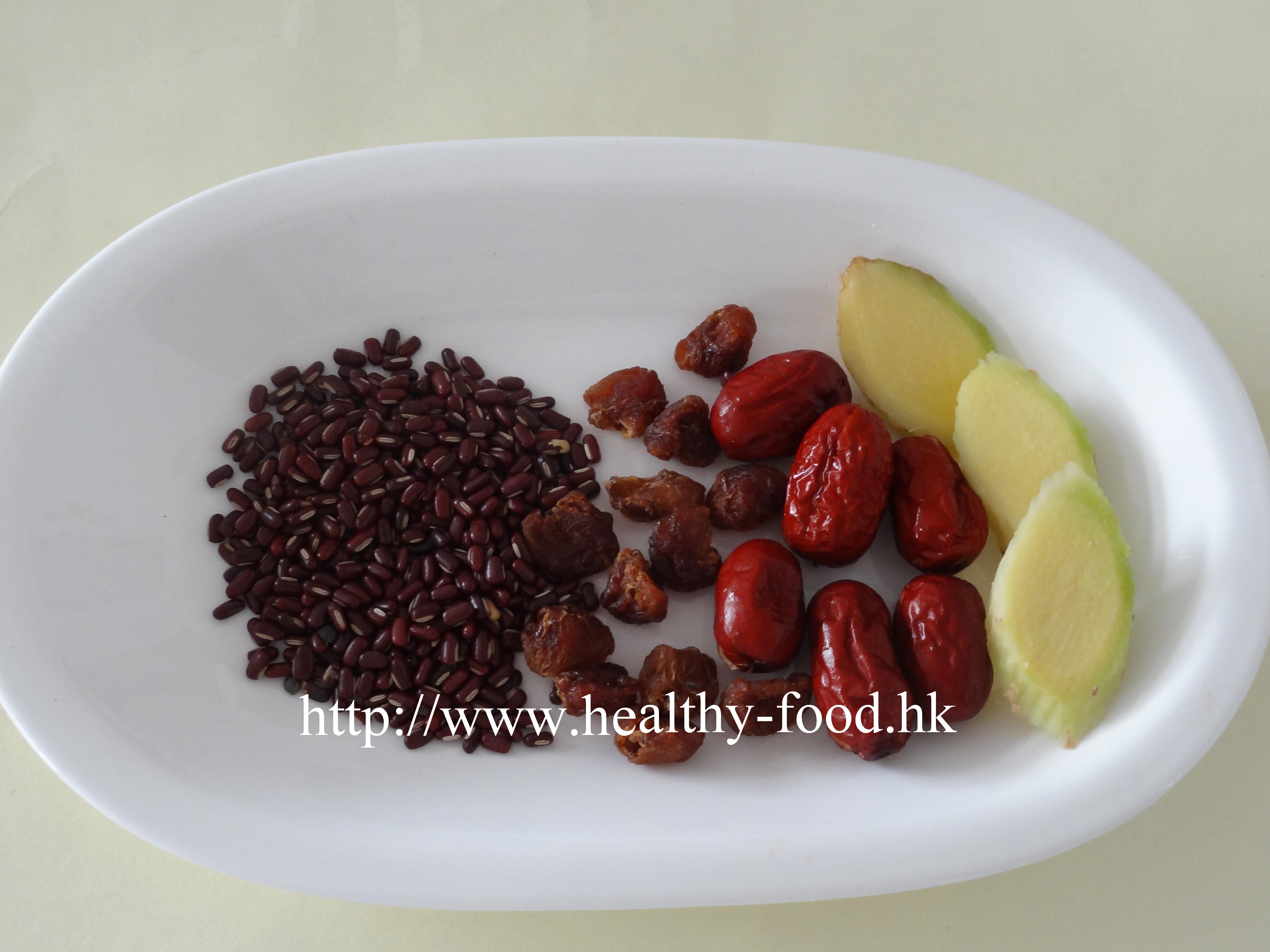
This simple four-ingredient soup brings together adzuki beans (a traditional food-therapy staple for draining dampness and swelling), warming longan and ginger (to gently raise qi and warm the middle), and red dates (to support blood and calm the heart). The result is a warming, subtly sweet broth that is easy to prepare and gentle enough for a new mother’s depleted system.
Who it suits / who should be cautious
- Appropriate for postpartum mothers experiencing swelling, pale complexion, fatigue, poor appetite, or a sense of heaviness — provided swelling is not related to high blood pressure complications
- Also suitable for anyone with nutritional anemia, poor complexion, or puffiness unrelated to heart or kidney disease
- For mothers who had a cesarean section: replace ginger with tangerine peel (chen pi), as some advise caution with ginger after surgery; continue following your medical team’s guidance
- Mothers who are breastfeeding can drink this soup
- Those with hypertension-related edema should consult their doctor before using this or any food therapy for swelling
Why these ingredients (the food-therapy logic)
- Adzuki beans (chi xiao dou): Sweet and slightly sour; one of the classic food-therapy ingredients for promoting urination and reducing water retention; also supports heart and spleen function
- Longan flesh (gui yuan rou): Warm and sweet; associated with nourishing heart blood, calming the mind, and supplementing qi; helps address palpitations, insomnia, and fatigue
- Fresh ginger (sheng jiang): Warming; helps activate circulation, stimulate the digestive system, and dispel cold-dampness; particularly valuable in postpartum situations to warm and protect the middle
- Red dates (hong zao): Gentle tonics for qi and blood; calm the spirit and add natural sweetness to the broth
Ingredients (2 bowls)
| Ingredient | Amount | Notes |
|---|---|---|
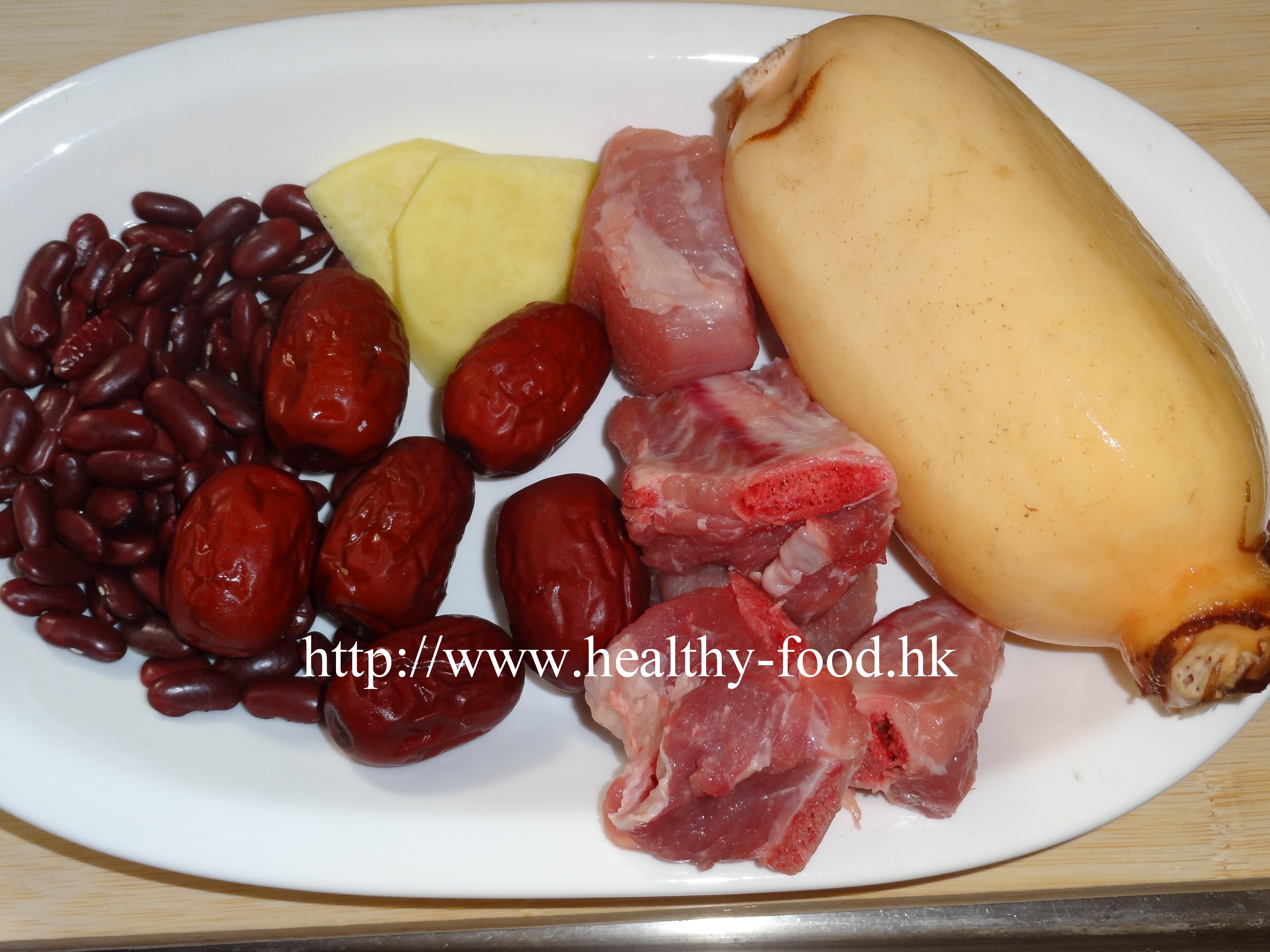
| Adzuki beans | 1 liang (~38 g) | Rinse and soak briefly |
| Dried longan flesh | 5 qian (~19 g) | Rinse gently |
| Fresh ginger | 3 slices | Can be replaced with tangerine peel for c-section mothers |
| Red dates | 10 pieces | Can remove seeds if preferred |
| Water | 5 bowls |
Method
- Rinse all ingredients. Soak adzuki beans in cold water for 30 minutes, then drain.
- Place all ingredients in a pot with 5 bowls of water.
- Bring to a boil over high heat, then reduce to a gentle simmer.
- Cook for 1 hour until the liquid reduces to about 2 bowls.
- Drink the broth and eat the solid ingredients — the adzuki beans, longan, and dates are all part of the nourishment.
Bro Niu’s tips
This soup is also appropriate for anyone who tends to look a bit puffy-faced or washed-out, not just new mothers. If you have had a cesarean birth and are avoiding ginger, substitute one piece of tangerine peel (chen pi) instead — it still helps move qi in the digestive system without being as warming. Keep dietary salt low during recovery, as excess sodium will worsen any fluid retention. Gentle abdominal massage in a single direction for about 10 minutes daily can also help the uterus return to its normal size, which in turn supports fluid balance.
Community questions answered (selected)
-
Q (gege): I had a c-section one week ago and both my legs and face are very swollen. My feet are so swollen I cannot put shoes on. Can I drink this soup after a c-section? And can I use ginger in it? Bro Niu: You can drink this soup. Replace the ginger with one piece of tangerine peel. You can also try adzuki beans and barley each 1 liang, tangerine peel 1 piece, and winter melon half a jin boiled with carp — that is also very effective for postpartum fluid retention. Post-cesarean swelling often relates to impaired circulation, so dietary salt should be kept very low. The uterus takes about six weeks to fully return to its pre-pregnancy size, so gentle daily abdominal massage can help support that process.
-
Q (Joyce): I drank this soup for three days and the swelling improved a lot, but it came back when I stopped. I am still pregnant (around 30 weeks) — can I keep drinking this? Bro Niu: If you are still pregnant, do not use barley — barley can stimulate uterine contractions. Instead, try adzuki beans, white hyacinth bean (bian dou) each 1 liang, poria 5 qian, and winter melon 1 jin cooked with lean pork. That is safe during pregnancy and helps with fluid retention. If you have already seen improvement with this soup, continue it with gaps — drink 3 doses, rest 2 days, then another round, until the swelling resolves.
-
Q (Apple): I have been eating a lot of sushi and rich food recently and my face and eyes are swollen. Is this soup right for me, or is there something else? Bro Niu: You can use adzuki beans and barley each 1 liang, winter melon skin (dong gua pi) 5 qian, and two honey dates, cooked with 5 bowls of water down to 2 bowls. Take three doses — this is effective for fluid retention from salty, rich eating. Watch your salt intake going forward, or the puffiness will keep returning.
Published September 3, 2012 · Adapted and translated for Nourilo from a traditional home-kitchen recipe. Approx. 4 min read.