Soups
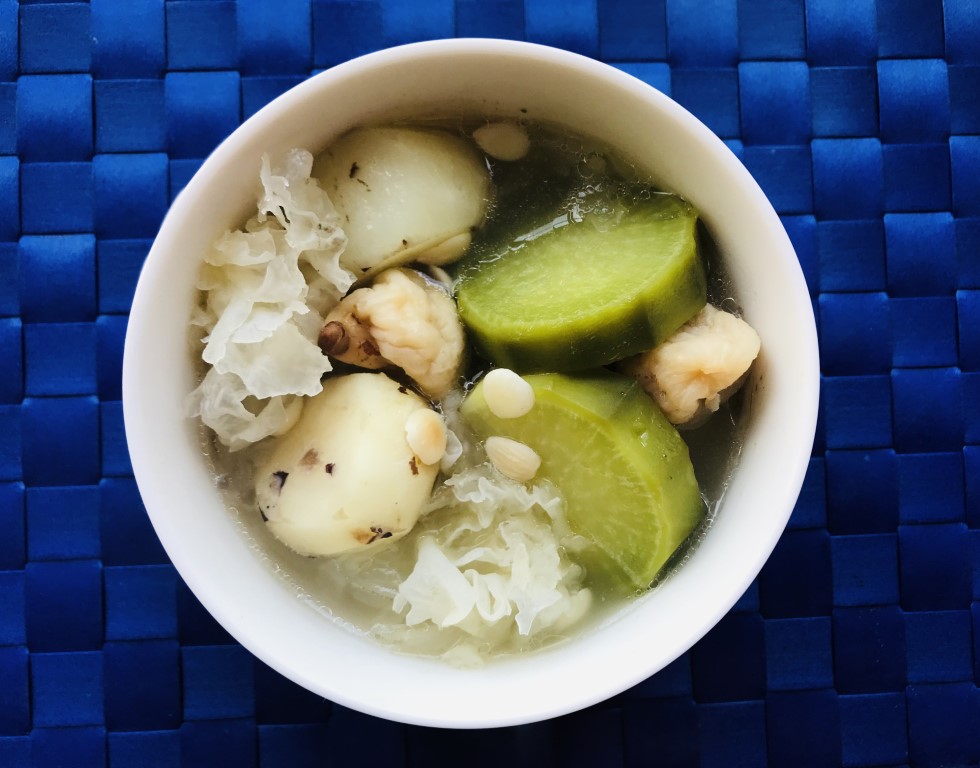
Glehnia, Polygonatum, Snow Fungus & Apple Soup
traditionally used to nourish yin, moisten dryness, and support those with heat signs from yin deficiency
Why people make this soup
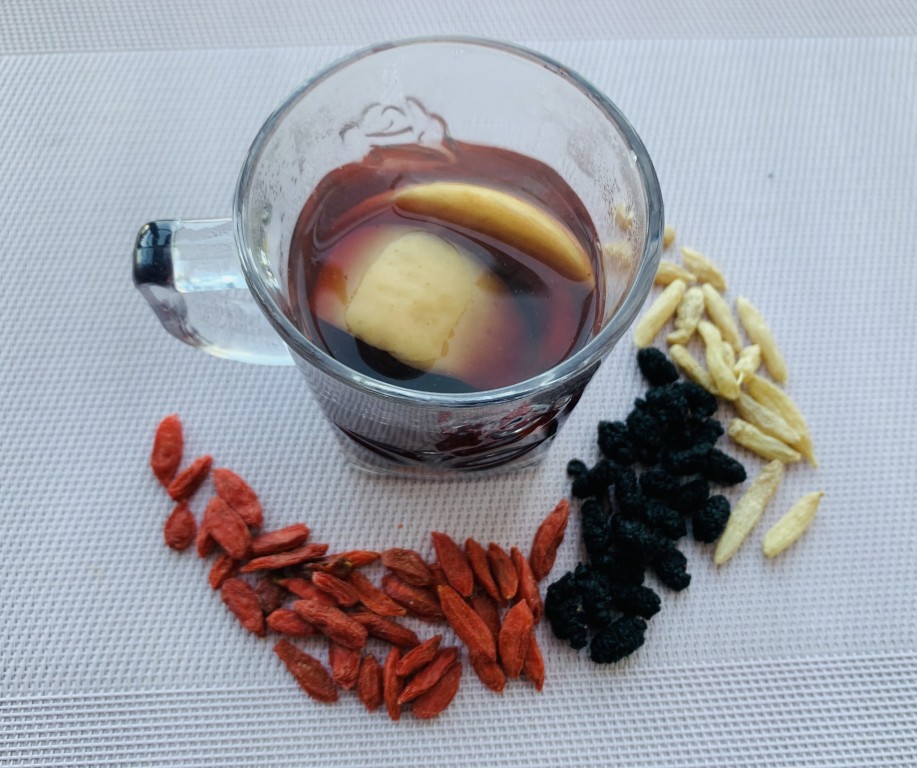
Burning the midnight oil regularly takes a toll in Chinese food therapy terms: persistent late nights are said to consume yin — the body’s cooling, moistening reserves. The signs are familiar to many: a dry mouth and throat that worsens toward evening, palms or soles that feel warm, eyes that ache after a long day of screen time, thirst for cold drinks, night sweats, and a tendency toward constipation. This soup is a gentle, long-standing remedy for exactly that pattern. Glehnia root and polygonatum are two of the most relied-upon herbs for moistening lung and stomach dryness; snow fungus adds plant-based gelatin to soothe and nourish; and apple gives the soup its natural sweetness and a dose of soluble fibre. The result is a soup that is genuinely pleasant to drink and appropriate as a regular household brew.
Who it suits / who should be cautious
- Suitable for those who tend to run warm, experience dryness (dry throat, dry skin, dry cough, constipation), or have heat signs associated with yin deficiency — common in those who work late or sleep poorly
- Suitable for children and the elderly; pregnant women can drink this soup
- Diabetics can also drink this soup (confirmed by Bro Niu)
- No strong cautions for healthy individuals; those with heavy dampness can add fu ling (5 qian) and dried tangerine peel (chen pi) to the pot
Why these ingredients (the food-therapy logic)
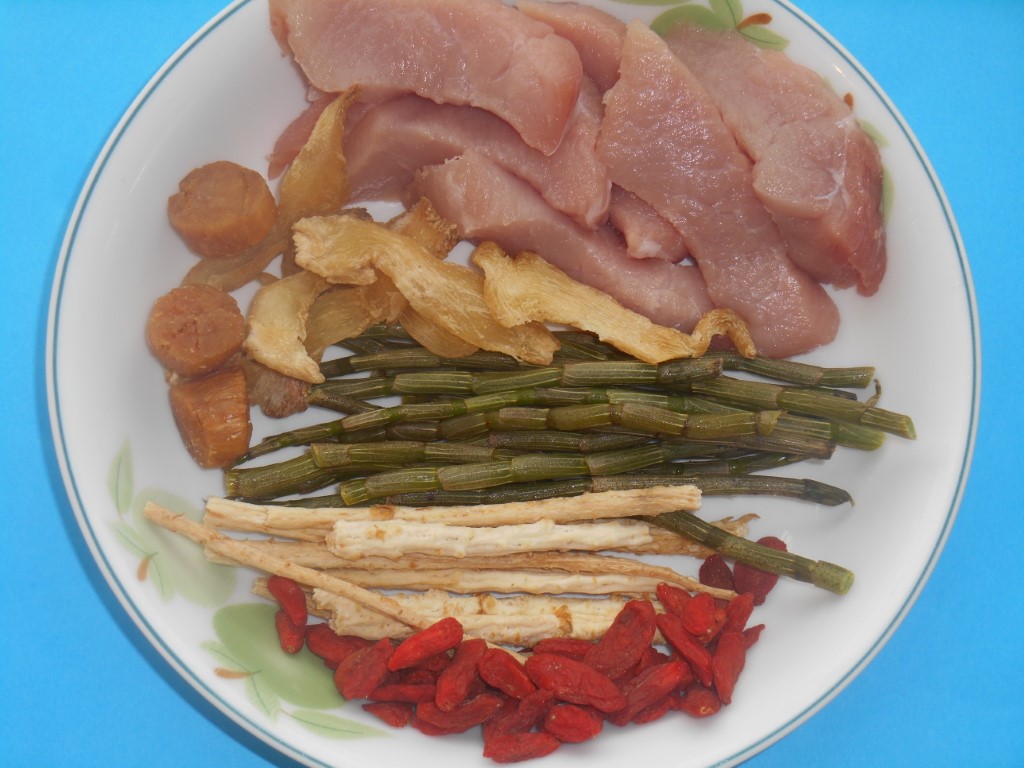
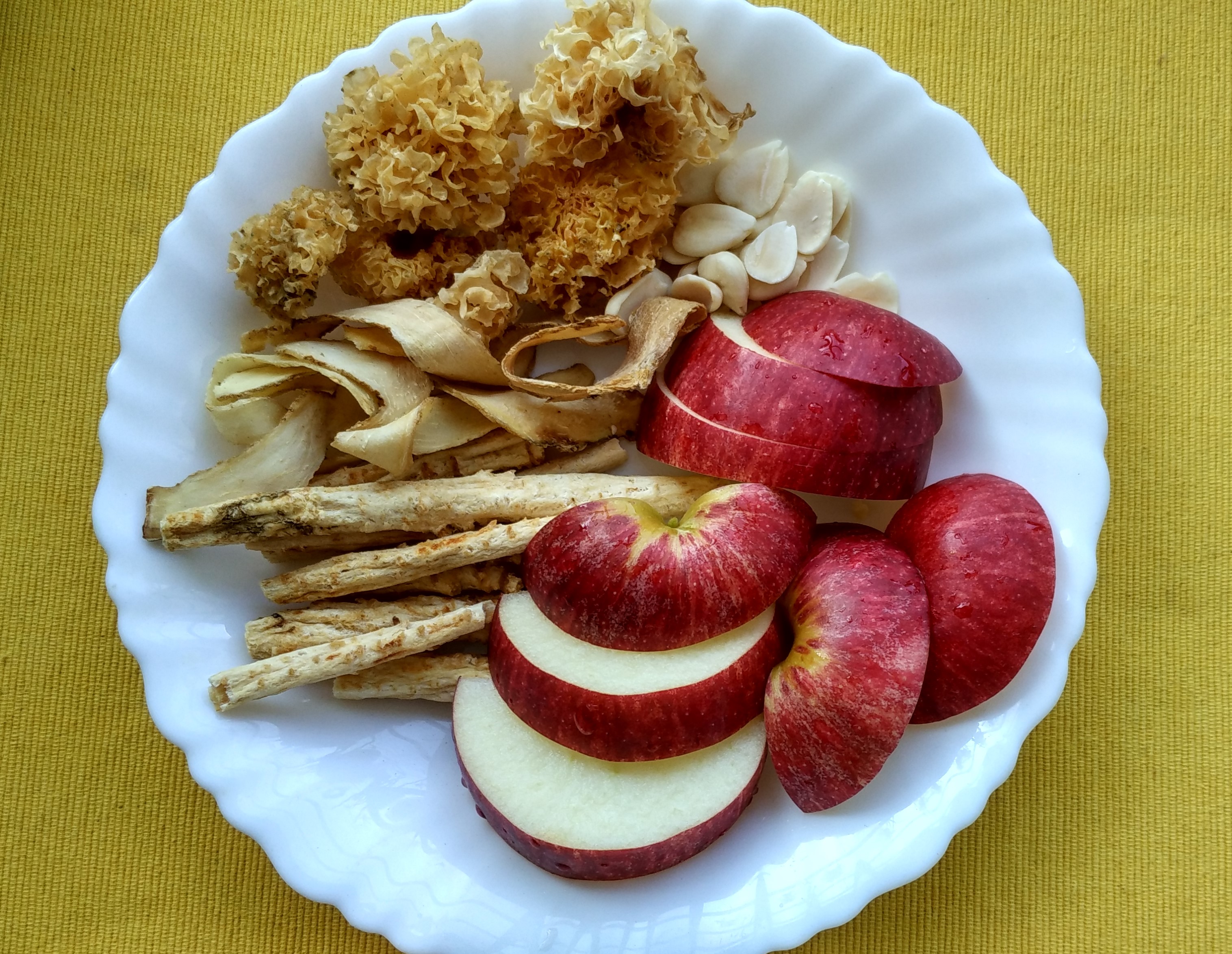
- Glehnia root (sha shen): Moistens the lungs and stomach; generates body fluids; one of the classic yin-nourishing herbs for dry cough and thirst in Chinese herbal tradition
- Polygonatum odoratum (yu zhu): Nourishes yin and moistens dryness; supports the lungs and stomach; commonly paired with glehnia root as a complementary pair for dryness patterns
- Snow fungus (xue er): A gelatinous white fungus that nourishes yin, lubricates the lungs, and is traditionally associated with skin nourishment; its plant-based polysaccharides are a key source of moisture in this soup
- Sweet-bitter almonds (nan bei xing): Moistens the lungs; helps relieve dry cough; a standard addition to Cantonese moistening soups
- Apple (ping guo): Generates fluids, tonifies the spleen and stomach; gives the soup its gentle sweetness; the skin is washed and kept on
Ingredients (3–4 bowls)
| Ingredient | Amount | Notes |
|---|---|---|
| Glehnia root (sha shen) | ~20 g | Rinse and soak briefly |
| Polygonatum (yu zhu) | ~20 g | Rinse and soak briefly |
| Snow fungus (xue er) | ~12 g | Soak in cold water until fully expanded; remove the woody stem base |
| Sweet-bitter almonds (nan bei xing) | ~40 g | Rinse |
| Apple | 2 medium | Rinse well, remove core, cut into quarters; skin can stay on |
| Water | 7 bowls (~1.75 L) |
Method
- Soak the snow fungus in cold water until fully expanded and soft (30–60 minutes); remove the woody base, break into smaller pieces.
- Rinse and soak glehnia root, polygonatum, and almonds briefly in cold water.
- Wash the apples, remove the cores, and cut into quarters (skin on is fine).
- Place all ingredients into a pot with 7 bowls of water.
- Bring to a boil, then reduce to a medium-low simmer for 1 hour.
- Serve the soup; the ingredients are also enjoyable to eat.
Bro Niu’s tips
This soup is naturally sweet, refreshing, and moistening — suitable for all ages. If you tend toward dry, constipated stools, add 4 dried figs (wu hua guo) to the pot. If there is heavy dampness, add fu ling (5 qian) and dried tangerine peel. The proportions given here serve 3–4 people; for 6 people, increase glehnia root and polygonatum to 1 liang each, and use 3 apples.
Community questions answered (selected)
-
Q (namnam): Can a 5-year-old child drink this soup? Is this a single-serving amount? Bro Niu: Children can drink this soup without any concern. This quantity is for 3 people.
-
Q (Cherrie): Can I drink this at 13 weeks of pregnancy? Do I need to add pork shin? Bro Niu: Pregnant women can use this soup. Adding pork shin or another lean meat makes the broth richer if you prefer.
-
Q (Yen): I have damp-heat with a thick white-coated tongue. Can I add fu ling (5 qian) and dried tangerine peel? Bro Niu: Yes, you can add fu ling and dried tangerine peel. Soak all herbs in cold water first, then start cooking from cold water. After a strong boil, switch to a medium-slow flame and cook for 1 hour.
Published May 13, 2018 · Adapted and translated for Nourilo from a traditional home-kitchen recipe. Approx. 4 min read.