Soups
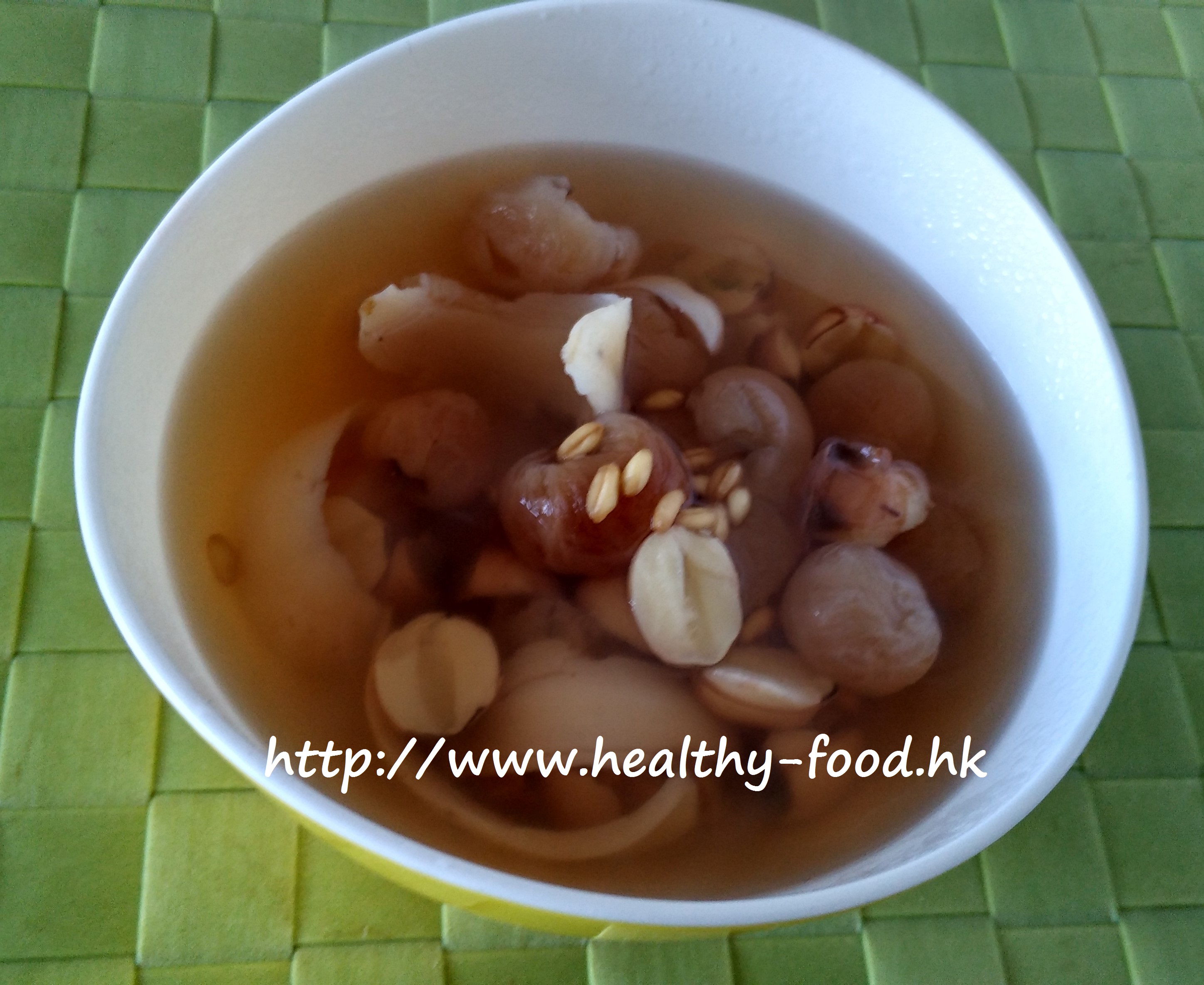
Wheat Grain, Lotus Seed, Lily Bulb and Ophiopogon Soup
traditionally used to nourish the heart, calm the mind, and ease the restlessness and poor sleep of nervous exhaustion
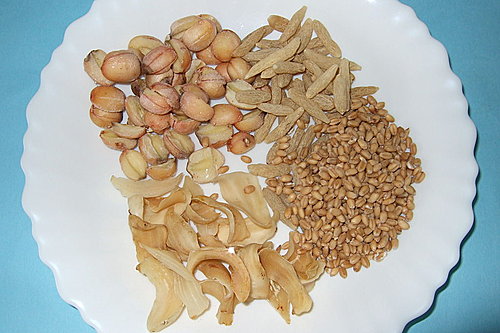
Why people make this soup
Cities breed a particular kind of exhaustion — not the clean tiredness that comes from physical work, but the frayed, wired-yet-depleted feeling that comes from living at high speed for too long. In traditional Chinese food therapy, this state is often associated with heart-yin deficiency: the nourishing, cooling aspect of the heart has been worn thin by anxiety, overwork, or prolonged stress, leaving a low-grade internal heat that disturbs sleep, generates restlessness, and makes the mind difficult to settle. This soup — wheat grain, lotus seeds, lily bulb, and ophiopogon tuber — is one of the most classical remedies for that state. It is gentle, easy to make, and has been used in Chinese households for generations as a nourishing, sleep-supportive grain meal.
Who it suits / who should be cautious
- Suitable for people with restlessness, anxiety, excessive dreaming, light or broken sleep, or mild depressive symptoms associated with internal heat
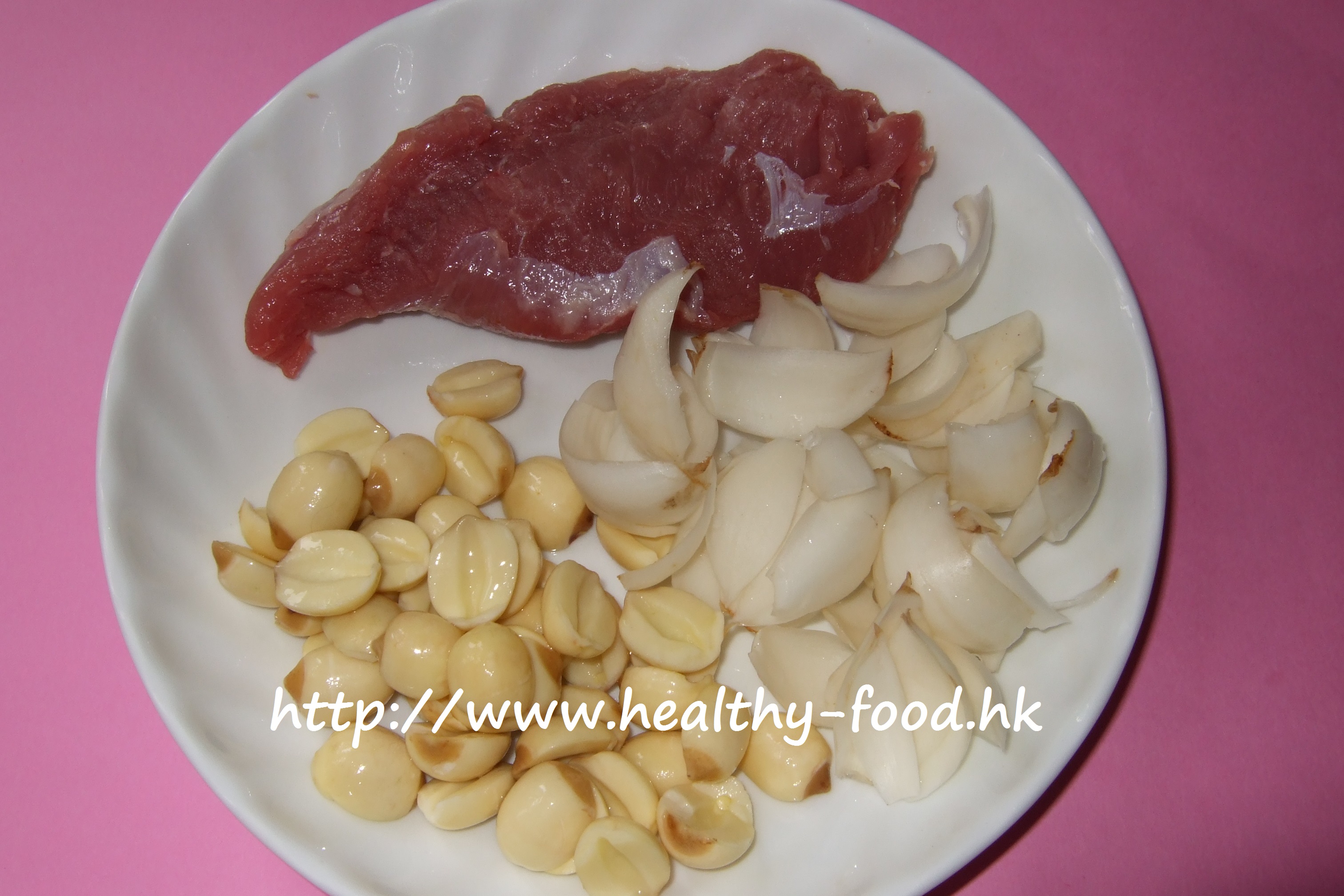
- Can be made as a sweet soup (add rock sugar) or a savoury soup (add lean pork)
- Wheat grain (mai mi) and floating wheat (fu xiao mai) are different: mai mi nourishes the heart and calms the mind, and also checks night sweats; fu xiao mai (unripened floating grain) is mainly for night sweats and nervous heat. Use mai mi for this recipe
- Do not use lily bulb during active colds or fever — it is yin-nourishing and may hold pathogens in
- This is a supportive measure only; anyone with clinical anxiety, depression, or severe insomnia must see a doctor
Why these ingredients (the food-therapy logic)
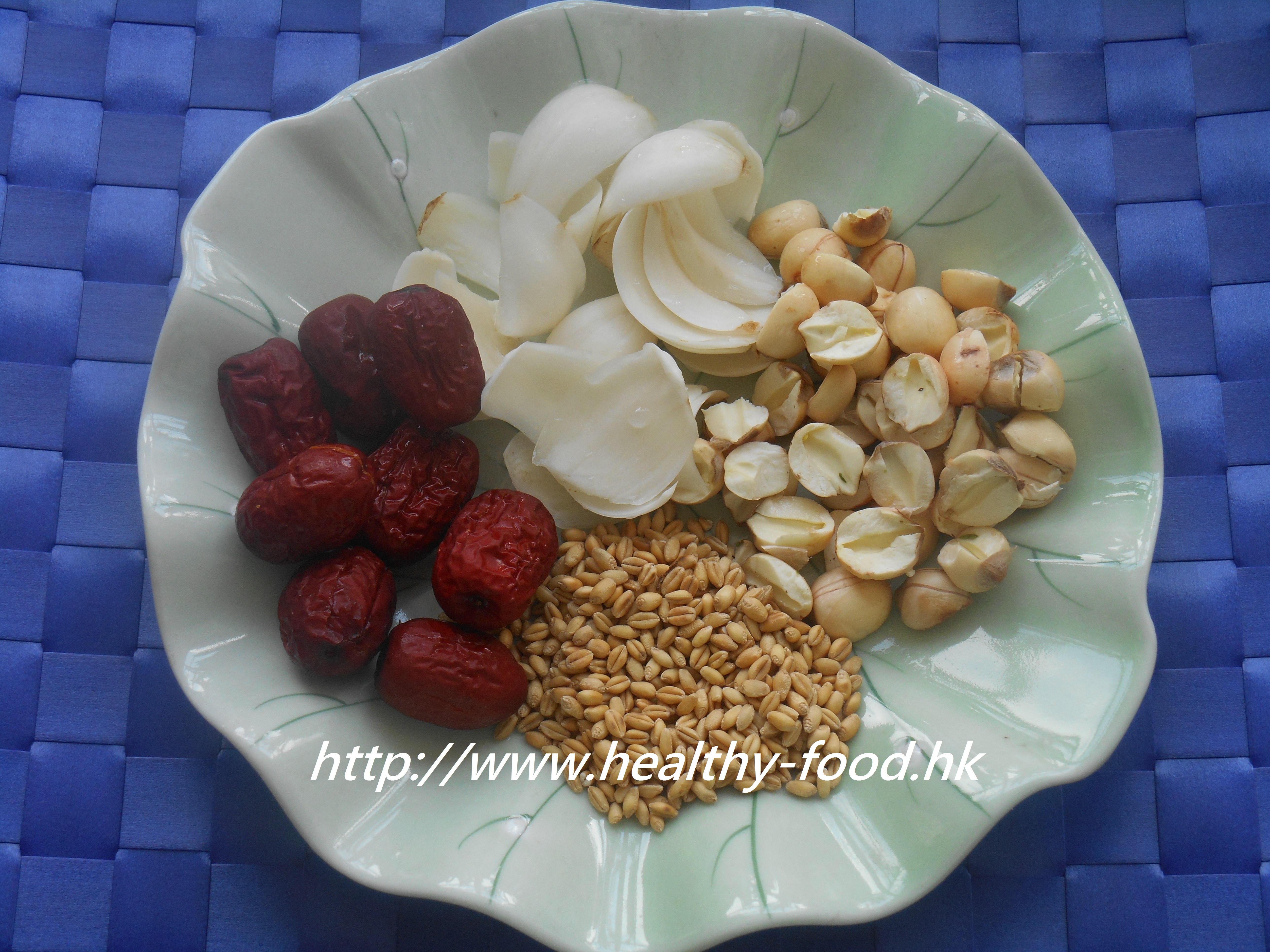
- Wheat grain (mai mi): Whole small wheat grains are considered heart-nourishing in traditional food therapy — they calm the spirit, ease anxiety, and are associated with supporting a healthy nervous system. Note: this is not rolled oats or flour, but the whole grain
- Lotus seeds with embryo (lian zi with lian xin): Traditionally, keeping the tiny green embryo (lian xin) inside the lotus seed amplifies the heart-clearing effect. Lotus seeds themselves nourish the spleen and calm the heart; the embryo adds a bitter, cooling quality that targets heart fire
- Lily bulb (bai he): A classic heart-lung nourishing herb; traditionally used to ease restlessness, “wandering sadness,” and the kind of nervous inability to settle that comes from yin depletion
- Ophiopogon tuber (mai dong): Nourishes yin, clears heart heat, and generates fluids; pairs naturally with lily bulb and lotus seeds in the heart-calming tradition
Ingredients (3 bowls)
| Ingredient | Amount | Notes |
|---|---|---|
| Lotus seeds (with embryo if possible) | ~38 g (1 liang) | The green embryo inside adds heart-cooling potency |
| Lily bulb (bai he) | ~38 g (1 liang) | Dried lily bulb from herb shop |
| Ophiopogon tuber (mai dong) | ~15 g (4 qian) | |
| Wheat grain (mai mi) | ~75 g (2 liang) | Whole small wheat grains — not rolled oats, not flour |
| Water | 6 bowls | Simmer down to 3 bowls over 2 hours |
Method
- Rinse all ingredients thoroughly and soak for 15–20 minutes.
- Place all ingredients in a pot with 6 bowls of water.
- Bring to a boil, then reduce to a gentle simmer.
- Cook for approximately 2 hours until about 3 bowls of thick, soft soup remain.
- Serve as a sweet soup (add rock sugar to taste) or a savoury version (add lean pork and a pinch of salt). Eat the grains and lotus seeds together with the broth.
Bro Niu’s tips
Wheat grain (mai mi) and floating wheat (fu xiao mai) are not the same thing — if you also have night sweats and nervous heat (烦热), you can substitute floating wheat, which is more targeted for those symptoms. Plain wheat grain, however, is the right choice for the heart-calming, sleep-supporting purpose of this soup. This recipe can also be made with plain water as the base, or with lean pork for a more savoury version. If severe insomnia persists after regular use, a stronger formula — such as fu shen, suan zao ren, bai zi ren, yuan rou, and bai he — should be tried; or better yet, please see a doctor.
Community questions answered (selected)
-
Q (Amy): Can this soup be made as a sweet soup with rock sugar, or as a savoury soup with salt and pork? Bro Niu: The lily bulb, ophiopogon, wheat grain and lotus seed soup is suitable either way — sweet with rock sugar, or savoury with lean pork. It makes a fine everyday tonic soup.
-
Q (lok): Can I replace the wheat grain (mai mi) with floating wheat (fu xiao mai)? I have a lot of fu xiao mai at home. Bro Niu: The two are different. Wheat grain (mai mi) nourishes the heart and calms the mind, and also checks night sweats. Floating wheat (fu xiao mai) is the unripened grain; its function is mainly to benefit qi, ease restlessness, and stop night sweats. If you have both restlessness and night sweats, fu xiao mai can be used. They are not interchangeable if the purpose is heart-calming.
-
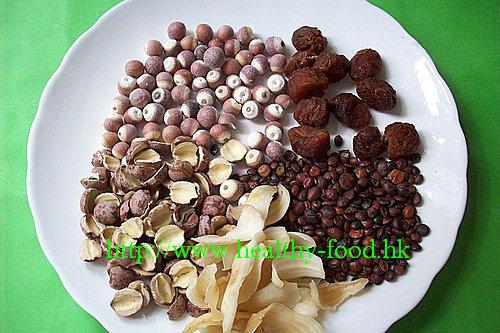
Q (Man): My husband has claustrophobia and workplace stress — he has hair loss, dizziness, chest discomfort, and frequent bathroom trips when outdoors. Is this soup right for him? Are there other options? Bro Niu: Try mulberry (sang shen zi) 5 qian, goji berries 3 qian, walnut meat 1 liang, lotus seeds with embryo 1 liang, and longan flesh (yuan rou) 3 qian, simmered with black-boned chicken — 8 bowls of water reduced to 4, the whole family can drink it. Your husband should drink 2 bowls a day. Three times a week. This helps nourish blood, calm the mind, and support healthy hair.
Published January 22, 2013 · Adapted and translated for Nourilo from a traditional home-kitchen recipe. Approx. 4 min read.