Soups
Two-Vine, Chestnut and Pork Rib Soup (Er Teng Li Zi Pai Gu Tang)
traditionally used to relax the sinews, ease leg and lower-back pain, and support bone strength
Why people make this soup
Sciatica can arrive without warning — a radiating pain that starts in the lower back, moves through the buttocks, and travels down the back of the leg. It can come with burning, numbness, or a weakness in the affected limb that makes ordinary movement exhausting. Bro Niu notes that a cluster of friends in their fifties recently came to him with this problem — a reminder of how common it is from mid-life onward, particularly in people who are sedentary, carry extra weight, or have diabetes.
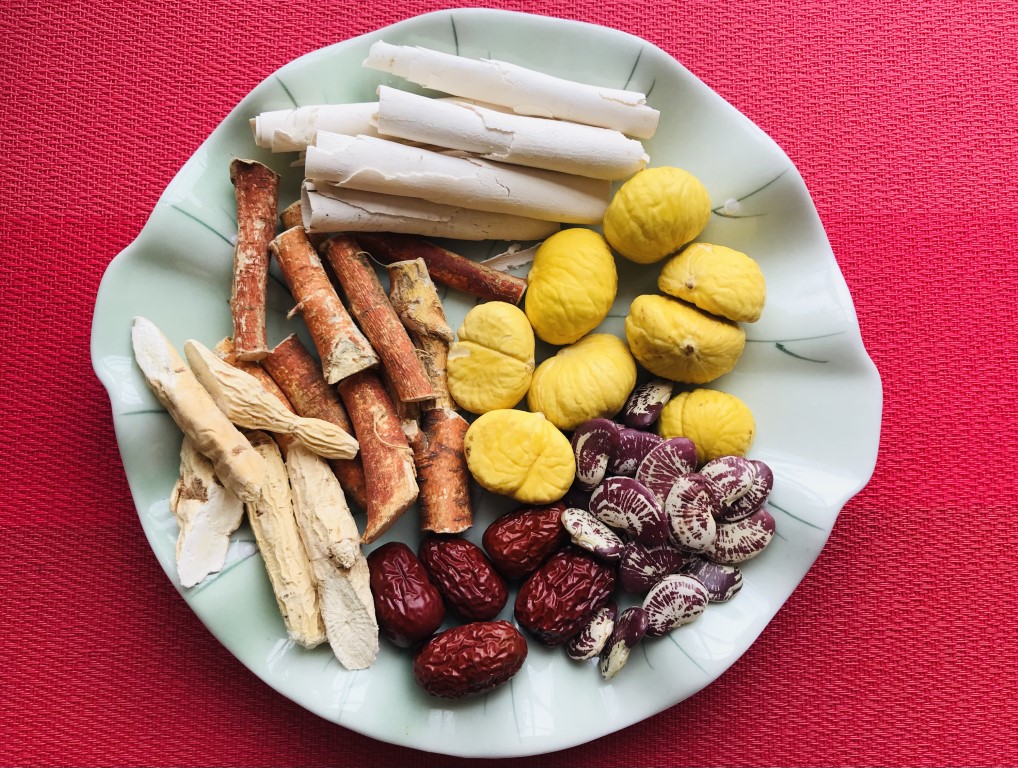
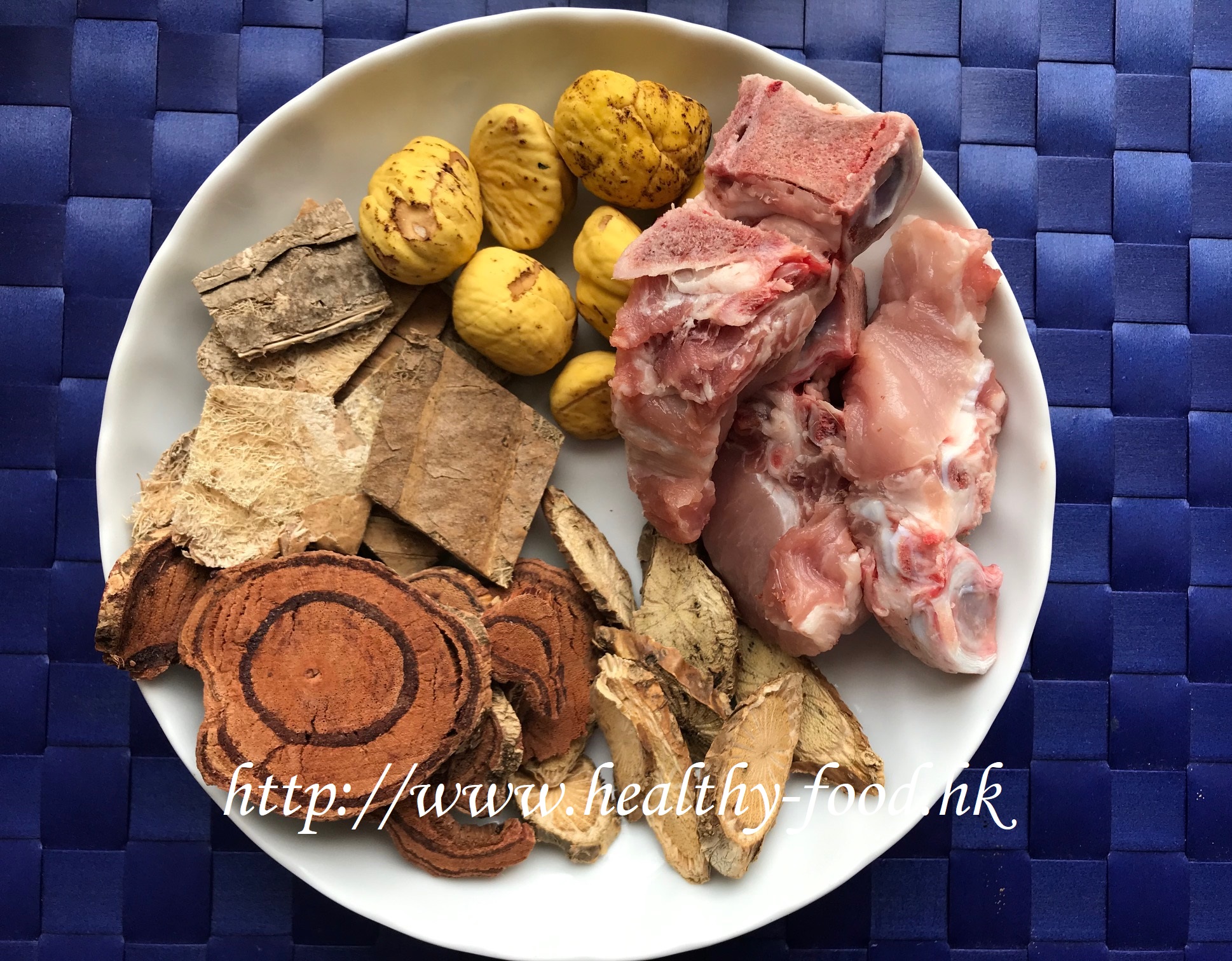
This soup uses chestnuts as its central ingredient, valued in traditional food therapy for strengthening the spleen and kidney, and supporting bone, muscle, and tendon health. The three herbal additions — millettia stem, broad-leaf tinospora vine, and loofah skeleton — are all used classically to open the channels, relax the sinews, and relieve stagnation associated with pain in the limbs and lower back.
Who it suits / who should be cautious
- Suitable for middle-aged and older adults with lower-back aching, leg weakness, bone-and-joint pain, or general sinew discomfort.
- Those taking blood pressure medication should wait at least 2 hours after their medication before drinking this or any herb-containing soup.
- People with constipation: the soup is fine, but avoid eating large amounts of the chestnut — chestnuts are constipating. (Alternatively, drink only the soup without eating the chestnuts.)
- All three herbs are available at Chinese medicine shops.
Why these ingredients (the food-therapy logic)
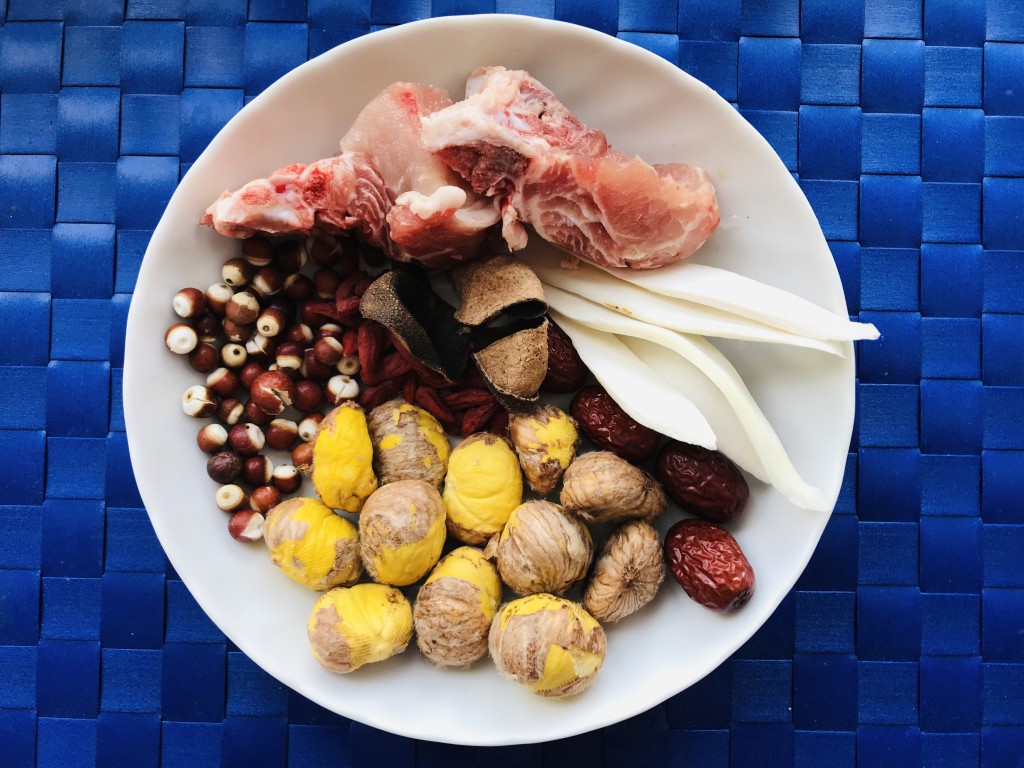
- Chestnuts (li zi): Traditionally used to strengthen spleen and kidney qi, support bone density, nourish the tendons and muscles, and address lower-back and leg weakness.
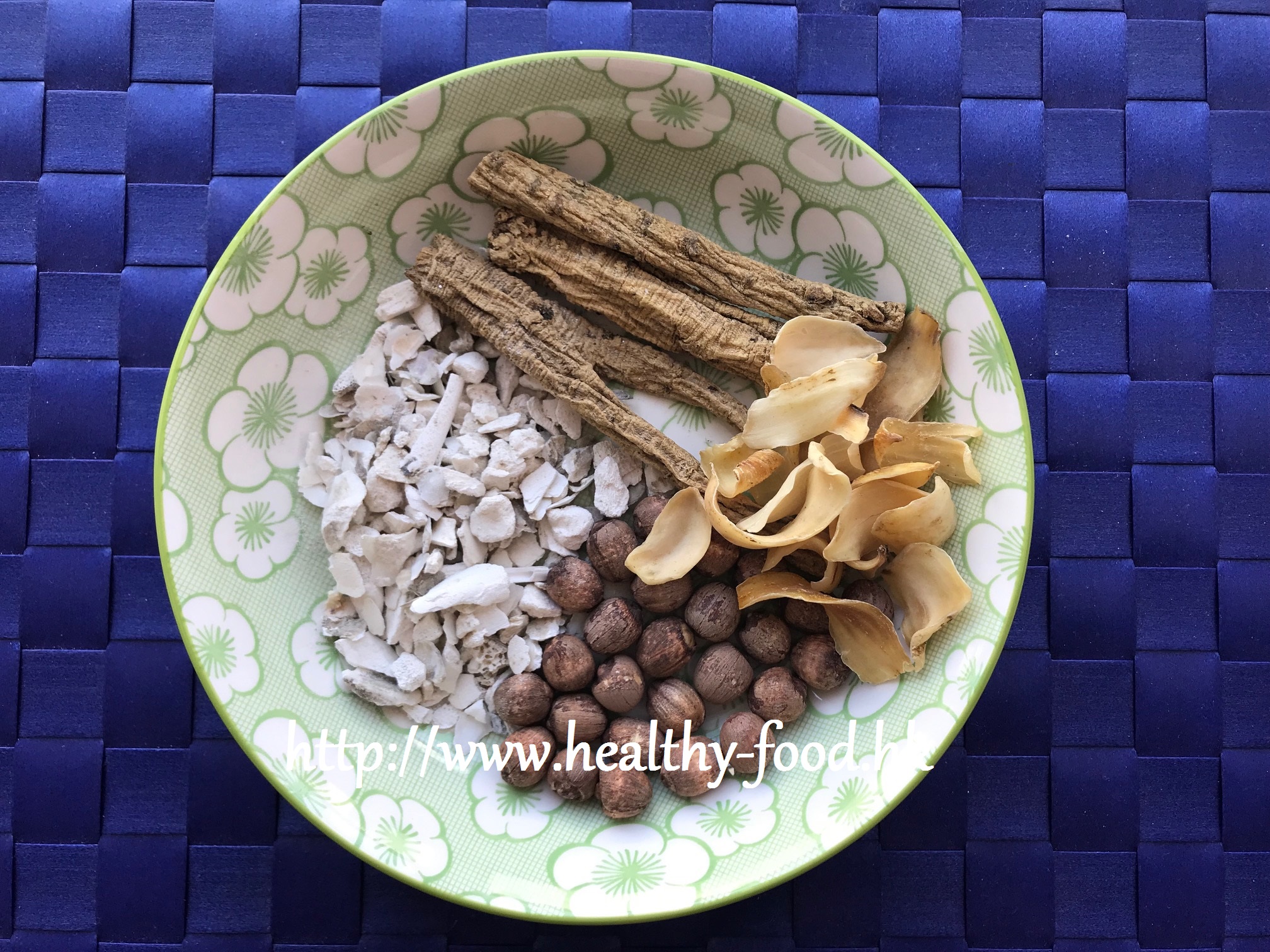
- Millettia stem (ji xue teng, Spatholobus suberectus): A classic blood-nourishing and sinew-relaxing herb; traditionally associated with promoting circulation, relaxing stiff muscles and joints, and nourishing liver blood.
- Broad-leaf tinospora vine (kuan jin teng, Tinospora sinensis): Literally “sinew-widening vine” — traditionally used to relax the tendons and ease pain in the joints and limbs.
- Loofah fibrous skeleton (si gua luo, Luffa cylindrica): The dry fibrous interior of a mature loofah; traditionally used to open the channels, promote milk flow, and relieve joint and muscle pain.
- Pork ribs: Provides collagen and protein; a mild, nourishing base for the soup.
Ingredients (4 bowls)
| Ingredient | Amount | Notes |
|---|---|---|
| Chestnuts | 3 liang (~113 g) | Shell removed (blanch in boiling water to peel more easily) |
| Millettia stem (ji xue teng) | 5 qian (~19 g) | Soak and rinse; available at Chinese herb shops |
| Broad-leaf tinospora vine (kuan jin teng) | 5 qian (~19 g) | Soak and rinse; available at Chinese herb shops |
| Loofah skeleton (si gua luo) | 5 qian (~19 g) | Soak and rinse; available at Chinese herb shops |
| Pork ribs | ~300 g | Blanched |
| Water | 8 bowls (~2 litres) | Reduces to 4 bowls |
Method
- Shell the chestnuts by first plunging them into boiling water briefly to loosen the skin.
- Blanch the pork ribs in boiling water; drain and rinse.
- Soak and rinse the three herbs separately.
- Combine all ingredients in a pot with 8 bowls of water.
- Bring to a boil, then reduce to a gentle simmer for 2 hours until the liquid reduces to about 4 bowls.
- Serve and drink. Eating the chestnuts and pork is encouraged — but those with constipation should limit chestnut consumption.
Bro Niu’s tips
This soup has a mild herbal flavour without being strongly medicinal — quite pleasant and easy to drink as a regular wellness pot for older adults dealing with stiff joints or back pain. Those with constipation are fine drinking the soup but should go easy on the chestnuts themselves. If you are taking any prescription medication, leave a gap of at least 2 hours between your medication and drinking any herb-containing soup.
Community questions answered (selected)
-
Q (Kris): If an elderly person has constipation, should they leave out the chestnuts? Bro Niu: Not necessarily. The elder can still drink the soup — they just should not eat too many chestnuts from the pot. Drinking only the soup, without eating the chestnuts, is a sensible approach.
-
Q (hrzly): I have rheumatoid arthritis and Sjogren’s syndrome (dry syndrome). What soups would be helpful? Bro Niu: Try using millettia stem (ji xue teng, 5 qian), black soybean (hei dou, 1 liang), snow fungus (xue er, 3 qian), and dried figs (wu hua guo, 4 pieces) simmered with pork shin — this combination is associated with supporting both dry syndrome and rheumatoid arthritis. You can also regularly make a congee with small red beans (chi xiao dou) and coix seeds (yi ren / sheng yi mi).
-
Q (Emily): My brother had spinal surgery 3 days ago and lost a lot of blood during the operation. Is it too soon for him to drink the “four red” soup? Bro Niu: Your brother can start on the four-red soup now — red beans, red-skin peanuts, red dates, and goji berries simmered together, savoury or sweet as preferred. Drink 3 consecutive doses, then pause for 2 days before resuming if it seems to be helping.
Published March 26, 2021 · Adapted and translated for Nourilo from a traditional home-kitchen recipe. Approx. 4 min read.