Soups
Hair Vegetable, Dried Oyster & Soybean Pork Shin Soup
Traditionally supports spleen function and helps clear post-festive food accumulation
Why people make this soup
Lunar New Year celebrations mean feasting — and after days of rich, greasy banquet dishes, most people feel uncomfortably full, sluggish, and bloated. In Cantonese homes, this soup often appears in the days after the holiday as a kind of reset. It’s also a practical way to use up festive ingredients: hair vegetable and dried oysters are classic lucky-food staples at New Year, and any leftovers can go straight into the pot. Beyond their symbolic role, both ingredients have real food-therapy credentials. Hair vegetable (fa cai) is associated with clearing intestinal heat and easing food stagnation, while dried oysters are valued for helping the body process accumulated phlegm and dampness. The result is a broth that is genuinely tasty — savory, slightly sweet from the soybean, with a pleasant depth from the oysters — and easy on a digestive system that has been through a lot.
Who it suits / who should be cautious
- Suited for the whole family — adults, the elderly, and children — as a post-feasting digestive support, or whenever the stomach feels sluggish and heavy
- Particularly useful after periods of rich eating, or for those prone to food accumulation and bloating
- People with an active fever or cold should generally hold off on rich protein soups and focus on lighter options first
Why these ingredients (the food-therapy logic)
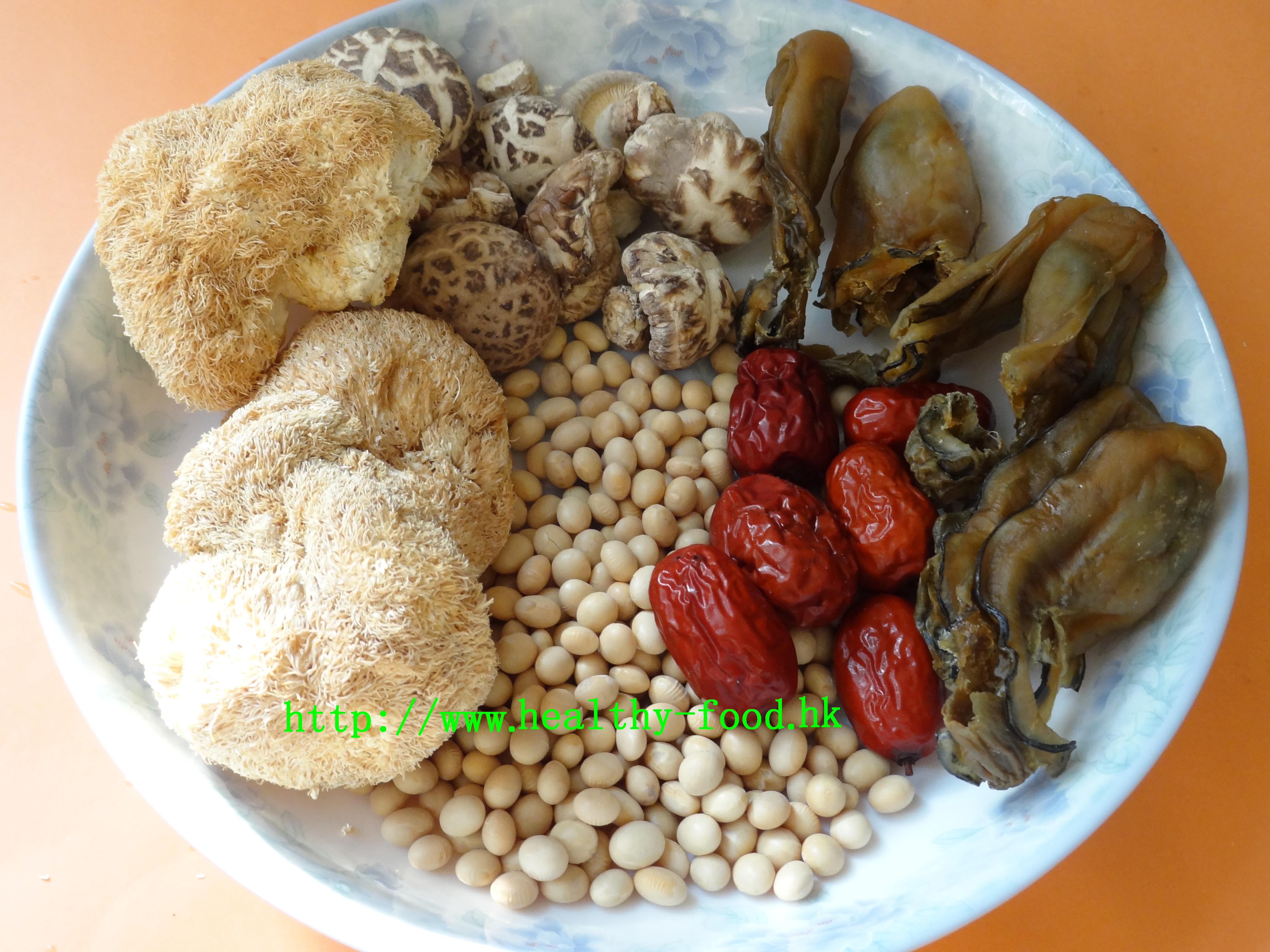
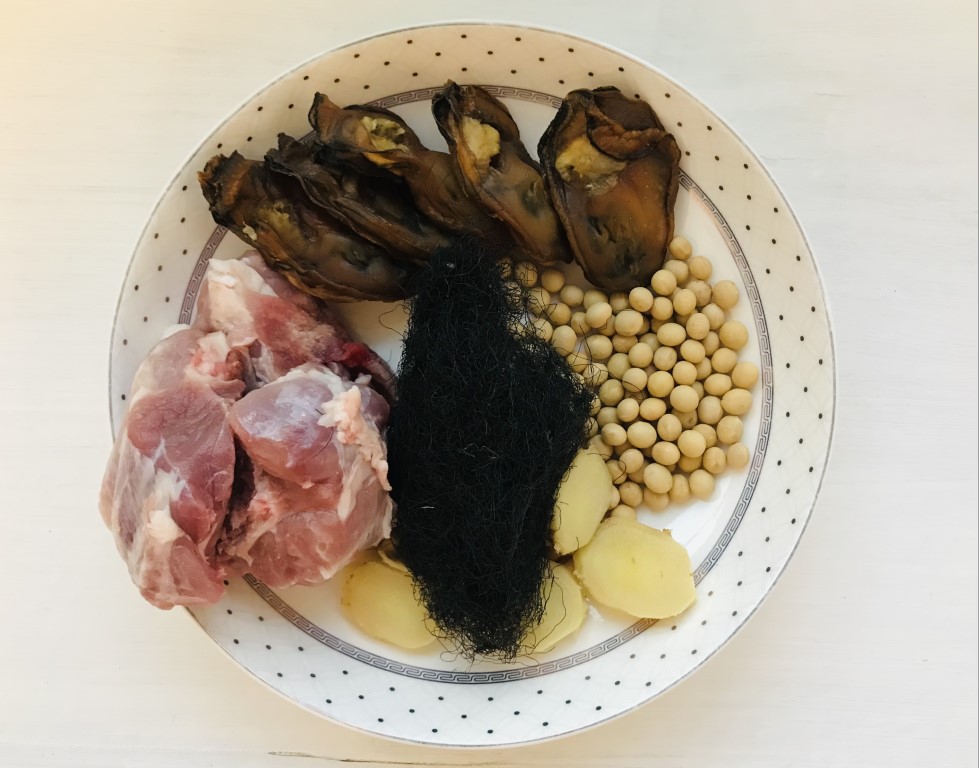
- Hair vegetable (fa cai): A type of cyanobacterium (not technically seaweed, despite its appearance); in Chinese food therapy it is associated with clearing intestinal heat, resolving food stagnation, and improving bowel regularity
- Dried oysters (hao shi): Sun-dried oysters have a concentrated umami flavor that makes the broth wonderfully savory; traditionally associated with softening nodules, resolving phlegm-accumulation, clearing damp-heat, and even having some activity against cold viruses; Bro Niu notes that winter-season oysters are especially high in glycogen, which is traditionally said to be protective for the liver
- Soybeans (huang dou): A hearty, high-protein legume associated with supporting the spleen-stomach system, clearing heat, and improving hydration
- Ginger (sheng jiang): Warms the middle, aids digestion, and balances the slight cooling tendency of the other ingredients
- Pork shin (zhu zhan): A collagen-rich cut that adds body to the broth without excessive fat
Ingredients (4 bowls)
| Ingredient | Amount | Notes |
|---|---|---|
| Hair vegetable (fa cai) | 1 small handful | Soak to rehydrate, rinse well |
| Sun-dried oysters | 5–6 pieces | Soak until softened, rinse |
| Soybeans | 75 g (2 liang) | Soak 1–2 hours before cooking |
| Fresh ginger | 3–4 slices | With skin on |
| Pork shin / shank | 1 piece (~300 g) | Cut into chunks, blanched |
Method
- Soak the hair vegetable and soybeans separately in water for 20–30 minutes; rinse well. Soak the dried oysters until softened.
- Cut the pork shin into chunks. Blanch with the soaked oysters: place both in cold water, bring to a boil, drain, and rinse clean.
- Combine all ingredients in a pot with 8 bowls of water.
- Bring to a boil, then reduce to a medium-low simmer and cook for 2 hours, until the liquid reduces to about 4 bowls.
- Serve with the soup solids — the soybeans and pork are good to eat alongside the broth.
Bro Niu’s tips
Look for dried oysters that are plump and golden, fragrant, with no sand along the edges — these make the most flavorful broth. Avoid thin, dark, or sandy ones. Good-quality dried oysters are especially high in glycogen during the winter season, which is why they are traditionally associated with liver protection. This soup is easy for the whole family to enjoy — savory, filling, and genuinely useful after an indulgent stretch of holiday eating.
Community questions answered (selected)
-
Q (reader, WING): Can partridge be used together with hair vegetable in a soup? Bro Niu: Yes, partridge and hair vegetable can be cooked together in a soup with no problem.
-
Q (Chan): I’m 60 and my digestion has weakened — I easily get food accumulation which leads to acid reflux, and then I keep getting sick. What soup can help in the early stages of accumulation? Bro Niu: For weakened digestion, try a soup with dry-fried barley sprout (chao mai ya) — 5 qian — with daikon radish, two dried duck gizzards (chen ya shen), and aged tangerine peel with lean pork. This combination is effective for strengthening the spleen and clearing food stagnation.
Published January 24, 2023 · Adapted and translated for Nourilo from a traditional home-kitchen recipe. Approx. 3 min read.