Herbal & Flower Teas
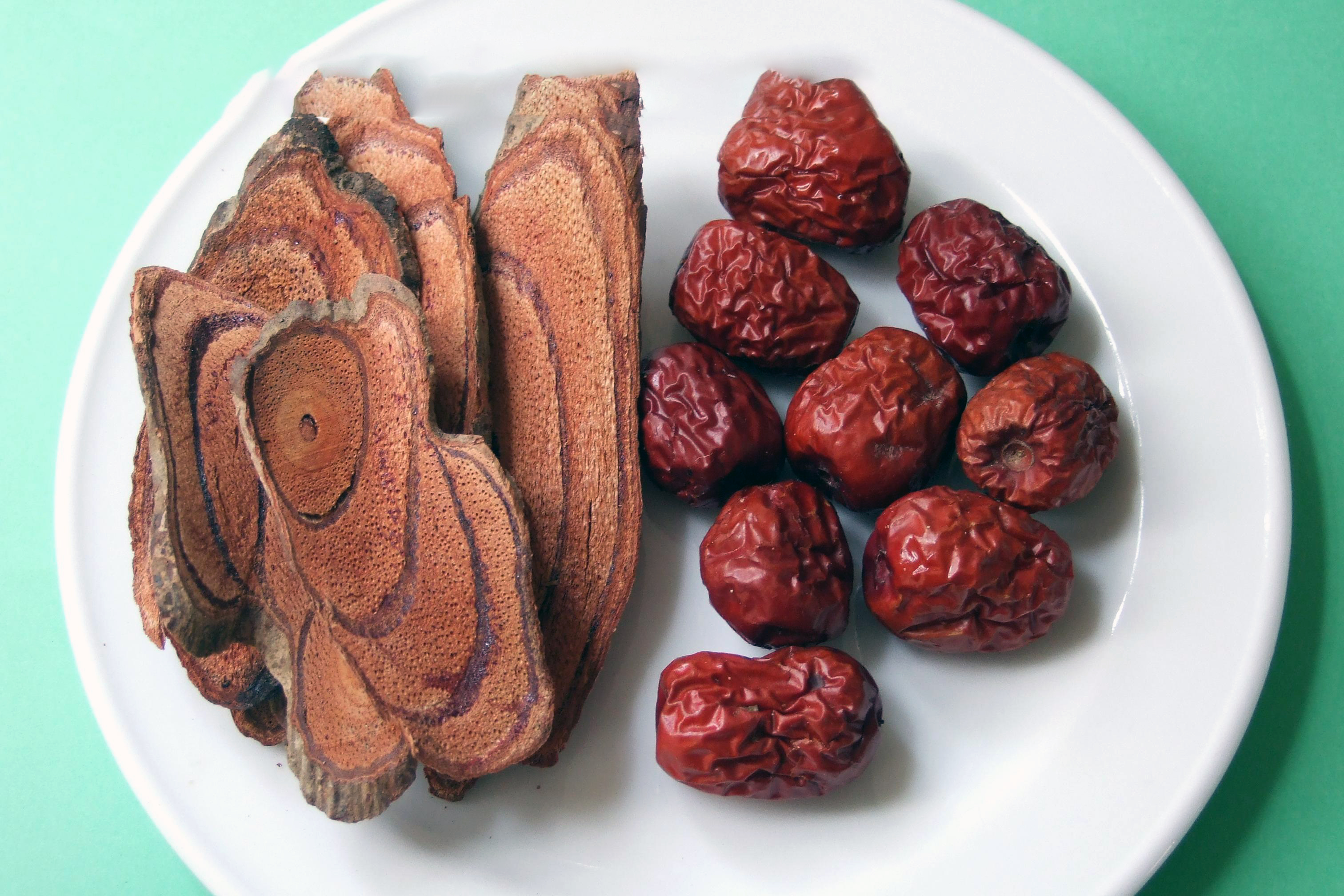
Spatholobus Stem (Ji Xue Teng) & Red Date Tea
Traditionally used to nourish blood, support circulation, and assist in cases of anemia and low platelet count
Why people make this tea
Spatholobus suberectus — ji xue teng in Chinese — is a climbing vine whose dried stem, when sliced and boiled, releases a rich, dark reddish-brown liquid that looks remarkably like blood. That vivid colour, along with the plant’s long history in traditional medicine, is why it became associated with blood-nourishing therapy. It is warm in nature, nourishing and activating at the same time — meaning it both builds blood and helps move it, making it useful for conditions where blood is deficient and sluggish. Combined with a substantial quantity of red dates — 20 pieces rather than the usual 6–8 — the blood-nourishing effect is considerably strengthened. This tea must be cooked for at least 90 minutes, not merely steeped, for the active components to be fully released.
Method
- Rinse the spatholobus stem. Rinse the red dates.
- Combine both ingredients in a pot with 6 cups of water.
- Bring to a boil, then reduce heat and simmer for 1.5 hours until the liquid reduces to about 2 cups.
- Drink the tea and eat the red dates.
Nourilo’s Tips
The key to this tea is sufficient cooking time — do not simply steep the spatholobus stem; it needs a full 90 minutes of simmering for its properties to be released. For a further boost to platelet counts, add 11 g of peanut skins (hua sheng yi, the red inner skin of peanuts), or use 75 g of whole peanuts with skins on (red-skinned peanuts are best). This tea is also appropriate for pale, tired individuals who do not have a diagnosed blood disorder but simply need blood-building support. Take monthly for a period rather than continuously, once platelet counts stabilise. For those prone to internal heat from red dates, switch to southern dates (nan zao).
Comments
Join the conversation — sign in or create a free account to comment.
Continue with GoogleLoading comments…