Soups
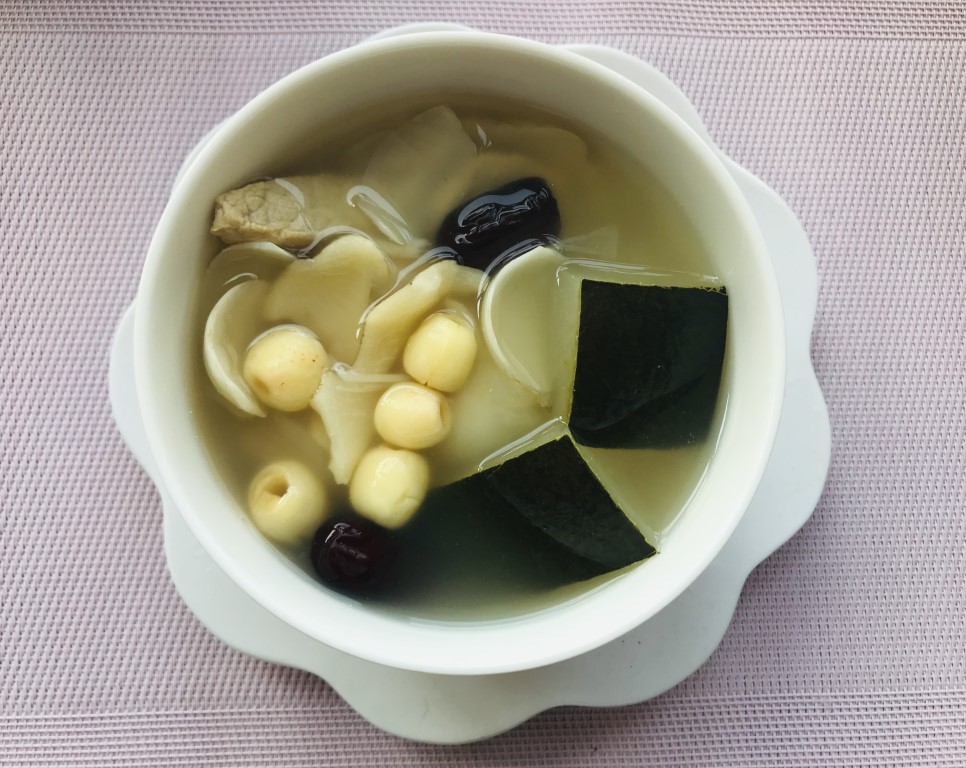
Snow Lotus Seed, Lily Bulb and Fresh Lotus Seed Dessert Soup
traditionally used to nourish the spleen, support skin health, and calm the mind
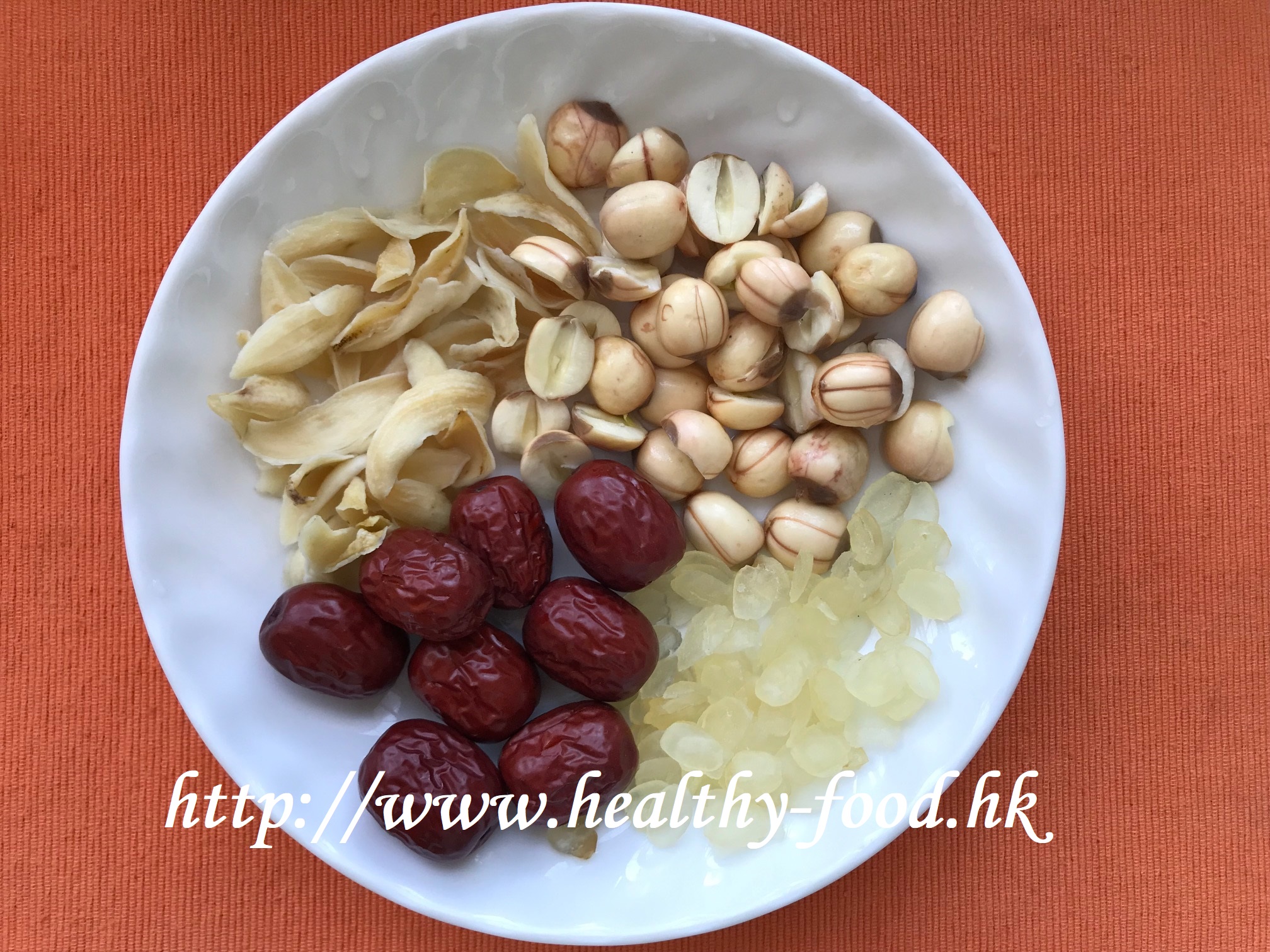
Why people make this dessert soup
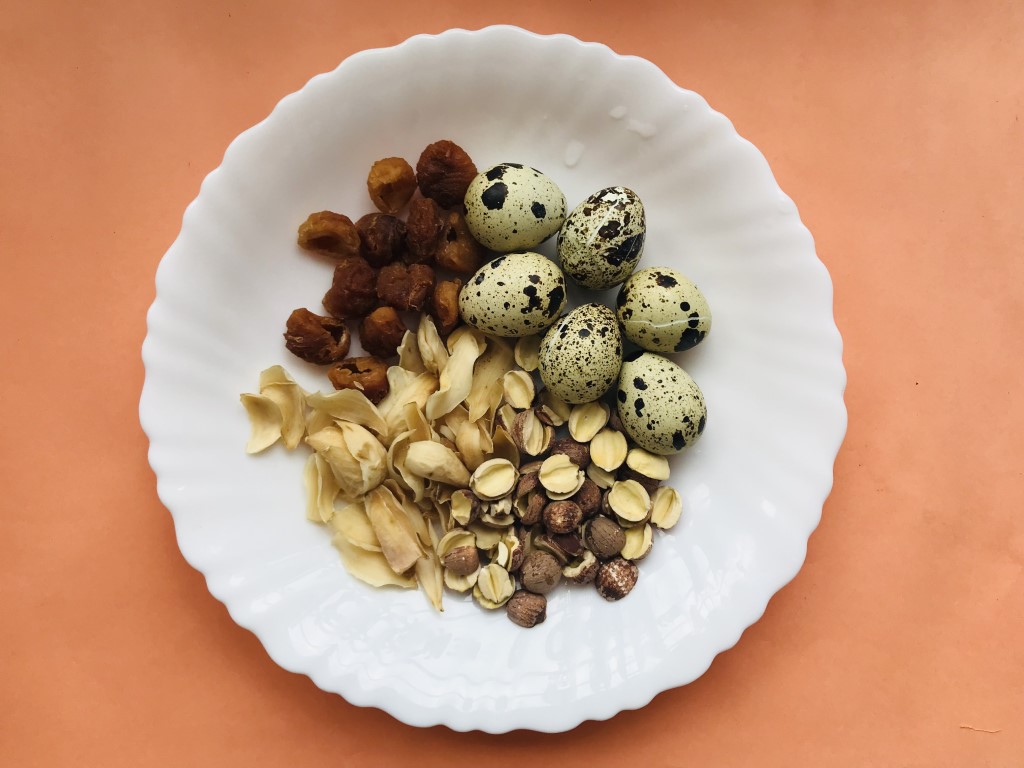
You may have heard of “snow lotus seeds” sold at a premium with claims that they are seeds from the rare Tianshan snow lotus flower. In fact, they are soap pod seeds (zao jiao mi) — the seeds of a locust tree variety (Gleditsia sinensis) — a genuinely useful ingredient in its own right, just not a luxury botanical. Once the market corrected itself and prices dropped, these seeds became a popular everyday ingredient. They are rich in plant protein and contain a natural gel that becomes silky-soft when cooked, which makes them prized for their skin-nourishing properties.
Combined with dried lily bulb (which traditionally calms the heart and eases anxiety), fresh lotus seeds (which settle and strengthen the digestive system and calm the spirit), and red dates (which support blood and energy), this dessert soup is a classic autumn and winter preparation — warm, nourishing, and well-suited to the dry, cool weather that tends to leave skin parched and sleep disrupted.
Who it suits / who should be cautious
- Suitable for most people, including older adults and children; a gentle, mild dessert
- Particularly helpful for those with dry skin, restless sleep, mild anxiety, or dryness-related discomfort in autumn and winter
- Those with fever or active illness should postpone until recovered
Why these ingredients (the food-therapy logic)
- Snow lotus seeds / soap pod seeds (zao jiao mi): Rich in plant protein and natural gelling compounds; traditionally associated with nourishing the liver, brightening the eyes, supporting bowel regularity, and improving skin texture and tone.
- Lily bulb (bai he): One of the best-known ingredients in Chinese food therapy for calming an overactive mind, easing mild anxiety and heart palpitations, and gently moistening the lungs. Mildly cool in nature.
- Fresh lotus seeds (xian lian zi): Traditionally used to tonify the spleen and stomach, calm the heart, and settle restless sleep. The green core (heart) should be removed as it is bitter.
- Red dates (hong zao): A classic blood and qi tonic; adds natural sweetness and warmth to the soup, gently supporting digestive energy.
Ingredients (4–5 bowls)
| Ingredient | Amount | Notes |
|---|---|---|
| Snow lotus seeds (zao jiao mi) | 75 g (2 liang) | Soak in cold water for 1 hour before cooking; they expand significantly |
| Dried lily bulb (bai he) | 37 g (1 liang) | Soak briefly, rinse |
| Fresh lotus seeds (xian lian zi) | ~110 g (3 liang) | Remove the bitter green core before cooking |
| Red dates (hong zao) | 8 pieces | Remove pits |
| Rock sugar (bing tang) | to taste | Add at the end |
| Water | 8 bowls (~1.2 L) | — |
Method
- Soak the snow lotus seeds in cold water for 1 hour until they have plumped up and become slightly translucent. Drain.
- Rinse the lily bulb briefly and set aside.
- Remove the bitter green cores from the fresh lotus seeds.
- Pit the red dates.
- Combine all ingredients except the rock sugar in a pot with 8 bowls of water. Bring to a boil over high heat, then reduce to a gentle simmer.
- Simmer for 1 hour until the snow lotus seeds are soft and slightly gelatinous, and the lotus seeds are tender. Add rock sugar and stir until dissolved.
- Serve warm. Eat the soup and the softened ingredients together.
Bro Niu’s tips
This is a clean, fragrant dessert that the whole family can enjoy. When buying snow lotus seeds (zao jiao mi), look for plump, evenly shaped seeds with a natural pale-yellow colour — not pure white, which may indicate bleaching. After cooking, they should be soft and slightly chewy, like a gentle mochi texture. The soup is especially welcome during autumn and winter when the air turns dry.
Community questions answered (selected)
-
Q (Karen): How much is one liang in ounces? Bro Niu: One liang is approximately 37 grams (about 1.3 oz).
-
Q (reader): My daughter is 2.5 years old and has had a fever of 39°C for two nights. We tried some drinks to clear heat but the temperature keeps rising again at night. What food therapy can help? Bro Niu: Try simmering reed root (lu gen, 5 qian) with raw coix seeds (1 liang) and bamboo leaves (dan zhu ye, 1 small bunch) in 5 bowls of water until reduced to 2 bowls. Split between morning and evening. This traditionally helps clear heat and ease a fever. If two doses show no improvement, please see a doctor.
Published November 4, 2021 · Adapted and translated for Nourilo from a traditional home-kitchen recipe. Approx. 4 min read.