Soups
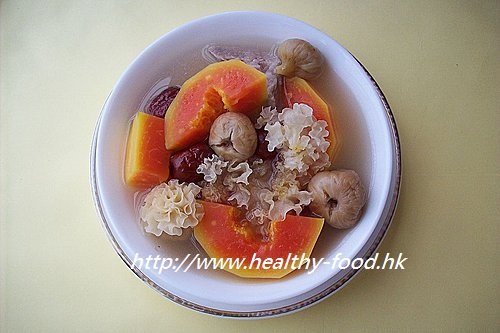
Snow Fungus, Papaya, Fig and Lean Pork Soup
traditionally associated with nourishing the lungs, supporting digestion, and moistening dry skin
Why people make this soup
In Cantonese home cooking, there is a category of soup that people reach for not because they are acutely ill but because life feels a little dry — dry skin in winter, a nagging dry cough that won’t quite leave, or a digestion that moves a little too slowly. This snow fungus, papaya and fig soup fits squarely into that tradition. It is light and clear-tasting rather than heavy or oily, yet each ingredient brings something worthwhile to the pot. Because it is gentle and nourishing rather than cooling or strongly medicinal, it is one of those soups the whole family — children included — can enjoy together.
Who it suits / who should be cautious
- Suited to people experiencing dry skin, dry cough linked to a lack of moisture in the lungs, mild constipation, or sluggish digestion
- Suitable for people with chronic mild digestive discomfort, gastritis, or loose stools from poor digestive function — papaya’s natural enzymes are traditionally valued here
- Suitable for all ages as a regular family soup
- Caution: pregnant women should avoid this soup, as papaya sap and pulp are traditionally considered to have a uterus-contracting effect and may not be safe during pregnancy
- Those with very cold constitutions or diarrhoea should use caution, as snow fungus and fig have a mildly nourishing rather than warming character
Why these ingredients (the food-therapy logic)
- Snow fungus (xue er): Often called the “poor person’s bird’s nest” in Cantonese tradition, snow fungus is prized for its ability to nourish the lungs, moisten dryness, and support the stomach. It has a neutral character that makes it easy to combine with many other ingredients.
- Papaya (mu gua): The slightly unripe, cooking-grade papaya is used here rather than the sweet ripe fruit. It is traditionally associated with supporting the stomach lining, easing chronic indigestion, relieving a heavy, bloated feeling after meals, and — in nursing mothers — supporting milk production.
- Dried figs (wu hua guo): Mild in flavour and nutritious, dried figs are traditionally said to open the appetite, promote healthy digestion, and gently ease constipation. They add a natural sweetness to the soup without the need for extra sugar.
- Red dates (hong zao): A staple of Cantonese soups, red dates are used here to add nourishing sweetness, support energy, and round out the flavour.
- Tangerine peel (guo pi / chen pi): A small piece added to most meat-based soups to reduce any gamey smell and to support the digestion of the other ingredients.
Ingredients (3–4 bowls / whole family)
| Ingredient | Amount | Notes |
|---|---|---|
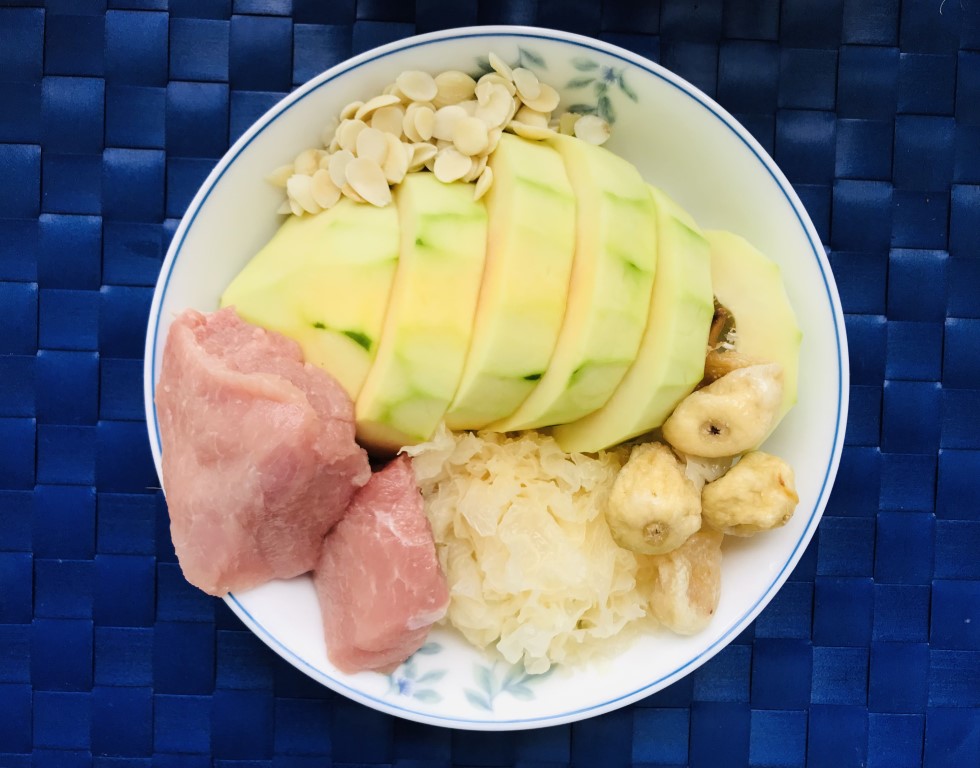
| Snow fungus (xue er) | 5 qian (~19 g) | Soak until fully expanded; trim hard stem ends |
| Papaya | ~300 g (half medium) | Semi-ripe cooking papaya; peel and deseed |
| Dried figs (wu hua guo) | 6 pieces | Rinsed |
| Red dates (hong zao) | 6 pieces | Rinsed |
| Lean pork | 6 liang (~225 g) | Blanch briefly if preferred |
| Dried tangerine peel (chen pi) | 1 piece | Soaked briefly, pith scraped |
| Water | enough to cover (~1.5 litres) |
Method
- Soak the snow fungus in cold water for about 30 minutes until fully expanded and soft. Trim off and discard any hard yellowish stem ends, and tear into smaller pieces.
- Peel the papaya, remove the seeds, and cut the flesh into large chunks.
- Rinse the figs, red dates, lean pork and tangerine peel. The pork can be briefly blanched in boiling water to remove any impurities, then rinsed.
- Add all prepared ingredients to a pot with enough water to cover generously (roughly 1.5 litres).
- Bring to a boil over high heat, then reduce to a gentle simmer and cook for approximately one hour.
- Season lightly if desired and serve. The soup pieces can be eaten alongside the broth.
Bro Niu’s tips
The key distinction to be aware of when buying papaya for this soup: the sweet, ripe orange papaya is for eating fresh or making desserts. What you want for this soup is the firmer, less ripe cooking variety — sometimes called “green papaya” or labelled as a cooking papaya, available at Chinese or Asian grocers. This version contains more of the enzymes and compounds that traditionally support the stomach lining, and it holds its shape much better during a long simmer. If you are adding extras, chicken feet work very well in this soup and add body; or replace the papaya with fresh yam for a different flavour combination. One reader asked whether fresh lily bulb could be added — yes, it can, and it has the additional benefit of calming the mind and helping with sleep.
Community questions answered (selected)
-
Q (潘太 / reader): I often make soups following your recipes. Can this papaya and snow fungus soup be drunk once a week as a general wellness soup for the whole family, including a three-year-old child? Bro Niu: Yes, this is a gentle family soup suitable for all ages. You can drink it weekly. If you prefer not to use papaya, you can substitute a peeled, cored apple — snow fungus, apple and fig soup has a similar moistening and lung-nourishing effect and is also lovely.
-
Q (Mick): Can frozen conch slices be added to this soup? Bro Niu: Yes, conch slices work fine here. But if you add conch, consider swapping the papaya for fresh yam — the flavours complement each other better that way.
-
Q (m / reader): Can I add apple and chicken feet to this soup? Bro Niu: Absolutely — both are welcome additions. Chicken feet will give the broth more body and a richer texture.
Published January 6, 2014 · Adapted and translated for Nourilo from a traditional home-kitchen recipe. Approx. 4 min read.