Herbal & Flower Teas
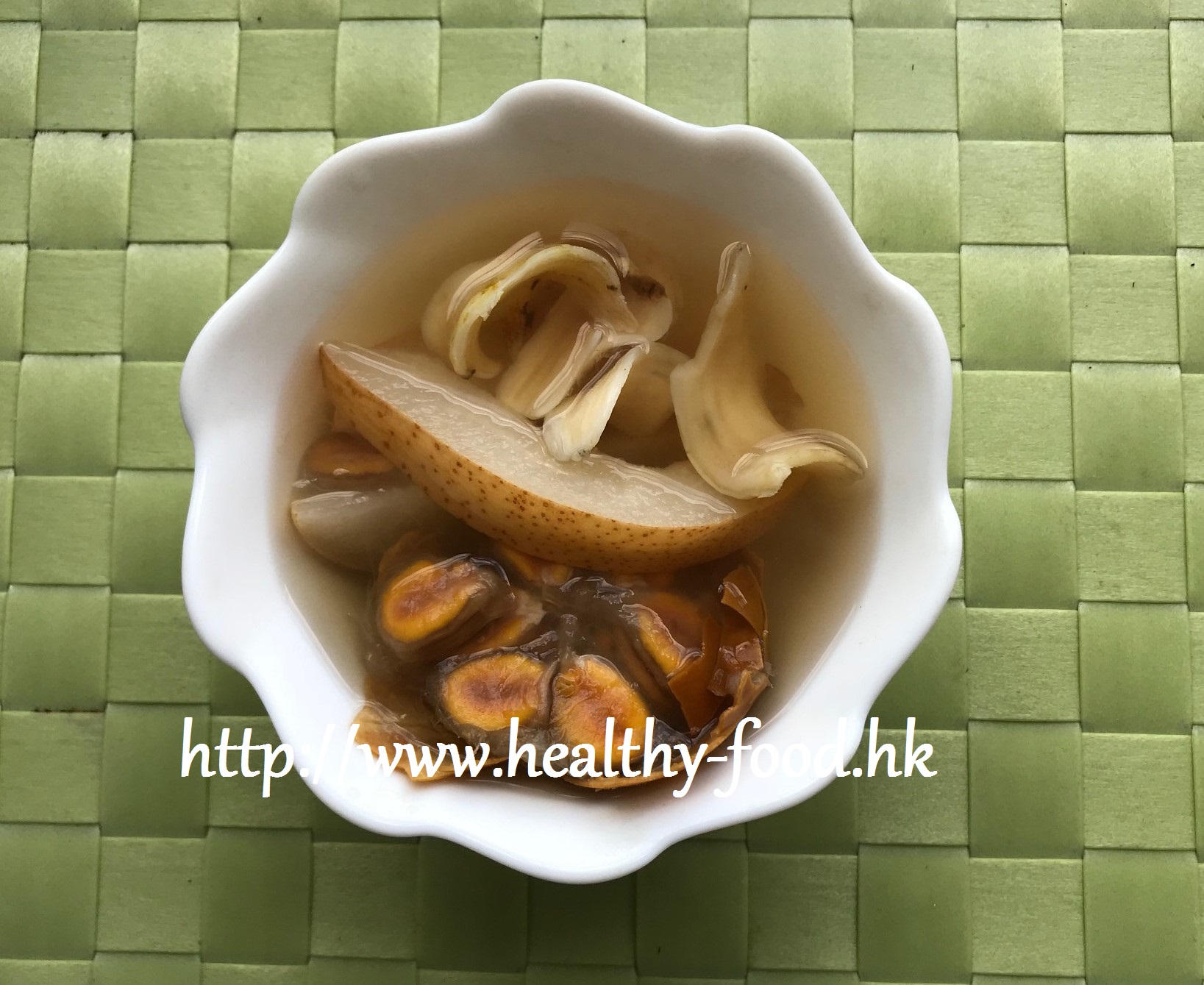
Golden Monk Fruit, Lily Bulb and Snow Pear Tea
Traditionally associated with moistening the lungs, calming the mind, and relieving dry cough or throat irritation from insufficient sleep or smoking
Why people make this tea
There is a window between 10 p.m. and 1 a.m. that the body counts on. Traditional Chinese medicine considers this the repair window — the period when qi and blood return to the liver to complete the day’s processing. Modern sleep science would not disagree: this is when sleep pressure is highest, when the body’s restorative processes are most active.
When people stay up past midnight regularly — whether for work, screens, or social obligations — the liver never gets its full recovery window. Toxins accumulate, skin deteriorates, immunity weakens, and the body ages faster than it should. Add smoking (nicotine constricts blood vessels, thickens blood, dries skin) and alcohol (causes puffiness, accelerates brain ageing, inflames the stomach lining), and the toll on the body becomes very real.
This tea cannot undo those patterns on its own. But it offers genuine relief for some of the most common symptoms: the dry, irritated throat; the fitful sleep; the mild cough that arrives after a stretch of late nights or a period of heavy drinking. It works because all three ingredients have complementary moistening, calming, and throat-soothing properties. And it tastes good — light, mildly sweet, clean — which means people actually drink it.
Who it suits / who should be cautious
- Suitable for all ages, including children; the whole family can drink this
- Particularly helpful for those who frequently stay up late, smoke, or drink regularly
- Also useful for dry cough, sore throat, or mild constipation
- The tea is slightly cooling; those who tend to feel cold or have a cold constitution should add a piece of tangerine peel to balance
- Snow pear can be replaced with apple if pear is unavailable or not preferred; apple is warmer in nature and equally suitable for those who run cold
- If using dried pear slices instead of fresh, use 8–10 slices
- Breastfeeding mothers should drink this 1+ hour after nursing
Why these ingredients (the food-therapy logic)
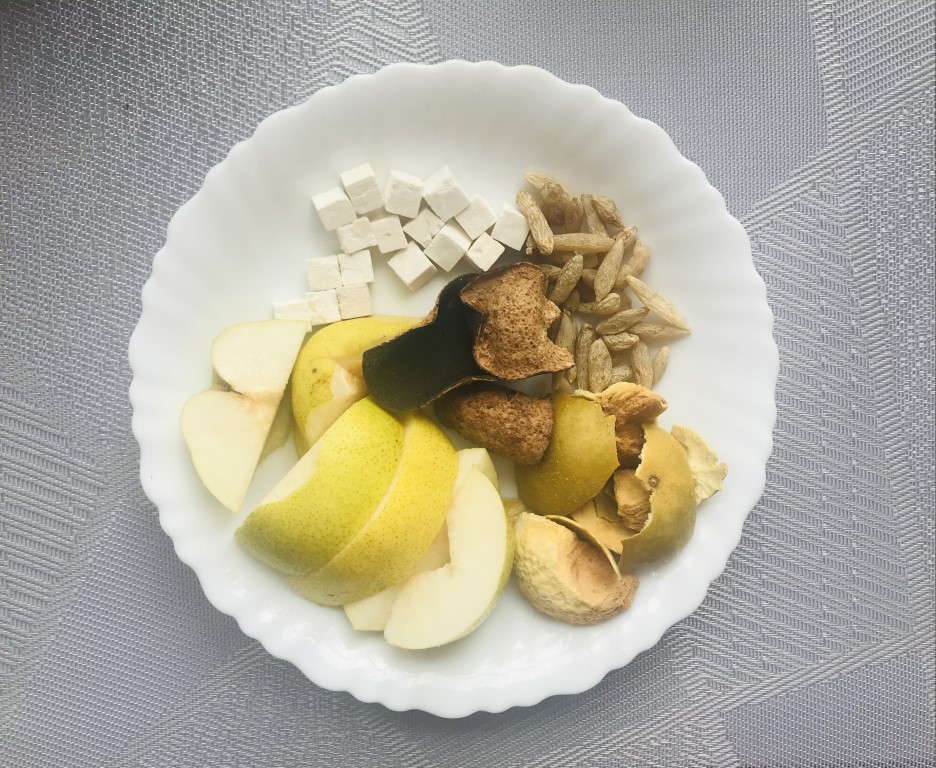
- Golden monk fruit (jin luo han guo): Prepared by low-temperature dehydration, this variety of monk fruit retains more of its natural sweetness and nutrients, and lacks the smoky flavour of traditionally processed monk fruit. It is associated with clearing heat, moistening the lungs, soothing the throat, and gently moving the bowels. Its naturally cooling nature is reduced compared to raw fresh monk fruit.
- Dried lily bulb (bai he): Gently cools and moistens the lungs and heart. Traditionally used for heat-related restlessness, dry cough, and anxiety-related insomnia. It calms without sedating.
- Snow pear (xue li): One of the most well-known lung-moistening fruits in Cantonese food therapy. Snow pear is associated with clearing heat from the lungs, generating fluids, dissolving phlegm, and relieving dry cough. Keeping the skin on is traditional practice; cooking it in the tea releases more of its compounds.
Ingredients (3 cups / 1 day’s supply)
| Ingredient | Amount | Notes |
|---|---|---|
| Golden monk fruit | Half a fruit | Crush gently to break open |
| Dried lily bulb (bai he) | 1 liang (~37 g) | Rinse |
| Snow pear | 1 pear | Wash, core, cut into chunks (skin on) |
| Water | 6 bowls |
Method
- Gently crush the half monk fruit (or break it open with your hands) to release its flavour.
- Rinse the dried lily bulb.
- Wash the snow pear, remove the core, and cut into chunks. Leave the skin on.
- Combine all ingredients in a pot with 6 bowls of water.
- Bring to a boil, then simmer for 30 minutes until reduced to about 3 bowls.
- Drink throughout the day. Can be taken warm or cooled.
Bro Niu’s tips
This tea is light and refreshing, suitable for the whole family. For those who find pear too cooling, substitute an apple — apple is more neutral-warm in nature and works equally well. If golden monk fruit is unavailable, a regular dried monk fruit can be substituted. For children who like it, lotus seeds can be added to the pot for added calming benefit.
Community questions answered (selected)
-
Q (guest): Can I use dried pear slices and dried lily bulb instead of fresh? What amounts? Bro Niu: Dried pear slices: use 8–10 pieces. Dried lily bulb: 1 liang (same as fresh dried).
-
Q (Penny): My 3-year-old daughter loves this tea. I swapped the pear for apple last time. Can I also add lotus seeds? She often wakes up upset in the middle of the night and seems to have bad dreams. Bro Niu: Yes, add lotus seeds with their hearts (you xin lian zi) — this is good for calming the heart and spirit. Take for 3 consecutive days.
-
Q (范太 / Penny): My husband and I often stay up late. I tend toward a cold constitution and have a slightly bitter taste in my mouth, and my period is light. Is this tea suitable for regular use? Bro Niu: People who stay up late can drink this tea regularly. Because you run cold, swap the snow pear for apple, which is warmer. For two people, add an extra apple. For the bitter taste, that may be related to stomach heat — try a light salted pork and preserved egg congee. For light periods, cook a small millet congee using 5 qian yi mu cao (motherwort) and 6 red dates — first simmer those in water for 20 minutes, then use that liquid to cook the congee. Two servings a week has a gentle regulating effect on the cycle.
Published December 29, 2018 · Adapted and translated for Nourilo from a traditional home-kitchen recipe. Approx. 4 min read.