Soups
Reed Root, Water Chestnut & Pear Soup
Traditionally used to clear lung heat, ease cough with thick phlegm, and support recovery from cold or fever
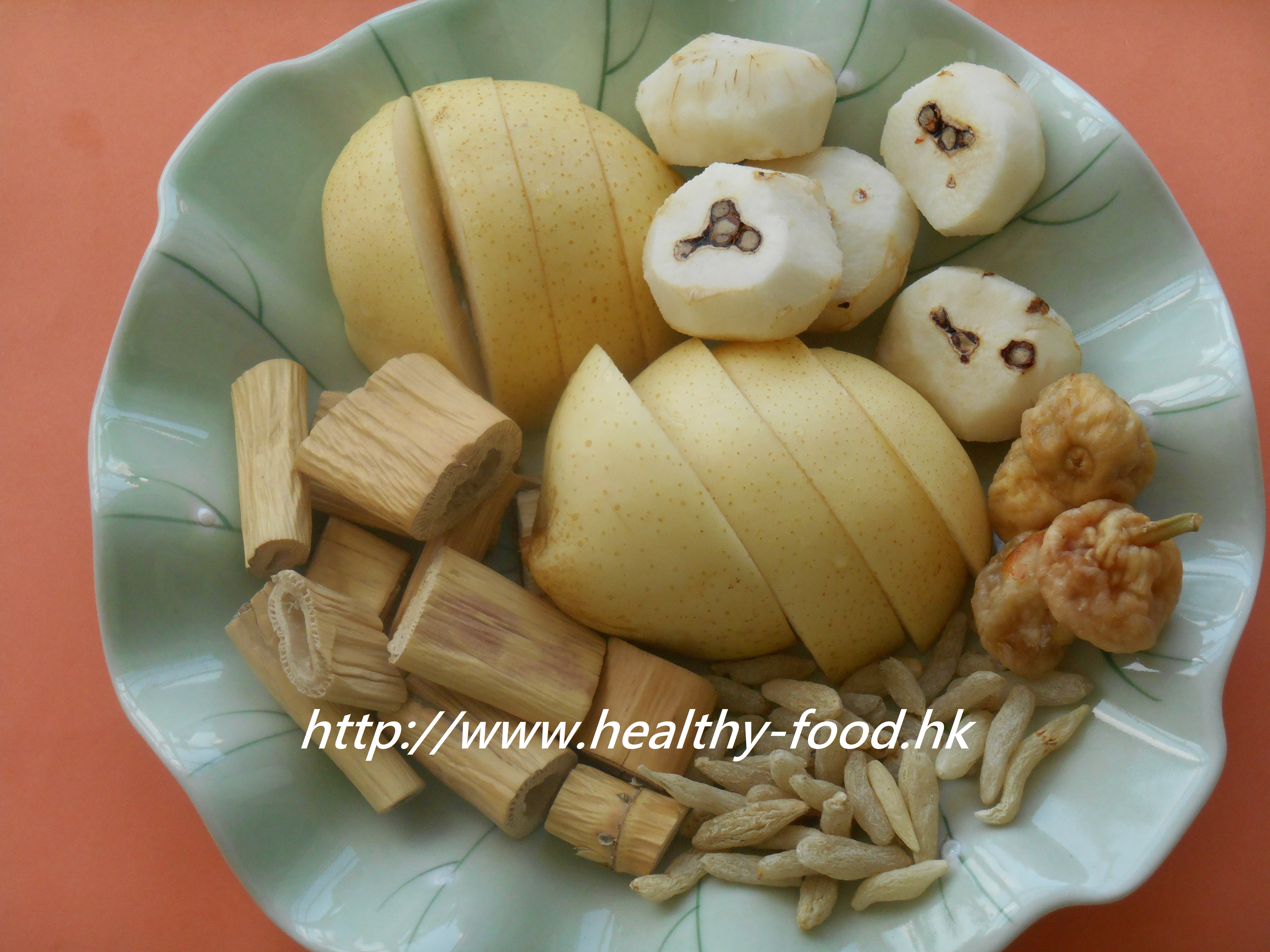
Why people make this soup
In traditional Chinese medicine, the lungs and the large intestine are considered closely related — when the lungs are congested with heat, the bowels often slow down too. This soup came out of that logic: it is designed to clear heat from the respiratory tract while also easing the digestion, which is why people who drink it often feel generally more comfortable and lighter, not just in the chest but throughout the body. Reed root in particular has long been regarded as one of the safest, most gentle herbs for children’s fevers, and the combination with sweet pear and water chestnut produces a broth that most children actually enjoy drinking — no persuasion needed.
Who it suits / who should be cautious
- Suitable for adults and children experiencing a cold or cough with thick, yellowish phlegm, or a low-grade fever
- Good for anyone with heat-related constipation during a respiratory illness
- Suitable for children, including infants (reduce quantity proportionally)
- Caution: this soup leans cooling — those with a cold-pattern cough (clear, watery phlegm, feeling chilly) should avoid it or consult a practitioner. If fever is high or persistent, please seek medical care.
- Can generally be taken alongside Western medicine; leave at least 2 hours between this soup and any prescription drugs
Why these ingredients (the food-therapy logic)
- Reed root (lu gen): The main ingredient. Traditionally known for clearing heat from the lungs and stomach, generating fluids, and helping to bring down fever. Considered one of the milder and safer cooling herbs, often used for children. Dried or fresh is available from Chinese herb shops.
- Water chestnuts (ma ti): Sweet, slightly cooling; traditionally associated with clearing heat, resolving phlegm, and moistening the throat. A refreshing addition that also makes the broth more palatable.
- Ophiopogon root (mai dong): A moistening herb traditionally used to support lung yin, ease a dry irritated throat, and promote the production of fluids. Pairs well with reed root.
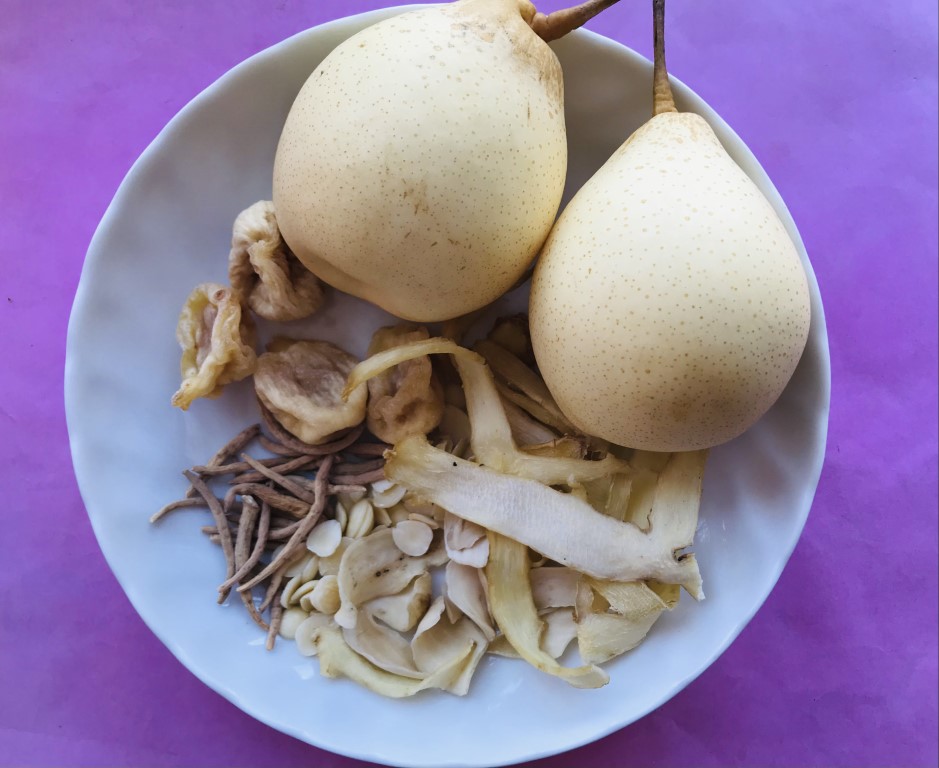
- Asian pear (xue li): Naturally sweet and moistening, long used in Cantonese cooking to soothe a dry or scratchy throat. Cooking the pear into the soup softens its texture and infuses the broth with its gentle sweetness.
- Dried figs (wu hua guo): Gently lubricating and mildly sweet; traditionally said to support the lungs and aid bowel movement, which often becomes sluggish during a respiratory illness.
Ingredients (2–3 bowls)
| Ingredient | Amount | Notes |
|---|---|---|
| Reed root (lu gen) | 18 g (5 qian) | From Chinese herb shop; rinse well |
| Water chestnuts (ma ti) | 6 pieces | Peel and slice; can substitute carrot if unavailable |
| Ophiopogon root (mai dong) | 11 g (3 qian) | Rinse well |
| Asian pear (xue li) | 1 medium | Wash, core, and cut into chunks; keep skin on is fine |
| Dried figs (wu hua guo) | 4 pieces | |
| Water | 6 bowls (approx. 1.5 litres) | Reduces to 2–3 bowls |
Method
- Rinse the reed root and ophiopogon root thoroughly.
- Peel and slice the water chestnuts.
- Wash the pear well, remove the core, and cut into rough chunks.
- Place all ingredients together in a pot with 6 bowls of water.
- Bring to a boil over high heat, then reduce to a medium simmer.
- Cook for about 1 hour until the liquid reduces to 2–3 bowls.
- Strain and serve warm. The soup is naturally sweet and pleasant — most children drink it without fuss.
Bro Niu’s tips
For a child who has just been vaccinated, you can make a lighter version using reed root, pear, and Job’s tears in water as a preventative drink — it may help the body settle more comfortably after the injection. If you cannot find reed root, cogon grass root (mao gen) is a reasonable substitute as it also clears heat, though the two herbs work slightly differently. When unavailable in both cases, half a dried monk fruit (luo han guo) also helps bring down heat and soothe the throat. This soup can be made for up to 3 days in a row; if storing, strain out the solids and refrigerate for no more than 1 day at a time. If the whole family wants to drink it, simply scale up — roughly 37 g reed root, 10 water chestnuts, 18 g ophiopogon, 2–3 pears, and 4–5 figs with more water.
Community questions answered (selected)
-
Q (Jessica, in Australia): Our family of three all had pneumonia. The fever is gone but we still have phlegm and cough. We cannot get reed root or ophiopogon here — what can we do? Bro Niu: You can substitute lily bulb (bai he) for reed root and sweet almonds (tian xing ren) for ophiopogon. The moistening and clearing effect will still be there.
-
Q (reader): If I cannot find water chestnuts, what can I use instead? Bro Niu: Carrot works well as a substitute for water chestnuts.
-
Q (reader): Can I take this soup at the same time as Western medicine? Bro Niu: It is better to leave about 2 hours between this soup and any Western medication. Cook it for about 30 minutes; if adding osmanthus flowers (xin yi hua) to help with nasal congestion, cut them open and add them near the end of cooking.
Published February 26, 2016 · Adapted and translated for Nourilo from a traditional home-kitchen recipe. Approx. 4 min read.