Herbal & Flower Teas
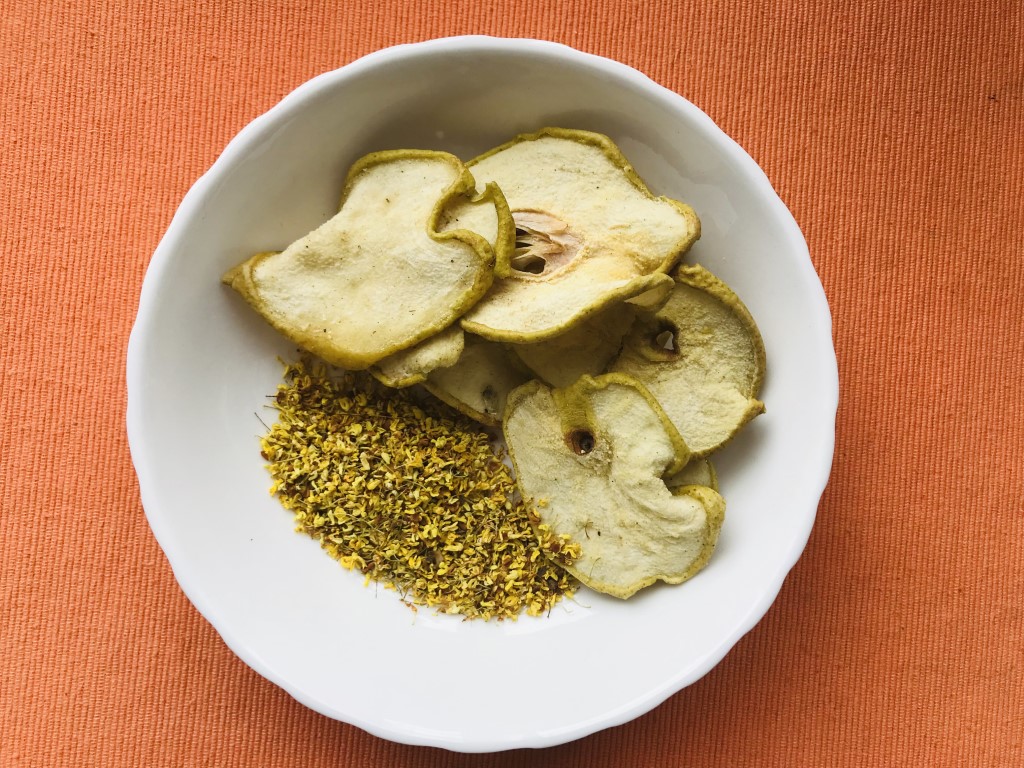
Osmanthus and Dried Pear Tea
traditionally associated with strengthening the spleen, dissolving phlegm and relieving bad breath
Why people make this tea
Children who constantly have phlegm, a poor appetite or noticeably bad breath are often dealing with a weakened spleen and stomach — a pattern that shows up repeatedly in families who see Bro Niu’s site. The conventional fix is to reach for cough medicine or mouthwash, but neither addresses the underlying issue. This simple tea does something different: osmanthus flowers have long been used in Chinese households not just for their beautiful fragrance, but for their traditional ability to support the stomach, help resolve phlegm, and neutralise the bacteria in the mouth that cause bad breath. Paired with dried pear slices — which are gentler and less cooling than fresh pear, having been slowly dried at low temperature — the result is a clear, fragrant, lightly sweet tea that children will actually want to drink. It can be made in minutes and returned to whenever the breath seems stale or the chest feels heavy.
Who it suits / who should be cautious
- Suitable for the whole family including children; also safe during menstruation
- Particularly good for children or adults with phlegm, poor appetite, bad breath or a dry throat
- Safe for those on regular medication — this is a food-grade tea, not a medicinal decoction
- Diabetic individuals should omit rock sugar; substitute with a small piece of monk fruit (luo han guo, 1/6 of a fruit) or a few stevia leaves for sweetness without affecting blood sugar
Why these ingredients (the food-therapy logic)
- Osmanthus flowers (gui hua): Warm in nature; traditionally used to warm and strengthen the stomach, dissolve phlegm, and kill oral bacteria that cause bad breath — one of the few culinary flowers with a clear oral health reputation in Chinese food therapy
- Dried pear slices (xue li gan): Low-temperature dried pear is less cooling than fresh pear, making it suitable even for those with a slightly cold constitution; retains the pear’s ability to moisten the lungs and throat; rich in vitamin C, E and active B vitamins that support immunity and skin
Ingredients (2–3 cups)
| Ingredient | Amount | Notes |
|---|---|---|
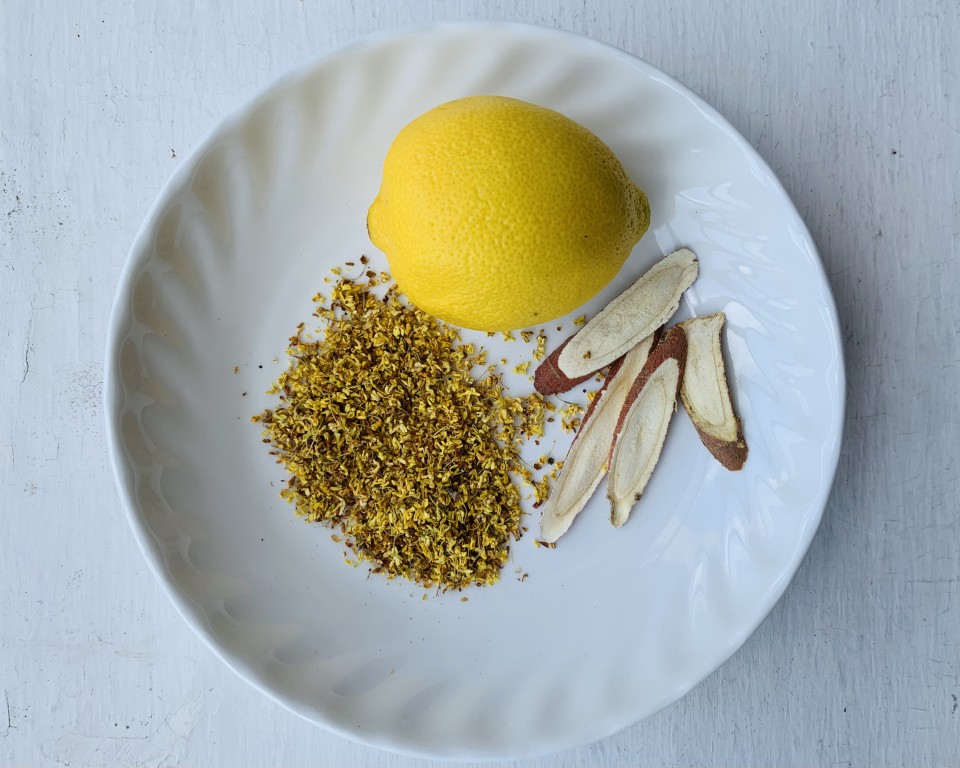
| Dried osmanthus flowers (gui hua) | 1 tablespoon | Available at tea shops; no substitution needed |
| Dried pear slices (xue li gan) | 5–6 slices | Rinse briefly; remove cores/seeds before cooking |
| Rock sugar (bing tang) | a small amount | Optional; omit for diabetics |
| Water | 4 bowls (~1 L) |
Method
- Briefly soak and rinse the dried pear slices. Check for and remove any cores or seeds — these have mild toxicity and should not be consumed.
- Place the pear slices and osmanthus flowers together in a pot with 4 bowls of water.
- Bring to a boil, then simmer for 15 minutes.
- Add a small amount of rock sugar and stir until dissolved.
- Pour and drink warm. The pear slices are also pleasant to eat.
Bro Niu’s tips
The key detail with dried pear is to always remove the core and seeds before cooking — they contain mild compounds that, while not seriously dangerous in small amounts, are best avoided entirely. The rest of the pear is fine and nutritious. Dried pear is a better choice than fresh pear for this tea precisely because it is not as cooling, making it suitable for regular use throughout the cooler months too. For diabetic family members, skip the rock sugar and use a small piece of monk fruit or a few stevia leaves instead — the osmanthus already provides a pleasant fragrance without any added sweetness.
Community questions answered (selected)
-
Q (yy): My 4-year-old has been coughing with lots of phlegm for a week, mostly at night now. He also has bad breath recently — could the phlegm be causing it? What is good for him? Bro Niu: Try putting perilla seeds (su zi) and radish seeds (lai fu zi), each 3 qian, into a tea bag and cooking them into a lean pork congee for your son. Three servings in a row should help clear the phlegm and ease the cough.
-
Q (Blue): Can I leave out the rock sugar? What can I substitute? Bro Niu: You can certainly omit the sugar entirely. For diabetics, use one-sixth of a monk fruit (luo han guo) or about 4 stevia leaves — both provide sweetness without raising blood sugar.
-
Q (LL): My elderly relative is nearly 90 with kidney stones and frequent night urination. Can she drink this tea? What else might help with the kidney stones? Bro Niu: Yes, this flower tea is suitable for her. For kidney stones, try brewing cat’s whiskers herb (mao xu cao) as a regular tea. For frequent night urination, a soup with white ginkgo nuts (bai guo, 15 pieces, cores removed), euryale seeds (qian shi, 1 liang), rubus berries (fu pen zi, 4 qian) and south dates (nan zao, 5 pieces) cooked with pork bladder and lean pork is worth trying.
Published May 4, 2022 · Adapted and translated for Nourilo from a traditional home-kitchen recipe. Approx. 4 min read.