Soups
Dragon-Tongue Leaf and Shihuangpi Soup
Traditionally used to clear phlegm and calm a cough
Why people make this soup
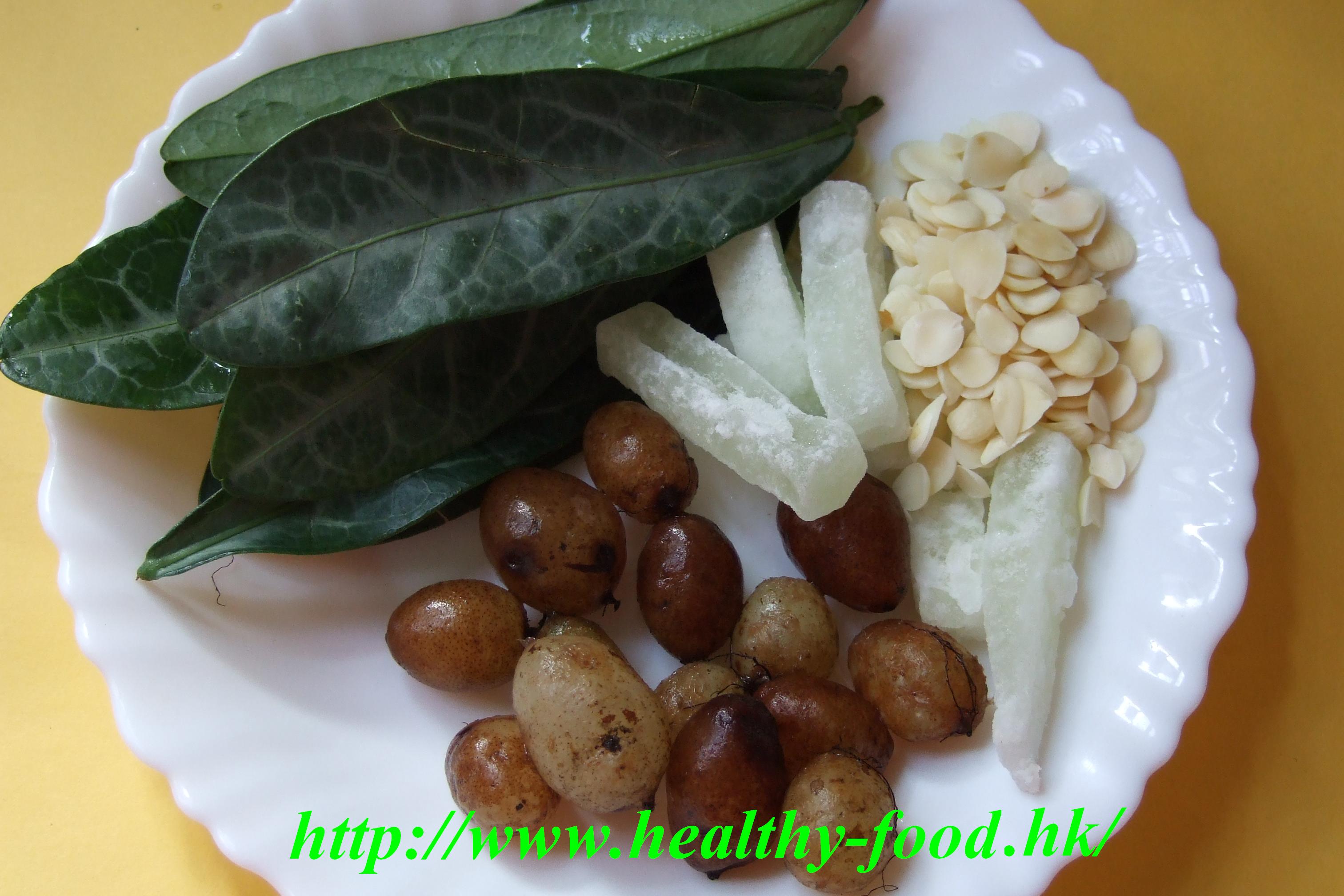
When the weather keeps flip-flopping and the air turns hazy, folks with weaker lungs often feel that tight, scratchy throat and start bringing up phlegm. Fresh dragon-tongue leaf and the hillside herb shihuangpi, simmered with a little sugared winter melon and apricot kernels, produce a fragrant, lightly sweet soup that goes down like a tea. It is the kind of pot people keep on hand to head off a cough before it digs in. Fresh dragon-tongue leaf is available at Chinese or Asian grocers; dried is sold at Chinese herb shops.
Who it suits / who should be cautious
- Suits people with a dry, phlegmy seasonal cough, and those wanting a mild preventive soup; gentle enough for the elderly and children.
- Bitter apricot kernels are mildly toxic — keep the ratio low (roughly 1 bitter to 5 sweet). If a child is coughing up a lot of phlegm, swap the sugared winter melon for a quarter of a luo han guo (monk fruit).
Why these ingredients (the food-therapy logic)
- Dragon-tongue leaf (long li ye): traditionally valued for moistening the lungs and easing cough; fresh leaf is considered stronger than dried.
- Shihuangpi (shi huang pi): a folk hillside herb associated with clearing heat and calming a cough.
- Sugared winter melon (tang dong gua): lends a clean sweetness and is associated with moistening the throat.
- Apricot kernels (nan bei xing): sweet kernels are associated with moistening the bowel; bitter kernels with easing cough and phlegm — used sparingly.
Ingredients (4 bowls)
| Ingredient | Amount | Notes |
|---|---|---|
| Fresh dragon-tongue leaf | ~38 g (1 tael) | Dried (5 qian) works if fresh is unavailable |
| Shihuangpi | ~75 g (2 taels) | Folk herb; if unavailable use 1/2 monk fruit instead |
| Sugared winter melon | ~38 g (1 tael) | For a phlegmy child, swap for 1/4 monk fruit |
| Sweet & bitter apricot kernels | ~38 g (1 tael) | Keep bitter kernels low (about 1:5) |
Method
- Rinse the shihuangpi and lightly bruise it with the back of a knife.
- Rinse the remaining ingredients.
- Put everything in a pot with 6 bowls of water and simmer about 40 minutes, down to 4 bowls. Serve.
Bro Niu’s tips
This soup is lightly sweet with little herbal bitterness and a very mild, balanced nature, so the elderly and young children can both enjoy it. If you want to skip the sugared winter melon, a quarter of a monk fruit can stand in to help with phlegm, though the taste is not quite as nice.
Community questions answered (selected)
-
Q (Anna): I leave early and come home late, so I can rarely get fresh ingredients. Do Chinese herb shops sell dried dragon-tongue leaf and shihuangpi I could use instead, and how much? Bro Niu: Dried dragon-tongue leaf is sold at herb shops — use about 5 qian. Shihuangpi is a hillside folk herb and herb shops don’t carry it, so use half a monk fruit in its place.
-
Q (MM): What is the difference between sweet (nan) and bitter (bei) apricot kernels? Bro Niu: Sweet kernels are usually larger and are associated with moistening the bowel; bitter kernels are smaller, more strongly flavored, and associated with easing cough and phlegm — but they are mildly toxic, so for every 5 sweet kernels use only 1 bitter one.
-
Q (amy): My child suddenly started coughing yesterday with no prior cold. Can they drink this soup? Bro Niu: Yes, your child can have this soup — it is very gentle and also good as a preventive against lung-heat cough.
Published September 3, 2010 · Adapted and translated for Nourilo from a traditional home-kitchen recipe. Approx. 3 min read.