Soups
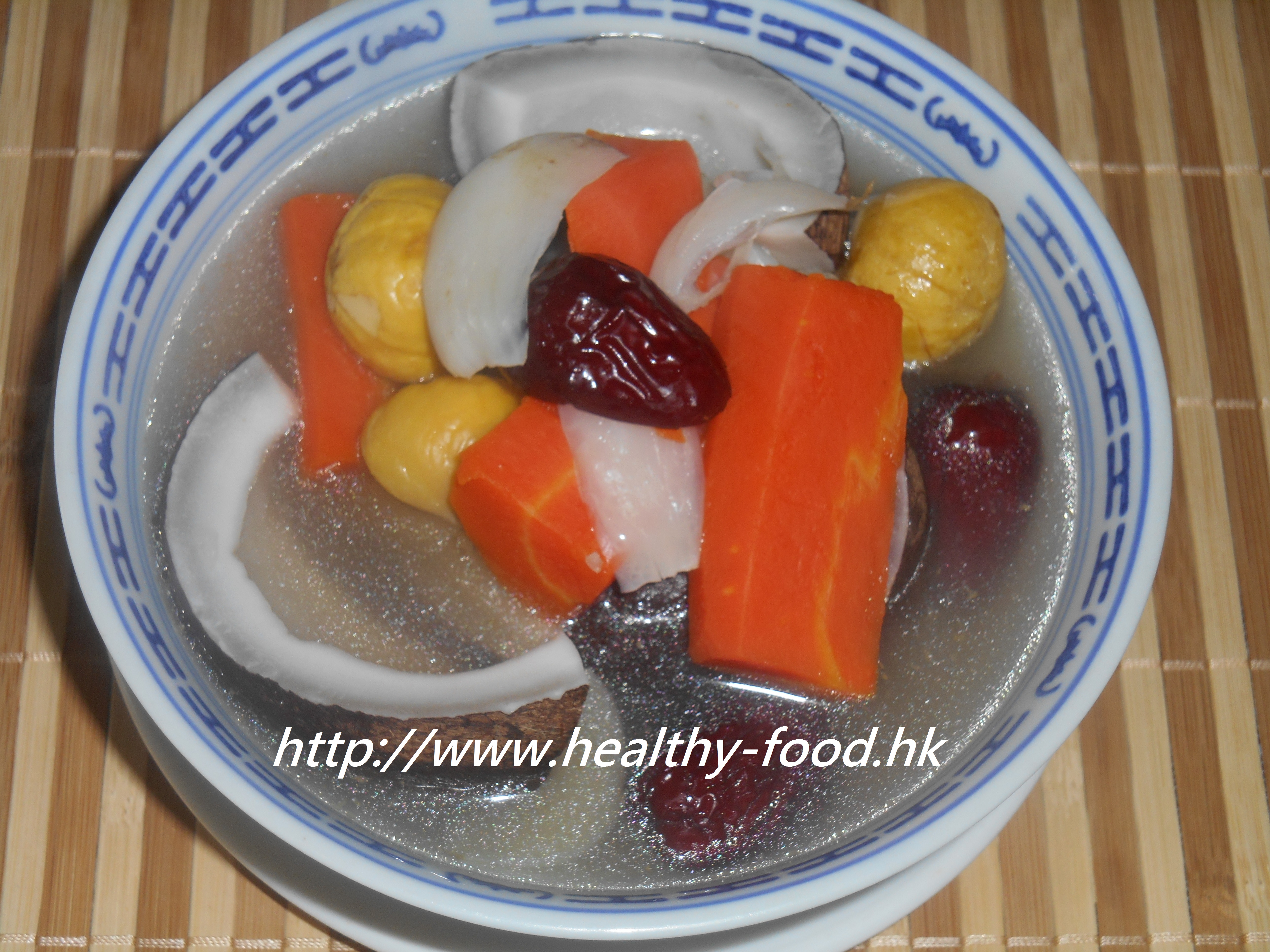
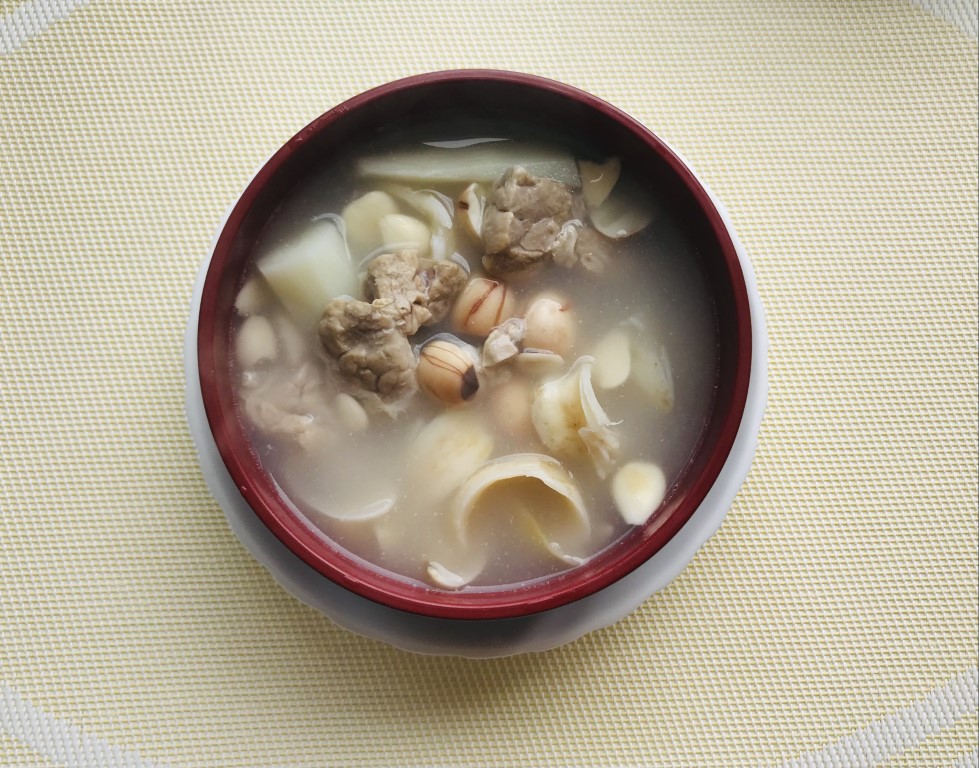
Palm Fruit (Southeast Asian Coconut), Lily Bulb and Carrot Lean Pork Soup
traditionally associated with moistening the lungs, soothing a dry cough, and nourishing the skin
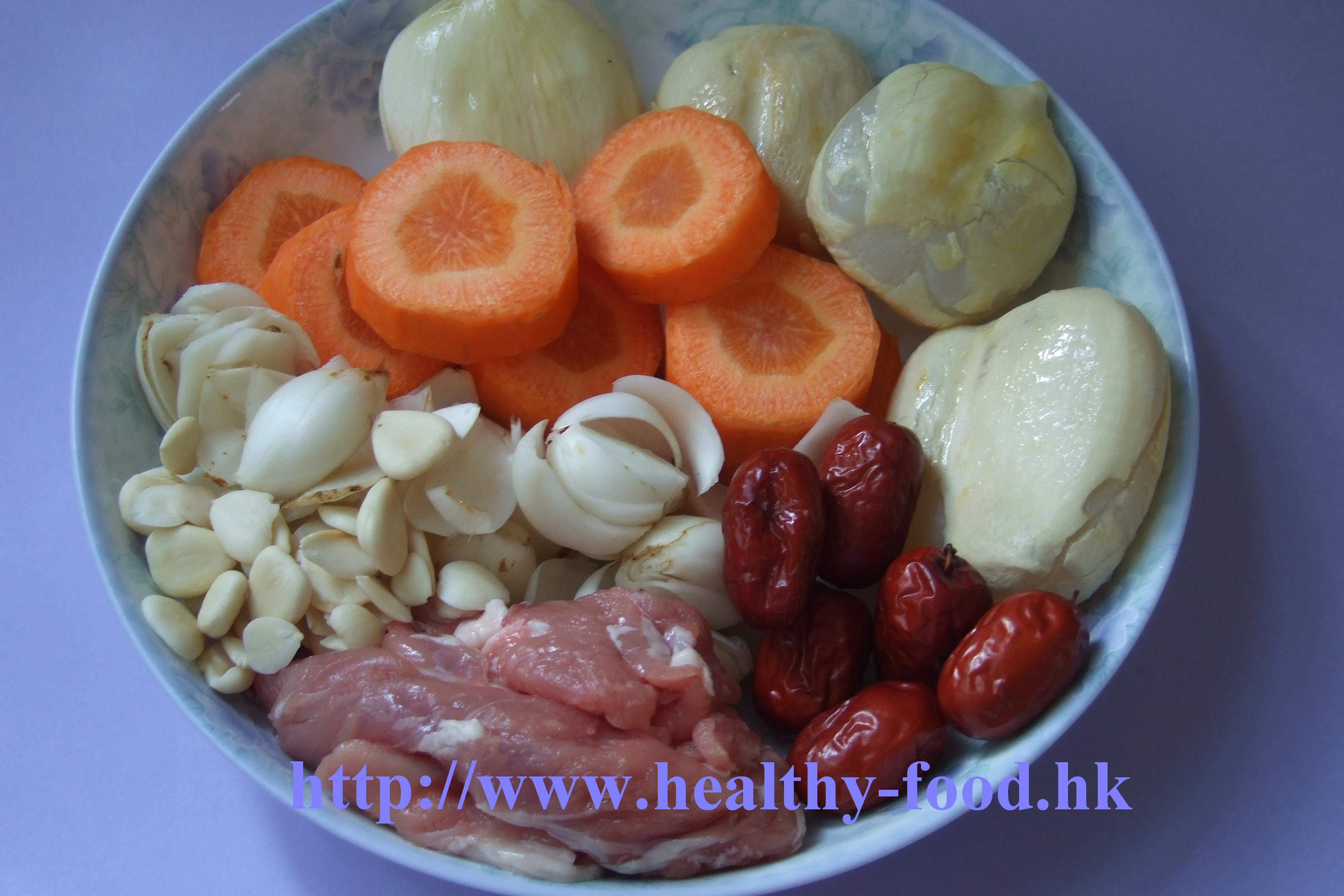
Why people make this soup
A quick note on the ingredient before we begin: the pale, slippery wedges sold at Asian markets under the name “fresh sea coconut” are almost certainly palm fruit from Southeast Asia — not the true sea coconut from the Seychelles, which is the world’s largest seed, can weigh up to 25 kilograms, and is considerably more expensive. The Southeast Asian palm fruit is a different, more affordable ingredient. It still has a pleasant moistening quality, a mild natural sweetness, and is genuinely lovely in soup — just do not expect it to perform identically to the real thing.
That said, this soup is delicious and deeply nourishing on its own terms. Palm fruit, fresh lily bulb, and apricot kernels all carry a reputation in traditional Chinese food therapy for supporting the lungs and relieving dryness. The carrot adds sweetness and colour; the lean pork grounds the soup and gives it body. It is one of those soups the whole family can share without concern, and it is particularly welcome in dry autumn and winter weather.
Who it suits / who should be cautious
- Suitable for the whole family, including children; light and gentle enough for everyday use
- Especially helpful for people experiencing dry skin, dry throat, or a mild dry cough in cold or dry weather
- Pregnant women with a persistent cough are advised to substitute the palm fruit and fresh lily bulb with tiger milk mushroom (hu ru ling zhi) and aged tangerine peel (chen pi), which are better suited to resolving phlegm during pregnancy — based on Bro Niu’s own guidance
- Apricot kernels: the mixed sweet-and-bitter variety used here is safe for general consumption; do not use large quantities of bitter apricot kernels (ku xing ren) alone, especially for children
Why these ingredients (the food-therapy logic)
- Palm fruit (zong lu guo): Traditionally associated with clearing heat, moistening the lungs, and resolving phlegm. Its cooling, moistening properties make it particularly useful during dry weather or when the lungs feel parched. Cooking with the skin on is recommended for best effect.
- Fresh lily bulb (xian bai he): A gentle, cooling ingredient used in Chinese food therapy to calm the mind and moisten the lungs. Adding it toward the end of cooking preserves its delicate texture.
- Carrot (gan sun): Rich in beta-carotene; traditionally associated with benefiting the eyes and lungs. Adds natural sweetness to the soup.
- Mixed apricot kernels (nan bei xing): A classic Cantonese pairing of sweet (nan xing) and bitter (bei xing) apricot kernels, traditionally used to moisten the lungs, relieve cough, and aid breathing.
- Lean pork (shou rou): Blanched first to remove impurities; provides a mild, savoury stock base and keeps the soup clean-tasting.
Ingredients (4–5 bowls)
| Ingredient | Amount | Notes |
|---|---|---|
| Palm fruit (market “fresh sea coconut”) | 1 packet (~200–300 g) | Cook with skin on for best effect |
| Fresh lily bulb | 1 packet (~100–150 g) | Rinse gently; add late in cooking if you want it less dissolved |
| Carrot | 1 medium | Peeled and cut into chunks |
| Mixed apricot kernels (nan bei xing) | 37 g (1 liang) | |
| Lean pork | 225 g (6 liang) | Blanch in boiling water for 2 minutes first |
| Water | 8 bowls (~2 litres) |
Method
- Blanch the lean pork in a pot of boiling water for 2 minutes, then rinse under cold water. This removes impurities and keeps the soup clear.
- Rinse the palm fruit, fresh lily bulb, carrot, and apricot kernels.
- Peel the carrot and cut into large chunks.
- Place all the prepared ingredients together in a large pot. Add 8 bowls of water.
- Bring to a boil over high heat, then reduce to a gentle simmer. Cook for approximately 2 hours until the soup reduces to 4 to 5 bowls. Drink the soup and eat the solid ingredients.
Tip for lily bulb texture: If you prefer the lily bulb to retain some shape and not fully dissolve into the soup, add it during the last 10 minutes of cooking rather than at the beginning.
Bro Niu’s tips
- The skin of the palm fruit contains more of the active compounds that support a moist cough-soothing effect — leave it on during cooking.
- If you want to turn this into a dessert soup (tong shui), remove the pork and add rock sugar to taste at the end.
- For adding pear, any sweet variety works well — Bro Niu personally prefers snow pear, Gong pear, or Korean pear. One pear, cored and quartered, can be added at the start of cooking.
Community questions answered (selected)
-
Q (WAH WAH): I bought what was sold as African sea coconut from a herb shop — it’s yellowish with a pleasant coconut fragrance. Is that the real thing from the Seychelles? Bro Niu: The genuine sea coconut from Africa (the Seychelles) has no coconut fragrance. Its flesh is snow-white with a distinct fibrous grain and serrated, dark-edged, non-curling borders. What you describe sounds like it may be a different variety.
-
Q (MAN): Did you leave out red dates from the ingredient list? I can see what look like 6 red dates in your photo. Bro Niu: Yes, I missed them — thank you for pointing that out! You can add 6 red dates (hong zao) to the soup.
-
Q (yy): I am 8 months pregnant with a lot of phlegm stuck in my chest and a wheezing cough. I have been ill for over a week. Is this soup suitable for me? Bro Niu: I would suggest replacing the palm fruit with tiger milk mushroom (hu ru ling zhi) at 3 qian and adding an aged tangerine peel (chen pi) — this combination is better suited to resolving phlegm during pregnancy. Drink about 3 to 4 times a week.
Published December 12, 2011 · Adapted and translated for Nourilo from a traditional home-kitchen recipe. Approx. 5 min read.