Soups
Sea Solomon's Seal, Snow Ear Fungus, Cordyceps Spore and Lean Pork Soup
traditionally used to nourish yin, moisten dryness, and support lung health
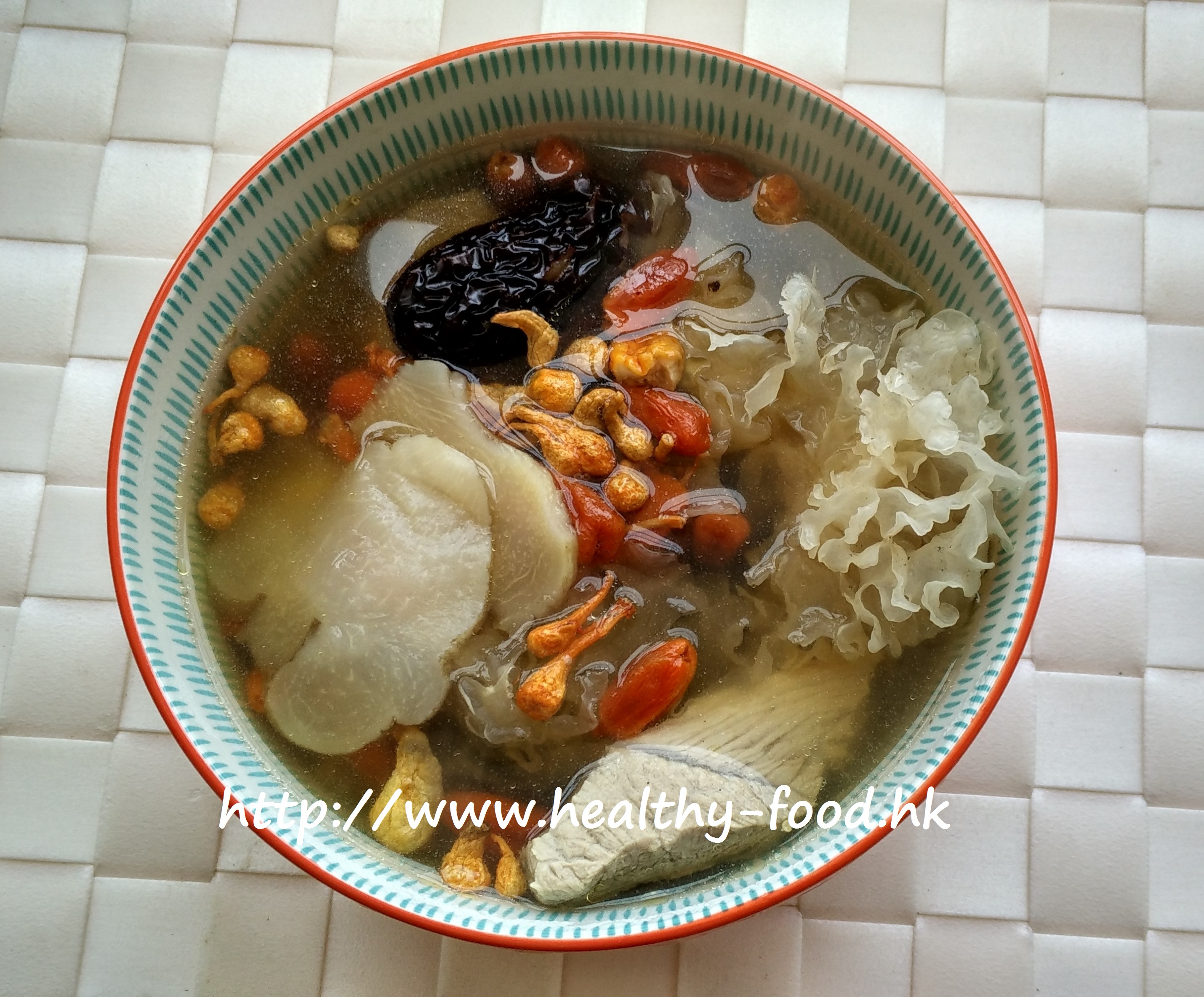
Why people make this soup
Nourilo shares this recipe from personal experience: after pushing through a busy teaching schedule with a sore throat and dry cough, things got worse before they got better — lost voice, multiple rounds of antibiotics, and eventually the lingering sensitivity of an over-worked throat. What he learned the hard way is summed up in an old Chinese saying: “treat an illness while it is still shallow.” This soup was what he turned to while recovering — a nourishing, yin-moistening blend that helps when the throat and lungs feel parched and exhausted, especially during dry autumn and winter seasons or after illness. It is a gentle, savoury soup, not a medicine, but it is the kind of thing a caring Chinese household makes when someone has been pushing too hard.
Method
- Slice the pork and blanch in boiling water for 2–3 minutes to remove impurities. Drain and set aside.
- Rinse sea Solomon’s seal, goji berries, and southern dates.
- Soak the snow ear fungus in cold water until fully expanded (about 20–30 minutes). Remove the tough yellow base and tear into smaller pieces.
- Rinse cordyceps spores.
- Add all ingredients to a pot with 2.1–2.4 L of cold water.
- Bring to a boil over high heat, then reduce to a medium-low simmer.
- Cook for approximately 1.5 hours until you have about 1.2 L of liquid.
- Serve and eat both the soup and the solid ingredients.
Nourilo’s Tips
Nourilo’s general advice for cooking Chinese herbal soups applies here: start with cold water rather than boiling water. Some ingredients contain proteins that lock up quickly in boiling water, making it harder for the beneficial compounds to dissolve into the broth. If you cannot find cordyceps spores, cordyceps flower (chong cao hua, available at most Chinese herb shops) works as a substitute — a loosely-packed handful is about the right amount. This soup is gentle enough for regular use during dry seasons.
Comments
Join the conversation — sign in or create a free account to comment.
Continue with GoogleLoading comments…