Soups
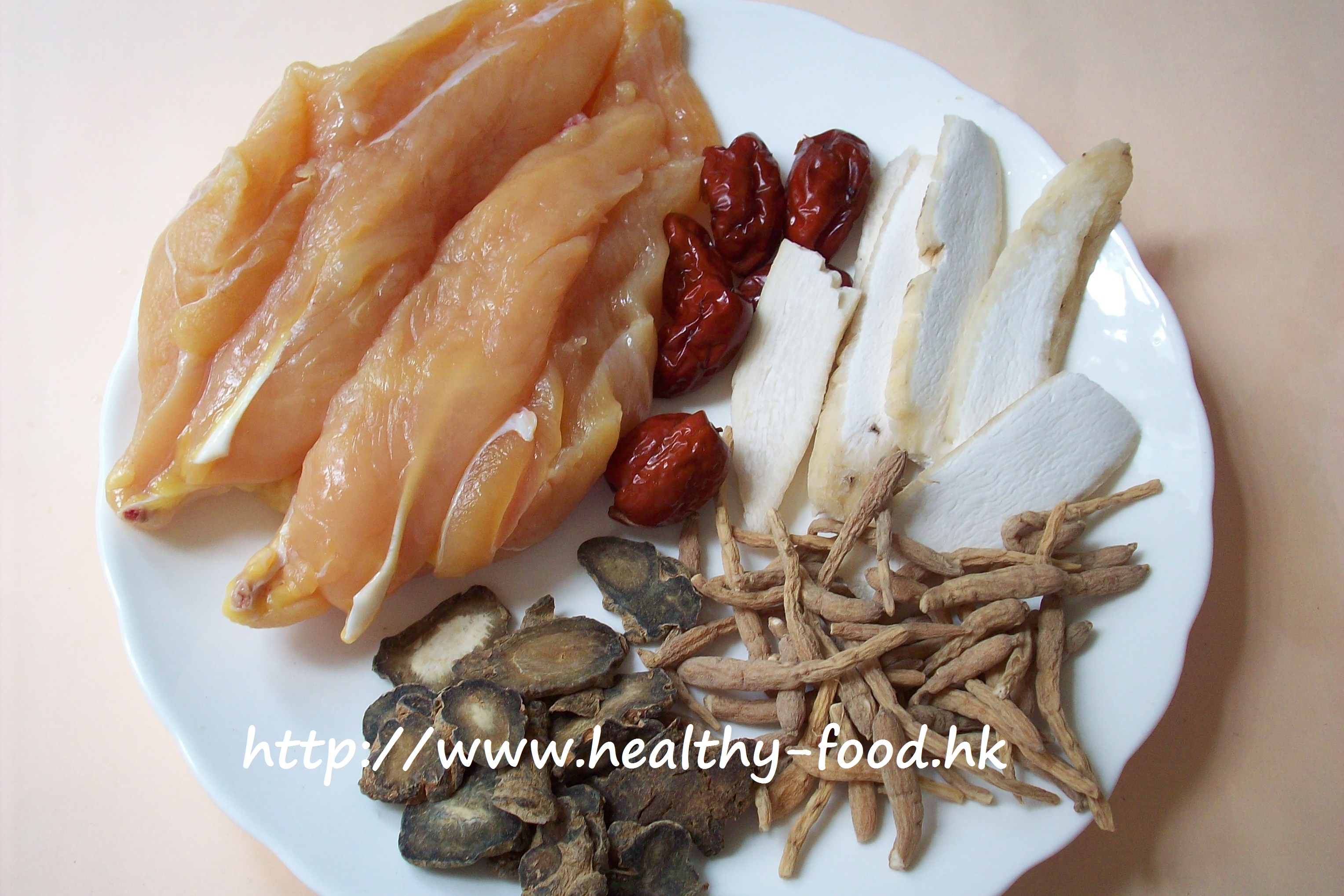
Pseudostellaria Root, Chinese Yam, Notoginseng and Chicken Breast Soup
traditionally used to strengthen the spleen, nourish qi and blood, and support healthy growth in children
Why people make this soup
Some children seem to eat well enough but just never quite put on weight — they stay small and lean, and parents worry. In traditional Cantonese food therapy, this is often attributed to a weak spleen and stomach that cannot efficiently absorb nutrients even when meals are regular. The approach is to gently strengthen the digestive system first, so the body can make better use of what it receives.
Pseudostellaria root (tai zi shen), nicknamed “prince ginseng,” is one of the most child-friendly tonic herbs in Chinese food therapy — it has the qi-nourishing quality of true ginseng but at a much gentler level. Notoginseng (tian qi), which is used here in its cooked/prepared form (shu tian qi), goes beyond simple blood-stopping and is traditionally considered to both nourish and move the blood, support healthy blood production, boost stamina, and enhance learning and memory. Together with Chinese yam and red dates in a light chicken breast broth, this is a well-loved soup for children who need a little extra nourishment.
Who it suits / who should be cautious
- Suits children (from school age onwards) who are thin, have weak digestion or poor absorption, or are growing slowly; adults with weak constitutions or those supporting cardiovascular health may also benefit
- Suitable for the whole family
- Do not use when a child has an active cold, flu, or fever
- Pregnant women should not use this soup
Why these ingredients (the food-therapy logic)
- Pseudostellaria root (tai zi shen): A gentle tonic herb; traditionally strengthens qi and supports the spleen and stomach’s absorption function; safer and milder than true ginseng for children
- Cooked notoginseng (shu tian qi): The cooked (prepared) form is used here for its tonifying properties rather than raw notoginseng’s blood-dispersing action; associated with nourishing blood, improving circulation, reducing fatigue, and supporting cognitive function
- Chinese yam (huai shan): A staple of Cantonese food therapy; nourishes the spleen and lungs, supports digestion and healthy weight, and is gentle enough for daily use
- Red dates (hong zao): Nourish qi and blood, provide gentle sweetness, and harmonise the formula
- Chicken breast (ji xiong rou): Lean, easily digestible protein that forms the flavourful base of the broth
Ingredients (3–4 bowls)
| Ingredient | Amount | Notes |
|---|---|---|
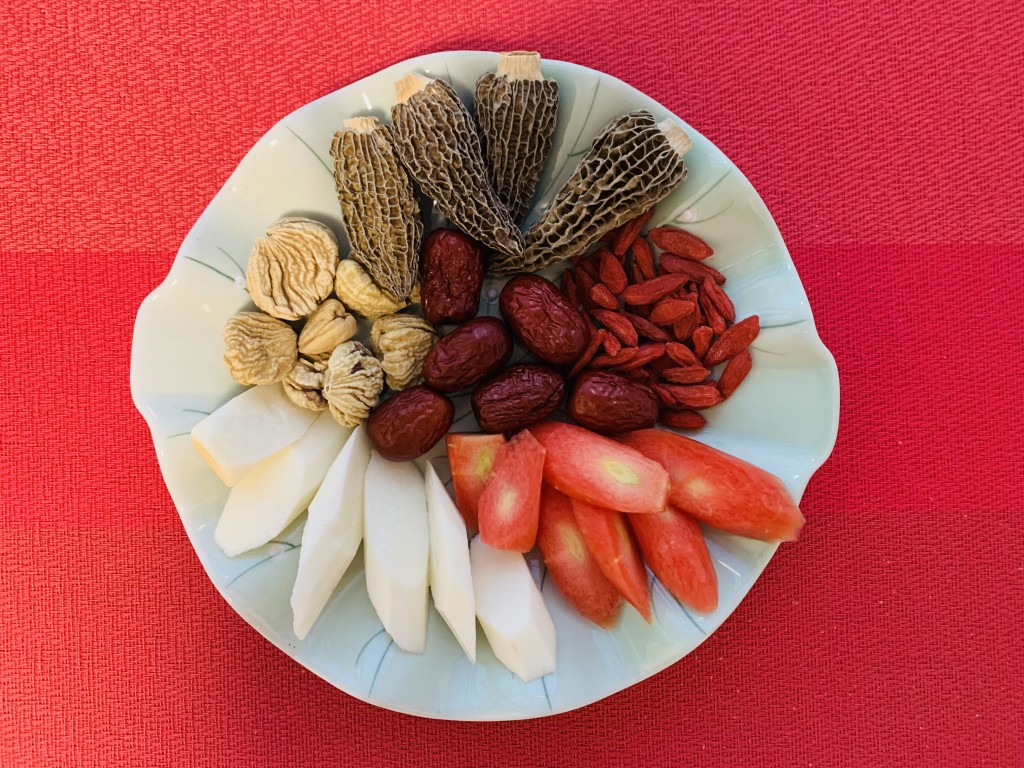
| Pseudostellaria root (tai zi shen) | 11 g (3 qian) | Rinse briefly |
| Cooked notoginseng (shu tian qi) | 11 g (3 qian) | Use the prepared/cooked form for tonifying |
| Chinese yam (huai shan) | 37 g (1 liang) | Rinse and soak |
| Red dates (hong zao) | 6 pieces | Pit and rinse |
| Chicken breast | 225 g (6 liang) | Cut into pieces and blanch |
| Water | 7 bowls (approx. 1.4 L) |
Method
- Cut the chicken breast into chunks and blanch in boiling water for 2 minutes to remove impurities; drain and rinse.
- Pit the red dates. Rinse and briefly soak the Chinese yam, notoginseng, and pseudostellaria root.
- Place all ingredients in a pot with 7 bowls of water.
- Bring to a boil, then reduce to a gentle simmer and cook for 1.5 hours, until the soup reduces to approximately 3–4 bowls.
- Serve warm. Drink the broth and eat the soup ingredients, especially the chicken and yam.
Bro Niu’s tips
This soup is also considered supportive for cardiovascular health, which is why it works well as a general family tonic — not just for growing children. If pseudostellaria root is unavailable, American ginseng (花旗参) can substitute, but add it only after the soup is fully cooked: turn off the heat, add the slices, and steep for 10 minutes before drinking. Regarding notoginseng: raw notoginseng (sheng tian qi) disperses blood stasis; cooked/prepared notoginseng (shu tian qi) nourishes and builds blood — for this tonifying recipe, always use the cooked form. For the soup to double as support, it can also be stewed (double-boiled) instead of simmered on the stovetop — use the same quantities but allow 2–3 hours.
Community questions answered (selected)
-
Q (jenny1010): From what age can children start having this soup? How often? Should raw or cooked notoginseng be used? Bro Niu: It is best to start after a child begins primary school (around age 6–7). For very young children, the quantity of Chinese herbs is worth keeping minimal. Two servings per week is sufficient. You can use raw notoginseng powder — add it to the finished soup and stir to combine before drinking. Most constitutions are suitable; it is especially good for children whose spleen and stomach absorption is weak.
-
Q (Vivian): My 11-year-old son’s height is increasing slowly. He has started playing ball sports at school. Can this soup help with height? Can American ginseng replace pseudostellaria? Bro Niu: You can make this soup — American ginseng also works. Take 1–2 servings per week.
-
Q (reader, anonymous): My son is in secondary school, has acne on his forehead, sleeps late, and is thin. Can he have this soup? Bro Niu: Acne on the forehead often indicates excessive heart fire. You could first try a soup of soybean sprouts, snow fungus, tofu, and lean pork for 2–3 servings per week to clear the heart fire. This Pseudostellaria, yam, and notoginseng soup is also fine for him.
Published March 30, 2017 · Adapted and translated for Nourilo from a traditional home-kitchen recipe. Approx. 4 min read.