Soups
Dried Night-Blooming Cereus, Euryale Seed & Fig Soup with Lean Pork
traditionally clears heat, moistens the lungs, and supports spleen and digestive health
Why people make this soup
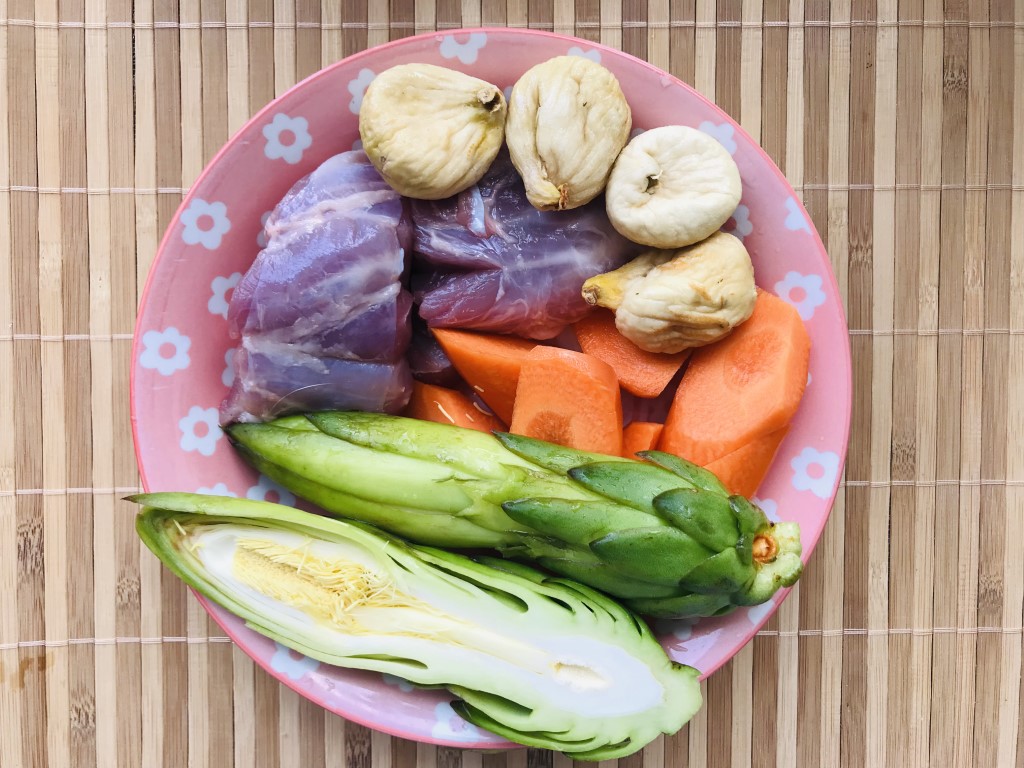
Night-blooming cereus (霸王花, ba wang hua) has a gentle, pleasant fragrance and a mild cooling quality. In Chinese food therapy, it is commonly used to support the respiratory tract — traditionally said to ease phlegm, support the lungs, and promote healthy bowel function. The fresh flower is considered more cooling in nature, so Cantonese households almost always use the dried version, which is gentler and suitable for a wider range of people. By adding euryale seeds (qian shi), Bro Niu rounds out the formula: the seeds are thought to tonify the spleen and support those prone to loose stools or weak digestion. The result is a soup that is mild enough for children and older adults, fragrant, and deeply comforting.
Who it suits / who should be cautious
- Most people, including the elderly and children; appropriate for both strong and weaker constitutions when using the dried flower
- Particularly helpful for those with phlegm, a warm or heat constitution, stubborn constipation, or mild stomach inflammation
- Those who prefer a vegetarian version can substitute the pork with peanuts or cashews
- The fresh flower is more strongly cooling and is best avoided by people with a cold stomach or delicate digestion
Why these ingredients (the food-therapy logic)
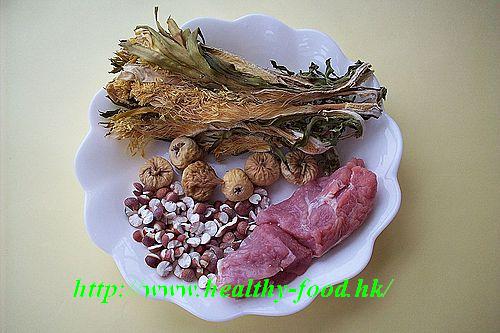
- Dried nightblooming cereus (ba wang hua): Fragrant, sweet, and mildly cooling. In Chinese food therapy, associated with clearing heat from the lungs and intestines, easing phlegm-cough, and supporting healthy bowel movements. Traditionally used also for bronchitis and lymph-related conditions.
- Euryale seeds / fox nuts (qian shi): Warming and tonifying for the spleen and kidneys; traditionally said to bind loose stools and ease chronic diarrhoea. Adding qian shi broadens the soup’s appeal — the cooling flower plus the consolidating seeds makes it suitable for virtually all constitutions.
- Dried figs (wu hua guo): Naturally sweet; traditionally associated with supporting the lungs and spleen, moistening the throat, and adding pleasant sweetness without refined sugar.
- Lean pork: Adds body and a mild savoury quality; supports the nourishing quality of the soup.
Ingredients (4 bowls)
| Ingredient | Amount | Notes |
|---|---|---|
| Dried night-blooming cereus | ~75 g (2 liang) | Rinse well; soak briefly if very dry |
| Euryale seeds (qian shi) | ~38 g (1 liang) | Rinse |
| Dried figs | 4–6 pieces | Rinse; halve for more flavour |
| Lean pork | ~300 g | Blanch briefly to remove impurities |
| Water | 8 bowls |
Method
- Blanch the lean pork in boiling water for 2 minutes. Drain and rinse.
- Rinse the night-blooming cereus, euryale seeds, and figs.
- Place all ingredients in a soup pot with 8 bowls of water. Bring to a boil over high heat.
- Reduce to a gentle simmer and cook for 2 hours.
- Serve — eat the soup and the solid ingredients (including the euryale seeds and figs) for the full benefit.
Bro Niu’s tips
Euryale seeds (qian shi) are particularly helpful for people with a weak spleen or chronic loose stools — they add a gentle consolidating quality to this otherwise lung-clearing soup. You can add dried lily bulbs and goji berries to this soup without any problem. For a vegetarian version, replace the pork with peanuts or cashews. The soup serves 4 people when made with 8 bowls of water simmered down to 4 bowls.
Community questions answered (selected)
-
Q (匿名): Can this soup be made without meat? What can I substitute? Bro Niu: Replace the pork with peanuts or cashews.
-
Q (Mickey): Can I add dried lily bulbs and goji berries? Bro Niu: Yes, both can be added — no problem at all.
-
Q (匿名): What does “痰火” (phlegm-fire) mean, and is this soup helpful? Bro Niu: In Chinese medicine, “phlegm” can refer to metabolic waste that accumulates when the body cannot eliminate it smoothly. When combined with internal heat, this becomes “phlegm-fire.” Luo han guo and xia ku cao (selfheal) can help with phlegm-fire. You can also try simmering 1 liang of xia ku cao with half a luo han guo as a tea.
Published March 6, 2010 · Adapted and translated for Nourilo from a traditional home-kitchen recipe. Approx. 3 min read.