Soups
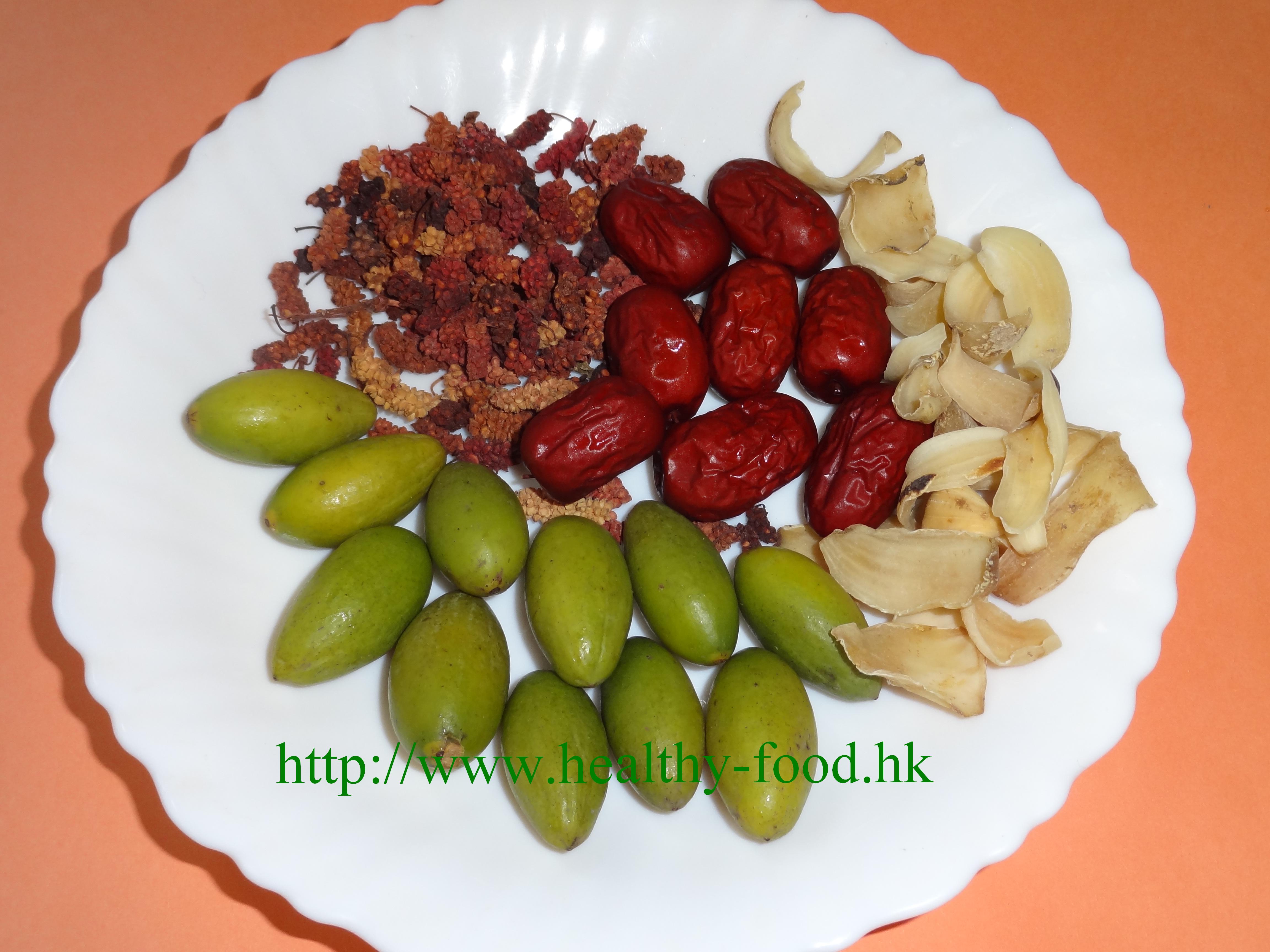
Mulberry, Lily Bulb, Chinese Olive & Red Date Soup
Traditionally used to nourish blood and yin, and support skin health during chronic eczema flare-ups
Why people make this soup
Chronic eczema tends to worsen in late autumn and winter when the air dries out. In Chinese food therapy, the pattern behind long-standing eczema is often described as “blood deficiency with wind-dryness” — meaning the skin loses moisture and nourishment from within, leading to rough, thickened patches, persistent itching, and recurrent flare-ups. This soup addresses that root pattern rather than just the surface symptoms, nourishing the blood and yin to help the skin recover its natural moisture from the inside.
Who it suits / who should be cautious
- People with chronic, recurring eczema characterized by dry, thickened, and intensely itchy skin (rather than weeping, hot, acute eczema)
- Bro Niu recommends taking it daily for 10 consecutive days during a flare-up, then 1–2 times per week for maintenance
- Generally mild and suitable for children and the elderly; suitable for babies from around 1 year old (fresh Chinese olive is gentler than the “di laoshu” herb alternative)
- If a child dislikes the slightly tart taste, try the alternative recipe Bro Niu suggests: fresh “di laoshu” root and fresh tu fuling (smilax) with azuki beans, barley, and honey dates in a pork rib soup — sweeter and equally helpful
Why these ingredients (the food-therapy logic)
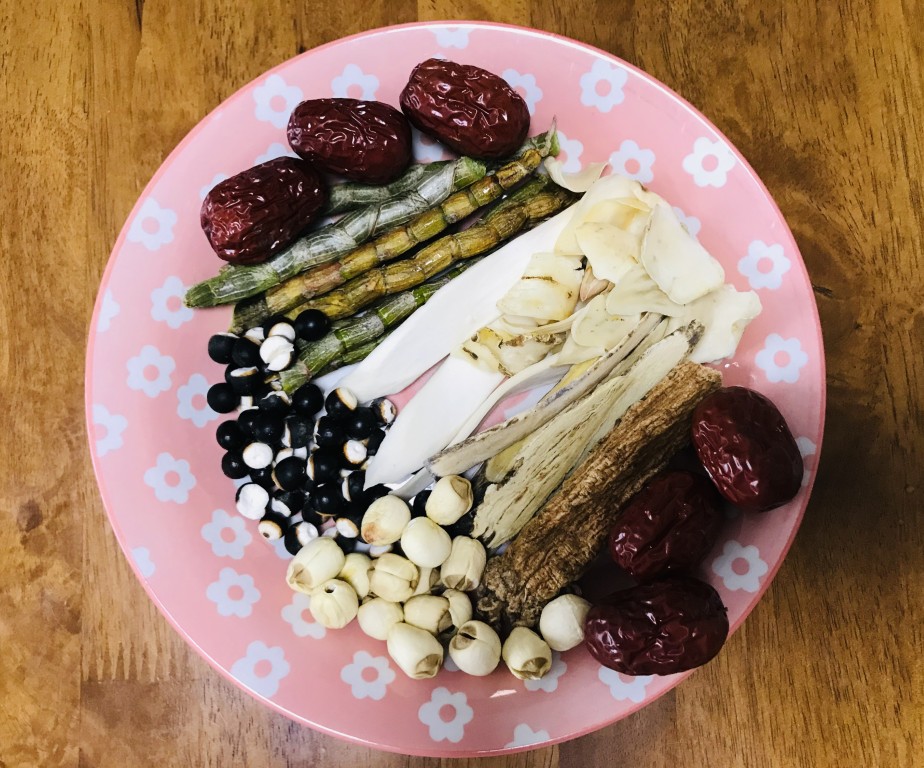
- Dried mulberries (sang shen zi): Considered a powerful blood and yin tonic in Chinese food therapy; traditionally associated with supporting the liver, kidneys, and skin; helps address the blood-deficiency pattern underlying chronic eczema
- Dried lily bulb (bai he): Moistening and calming; traditionally associated with clearing heat from the lungs and heart, and calming the mind; pairs well with mulberry in nourishing yin
- Fresh Chinese olives (qing lan): Available at Chinese herb shops and Chinese or Asian grocers; traditionally associated with clearing heat and detoxifying; Bro Niu notes these are the key ingredient that makes this soup effective for eczema
- Red dates (hong zao): Gently nourishing; traditionally used to support qi and blood; adds natural sweetness to balance the tart ingredients
Ingredients (4 bowls / 2 days’ servings)
| Ingredient | Amount | Notes |
|---|---|---|
| Dried mulberries (sang shen zi) | 38 g (1 liang) | Rinse well; fresh mulberries can substitute: use 75 g |
| Dried lily bulb (bai he) | 38 g (1 liang) | Rinse and soak briefly |
| Red dates | 10 pieces | Pitted |
| Fresh Chinese olives (qing lan) | 6 pieces | Available at Chinese herb shops or Asian grocers; rinse well |
| Water | 8 bowls (approx. 1.6 L) | |
| Lean pork (optional) | to taste | Can add for extra nourishment |
Method
- Rinse and soak all dried ingredients briefly.
- Pit the red dates.
- Place all ingredients in a pot with 8 bowls of water. Bring to a boil, then reduce to a low simmer.
- Cook for about 2 hours until the liquid reduces to roughly 4 bowls.
- Divide into 2 portions, drink one portion per day over 2 days.
Bro Niu’s tips
Fresh Chinese olives (qing lan) are the key herbal ingredient here — look for them at Chinese herb shops or Chinese and Asian grocers. This soup is mild and calming, and can also be used as a general tonic for anxiety and poor sleep. Lean pork can be added for extra richness. Reheat the second day’s portion before drinking. For children who find the taste too tart, see the alternative recipe in the Q&A below.
Community questions answered (selected)
-
Q (Winnie Lai): My daughter is 8 years old and her eczema keeps coming back. Can she take this mulberry soup? I started giving it to her this morning and plan to follow your advice of 10 consecutive days. Is that right? And on the second day, does she just reheat it? Bro Niu: This soup is very mild — it’s a gentle, moistening type of remedy. Yes, she can drink it for 10 consecutive days. On the second day, just reheat it and it’s ready to drink.
-
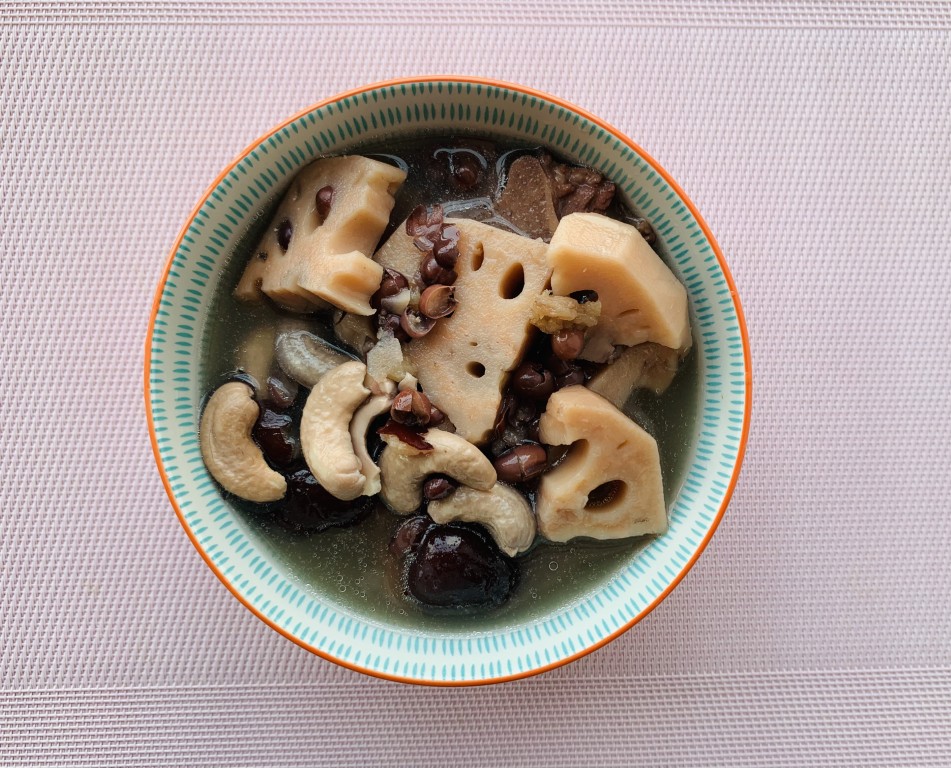
Q (Winnie): My daughter finds it too sour and won’t drink it. Are there other ways to help her chronic eczema? Bro Niu: If your child can tolerate slightly cooling foods, try this instead: fresh “di laoshu” root and fresh tu fuling (smilax), about 75 g each, with azuki beans and barley (each 38 g), and 2 honey dates, cooked with pork ribs. It’s sweet and pleasant, and children usually enjoy it. It clears heat, detoxifies, and addresses damp eczema.
-
Q (Daisy): My toddler has dry eczema. Is it okay to give her azuki bean and barley soup? Would those damp-draining ingredients make dry skin worse? Bro Niu: Children with dry-type eczema can still drink spleen-strengthening and damp-draining soups — that’s fine. More importantly, keep the skin moisturized with a natural, low-chemical moisturizing cream or lotion. The fresh olive and mulberry soup (qing lan sang shen) is also suitable for toddlers — once or twice a week is a good frequency.
Published December 3, 2012 · Adapted and translated for Nourilo from a traditional home-kitchen recipe. Approx. 4 min read.