Tonic Drinks & Waters
Mulberry-Almond Drink (Sang Xing Yin)
traditionally used to clear wind-heat, moisten the lungs, and ease a dry cough with little or no phlegm
Why people make this drink
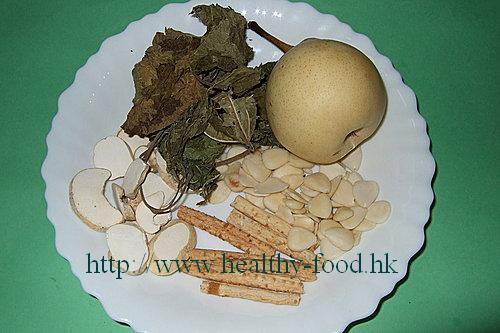
Not all coughs are the same — and in traditional food therapy, the remedy depends entirely on the type. After a cold or flu, some people are left with a hot, dry cough: the throat feels scratchy, there is little or no phlegm, the voice may be slightly rough, and the discomfort often worsens in warm, dry air. This is what traditional Chinese medicine calls a “dryness-heat” cough — the kind that lingers because the lungs are dried out and irritated rather than congested. Sang Xing Yin (Mulberry-Almond Drink) is a well-known herbal formula for exactly this. Mulberry leaf gently clears wind-heat from the lung’s surface, while snow pear and glehnia add moisture from below. Fritillaria (zhe bei mu) dissolves any residual phlegm, and apricot kernel descends the lung qi to stop the coughing impulse. Together they are balancing rather than aggressive — clearing heat and dryness while helping the lungs restore their natural moisture.
Who it suits / who should be cautious
- Suits people with a dry, hot-type cough: little phlegm, dry or sore throat, possible mild fever, or a lingering cough after a wind-heat cold
- Also appropriate for wind-heat cold with headache, mild fever, and cough
- NOT suitable for wind-cold coughs (clear, watery phlegm; chills more than heat; no thirst)
- Snow pear seeds have a mild toxic quality — always remove the core and seeds before cooking
Why these ingredients (the food-therapy logic)
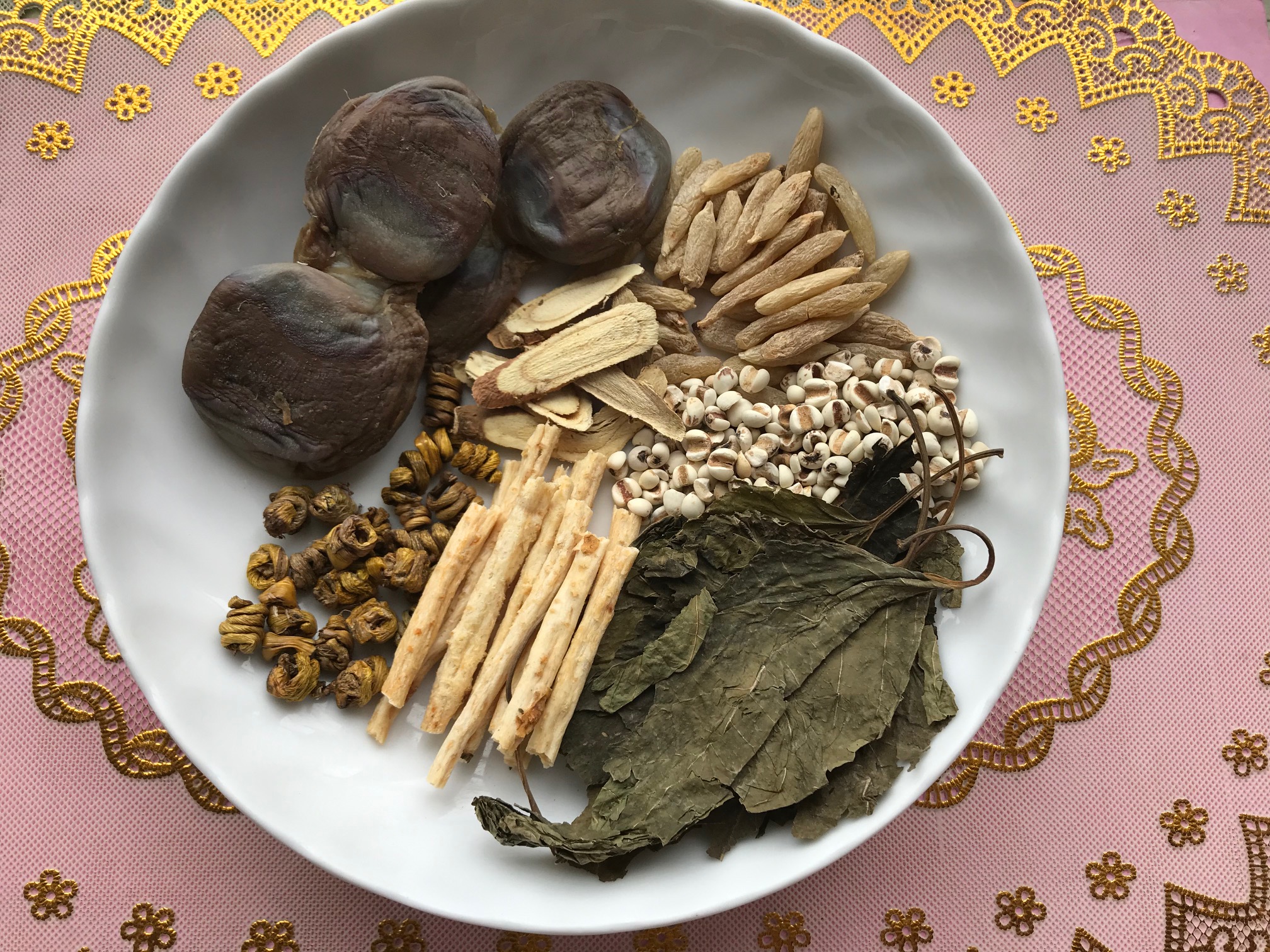
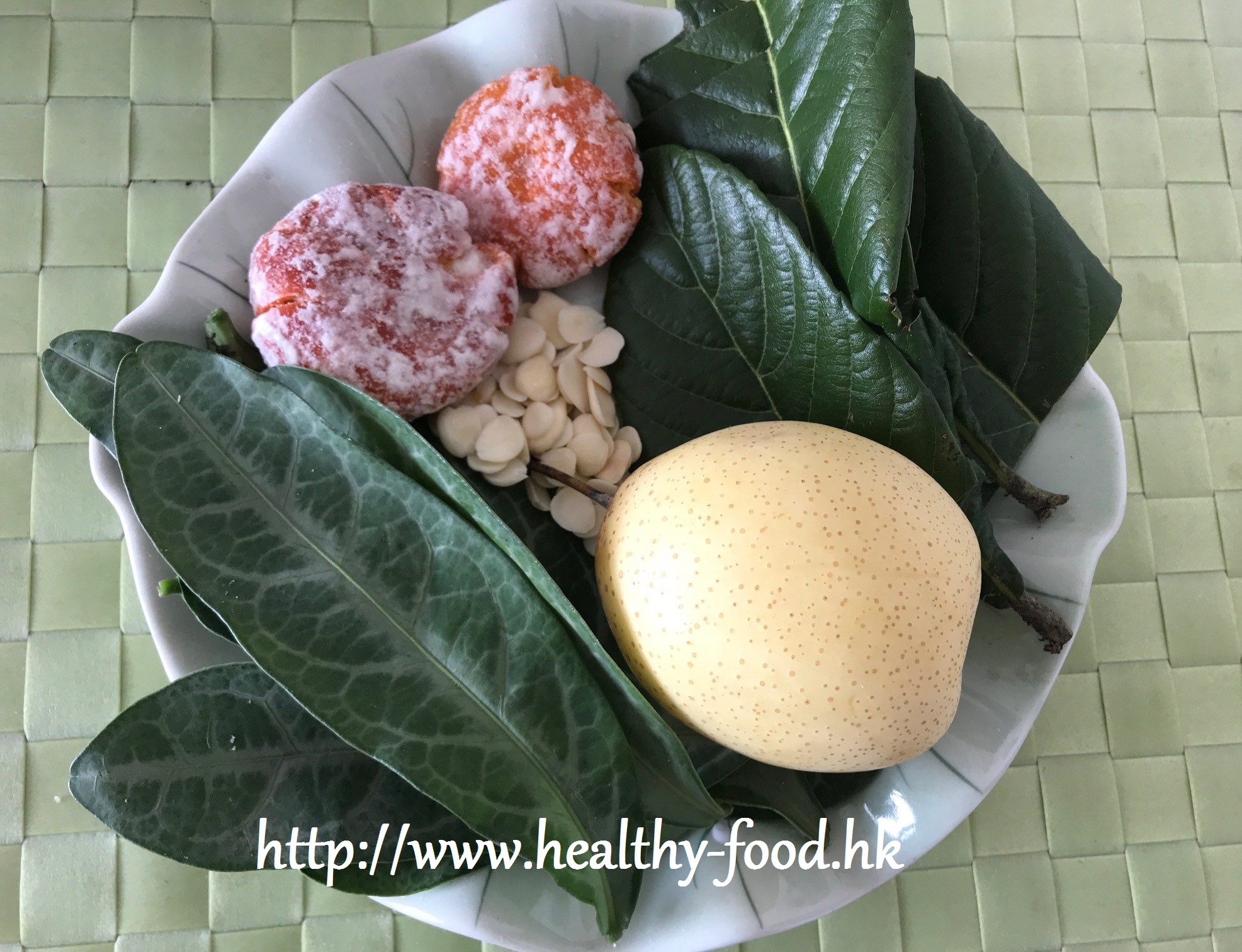
- Mulberry leaf (sang ye): Light and ascending; traditionally used to clear wind-heat from the lungs and the body’s surface without being too cold
- Apricot kernel (bei xing / northern bitter apricot): Descends lung qi; one of the classic ingredients for stopping cough and dissolving phlegm
- Glehnia root (sha shen): Nourishes lung yin and moistens dryness; particularly suited to heat-type conditions that have dried out the respiratory tract
- Zhejiang fritillaria (zhe bei mu): Clears heat and dissolves phlegm; useful when there is some stubborn heat-phlegm alongside the dry cough
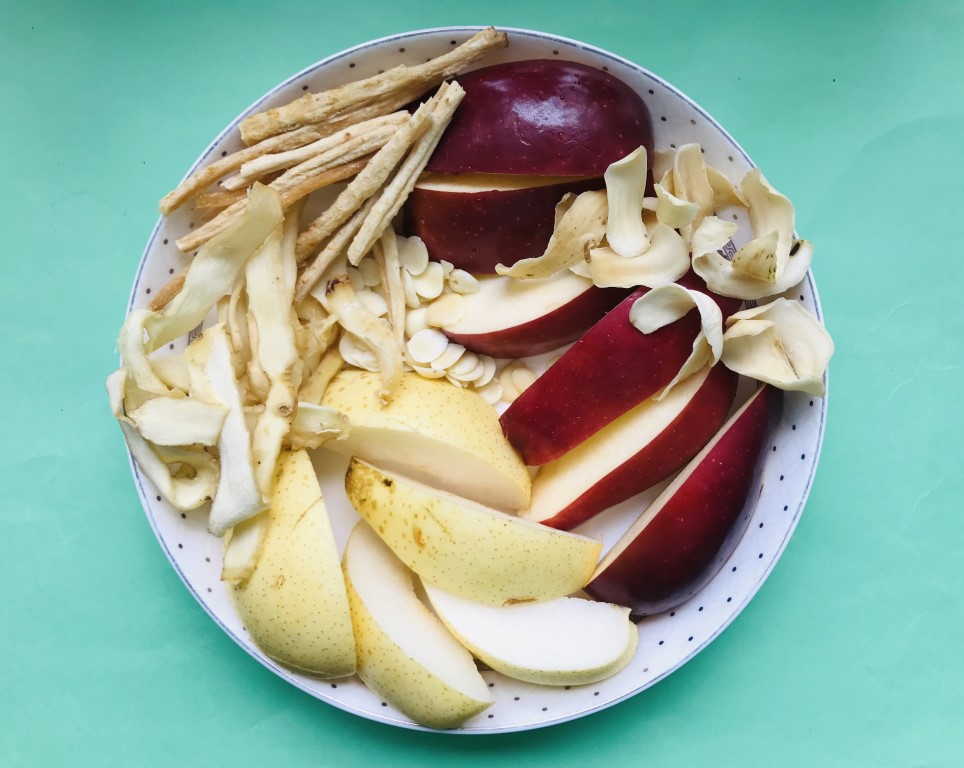
- Snow pear (xue li): Naturally moistening and cooling; adds flavour and amplifies the lung-moistening effect of the formula
Ingredients (2–3 bowls)
| Ingredient | Amount | Notes |
|---|---|---|
| Mulberry leaf (sang ye) | ~18 g (5 qian) | Rinse and soak briefly |
| Apricot kernel (bei xing) | ~18 g (5 qian) | Rinse |
| Glehnia root (sha shen) | ~11 g (3 qian) | Rinse |
| Zhejiang fritillaria (zhe bei mu) | ~11 g (3 qian) | Rinse |
| Asian pear (xue li) | 1 medium | Wash, cut into chunks, remove core and seeds |
Method
- Soak and rinse the herb ingredients briefly. Remove the core and seeds from the snow pear and cut into large chunks.
- Place all ingredients in a pot with enough water to cover generously (about 5 bowls).
- Bring to a boil, then reduce heat and simmer for about 1 hour.
- Strain and serve warm. The pear and softened herbs can also be eaten.
Bro Niu’s tips
- This drink clears wind-heat and disperses dryness; it suits wind-heat cough, headache, mild fever, and a sore throat
- It is specifically NOT suitable for wind-cold coughs — if your phlegm is clear and watery and you feel chilly rather than hot, this is the wrong approach
- The pear seeds have a mild toxic quality; always remove them before cooking
- For a dry cough with absolutely no phlegm, persistent and scratchy — try also adding a small amount of ophiopogon (mai dong, 3 qian) for extra moisture
Community questions answered (selected)
-
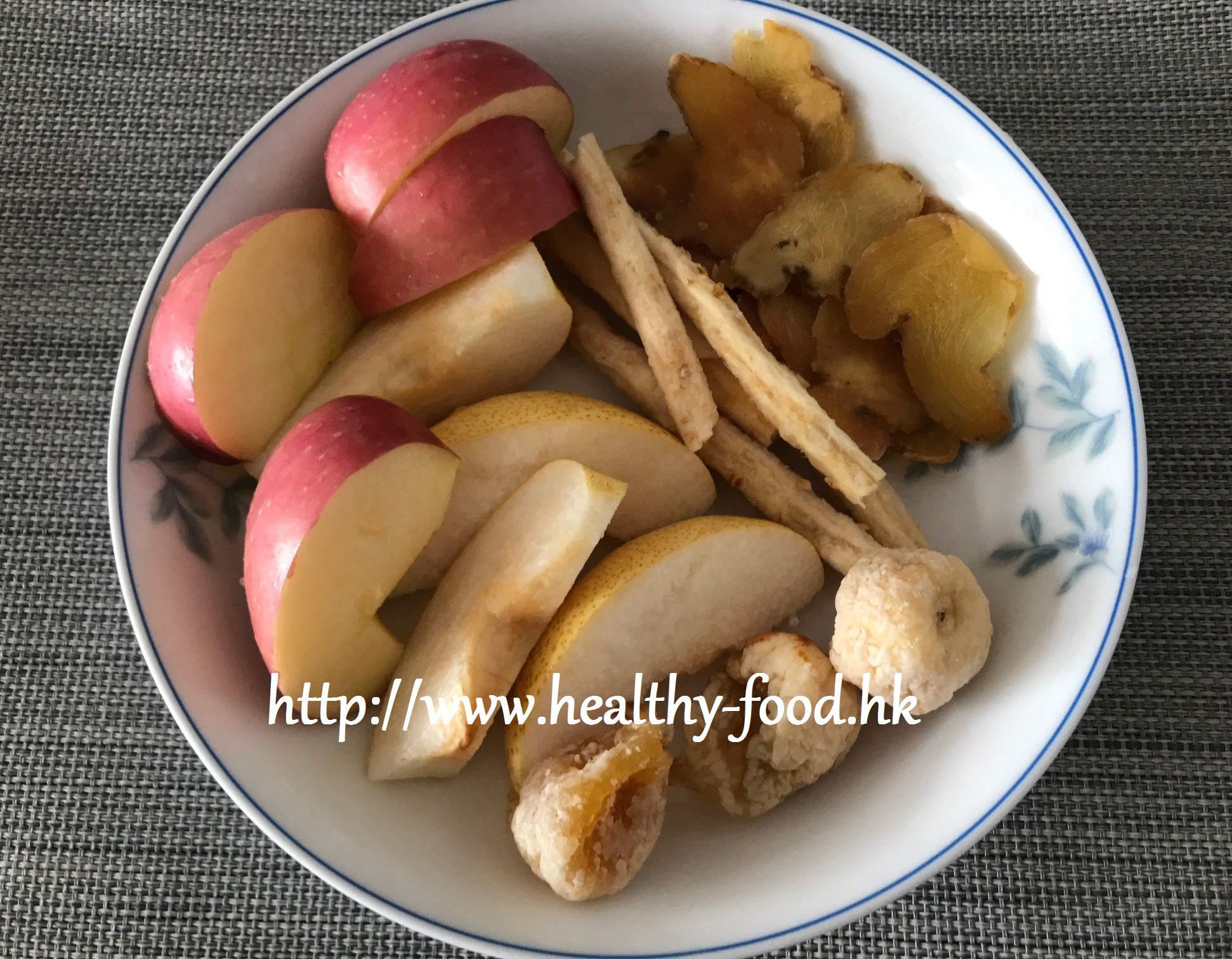
Q (Ming): After recovering from a cold, I have been coughing for a long time with no phlegm. It is worse in the morning and at night. What should I make? Bro Niu: You can try simmering dark plum (wu mei, 2 pieces), chrysanthemum (ju hua, 3 qian), platycodon (jie geng, 3 qian), and liquorice (gan cao, 1 qian) in 3 bowls of water for 15 minutes. Take for several consecutive days.
-
Q (Joice): My mother is about 60 years old and has been coughing almost every day and night for nearly a year — no phlegm. She has seen both Western and Chinese doctors with partial improvement but no lasting result. The Chinese doctor diagnosed wind-allergy cough. Bro Niu: Try a tea made from dark plum (wu mei, 2 pieces), chrysanthemum (ju hua, 1 tablespoon), and a few slices of liquorice root (gan cao, 4 to 5 pieces). Steep until light in color. Take four times a week for two weeks and see if there is improvement with the sensitivity cough.
Published July 10, 2012 · Adapted and translated for Nourilo from a traditional home-kitchen recipe. Approx. 4 min read.