Soups
Morinda, Millettia and Pork-Tail Bone Soup
Traditionally used to support the liver, kidneys and a weak lower back and legs
Why people make this soup
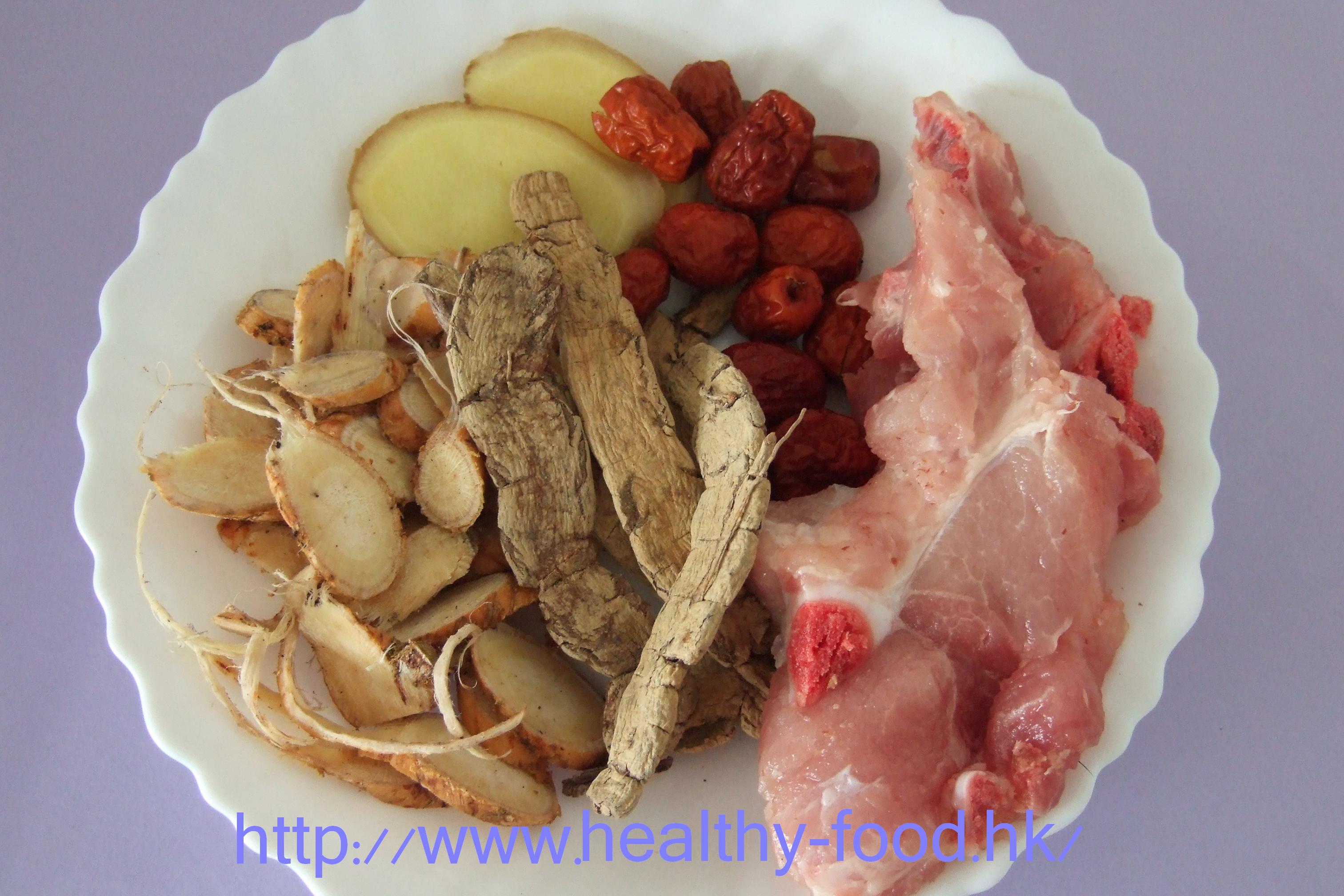
Beyond the hard work of rehabilitation, a stroke survivor can be supported with nourishing food. Bro Niu builds this pot around morinda and fresh millettia root — herbs traditionally used to strengthen the sinews and bones — with red dates, ginger and pork tailbone. Traditionally it is associated with supporting the liver and kidneys and strengthening a weak lower back and legs, and it is offered to those who feel unsteady on their feet.
Who it suits / who should be cautious
- Those in stroke recovery with weak, unsteady legs, or with weak lower-back and knees.
- Also traditionally used for poor development in children and leg weakness after polio.
- This soup is mild and can be taken in pregnancy. If taking blood-thinners, space it 1–2 hours from medication. Do not give it to anyone with swallowing difficulty — please see a doctor, and keep up physical therapy.
Why these ingredients (the food-therapy logic)
- Morinda (ba ji): classically associated with supporting the kidneys and warming the lower back and knees.
- Millettia root (niu da li): traditionally used to strengthen the sinews, bones and legs.
- Red dates and ginger (hong zao, sheng jiang): warm the middle and support the blood.
- Pork tailbone (zhu wei gu): a rich, traditional base for back-and-knee tonic soups.
Ingredients (3–4 bowls)
| Ingredient | Amount | Notes |
|---|---|---|
| Morinda (ba ji) | ~38 g | rinsed (the inner stem can stay in) |
| Fresh millettia root | ~75 g | peeled, sliced |
| Fresh ginger | 3 slices | |
| Red dates (jujube) | 8 | rinsed |
| Pork tailbone | ~450 g | blanched |
Method
- Blanch the pork tailbone; peel and slice the fresh millettia root; rinse the morinda and red dates.
- Put everything into a pot with 8 bowls of water (cold water is fine) and simmer about 3 hours down to 3–4 bowls.
Bro Niu’s tips
Fresh millettia root is sold at herbal-medicine stalls. This soup is also traditionally used for poor development in children and for leg weakness after polio. Most importantly, keep encouraging the survivor to move and to do their rehab exercises — that matters more than any soup.
Community questions answered (selected)
- Q (ff): My husband had an ischaemic stroke in early May, now with right-side paralysis; he has high blood pressure, diabetes and takes blood-thinners. Is this soup suitable, and should it be spaced from his meds? Bro Niu: This soup is fine — use cold water, simmer 2–3 hours, and drink it about 1 hour after his medicine. Help him move his limbs often; acupuncture works well and quickly.
- Q (Winifred): Can a woman 4 months pregnant drink this stroke soup? Bro Niu: Yes, this soup can be taken in pregnancy.
- Q (susan): Can I add fresh burdock to this soup? And do the eucommia (du zhong) and achyranthes (niu xi) go in the same pot? Bro Niu: Eucommia and achyranthes can go in together — eucommia strengthens the sinews and bones, and achyranthes is a “guiding” herb that directs the action down to the lower back and legs. Cook the fresh burdock as a separate soup.
Published July 29, 2011 · Adapted and translated for Nourilo from a traditional home-kitchen recipe. Approx. 2 min read.