Soups
Gastrodia, Polygonatum and Walnut Soup
traditionally associated with calming liver wind, nourishing blood, and supporting relief from migraines and dizziness

Why people make this soup
Migraines are genuinely disabling. When a bad episode strikes, some people cannot get out of bed — the pain is relentless, and there can be visual disturbances like flashing lights on one side. Pain medication offers temporary relief, but many people look for something that might help reduce how often the attacks come. In traditional Cantonese food therapy, this type of migraine is often associated with “liver wind” — a pattern where insufficient nourishment to the liver leads to internal stirring that rises up to disturb the head. This soup was designed to address that root pattern: gastrodia calms liver wind and stops head pain; polygonatum and walnuts provide deep nourishment to support the brain and blood over time. The result is a savoury, mildly sweet soup that is pleasant to drink and gentle enough to take regularly.
Who it suits / who should be cautious
- People who experience recurring migraines, dizziness, or tension headaches, especially those associated with fatigue, blood deficiency, or stress
- Can be used regularly on a long-term basis — Bro Niu recommends 2–3 servings per week as a course of treatment
- Those currently unwell with a cold or flu, or with an active fever, should wait until fully recovered before drinking this soup
- Pregnant women at 35 weeks or beyond may drink this soup; earlier in pregnancy, consult a doctor
- People breastfeeding may drink this soup, but wait 3–4 hours before nursing to allow time for the herbs to clear
- Walnuts are warming in nature and should not be paired with cold-natured ingredients such as tianshan snow lotus fruit
- If headaches are severe, worsening, or accompanied by high blood pressure, visual changes, or other concerning symptoms, please see a doctor
Why these ingredients (the food-therapy logic)
- Gastrodia (tian ma): One of the most widely used herbs in traditional Chinese medicine for head complaints. It is traditionally associated with calming “liver wind” — the internal stirring thought to underlie migraines and dizziness — and with improving blood circulation to the head. It is often combined with fish head in Cantonese tradition for enhanced effect.
- Polygonatum (huang jing): A nourishing rhizome that is traditionally considered to tonify qi and essence, support the middle, and sustain the body over time. In this formula it provides the foundational nourishment that allows the gastrodia to do its calming work.
- Walnut kernels (he tao rou): Walnuts are traditionally considered to benefit the brain (their shape echoes the brain in classical Chinese thinking) and to warm and strengthen the kidneys. They add richness to the broth and contribute to the nourishing quality of the overall soup.
- Red dates (hong zao): Naturally sweet, traditionally associated with nourishing blood, calming the mind, and harmonising a formula. Here they add gentleness and flavour balance.
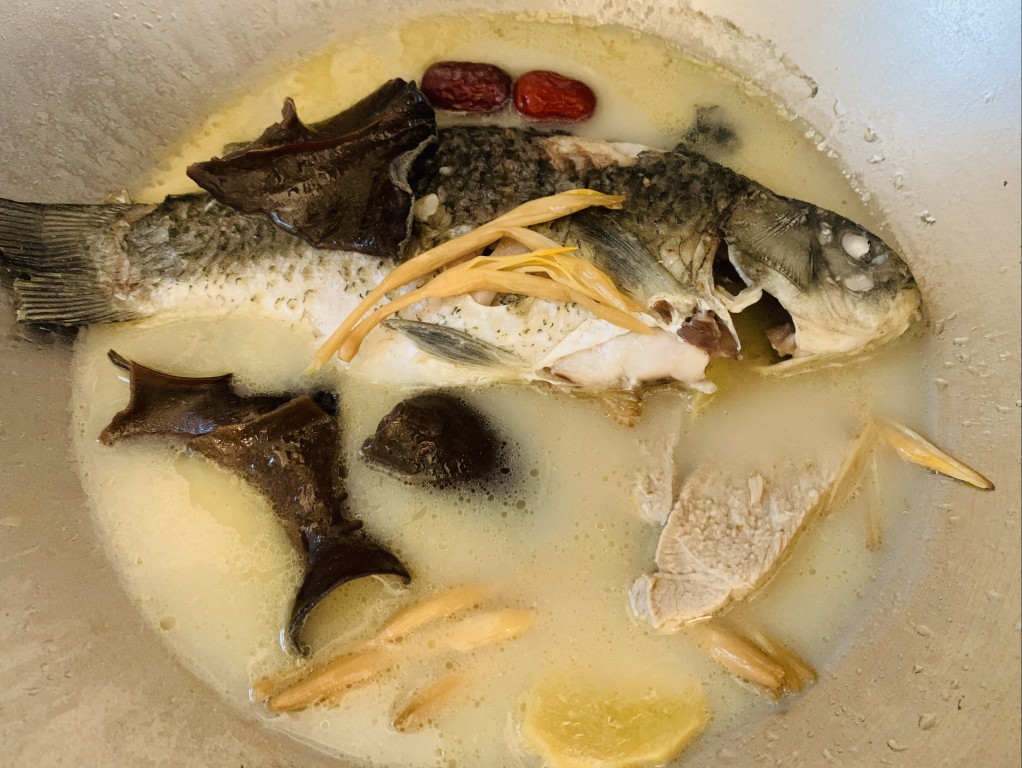
- Lean pork: Provides protein and a savoury base for the broth. A large fish head (da yu tou) can be used in place of or alongside the pork — Bro Niu notes that adding a fish head noticeably improves the therapeutic effect.
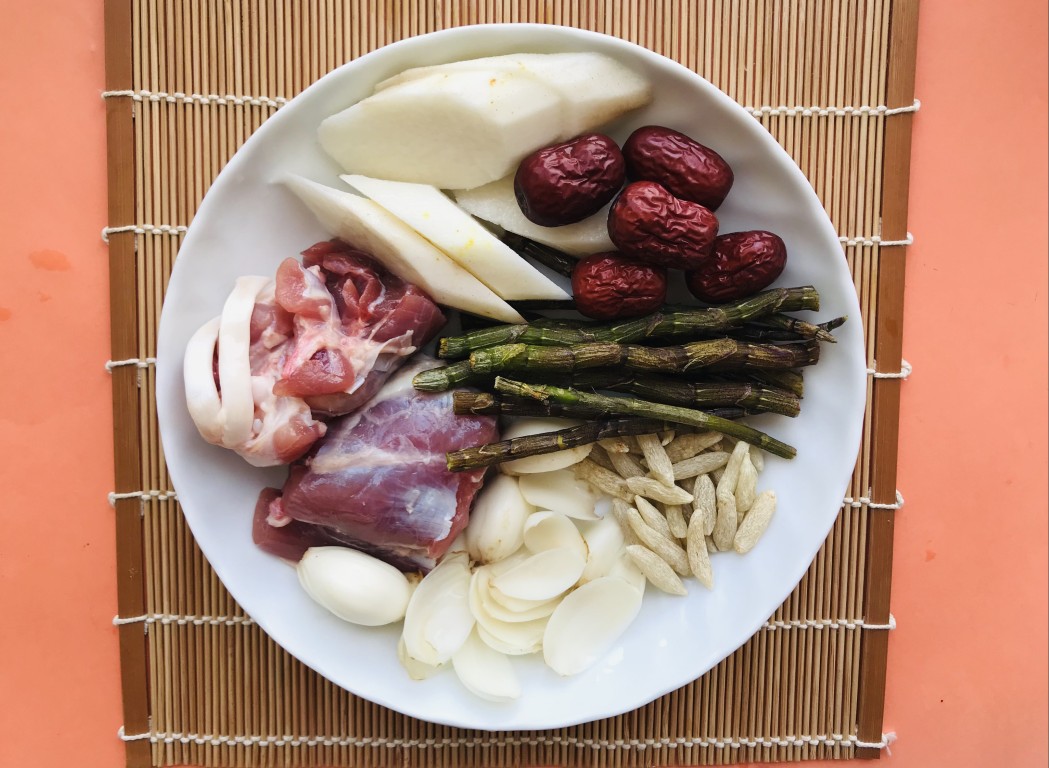
Ingredients (2 bowls, serves 1–2)
| Ingredient | Amount | Notes |
|---|---|---|
| Gastrodia rhizome (tian ma) | 3 qian (~11 g) | Rinse and soak briefly |
| Polygonatum (huang jing) | 5 qian (~19 g) | Rinse and soak briefly |
| Walnut kernels | 1 liang (~37 g) | Rinse |
| Red dates | 6 pieces | Rinse; pitting optional |
| Lean pork | 6 liang (~225 g) | Blanch in boiling water first to remove impurities |
Method
- Blanch the lean pork briefly in boiling water, then drain and discard the blanching water. This removes impurities and keeps the broth clean.
- Rinse and briefly soak the gastrodia, polygonatum, walnuts, and red dates.
- Place all ingredients in a pot with 5 bowls of water.
- Bring to a boil, then reduce to a gentle simmer and cook for 1 hour, until the liquid has reduced to approximately 2 bowls.
- Drink warm, dividing the 2 bowls over the course of the day.
Bro Niu’s tips
Adding a large fish head to the pot alongside or instead of the pork makes a noticeable difference to the therapeutic effect — this is Bro Niu’s preferred version for those with more frequent or severe migraines. This soup is well-suited to long-term intermittent use: the recommended pattern is 2–3 servings per week, taken as a course. Once symptoms improve significantly, you can stop. Do not take it every single day — giving the body rest days between servings is better practice with herbal-based soups. For a larger batch serving 5–7 people, increase to 10 bowls of water and cook for 1 hour; add extra lean pork to give the broth more body and flavour.
Community questions answered (selected)
-
Q (Jade): I have had a headache for a long time, almost every day for several hours. I made this soup yesterday and today it is noticeably less painful. How many days in a row should I take it, and how much per day? Bro Niu: If you can feel the benefit, take it for 3 consecutive days, then stop for 3 days before starting another course. Divide the 2 bowls over the course of each day — drink one in the morning and one in the evening.
-
Q (Bobo): I am a chronic hepatitis B carrier and I have been getting frequent headaches. After taking the fish head soup version of this recipe for one month, my headaches have clearly reduced. How should I continue the treatment? Can it be completely resolved? Bro Niu: Migraines can be improved with consistent treatment. Continue at a rate of about 2 times per week until your symptoms are well under control.
-
Q (Candy): My husband gets frequent headaches and we have tried a tian ma and chuan xiong soup but it didn’t help. He tends to feel cold and doesn’t handle tonics well. What else can we try? Bro Niu: If headaches are frequent and not responding to food therapy, I would suggest your husband see a doctor to rule out causes such as insufficient blood flow to the brain or other underlying conditions. You can try: huang jing 5 qian, tian ma 3 qian, red dates 6 pieces, fresh ginger 3 slices — cooked with a large fish head for 1 hour. This version is particularly helpful for blood deficiency and migraine-type headaches.
Published September 2, 2011 · Adapted and translated for Nourilo from a traditional home-kitchen recipe. Approx. 5 min read.