Soups
Red-Skin Peanut, Jujube & Longan Soup
traditionally associated with nourishing the blood, supporting platelet production, and strengthening the spleen
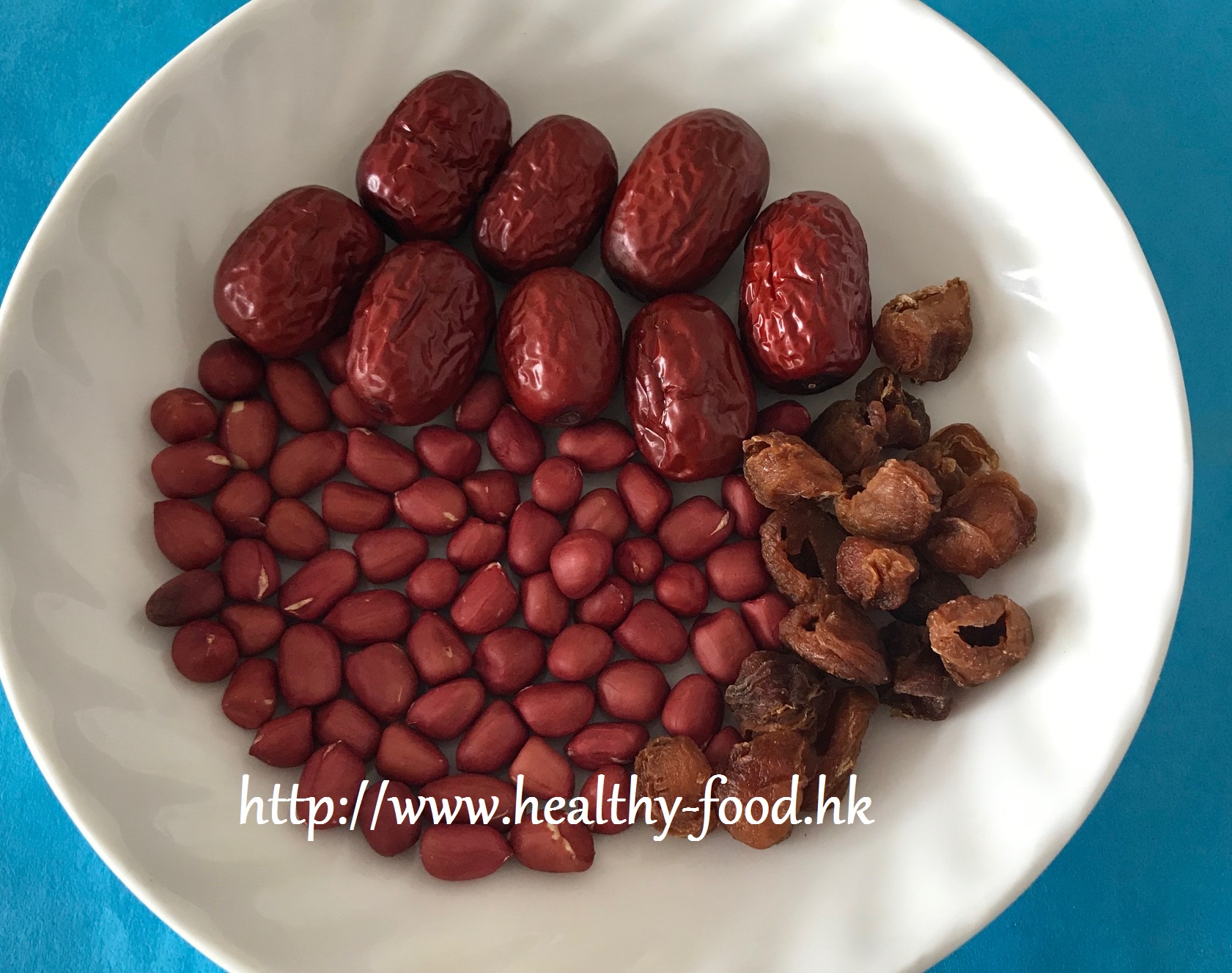
Why people make this soup
When someone asks Bro Niu about food therapy for low platelet counts, the answer almost always starts here. People with this condition tend to have what Chinese food therapy calls qi-blood deficiency and spleen weakness — they bruise easily, tire quickly, feel short of breath, and may look pale or thin. This sweet, cheerful-looking soup is built around a deceptively simple idea: the deep-red skin of the peanut has long been prized in Chinese food culture as a blood tonic, and modern research has explored extracts from peanut skins in relation to platelet-related conditions including thrombocytopenic purpura and thalassaemia. Paired with iron-rich jujubes and longan flesh — which nourishes the heart and spleen and calms the mind — this becomes a comforting everyday brew that even children enjoy.
Who it suits / who should be cautious
- Suited to people with qi-blood deficiency or spleen weakness; those experiencing easy bruising, pallor, or low energy
- Children can drink this soup (a 16-month-old baby may have half a bowl, per Bro Niu)
- Suitable for people with liver haemangioma alongside anaemia
- People with a very heat-prone constitution (re di) can replace longan flesh with mulberry fruit (sang shen zi) to reduce warmth
- Platelet count — whether too high or too low — requires medical investigation. Do not self-manage; always work with your doctor
Why these ingredients (the food-therapy logic)
- Red-skin peanuts (hong yi hua sheng): The deep-red papery skin coating the peanut is the therapeutic part — traditional Chinese medicine has long associated it with nourishing the blood and helping the body retain blood; research has investigated peanut skin extracts for platelet-related conditions
- Red dates / jujubes (hong zao): Deeply nourishing to the spleen and blood; one of the most widely used tonic foods in Chinese culinary tradition
- Dried longan flesh (gui yuan rou): Nourishes the heart and spleen, supports qi and blood, and traditionally calms an anxious or unsettled mind
Ingredients (3 bowls)
| Ingredient | Amount | Notes |
|---|---|---|
| Red-skin peanuts | 75 g (2 liang) | Use peanuts with the red skin intact; cook the whole nut |
| Red dates (jujubes), pitted | 6–8 pieces | Remove the stones |
| Dried longan flesh | ~19 g (5 qian) |
Method
- Rinse all ingredients and soak for about 15 minutes to clean.
- Place everything in a pot with 6 bowls (about 1.2 litres) of water.
- Bring to a boil, then simmer for about 1 hour.
- Serve the soup, eating the peanuts, dates, and longan as well — the solids carry much of the nourishment.
Bro Niu’s tips
This soup is naturally sweet and tastes pleasant enough that children rarely refuse it. Anyone with spleen deficiency or blood deficiency can drink it regularly. Over time, consistent consumption is said to bring a rosier complexion and smoother, more radiant skin. When buying red-skin peanuts, look for ones with a deep, vivid red skin — the richer the colour, the better. If you cannot find them, regular unpeeled (with skin) small peanuts work as a substitute. When buying peanut skins separately, use about 11 g (3 qian) of dried peanut skin cooked with dates.
Community questions answered (selected)
-
Q (大菲): Do I cook the whole peanut, or just the skin? Bro Niu: If you have bought red-skin peanuts, cook them whole — peel and all. You can eat the cooked peanuts at the end.
-
Q (Janet): A man with a heat-prone constitution and hair loss — is this soup suitable? Bro Niu: Simply replace the longan flesh with mulberry fruit (sang shen zi) and it will be fine for a heat-prone person.
-
Q (Connie): Can a 16-month-old baby drink this? Bro Niu: A 16-month-old baby can have half a bowl.
Published July 27, 2019 · Adapted and translated for Nourilo from a traditional home-kitchen recipe. Approx. 3 min read.