Congee & Porridge
Black Bean, Walnut and Black Brown Rice Congee
traditionally associated with calming the nerves and nourishing the spirit
Why people make this congee
Sometimes life piles on all at once — work stress, strained relationships, a general sense that things aren’t going your way. Traditional food therapy recognises that our emotional state is connected to the body’s nutritional balance, and that deficiencies in certain vitamins and minerals can contribute to low mood. This richly coloured congee, packed with whole grains, legumes and healthy fats, is designed to nourish the body from the inside out. It won’t replace professional care for serious low mood, but as a daily warming bowl, it offers genuine nutritional value alongside the comfort of a home-cooked meal.
Who it suits / who should be cautious
- Suitable for most adults as a nourishing everyday food
- Particularly associated with supporting those who feel mentally fatigued, emotionally flat, or have difficulty sleeping
- Traditionally noted as helpful for maintaining healthy blood pressure and cholesterol levels
- Pregnant women should substitute cooked red beans (chi xiao dou) for the raw Job’s tears (yi mi), as raw Job’s tears are not recommended during pregnancy
Why these ingredients (the food-therapy logic)
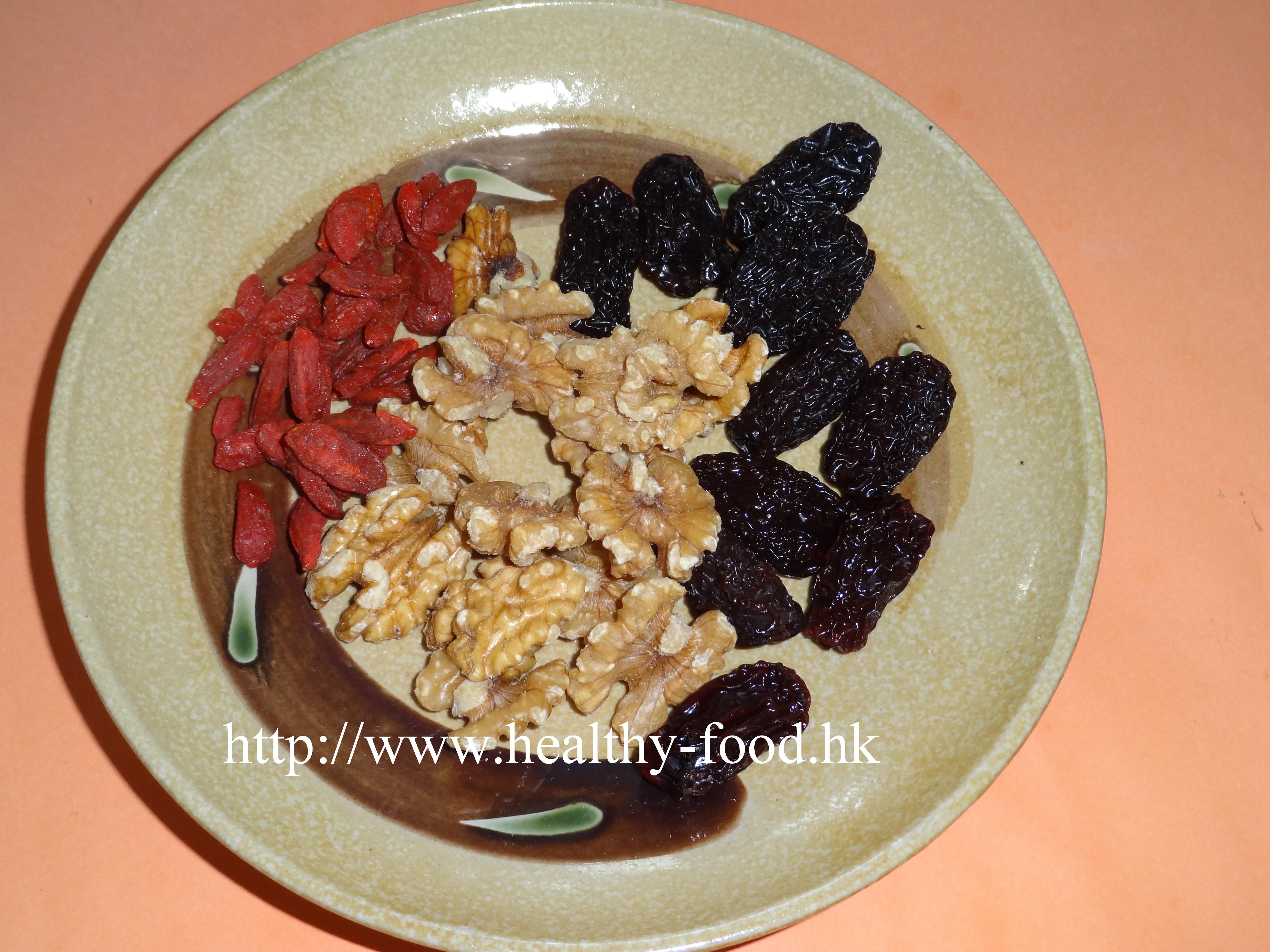
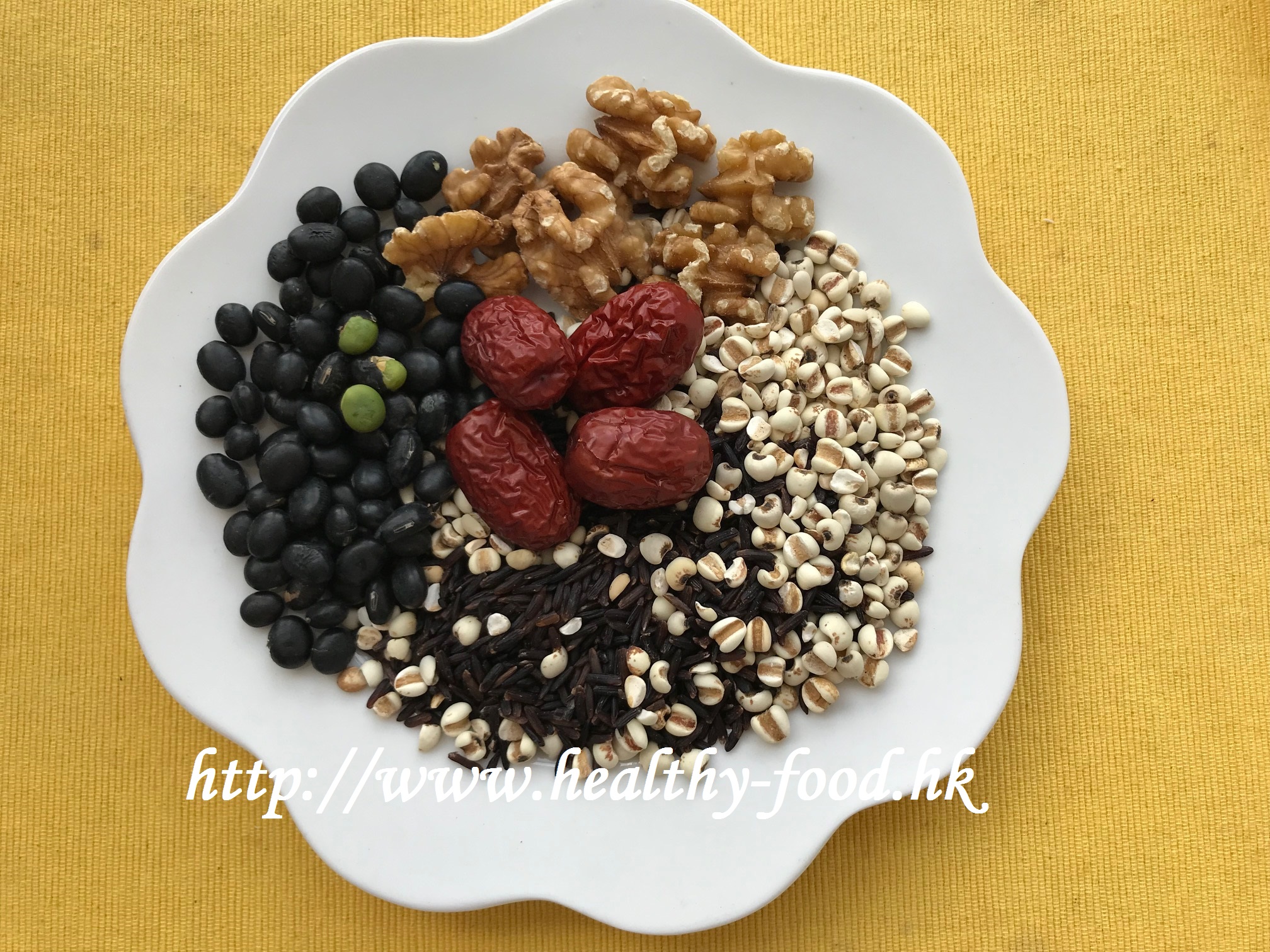
- Green-kernel black beans (qing ren hei dou): Rich in protein, iron, and B vitamins. In traditional food therapy, they are associated with nourishing the kidneys and liver, which in turn supports emotional resilience.
- Walnut (he tao): Walnuts have long been associated in Chinese food culture with supporting brain function and calming the mind. They are a good source of omega-3 fatty acids.
- Job’s tears / pearl barley (yi mi): Used to resolve dampness and support the spleen — in traditional theory, a well-functioning spleen grounds the mind and prevents foggy thinking.
- Red dates (hong zao): A beloved tonic ingredient associated with nourishing the blood and calming the spirit.
- Black brown rice (hei zao mi): Compared to white rice, black rice is richer in fibre, antioxidants, vitamin E, iron and protein. Its low glycaemic index also makes it suitable for people monitoring blood sugar.
Ingredients (4–5 bowls)
| Ingredient | Amount | Notes |
|---|---|---|
| Green-kernel black beans | 1 liang (~37 g) | Rinse and soak |
| Walnut kernels | 1 liang (~37 g) | Rinse |
| Job’s tears / pearl barley | 1 liang (~37 g) | Rinse and soak (substitute red beans for pregnancy) |
| Red dates | 4–5 pieces | Pit and rinse |
| Black brown rice | 2 liang (~75 g) | Rinse and soak |
| Rock sugar | to taste | Add at the end |
| Water | 8 bowls (~2 L) |
Method
- Rinse and soak all ingredients separately for 30–60 minutes. Pit the red dates.
- Place all ingredients except the rock sugar into a pot with 8 bowls of water.
- Bring to a boil, then reduce heat and simmer for about 1.5 hours, stirring occasionally, until the congee thickens and reduces to about 4–5 bowls.
- Stir in rock sugar to taste and cook until dissolved.
- Serve warm. Eat as a meal — the congee is filling and satisfying on its own.
Bro Niu’s tips
This congee has a lovely earthy sweetness from the black rice and dates. Any whole grain or coarse grain can be used — black glutinous rice, brown rice, red rice — they all work well. Eating this regularly is associated in traditional food therapy with nourishing the five organs, lifting mood, and supporting healthy blood pressure and cholesterol. Pregnant women should swap out the raw Job’s tears for red beans.
Community questions answered (selected)
-
Q (Bobby): Can I use black glutinous rice, regular brown rice, red rice, or black quinoa instead of black brown rice? Bro Niu: Yes, you can use any whole grain or coarse grain you like — they all work well.
-
Q (reader): How many grams is one liang? Bro Niu: One liang is approximately 37.5 grams.
Published October 3, 2020 · Adapted and translated for Nourilo from a traditional home-kitchen recipe. Approx. 3 min read.