Herbal & Flower Teas
Loquat Adenophora Almond Tea
Traditionally used to soothe the lungs and ease itchy-throat cough
Why people make this tea
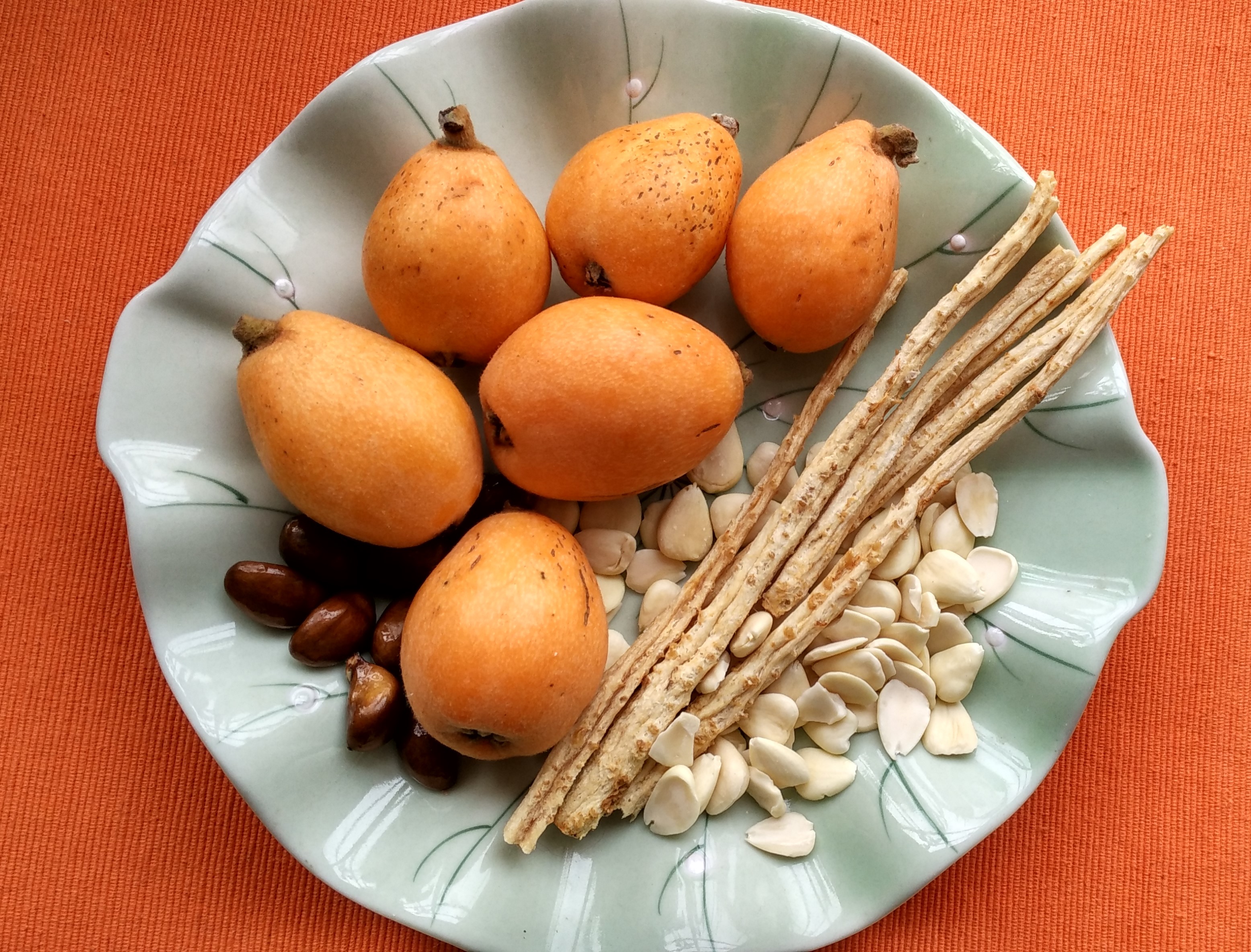
Every spring when fresh loquats appear in the market, Bro Niu likes to put a batch of this simple tea on the stove. Loquat flesh is tender, fragrant, and rich in vitamins; it has a long history in Chinese food therapy as a lung-soothing fruit. Paired with adenophora root — a classic herb for nourishing lung yin — and the classic duo of sweet and bitter apricot kernels, this tea is beautifully clear and refreshing. It is particularly well-suited to the kind of persistent, tickly cough that tends to flare up when the air is dry or after a respiratory illness has mostly resolved.
Who it suits / who should be cautious
- Suitable for adults and children with lung-heat type cough, irritable-airway cough with throat tickling, or lingering dry cough in older adults
- Suitable for all ages — Bro Niu describes this as gentle enough for young and old alike
- Those with a weak spleen or chronic loose stools should avoid it, as the tea is cooling in nature
- If you prefer to reduce sugar, simply omit the rock sugar — loquat provides its own natural sweetness
Why these ingredients (the food-therapy logic)
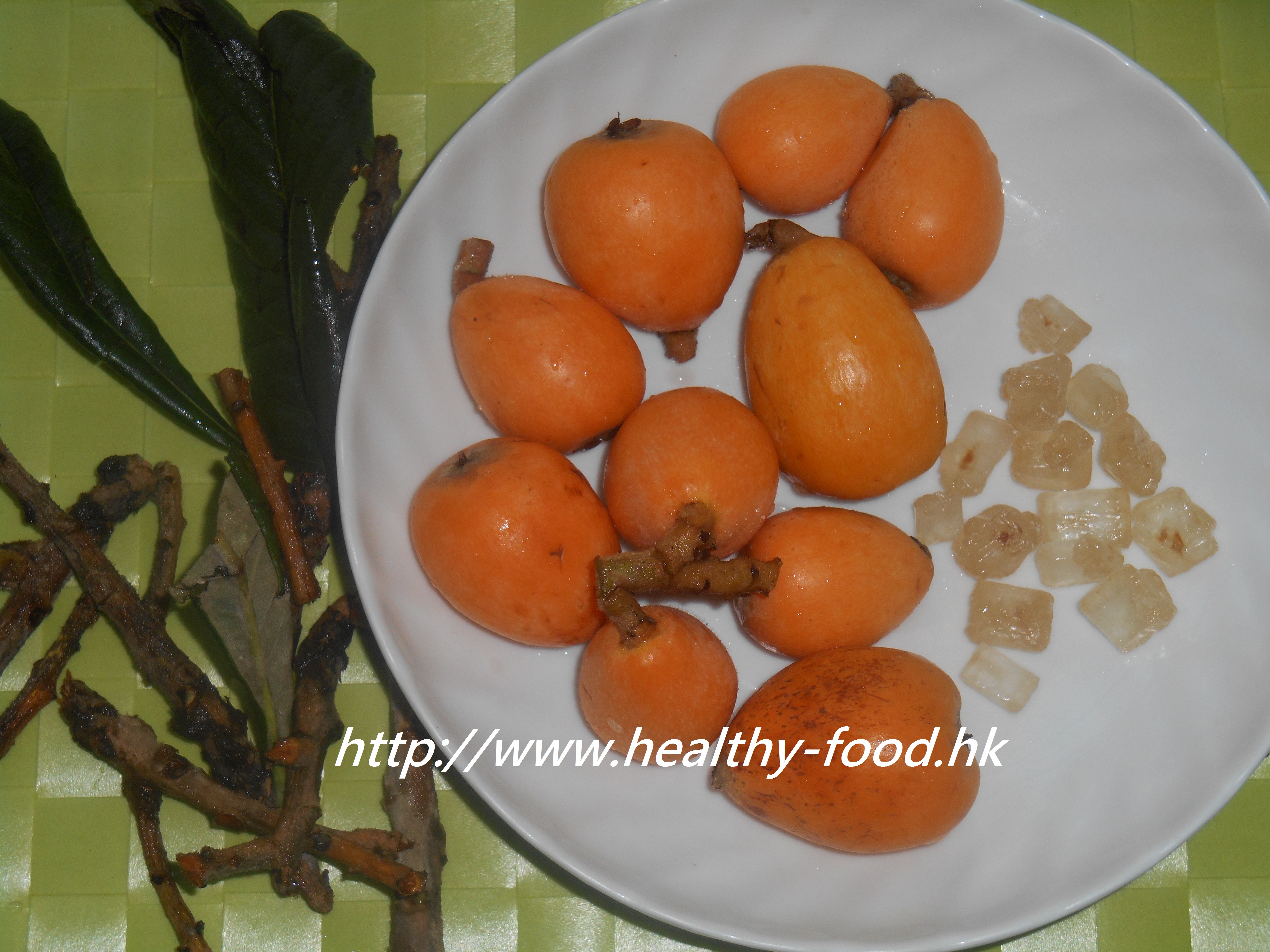
- Loquat fruit (pi pa): Rich in vitamins and minerals; traditionally associated with moistening and soothing the lungs, supporting digestion, and calming a cough. The stone (kernel) is also used — when cracked, it contributes to the cough-relieving effect of the brew
- Adenophora/glehnia root (sha shen): A yin-nourishing herb frequently used in food therapy for dry, heat-related cough; considered gentler than other stronger herbs
- Sweet and bitter apricot kernels (nan bei xing, Prunus armeniaca): The sweet (nan) kernel moistens while the bitter (bei) one descends lung qi; together they are a classic pairing for cough and wheezing
- Rock sugar (bing tang): Mild and moistening; can be omitted if phlegm is a concern, as sugar may increase phlegm production
Ingredients (2 bowls / 1–2 servings)
| Ingredient | Amount | Notes |
|---|---|---|
| Fresh loquat | 6–8 pieces | Peel and cut flesh; crack the stone |
| Adenophora root (sha shen) | ~18 g (5 qian) | Soak and rinse before use |
| Sweet-bitter apricot kernels (nan bei xing) | ~37 g (1 liang) | Rinse; combined equal parts sweet and bitter |
| Rock sugar | A small amount | Optional; omit if there is a lot of phlegm |
Method
- Peel the loquat and cut the flesh into pieces. Crack the stone with the back of a knife and include it in the pot — do not discard it.
- Soak and rinse the adenophora root and apricot kernels.
- Combine all ingredients in a pot with 4.5 bowls (about 1.1 litres) of water.
- Bring to a boil, then reduce to a gentle simmer for 30 minutes until reduced to about 2 bowls.
- Strain and serve. Add rock sugar to taste if desired.
Bro Niu’s tips
The loquat stone is not wasted — cracking and simmering it along with the flesh contributes to the phlegm-dissolving quality of the tea. This brew is mild and pleasant, suitable for the whole family. Those with spleen deficiency or loose stools should not drink it. If fresh loquats are unavailable, dried loquat leaves (pi pa ye) can substitute, though the flavour and sweetness will differ.
Community questions answered (selected)
-
Q (Shirley): I have had a sensitive-airway cough for a month and a half. My thyroid has been completely removed. What can I drink? Bro Niu: Try steeping 3 dark plums (wu mei), 1 tablespoon of chrysanthemum flowers (ju hua), and 5 to 6 slices of licorice root (gan cao) in boiling water. Drink daily, re-steeping until the flavour fades. Continue for as long as symptoms persist — this combination works on wind-type and sensitive-airway cough, but patience is needed.
-
Q (Angel Leung): I have been dry-coughing non-stop this week, worse at night, and it feels like something is tickling my throat constantly. What tea or soup can help? Bro Niu: Try wu wei zi (schisandra) 3 qian, gan cao (licorice) 2 qian, and one ju bing (mandarin cake). Simmer in 4 bowls of water down to 2 bowls. Take for 3 consecutive doses and see if there is improvement.
-
Q (ying): My husband has been coughing for a month — likely post-nasal drip type, with white phlegm and throat tickling both day and night. He has already taken antibiotics, steroids, and injections. Bro Niu: Try one ju bing (mandarin cake) cut into pieces, chen pi (dried tangerine peel) 2 qian, and xin yi hua (magnolia flower bud) 3 qian. Simmer 4 bowls down to 2 bowls and take for 3 consecutive doses.
Published March 17, 2018 · Adapted and translated for Nourilo from a traditional home-kitchen recipe. Approx. 4 min read.