Soups
Lion's Mane, Poria & Soybean Soup
Traditionally associated with supporting spleen function and mental vitality

Why people make this soup
As we age, it is natural for memory and mental sharpness to gradually fade — many older adults find themselves forgetting recent events, feeling mentally foggy, or responding more slowly than they used to. In Chinese food therapy, the spleen is considered the root of acquired vitality and is linked to mental clarity, so nourishing it is a traditional first step. Bro Niu often recommends this soup as a gentle, easy-to-prepare brew that the whole family can enjoy together, making it a practical addition to any household’s weekly routine.
Who it suits / who should be cautious
- Suits: older adults or anyone experiencing forgetfulness, low energy, or difficulty concentrating; the whole family as a regular wellness soup
- Those with weak digestion or poor appetite should not eat too many soybeans in one sitting — ensure they are cooked until very soft
- This soup is gentle and broadly suitable; no strong contraindications for healthy adults
Why these ingredients (the food-therapy logic)
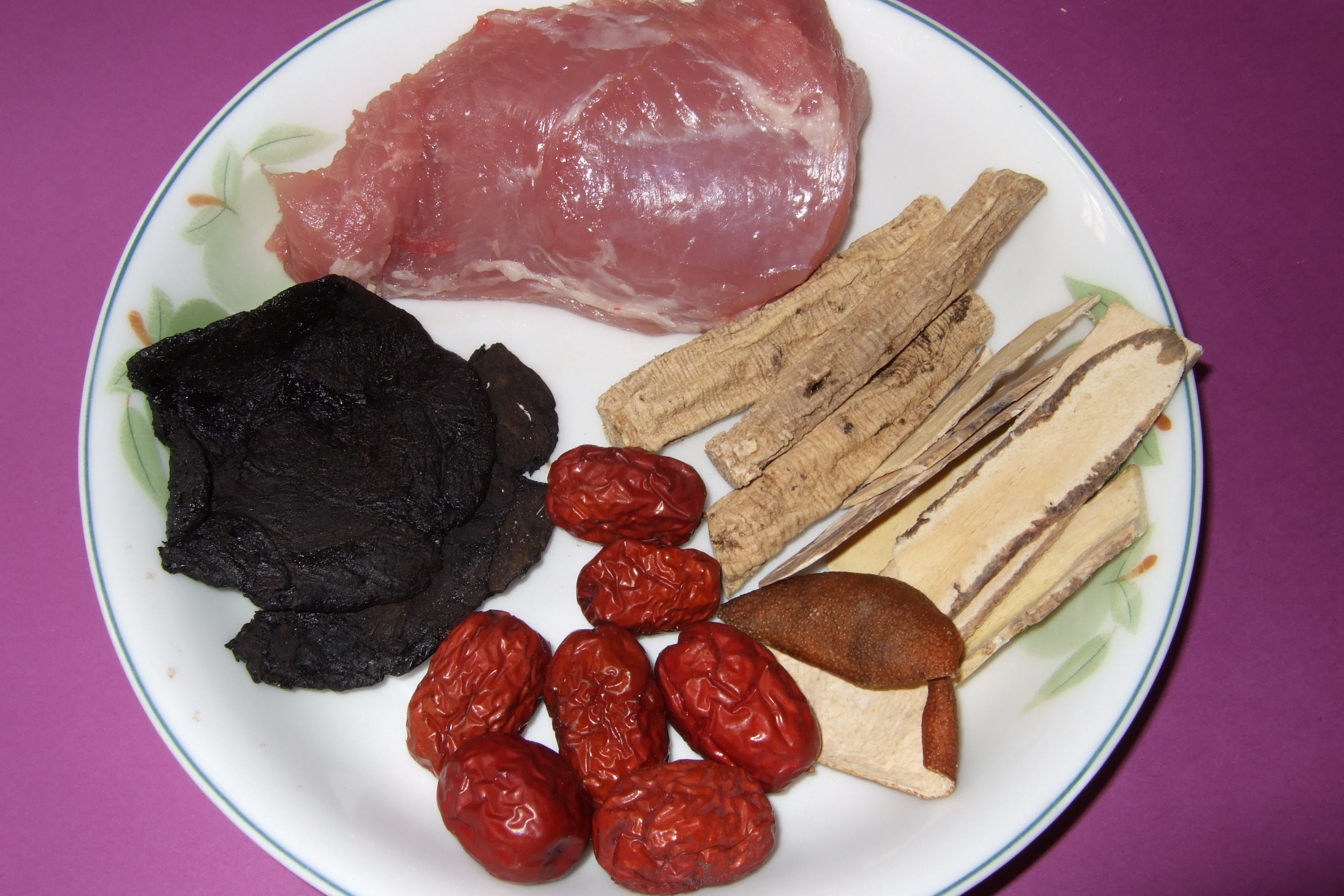
- Lion’s mane mushroom (hou tou gu): One of the most celebrated mushrooms in Chinese food medicine, traditionally regarded as supporting the stomach and spleen; contemporary research is exploring its bioactive compounds (hericenones, erinacines), though clinical conclusions are still pending
- Poria (fu ling): A widely used tonic fungus associated with calming the mind, supporting the spleen, and draining dampness; a staple of Chinese herbal cuisine
- Soybeans (huang dou): Rich in lecithin (including acetylcholine precursors), soybeans have a long history in Asian diets associated with brain nourishment; must be fully cooked to neutralise anti-nutritional factors
- Red dates (hong zao): Mildly sweet; traditionally used to harmonise the other herbs and support qi and blood
- Lean pork / chicken breast: Adds protein and savory depth; blanching first removes impurities for a cleaner broth
Ingredients (3–4 bowls)
| Ingredient | Amount | Notes |
|---|---|---|
| Lion’s mane mushroom (dried) | 75 g (2 liang) | Soak and rinse before use |
| Poria (fu ling) | 38 g (1 liang) | Soak and rinse |
| Dried soybeans | 75 g (2 liang) | Soak, rinse; cook until fully soft |
| Red dates, pitted | 8 pieces | Soak and rinse |
| Lean pork or chicken breast | 300 g (half jin) | Blanch in boiling water first |
| Water | 6 bowls (~1.4 L) |
Method
- Blanch the pork (or chicken breast) briefly in boiling water; remove and rinse.
- Soak and rinse the lion’s mane mushroom, poria, soybeans, and red dates.
- Place all ingredients into a pot with 6 bowls of water.
- Bring to a boil, then reduce to a gentle simmer and cook for about 2 hours until the beans are fully tender.
- Serve the broth and eat the soup ingredients together.
Bro Niu’s tips
Soybeans add wonderful richness to this soup and are traditionally associated with brain nourishment, but do not add too many at once — they need to be cooked completely soft before eating. Those with sluggish digestion or a tendency to bloat should eat the beans in smaller amounts. Adding a small piece of dried tangerine peel (chen pi) can help ease any gassiness from the beans.
Community questions answered (selected)
-
Q (Ling): My husband was recently diagnosed with chronic bronchitis. He also has trouble sleeping since he quit smoking. Do you have any affordable soups or food remedies to help boost his immunity? Bro Niu: Try a brew of perilla leaf (zi su ye, 38 g) and dried ginger (gan jiang, 11 g) in 3 bowls of water, simmered down to 2 bowls — drink morning and evening for one week. Both herbs are inexpensive and available at Chinese herbal shops. For lung support over time, try soups with adenophora root (sha shen), ophiopogon (mai dong), snow ear fungus, almonds (nan bei xing), and figs with partridge or fresh fish.
-
Q (Sammi): I have been sleeping very poorly — vivid dreams all night, wake up exhausted. I tried your black bean, lotus seed, wheat berry, and jujube soup but only make it every two to three weeks. Is once a week better? Bro Niu: That soup works well for insomnia and heavy dreaming — ideally drink it two to three times a week until symptoms improve. The ingredients are very gentle, so frequent use is fine. Your husband’s cold hands and feet sound like yang deficiency; try stewing some velvet antler or sea horse with red dates and chicken. A daily cup of brown sugar ginger tea with a small piece of cinnamon bark can also help warm the body.
-
Q (amy): I keep getting milia (oil seed bumps) on my face even though I rarely eat fried food. What can I do? Bro Niu: Milia are often linked to a diet high in fat, sweets, chocolate, cake, or other high-calorie foods — not only fried foods. Try mixing 1 tablespoon of coix seed powder (yi ren fen) with warm water and massaging it onto your face; leave for 30 minutes then rinse. Or use a raw, shelled ginkgo nut cut open and rubbed gently on the affected areas, rinse after 30 minutes. Drink plenty of water, eat more vegetables and fruit, keep bowel movements regular.
Published February 13, 2012 · Adapted and translated for Nourilo from a traditional home-kitchen recipe. Approx. 4 min read.