Soups
Huai Yam, Euryale Seed & Crocodile Meat Soup
Traditionally associated with strengthening the spleen, lungs, and kidneys to ease chronic cough and wheezing
Why people make this soup
Some children seem to catch every cold that passes through their classroom, and after each illness they are left weakened and coughing again before they have fully recovered. Some older adults who smoked for years are dealing with a similar pattern — a chronic cough and shortness of breath that never quite go away. In both cases, Chinese food therapy points to a depletion of the spleen, lung, and kidney systems, which in turn creates persistent phlegm and reduced respiratory resilience.
Crocodile meat is an unusual but traditional Cantonese ingredient — dried crocodile meat has been used in soups and stews for generations, specifically valued for its reputation of supporting the lungs and kidneys. Bro Niu notes that the flavour of this soup is genuinely delicious, which makes it one of those rare remedies that people actually look forward to drinking. One reader commented that after following this recipe weekly for several months, she no longer heard her family member’s persistent cough — a testimonial Bro Niu finds heartening.
Who it suits / who should be cautious
- Suits: children and adults with chronic or recurring cough, mild wheezing, or frequent respiratory illness; particularly for those with a cooler constitution; suitable for the whole family
- Not suitable during active cold, fever, or acute infection — those with external illness should wait until fully recovered
- Crocodile meat is warming in nature; those with pronounced heat constitution (frequent thirst, dry mouth, hot feeling) should moderate intake
- Pregnant women: this soup is generally considered safe, but consult a Chinese medicine practitioner before regular use
- G6PD deficiency (favism): Bro Niu has confirmed this soup is suitable for those with this condition
Why these ingredients (the food-therapy logic)
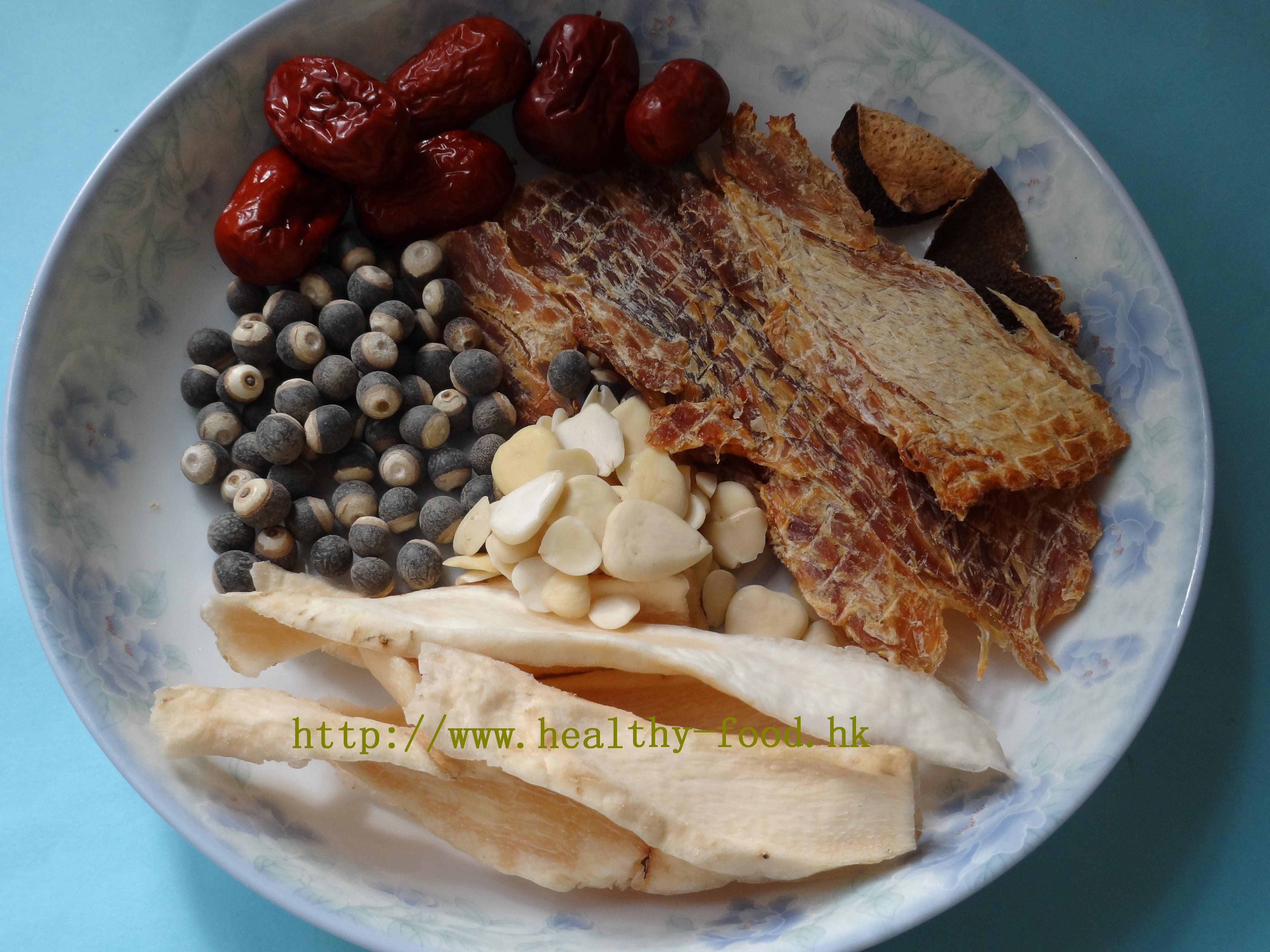
- Crocodile meat (e yu rou): A traditional Cantonese tonic ingredient associated with supporting the lungs and kidneys, reducing phlegm, and calming cough and wheezing; frozen fresh meat is considered more reliable in quality than some dried products, which may be adulterated
- Chinese yam (huai shan): A classic spleen and lung tonic; helps address the digestive root of recurring respiratory illness
- Euryale seeds (qian shi): Support kidney function and consolidate fluids; the “old tree” variety (darker in colour) is considered by Bro Niu to have stronger kidney-supporting action
- North and south apricot kernels (nan bei xing): Combined, these kernels moisten the lungs and support the clearing of phlegm; a staple of Cantonese respiratory soups
- Dried tangerine peel (chen pi): Moves qi, reduces phlegm, and harmonises the digestive tract
- Red dates: Harmonise the formula and add natural sweetness
Ingredients (3 bowls)
| Ingredient | Amount | Notes |
|---|---|---|
| Chinese yam (huai shan, dried) | 38 g (1 liang) | Soak and rinse |
| Euryale seeds (qian shi) | 38 g (1 liang) | Soak and rinse |
| North and south apricot kernels | 38 g (1 liang) | Soak and rinse |
| Dried tangerine peel (chen pi) | 1 piece | Soak and rinse |
| Red dates | 6 pieces | Soak and rinse |
| Dried crocodile meat | 38 g (1 liang) | Soak briefly, then blanch before use |
| — or frozen crocodile meat | 225 g (half pound) | Blanch before use |
| Water | 6 bowls (~1.4 L) |
Method
- Soak the dried crocodile meat briefly, then blanch in boiling water and rinse (or blanch frozen meat directly).
- Soak and rinse the huai yam, euryale seeds, apricot kernels, tangerine peel, and red dates.
- Place all ingredients in a pot with 6 bowls of water.
- Bring to a boil, then reduce to a gentle simmer and cook for about 2 hours until reduced to approximately 3 bowls.
- Serve and eat both the broth and soup ingredients.
Bro Niu’s tips
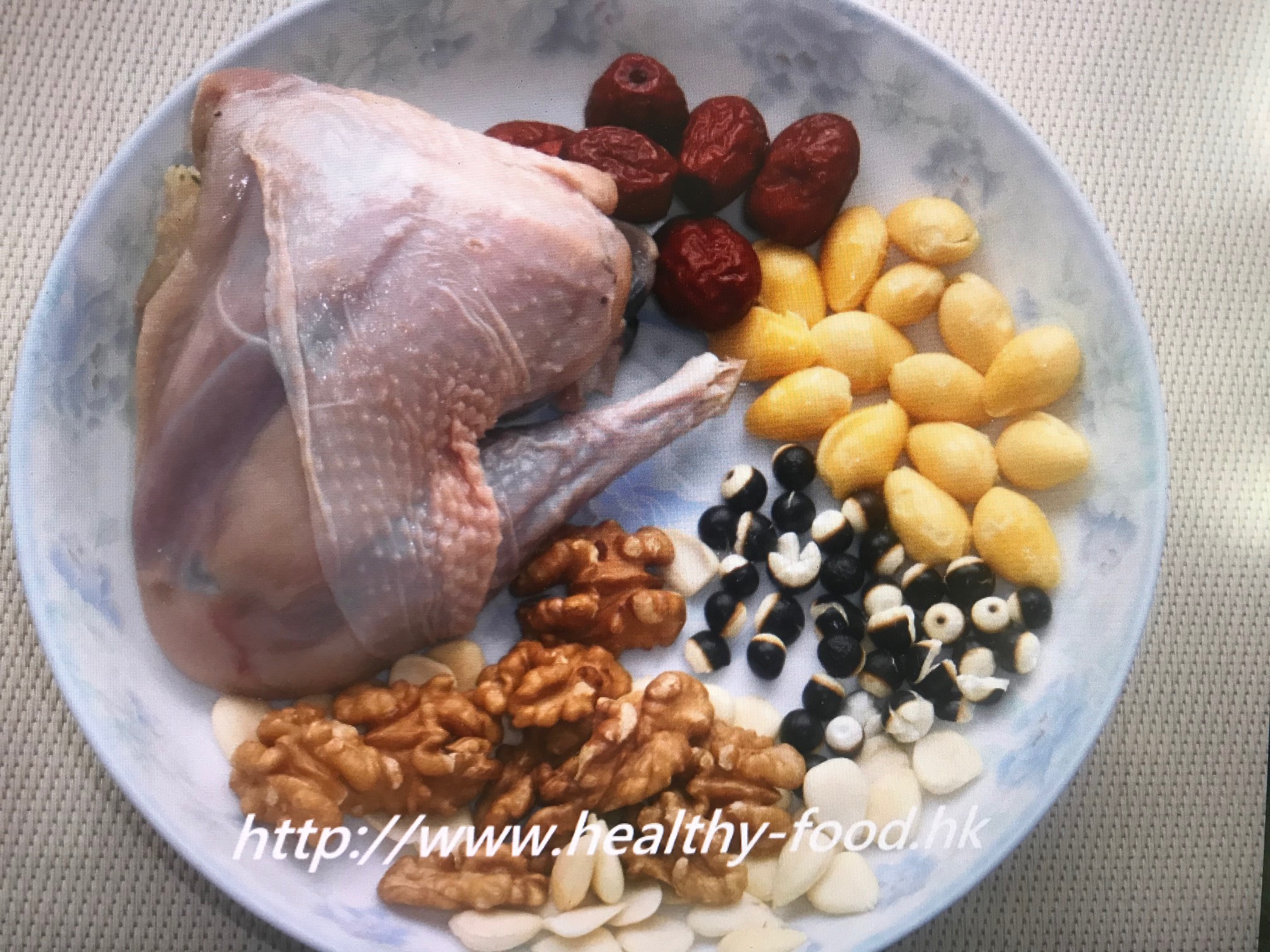
The old-tree euryale seeds (darker in colour) shown in the photo have stronger kidney-supporting properties, but any good-quality euryale seeds work well. Dried crocodile meat from reliable sources has better therapeutic concentration than fresh, but frozen crocodile meat is more consistently authentic — Bro Niu recommends frozen if you are unsure of the source of dried products. This soup can also be made as a double-steamed soup (炖汤) by placing all ingredients in a covered ceramic pot with water, sealed, and steamed for 3 hours — the result is lighter and more fragrant. If red dates are unavailable or you prefer to omit them, dried figs (wu hua guo) make a lovely substitute.
Community questions answered (selected)
-
Q (Lee): My family member has had a persistent cough every autumn for years. I followed your recipe weekly for several months, and we have not heard that cough at all this season. Thank you, Bro Niu. Bro Niu: That is wonderful to hear — wishing you and your family continued good health!
-
Q (Janey): I have been coughing for a month with thin white phlegm, worse at night. Is this soup suitable? I have crocodile meat at home. Bro Niu: Thin white phlegm worse at night often points to a cold-type cough. First try perilla leaf (zi su ye), perilla seed (su zi), ginger, and licorice root tea for 3 batches to clear the cough. Once the active cough settles, then make the crocodile meat soup with ginkgo nuts, apricot kernels, walnuts, and figs to strengthen the lungs and reduce future recurrence.
-
Q (Tammy): My one-year-old has had a persistent cough and sometimes wheezes at night. Is this soup suitable for a baby? Bro Niu: For a one-year-old, try carrot (1 small piece), red dates (6, pitted), and dried tangerine peel (half a piece) cooked into a congee — this is gentle, tasty, has no side effects, and is very effective for persistent cough in young children. The crocodile meat soup can also be tried — give one bowl to see how the baby responds. Continue for 2–3 batches.
Published February 21, 2012 · Adapted and translated for Nourilo from a traditional home-kitchen recipe. Approx. 5 min read.