Soups
Chinese Yam, Lotus Seed and Yellow Ear Fungus Soup
traditionally supports digestive wellness, skin nourishment and healthy ageing

Why people make this soup
Yellow ear fungus — also called golden wood ear or osmanthus ear (gui hua er) because of its faint floral scent — is one of the most prized fungi in Chinese culinary tradition. Unlike the more familiar black wood ear, it is thick-fleshed and exceptionally rich in plant-based gelatin. Bro Niu points out that while it does not match black wood ear for improving blood circulation and lowering blood pressure, it has its own strengths: it is traditionally associated with supporting the liver’s fat metabolism, keeping fat from accumulating in the liver, and contributing to skin suppleness over time.
Combined with Chinese yam, lotus seeds, goji berries and red dates in this simple soup, the result is a deeply nourishing, mildly sweet pot that the whole family can enjoy — from children to elders.
Who it suits / who should be cautious
- Suitable for the whole family as a regular wellness soup
- Particularly valued by those who want to support their skin from within or feel digestive energy has been low
- Pregnant women may drink this soup (Bro Niu confirmed in Q&A)
- Not suitable when you have a cold, fever or flu — wait until you recover fully
- Yellow ear fungus soaked in water for too long at room temperature may develop harmful nitrite compounds. Soak in the morning and cook by lunch or dinner the same day; do not leave it soaking overnight at room temperature (soak in the fridge for longer soaks)
Why these ingredients (the food-therapy logic)
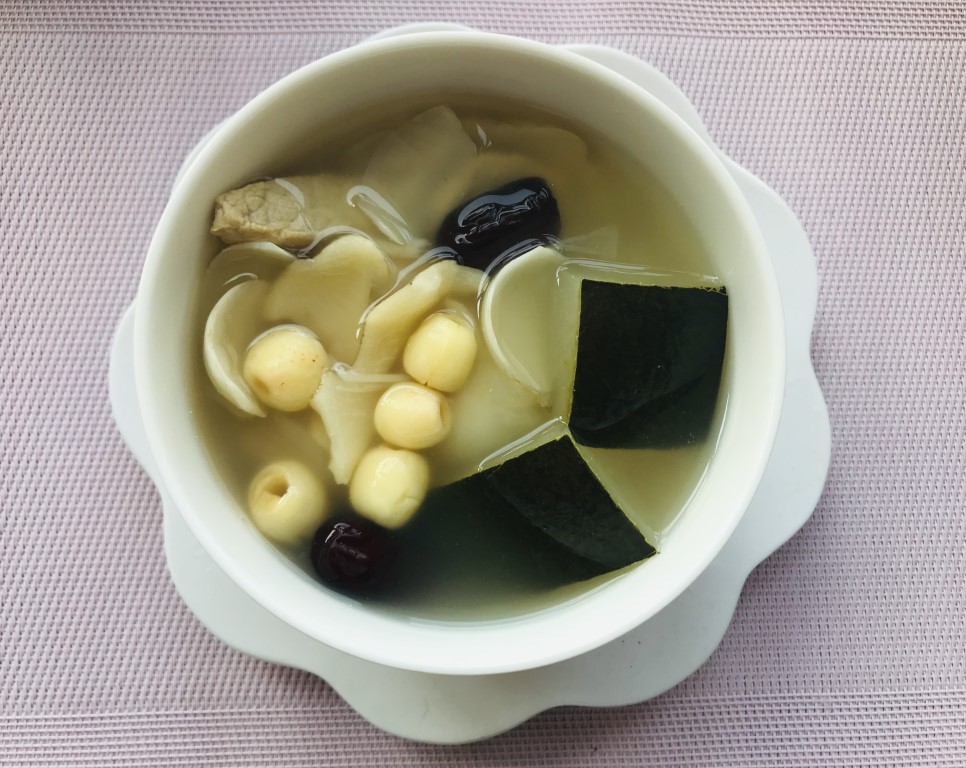
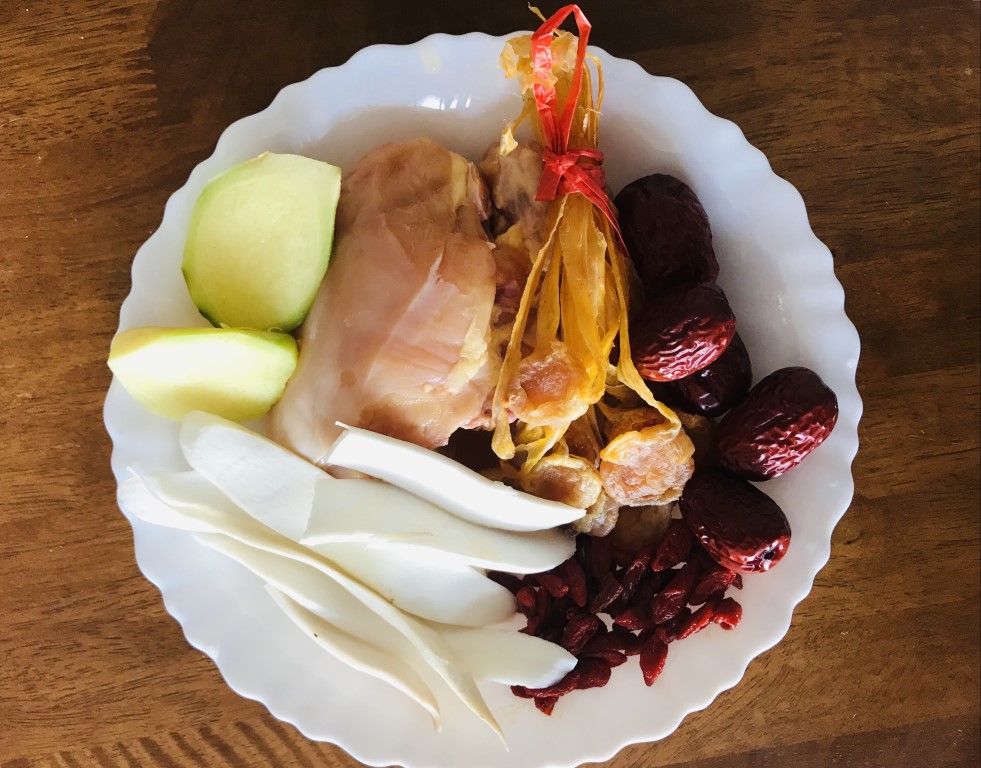
- Yellow ear fungus (huang er): Rich in plant-based collagen and polysaccharides. Traditionally associated with nourishing the liver, supporting skin moisture and counteracting fatigue. Has a delicate osmanthus fragrance.
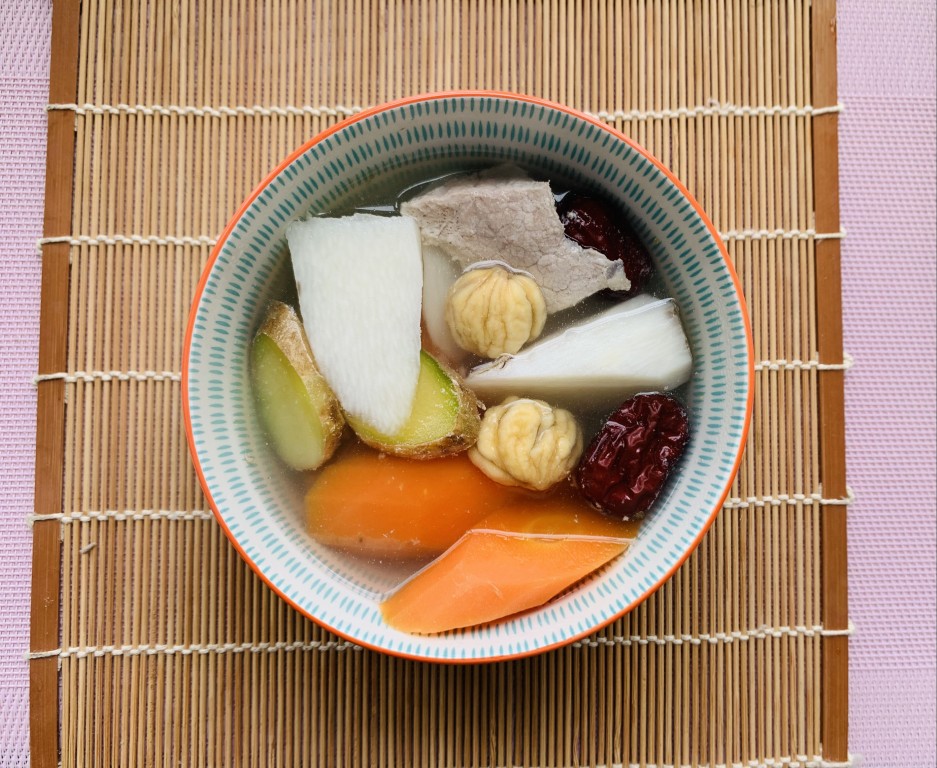
- Chinese yam (huai shan): One of the most commonly used tonic herbs in Cantonese soups. Considered sweet and neutral, associated with strengthening the spleen and stomach and supporting healthy digestion and absorption.
- Lotus seeds (lian zi): Traditionally used to support the spleen and calm restlessness. Bro Niu recommends the skin-on variety (you yi lian zi) for better therapeutic value.
- Goji berries (gou qi zi): Widely known for their association with liver and eye nourishment.
- Dried figs (wu hua guo): Considered moistening and tonifying; helps round out the flavour of the soup.
- Red dates (hong zao): Warming, sweet and commonly used to support blood and energy.
Ingredients (4 bowls)
| Ingredient | Amount | Notes |
|---|---|---|
| Dried Chinese yam (huai shan) | ~37 g (1 liang) | Rinse well |
| Dried lotus seeds (lian zi) | ~37 g (1 liang) | Skin-on preferred |
| Goji berries (gou qi zi) | ~15 g (4 qian) | Rinse |
| Yellow ear fungus (huang er) | ~7.5 g (2 qian) | Soak overnight or for at least 6 hours; trim stem |
| Dried figs (wu hua guo) | 4 pieces | |
| Red dates (hong zao) | 6 pieces | |
| Lean pork (shou rou) | ~225 g (6 liang) | Blanched |
| Water | 8 bowls (~1.6 L) |
Method
- Soak the yellow ear fungus in plenty of cold water for at least 6 hours (or overnight in the fridge). After soaking, trim off the tough central stem. The fungus should expand considerably.
- Blanch the lean pork in boiling water briefly, drain and rinse.
- Rinse the Chinese yam, lotus seeds, red dates, dried figs and goji berries.
- Place all ingredients in a pot with 8 bowls of water.
- Bring to a boil, then reduce to a simmer and cook for 2 hours, reducing to approximately 4 bowls.
- Serve the soup together with all the solid ingredients — eat both soup and toppings.
Bro Niu’s tips
- Yellow ear fungus is thick and dense when dry. It absolutely must be soaked for a long time — ideally overnight or at least 6 hours — before it will become tender enough to cook through. The centre remains hard if not fully rehydrated.
- Do not soak yellow ear fungus (or white wood ear) in water for too long at warm temperatures, as it can produce nitrite compounds. Soak it in the morning and use it by evening at the latest.
- If the fungus smells sharp or pungent after soaking, it has turned and should be discarded.
- Honey dates (mi zao) are made from sugar and are not a good substitute for red dates or figs in this recipe.
- This soup is not suitable during a cold or fever.
Community questions answered (selected)
-
Q (Twiggy): Which lotus seeds are better for soup — yellow-skinned or white? Bro Niu: The skin-on lotus seeds (you yi lian zi) are therapeutically better. The white lotus seeds are mainly used for sweet dessert soups or dishes like winter melon cup where appearance matters.
-
Q (reader): Can someone with uterine fibroids drink this soup? Bro Niu: Yes, this soup is fine for uterine fibroids. If you swap the yellow ear fungus for black wood ear (hei mu er), 2–3 qian, it would be even more suitable.
-
Q (Lin Xiaojie): Can pregnant women drink this yellow ear soup? Bro Niu: Yes, pregnant women may drink this soup.
Published May 20, 2013 · Adapted and translated for Nourilo from a traditional home-kitchen recipe. Approx. 4 min read.