Soups
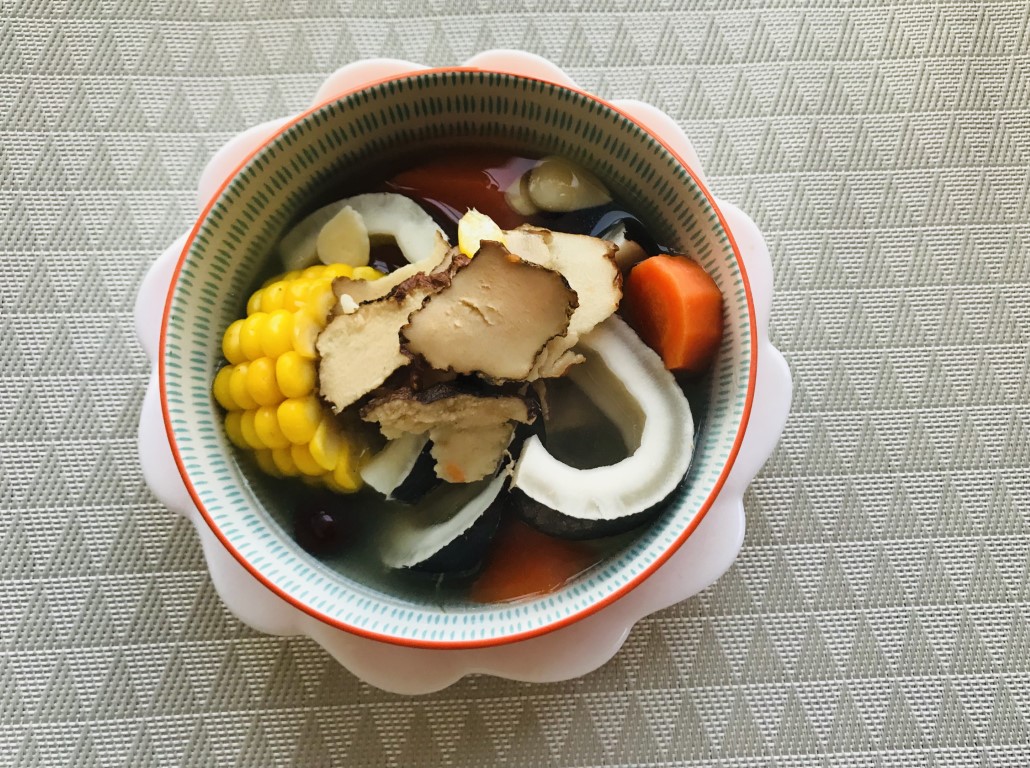
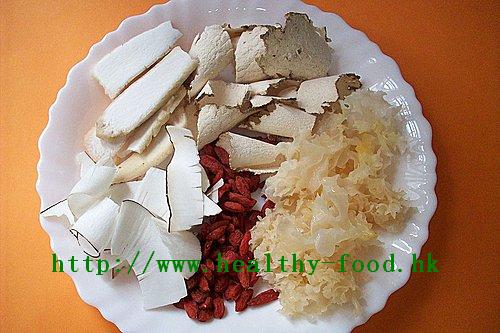
Chinese Yam, Goji, Sea Coconut, Tiger Milk Mushroom, Reishi and Snow Fungus Soup
traditionally associated with strengthening lung qi, supporting immunity, and reducing allergic cough and nasal sensitivity
Why people make this soup
Some people seem to catch every passing cold, or find their nose running and their chest tightening the moment the temperature dips. In Chinese medicine, this kind of sensitivity is often attributed to weak lung qi — the body’s defensive energy that is supposed to act like a buffer against environmental changes. Strengthening this takes time and consistency, not a quick fix. Regular gentle tonifying through food is the traditional approach, combined with sensible habits like adequate rest, appropriate layering when the weather turns, and moderate exercise.
This soup is built around five ingredients that work together to support lung and spleen function without being too warming or too cooling — a balance that makes it suitable for a wide range of people, including children, regardless of whether they tend to run hot or cold.
Who it suits / who should be cautious
- People prone to allergic cough or nasal sensitivity (allergic rhinitis) that flares with cold weather changes
- Children with a tendency toward frequent colds and weak lung constitution
- People who feel easily fatigued or have weak immunity
- This soup is considered neither too warming nor too cooling, so both hot-natured and cold-natured people can use it
- Note on water quantity: A reader confirmed with Bro Niu that the correct amount is 8–9 bowls of water (not 6 as originally printed) — this ensures adequate cooking time without the soup reducing too fast
Why these ingredients (the food-therapy logic)
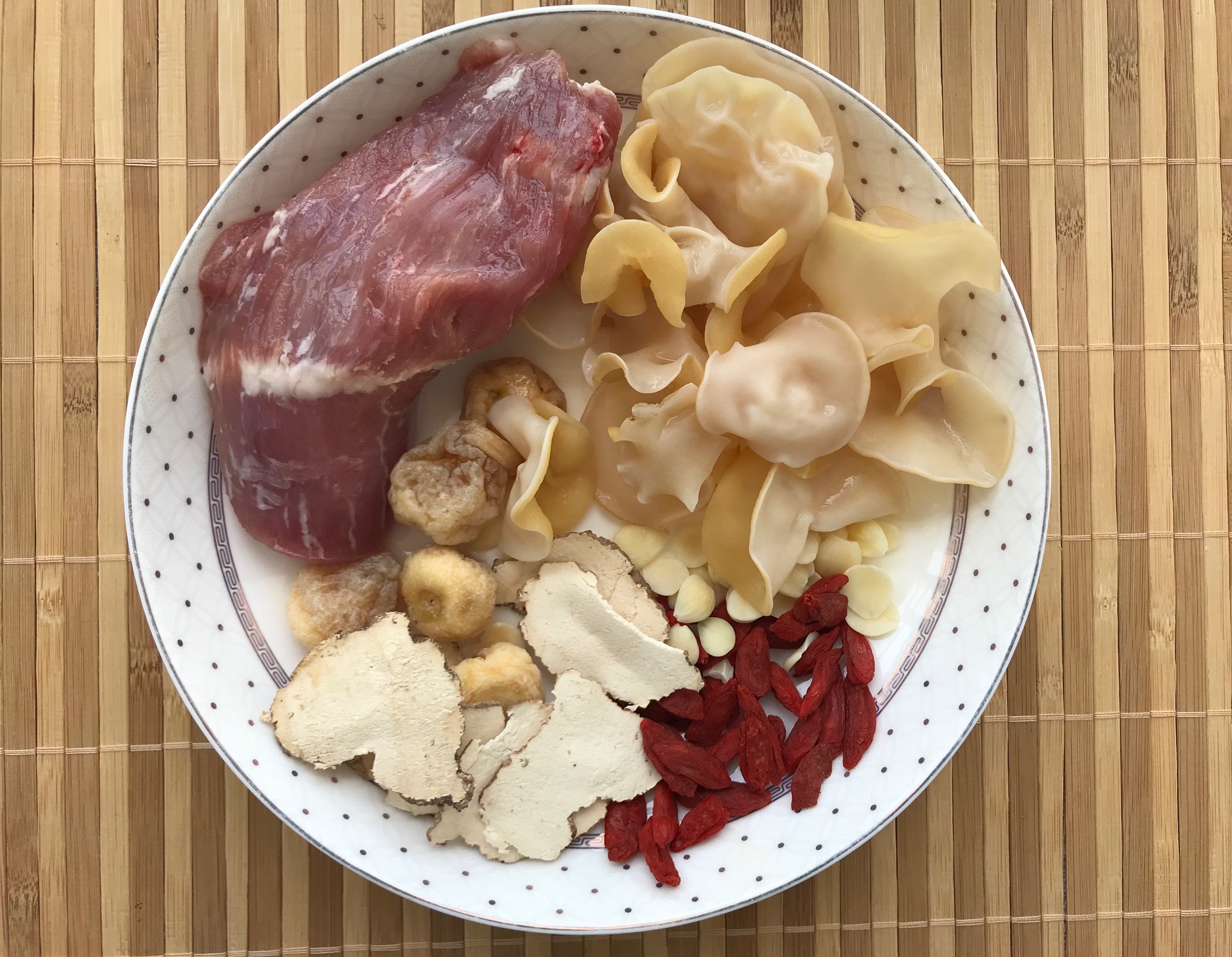
- Chinese yam (huai shan, Dioscorea opposita): One of the most important food-grade spleen and lung tonics in Chinese food therapy; gentle, slightly sweet, suitable for long-term use.
- Goji berries (gou qi zi, Lycium barbarum): Nourishes liver and kidney; traditionally associated with supporting vision and immunity; provides a mild sweetness to the broth.
- Sea coconut (hai di ye): A cooling, moistening ingredient for the lungs; helps address dry cough or heat accumulation in the respiratory tract.
- Tiger milk mushroom (hu ru ling zhi, Lignosus rhinocerotis): A mushroom from Southeast Asia increasingly studied for its respiratory benefits; traditionally used in Chinese folk medicine to support the lungs and address cough and phlegm.
- Reishi type (ling zhi, Ganoderma): Broadly tonifies immune function and is associated with calm energy rather than stimulation.
- Snow fungus (xue er, Tremella fuciformis): Nourishes lung yin and body fluids; cooling and moistening; pairs well with the slightly warming elements in the formula to create a balanced soup.
- Lean pork: Provides substance and rounds out the nutritional profile.
Ingredients (4 bowls)
| Ingredient | Amount | Notes |
|---|---|---|
| Chinese yam (huai shan) | 37 g (1 oz) | Soak if there is any sour/sulfur smell; otherwise rinse and use |
| Goji berries (gou qi zi) | 15 g (4 qian) | Rinse |
| Sea coconut (hai di ye) | 11 g (3 qian) | Rinse |
| Tiger milk mushroom (hu ru ling zhi) | 11 g (3 qian) | Rinse |
| Snow fungus (xue er) | 7.5 g (2 qian) | Soak until soft, remove stem, tear into pieces |
| Lean pork | to taste | Blanch in boiling water first, then drain |
| Water | 8–9 bowls (approx. 2–2.2 L) | See note above |
Method
- Soak the snow fungus in water until fully hydrated (about 30 minutes). Remove and discard the tough stem, then tear into smaller pieces.
- Rinse the Chinese yam (if it has a sour or sulfurous smell, soak for at least 30 minutes to remove any sulphur treatment). Rinse all other ingredients.
- Blanch the lean pork in boiling water, drain, and set aside.
- Place all ingredients in a pot with 8–9 bowls of water.
- Bring to a boil, then reduce to a medium-low simmer and cook for 2 hours until the soup reduces to about 4 bowls.
- Serve warm.
Bro Niu’s tips
This soup supports without causing dryness or heat, so it is suitable for regular use — a few times a week during cold or allergy season is ideal. It is also excellent for children with a tendency toward respiratory sensitivity. For children with nasal allergies, Bro Niu also suggests steeping magnolia flower buds (xin yi hua) as a tea — 3 days of this can often help calm nasal discharge.
Community questions answered (selected)
-
Q (Mat): The recipe says 6 bowls of water cooked for 2 hours to yield 4 bowls — but that seems like a lot of evaporation. Is that right? Bro Niu: My apologies — that was a typo in the original. It should be 8–9 bowls of water. The post is from 2012 and unfortunately cannot be edited now.
-
Q (Sylvia): How long should I soak the Chinese yam? Do I need to soak the tiger milk mushroom and sea coconut as well? Bro Niu: If it is dehydrated Chinese yam, just rinse briefly. If there is any sour smell (from sulphur fumigation), soak for at least 30 minutes. Tiger milk mushroom and sea coconut just need a quick rinse.
-
Q (Tracy): My son is just over a year old and has a nasal drip from nasal allergies. Is there anything suitable for him? Bro Niu: You can steep magnolia flower buds (xin yi hua) as a tea for your son to drink — it helps settle the nasal discharge. Try 3 consecutive days and see if there is improvement.
Published February 10, 2012 · Adapted and translated for Nourilo from a traditional home-kitchen recipe. Approx. 4 min read.