Soups
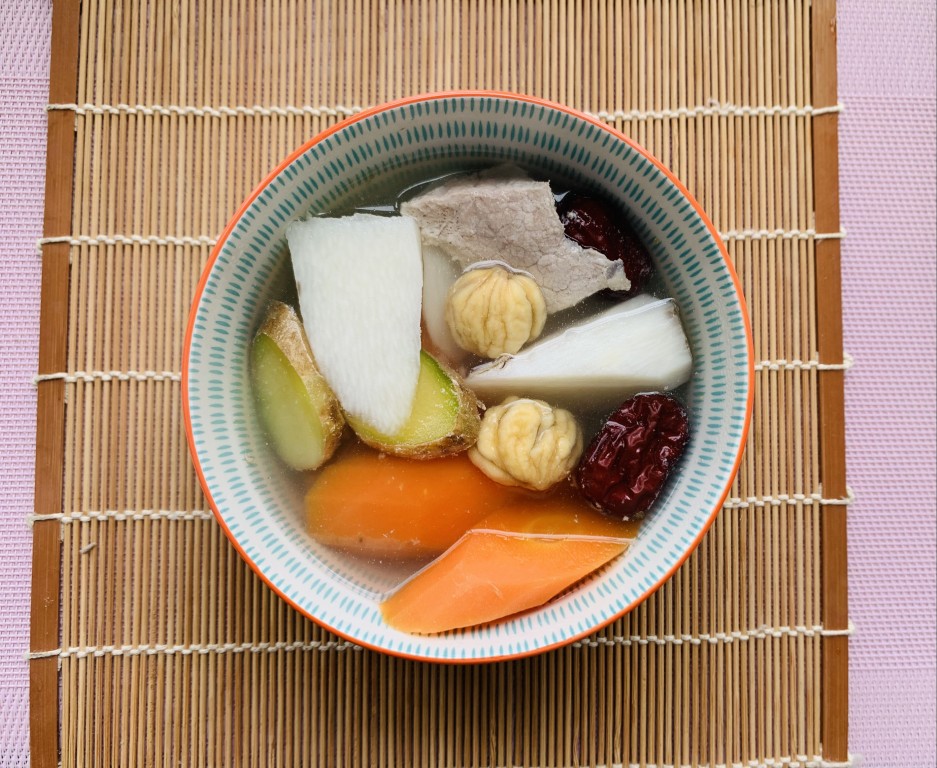
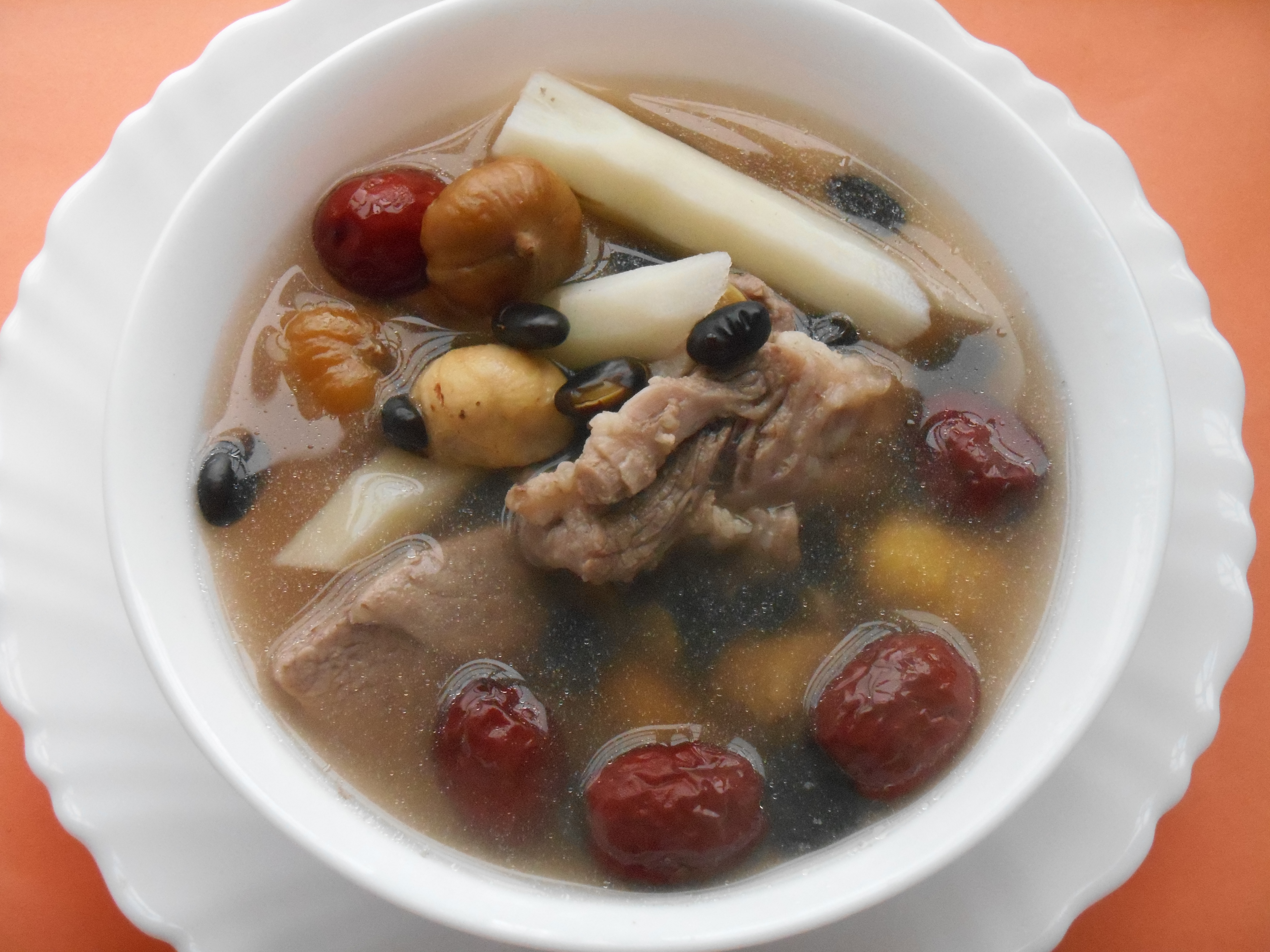
Fresh Yam, Chestnut and Black Bean Pork Shin Soup
traditionally associated with nourishing liver and kidney, supporting bone and joint health
Why people make this soup
Heel pain is something many people quietly live with — it often comes on gradually, sometimes without any obvious injury, and tends to get worse over time. In Chinese medicine, chronic heel and foot pain is often linked to the concept of liver and kidney deficiency, particularly in middle-aged and older adults. The kidneys in this framework are associated with the health of bones and connective tissue, so nourishing the kidney is seen as an important part of supporting the body’s structural resilience. This soup brings together three key food-therapy ingredients — fresh yam, chestnuts and black soybeans — all traditionally regarded as kidney-tonifying foods, to make a warm, flavoursome soup that the whole household can enjoy.
Who it suits / who should be cautious
- Suits men, women, the elderly and children — a gentle, everyday soup with no strong warming or cooling bias.
- Particularly suited to those experiencing heel pain, lower back soreness, leg weakness or mild loose stools associated with spleen deficiency.
- For best results, consume regularly (a few times per week) rather than as a one-off remedy, as food therapy builds its effects gradually.
- Those with acute inflammatory flare-ups or undiagnosed severe foot pain should see a doctor rather than relying solely on dietary support.
Why these ingredients (the food-therapy logic)
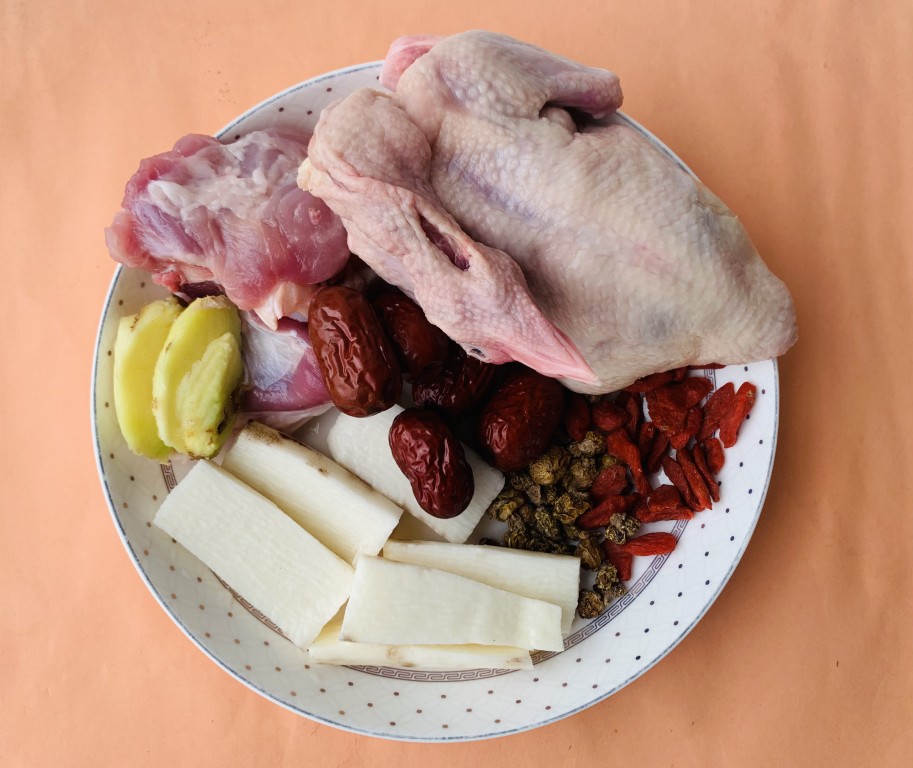
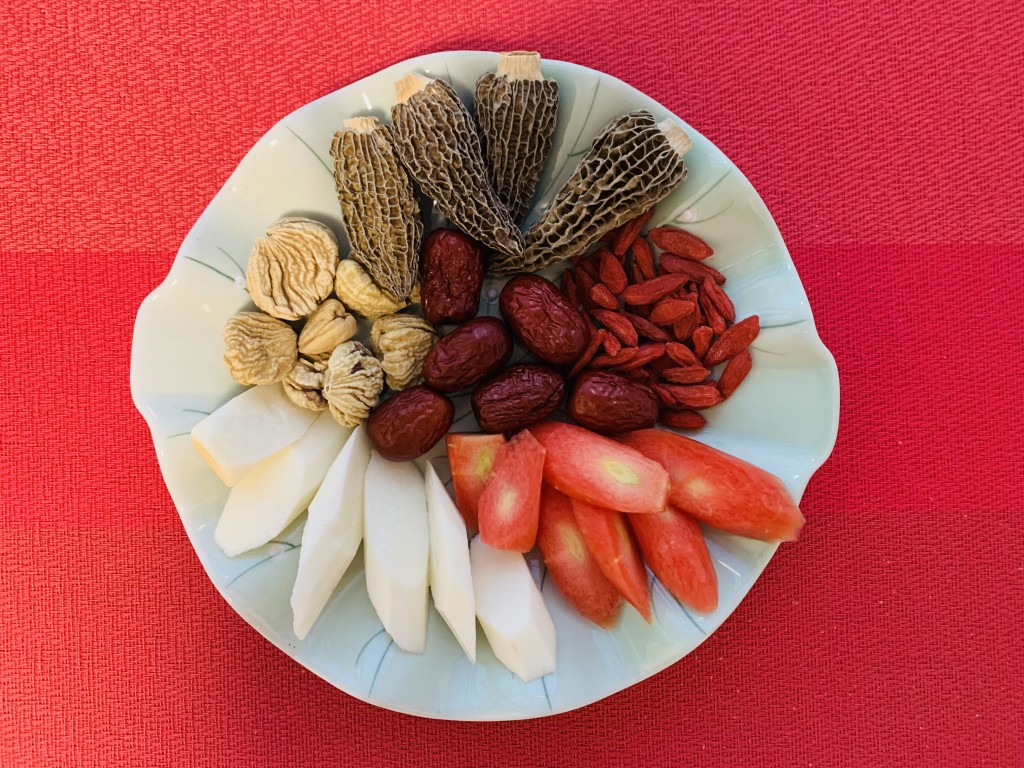
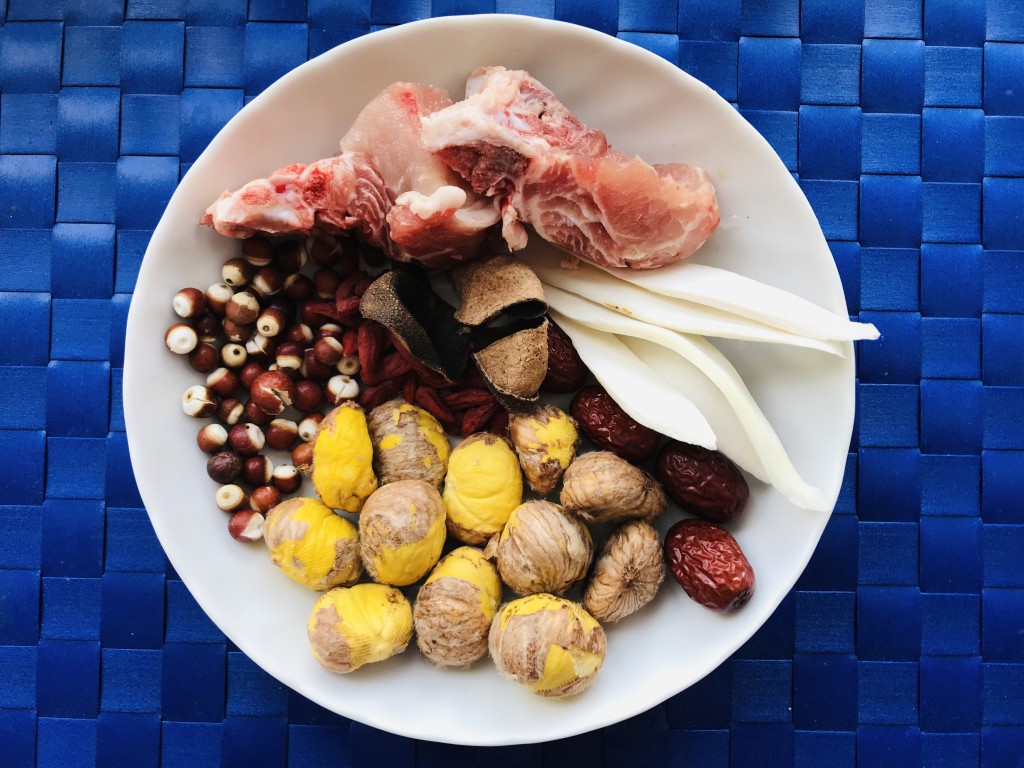
- Fresh Chinese yam (xian huai shan / Dioscorea polystachya): One of the most versatile food-therapy ingredients in Cantonese cooking. Traditionally associated with nourishing the spleen, stomach, lung and kidney, and commonly used to support vitality and digestion. Fresh yam (especially the “iron rod” variety, tie gun huai shan) has a delicate flavour and smooth texture.
- Chestnuts (li zi): Regarded in traditional food therapy as a warming kidney tonic and a food that is associated with strengthening the tendons and bones. They add natural sweetness and body to the soup.
- Green-kernel black soybean (qing ren hei dou): The specific variety to seek out here is the green-kernel black soybean, available in Chinese herbal or dried-goods shops. It is considered more medicinally tonifying than ordinary black beans, traditionally associated with nourishing the liver and kidney and supporting the joints.
- Red dates (hong zao): Pitted and added for natural sweetness and to harmonise the blend; traditionally associated with nourishing blood and supporting the spleen and stomach.
- Pork shin (zhu zhan): A lean, gelatinous cut well suited to long-simmered Cantonese soups. It enriches the broth without making it heavy.
Ingredients (4–5 bowls)
| Ingredient | Amount | Notes |
|---|---|---|
| Fresh Chinese yam (xian huai shan) | 115 g (3 liang) | Peeled, washed, cut into sections |
| Chestnuts | 115 g (3 liang) | Shell and inner skin removed |
| Green-kernel black soybean (qing ren hei dou) | 40 g (1 liang) | Soaked and rinsed |
| Red dates | 6 pieces | Pitted |
| Pork shin | 300 g (half jin) | Blanched |
| Water | 8 bowls (approx. 1.6 L) |
Method
- Blanch the pork shin in boiling water for 3–5 minutes, then rinse and set aside.
- Peel and wash the fresh yam; cut into thick sections. Prepare this just before cooking, or keep submerged in water to prevent browning.
- Remove the shell and inner skin from the chestnuts.
- Rinse and soak the green-kernel black soybeans for at least 30 minutes.
- Pit the red dates.
- Place all ingredients into a pot with 8 bowls (about 1.6 L) of water.
- Bring to a boil over high heat, then reduce to a medium-low simmer for 1.5 hours until the liquid reduces to about 4–5 bowls.
- Serve hot — eat both the soup and the solid ingredients.
Bro Niu’s tips
This soup is suitable for the whole family, including children. For those managing heel pain, Bro Niu stresses consistency: food therapy builds up over time, so aim for several servings per week rather than a single pot. If you cannot find fresh yam, dried yam (gan huai shan, about 40 g / 1 liang) works as a substitute. If green-kernel black soybeans are hard to find, regular yellow soybeans make a reasonable alternative. Chestnuts can be replaced with walnuts (he tao rou) to add an extra kidney-tonifying element, as Bro Niu has confirmed in follow-up questions. This soup can also be made with pork tail bones (zhu wei gu) for a richer, slightly sweeter broth.
Community questions answered (selected)
-
Q (小仪): Can I add black fungus (wood ear) and corn to this soup? Bro Niu: Yes, you can add both black fungus and corn — no problem at all.
-
Q (Jean): Can I add walnuts? Bro Niu: Yes — adding walnut meat is fine; it helps to further nourish the kidney qi.
-
Q (心): I cannot find fresh yam — can I use dried yam? And can I leave out the black soybeans? I find them a bit dry and they seem to make my throat scratchy. Bro Niu: Dried yam works perfectly well. If you find the black soybeans cause discomfort, simply leave them out and use yellow soybeans instead. Your tongue sounding very yellow also sounds like internal heat — try making some luo han guo and snow pear water to help clear that.
Published August 6, 2014 · Adapted and translated for Nourilo from a traditional home-kitchen recipe. Approx. 4 min read.