Soups
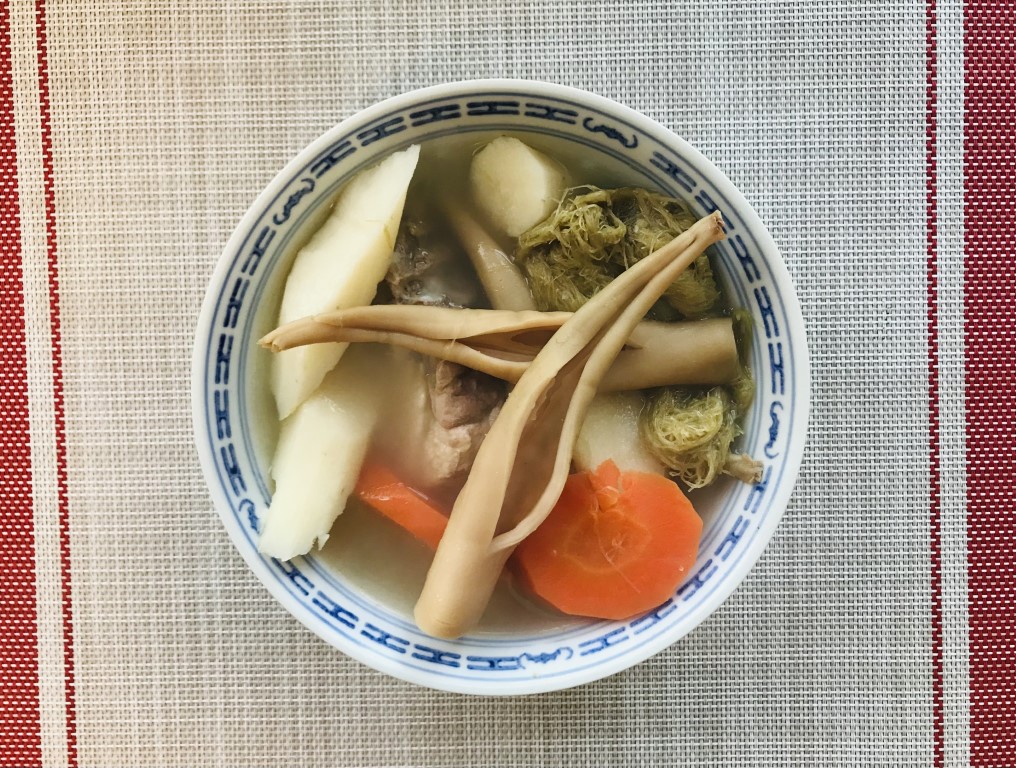
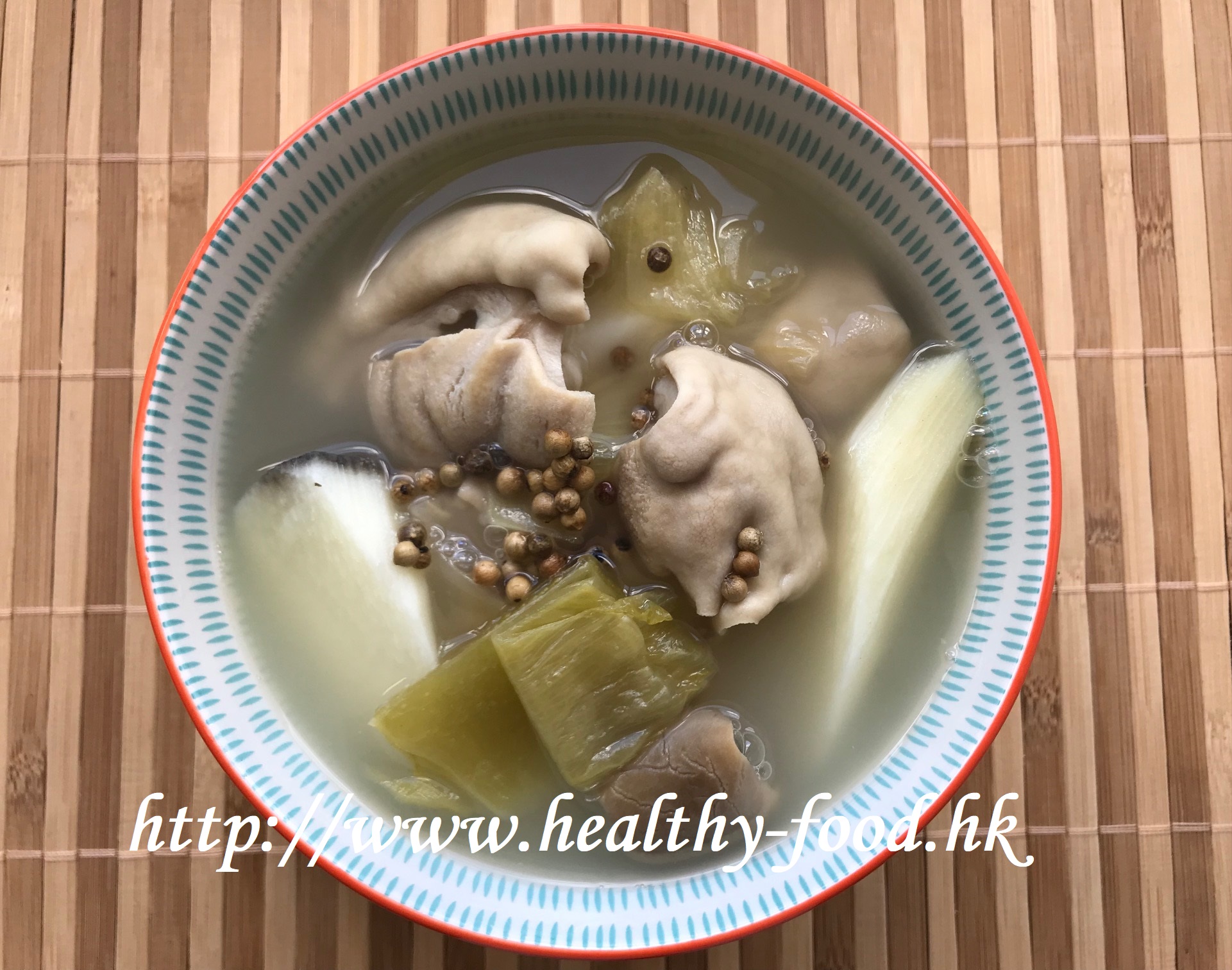
Fresh Chinese Yam, White Pepper Corn & Pork Tripe Soup
Traditionally used to warm the stomach, dispel cold, and ease stomach pain or nausea
Why people make this soup
The peppercorn-and-pork-tripe soup is one of the most beloved cold-weather comfort soups in the Cantonese kitchen. White peppercorns are gently warming — peppery in fragrance but not searingly hot — and are traditionally associated with calming stomach pain caused by cold, easing nausea, and relieving vomiting of clear fluids. Pork tripe (the stomach lining of a pig) has long been used in Chinese food therapy under the principle of “like nourishes like” — it is thought to benefit the stomach and build digestive strength. Added to this classic base, Bro Niu incorporated a fresh root of Chinese yam, which provides a mild, starchy sweetness and is traditionally used to strengthen the stomach and spleen. Together with tangy salted mustard greens and pork ribs for body, this is a full meal-soup that warms you from the inside out.
Who it suits / who should be cautious
- Suits people with a cold constitution who suffer from stomach aches, nausea, or feel cold easily in the abdomen
- Good in cooler weather or rainy seasons when the body feels heavy or chilled
- Those with gout, hyperlipidaemia (high blood fats), or high cholesterol: pork tripe is organ meat and should not be eaten frequently; occasional enjoyment is fine
- Please see a doctor if stomach pain is severe or persistent
Why these ingredients (the food-therapy logic)
- White peppercorns (hu jiao li): Warming and aromatic; traditionally used to warm the middle jiao, direct rebellious qi downward, dispel cold, and relieve stomach cramping, vomiting of clear water, and nausea
- Pork tripe (zhu du): A Cantonese tonic for the stomach; traditionally considered strengthening for the digestive system and used as a food therapy for stomach deficiency
- Fresh Chinese yam (xian huai shan, Dioscorea opposita): Tonifies the spleen and stomach; starchy and binding; traditionally associated with supporting digestion, benefiting the stomach, and dispelling cold from the internal organs
- Salted mustard greens / pickled sour vegetable (xian suan cai): Adds flavour and is traditionally considered warming and stomach-supporting; enhances the overall warming quality of the soup
- Pork spare ribs: Provides richness, protein, and body to the broth
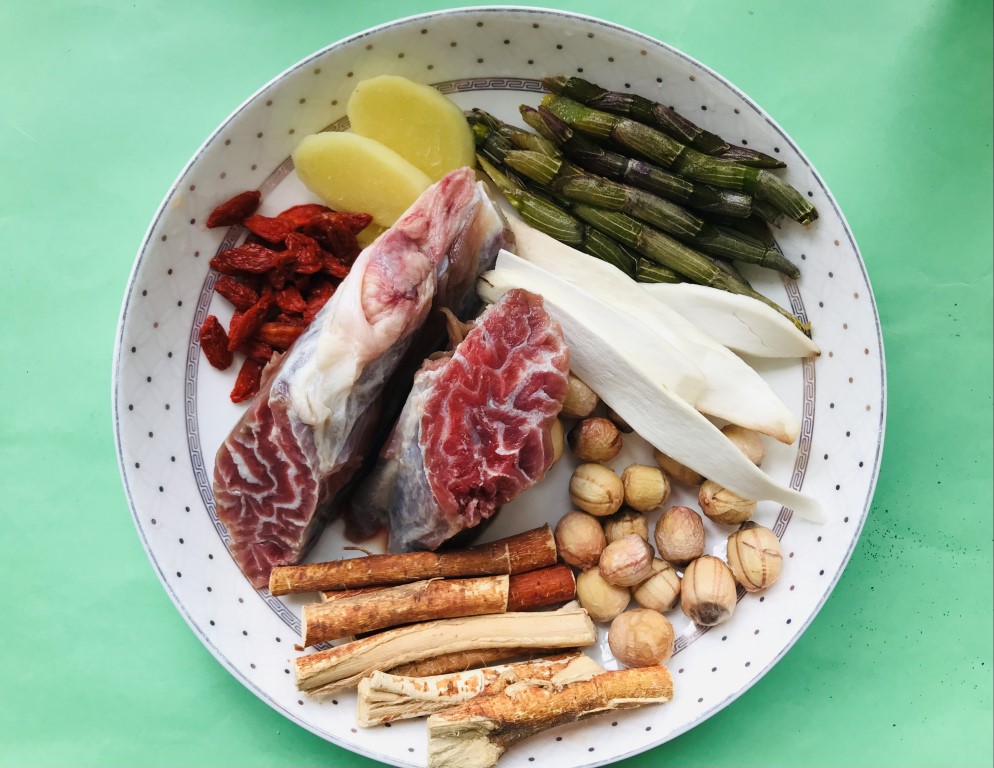
Ingredients (about 5 bowls / 4–5 servings)
| Ingredient | Amount | Notes |
|---|---|---|
| Fresh Chinese yam | 1 medium root (~300 g) | Peel and cut into chunks |
| White peppercorns | 1 tablespoon | Lightly cracked is fine |
| Pork tripe | 1 whole | Cleaned thoroughly (see tips) |
| Salted mustard greens | To taste | Rinse before use |
| Fresh ginger | 3 slices | |
| Pork spare ribs | 225 g (6 liang) | Blanched and rinsed |
Method
- Clean the pork tripe meticulously: rub inside and out with cornstarch (cornflour) and salt repeatedly, then rinse well. Soak in a little white vinegar for 30 minutes to remove any residual odour. Blanch the whole tripe in boiling water, then drain.
- Cut the blanched tripe into large chunks.
- Peel the fresh Chinese yam and cut into chunks. Rinse the salted mustard greens.
- Blanch the pork ribs in boiling water, drain, and rinse.
- Combine all ingredients in a pot with 10 bowls (about 2.5 litres) of water.
- Bring to a boil, then reduce heat and simmer for 2 hours until the liquid reduces to approximately 5 bowls.
- Serve hot, eating the tripe, yam, and ribs along with the soup.
Bro Niu’s tips
The secret to a clean, fragrant tripe soup is proper preparation. First rub the tripe repeatedly with cornstarch and salt to remove the slippery layer, rinse thoroughly, then soak in a splash of white vinegar for half an hour — this neutralises any off-odours. After blanching, the tripe cooks up tender and silky. The finished soup is rich, warming, and deeply savoury.
Published August 26, 2021 · Adapted and translated for Nourilo from a traditional home-kitchen recipe. Approx. 3 min read.