Soups
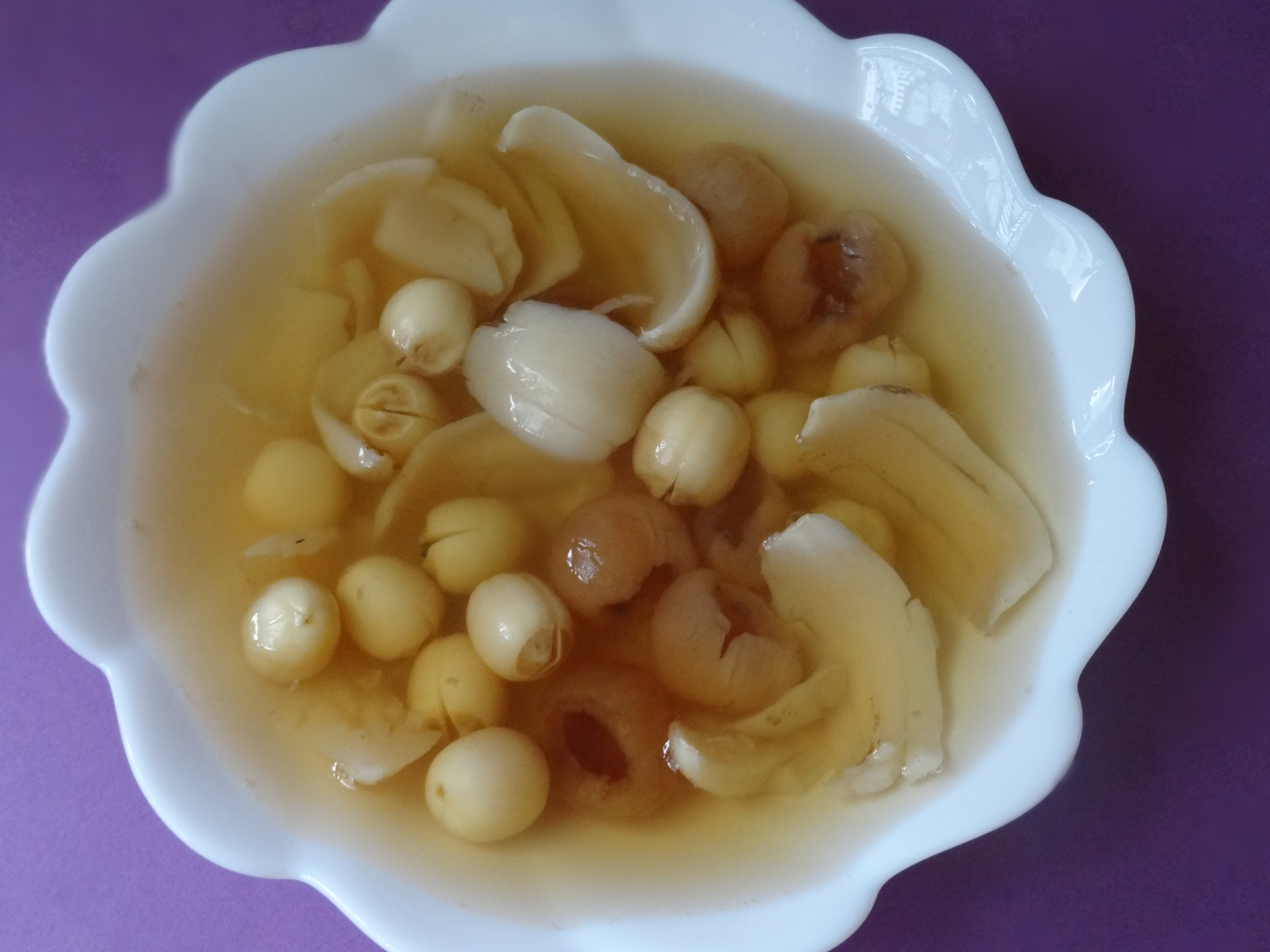
Fresh Lily Bulb and Lotus Seed Sweet Soup
traditionally used to clear heat, calm the heart, and support restful sleep
Why people make this soup
The combination of lily bulb and lotus seed has a long history in Chinese food therapy as a preparation for disturbed sleep, excessive dreaming, and a restless, overheated quality of mind. This classic sweet soup keeps things beautifully simple: just the two ingredients with a little rock sugar. No fuss, just nourishment.
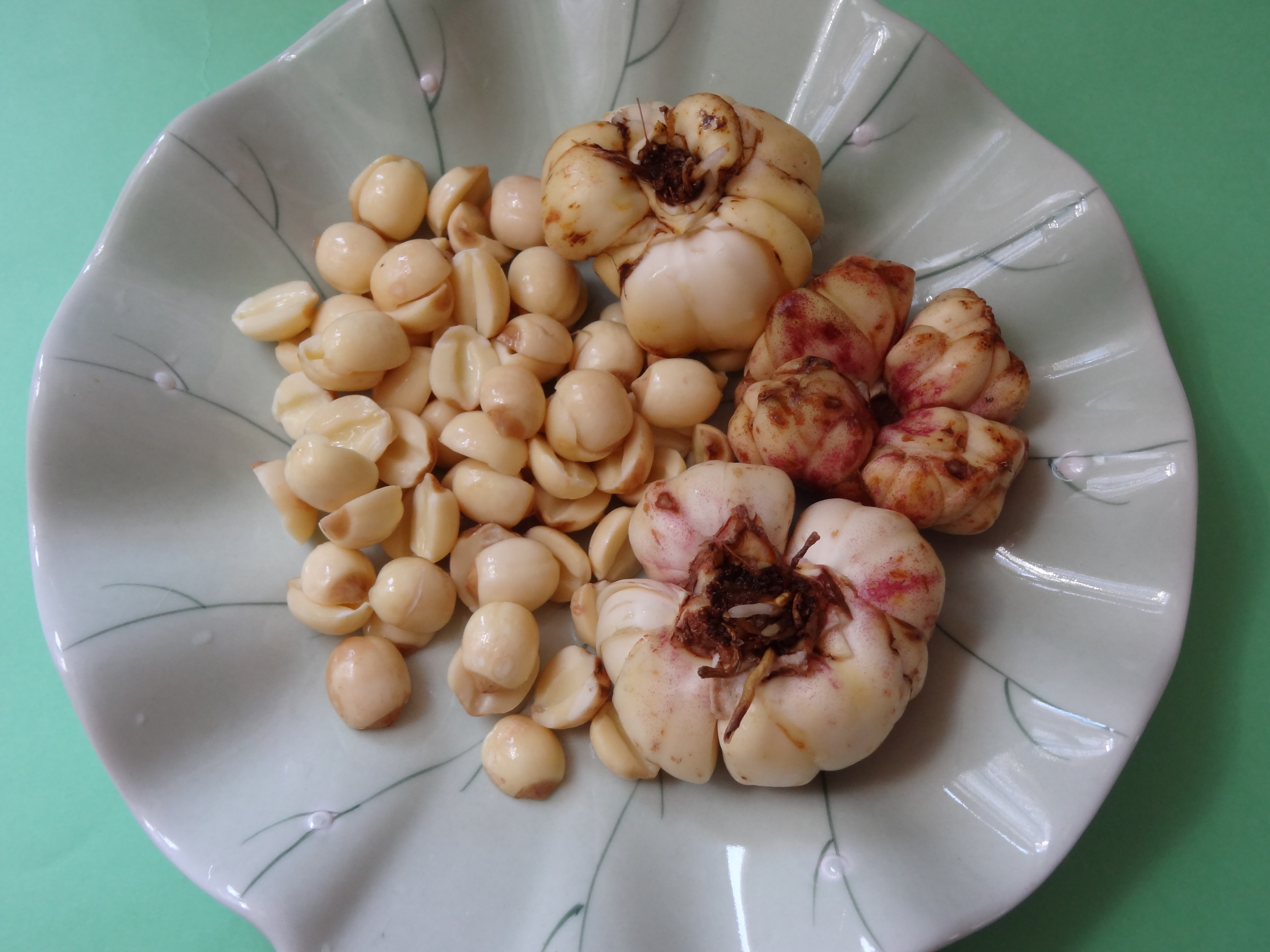
Fresh lily bulbs — whether the slightly bitter Shanghai variety or the milder Lanzhou type — share that characteristic soft, silky texture that makes them a pleasure in a sweet soup. Fresh lotus seeds are tender, mildly sweet, and have a pleasant nutty quality. Both ingredients are available at Chinese and Asian grocers in summer, and dried versions produce essentially the same result when fresh ones are out of season.
Who it suits / who should be cautious
- Suitable for children aged 2 and above as well as adults.
- Well suited to those experiencing difficulty sleeping, excessive dreaming, mild nervousness, or emotional restlessness in summer.
- The lotus seed embryo (the small green kernel inside the seed) has a strong bitter taste and a blood-pressure-lowering association in traditional Chinese food therapy. Whether to include it or remove it depends on personal preference and constitution.
- Dried lotus seeds come in two types: white (skin removed) and red (skin on). White lotus seeds give a more attractive appearance in sweet soups; red lotus seeds are traditionally considered better for nourishing the blood.
Why these ingredients (the food-therapy logic)
- Fresh lily bulb (xian bai he): Traditionally associated with clearing heat from the heart and lungs, calming the mind, and easing anxiety-related sleeplessness. Its gentle flavour makes it a natural pairing with sweet soups.
- Fresh lotus seeds (xian lian zi): Fresh lotus seeds are tender, mildly sweet, and have a pleasant nutty quality. In traditional food therapy, lotus seeds are associated with strengthening the spleen and heart, reducing excessive dreaming, and calming the spirit. Removing the embryo (plumule) makes the taste mild and pleasant; leaving it in adds bitterness and a stronger calming effect.
Ingredients (3–4 bowls)
| Ingredient | Amount | Notes |
|---|---|---|
| Fresh lily bulb | 2–3 bulbs | Petals separated and well rinsed |
| Fresh lotus seeds | 75 g (2 oz) | Embryo removed (or left in, to taste) |
| Rock sugar | To taste | Added near the end |
If using dried ingredients: soak dried lotus seeds for 1–2 hours before cooking. Use the same quantities.
Method
- Separate the lily bulb into individual petals and rinse thoroughly.
- Remove the embryo from each lotus seed if desired (use a toothpick or thin skewer to push it out through one end).
- Place the lotus seeds in a pot with 5 bowls (about 1.25 litres) of water.
- Bring to a boil, then reduce to a simmer and cook for 30 minutes.
- Add the lily bulb petals and rock sugar. Stir until the sugar dissolves.
- Serve warm or at room temperature.
Bro Niu’s tips
Dried tangerine peel (chen pi) works beautifully as a flavour addition here — Bro Niu prefers it over ginger for this particular sweet soup, as it harmonises the flavours without adding too much warmth. Both fresh and dried lily bulbs and lotus seeds work equally well in this recipe, so do not worry if fresh versions are not available.
Community questions answered (selected)
-
Q (Amy): I have been having many vivid dreams and feel like I have not slept properly at all. My sleep quality is very low, and I feel tired during the day. What would help? Bro Niu: Try cooking 4 qian (about 12 g) of poria cocos / fu shen, 38 g dried lily bulb, 4 qian longans (yuan rou), and 38 g lotus seeds (preferably with the embryo left in) in 5 bowls of water to yield 2 bowls. Drink this for 3 consecutive days. It is traditionally used to nourish the heart and calm the spirit, and should help with excessive dreaming and restless sleep.
-
Q (reader, regarding white vs red lotus seeds): What is the difference between white lotus seeds and the red-skinned ones? When should each be used? Bro Niu: White lotus seeds (skin removed) give a more attractive appearance in sweet soups. Red lotus seeds (with their reddish skin) are traditionally considered to have a stronger blood-nourishing effect. For a visually appealing dessert soup, white is the usual choice; for nourishing the blood, red is better.
-
Q (Kathy): My family member has sprained their back. Is there anything they should avoid eating? Bro Niu: After a sprain, the most important things are rest and avoiding sour foods and raw or cold foods, as these are believed to hinder recovery in traditional Chinese medicine. This sweet soup is perfectly fine to have — you could add a piece of dried tangerine peel for flavour, rather than ginger.
Published August 9, 2013 · Adapted and translated for Nourilo from a traditional home-kitchen recipe. Approx. 4 min read.