Soups
Dried Lychee, White Peony and Lily Bulb Soup
traditionally associated with calming the nervous system, easing liver qi stagnation and supporting restful sleep
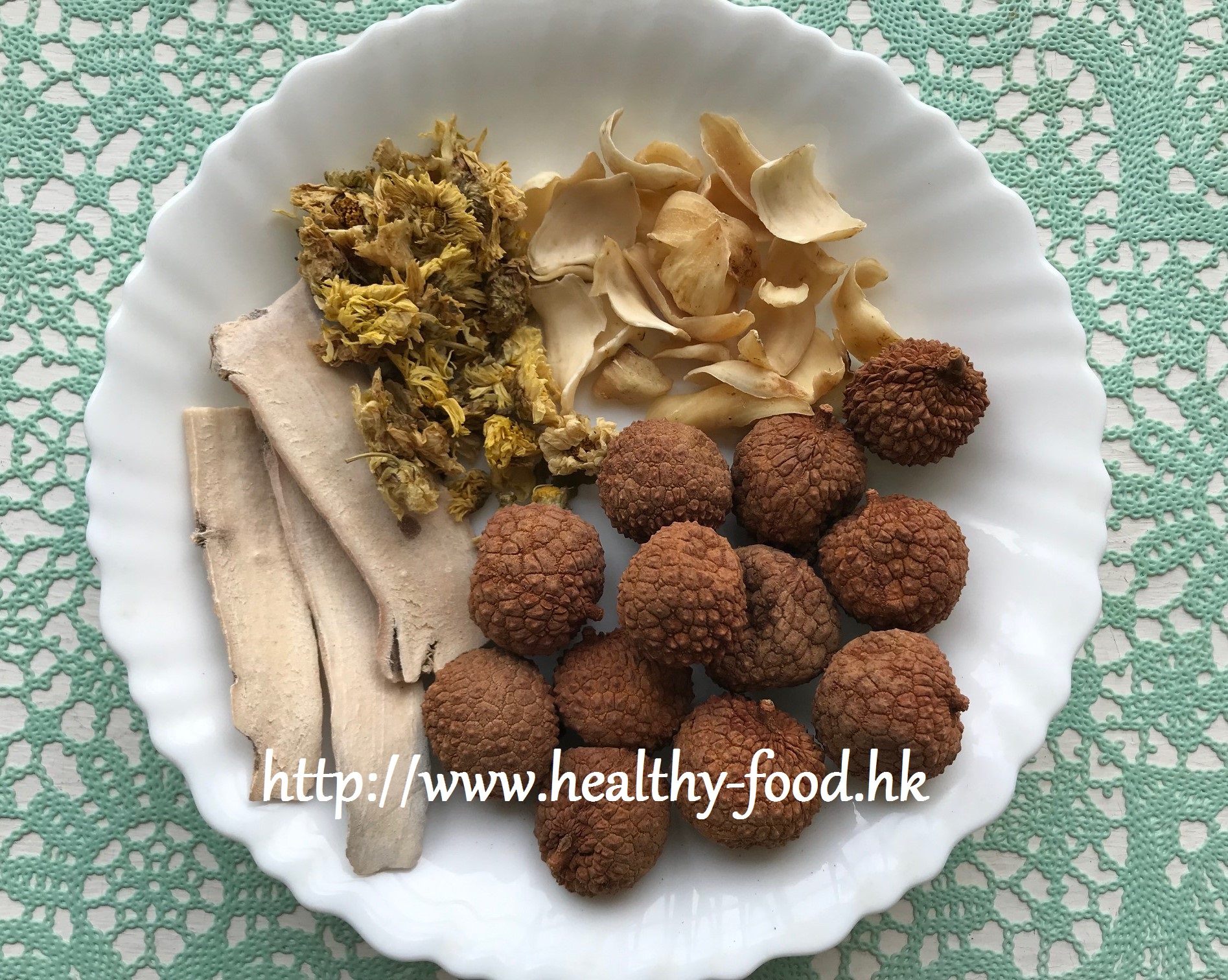
Why people make this soup
Fresh lychees come into season in abundance, and while they are a wonderful summer fruit, Bro Niu is careful to note that eating too many on an empty stomach — particularly in one sitting — can cause a spike in blood sugar severe enough to be dangerous. Five to six at a time is a sensible limit. Dried lychees, on the other hand, are a more concentrated and shelf-stable ingredient that keeps their nutritional value even when the fresh fruit is out of season. In Chinese food therapy, lychee is associated with nourishing the liver and spleen, moving qi, supporting blood health, warming the digestion and calming the heart-mind. Combined with white peony root — one of the most widely used herbs for soothing a “stagnant” or overworked liver — and lily bulb, which has a long tradition in Chinese herbalism as a gentle mind-calming herb, this soup is intended for people who feel emotionally tight, easily irritated, unable to sleep properly or low in spirits. Chrysanthemum adds a brightening, heat-dispersing quality and gives the finished soup a light, pleasant fragrance.
Who it suits / who should be cautious
- Suits people experiencing emotional tension, mild low mood, irritability, chest tightness, poor sleep, forgetfulness, or anxiety associated in Chinese medicine with liver qi stagnation
- Also suitable as a gentle support for the elderly, those who are weak after illness, or women with post-partum blood deficiency
- People with yin deficiency and internal heat (yin xu huo wang) should not use this soup — please see a doctor
- Pregnant women should not use this soup
- Those with lychee kernel in the soup (the stone, which adds qi-moving properties) should be aware the kernel is traditionally included; fresh or dried lychee with stone can both be used
Why these ingredients (the food-therapy logic)
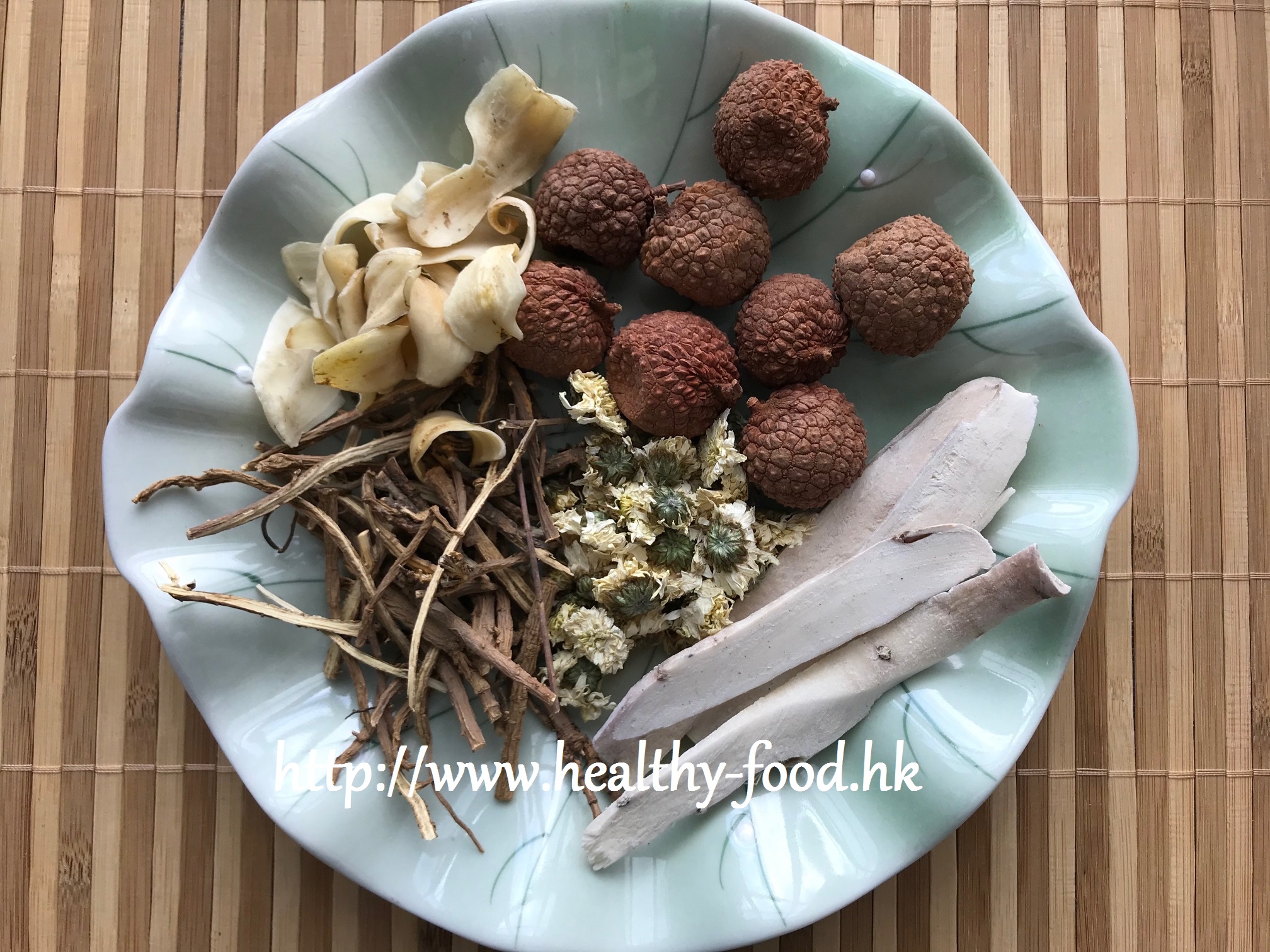
- Dried lychee (li zhi gan): Warmer and more concentrated than fresh lychee; in food therapy associated with nourishing the liver and spleen, supporting blood, calming palpitations, easing forgetfulness and fatigue, and warming the digestion; research suggests lychee supports brain tissue nourishment
- White peony root (bai shao): One of the most important herbs in Chinese medicine for soothing the liver and easing emotional stagnation; associated with easing physical tension, managing pain and supporting smooth liver function
- Lily bulb (bai he): A classic calming herb used in Chinese food therapy for restlessness, palpitations and poor sleep; associated with clearing heat from the heart-mind and moistening the lungs
- Chrysanthemum (ju hua): Added near the end of cooking; associated with dispersing liver heat, brightening the eyes and reducing irritability; adds a pleasant floral fragrance
Ingredients (2 bowls)
| Ingredient | Amount | Notes |
|---|---|---|
| Dried lychee flesh (shell removed) | 38 g (~1 liang) | Or use 6–8 fresh lychees; kernel can be included |
| White peony root (bai shao) | 15 g (~4 qian) | Soak and rinse |
| Dried lily bulb (bai he) | 38 g (~1 liang) | Soak and rinse |
| Dried chrysanthemum flowers (ju hua) | 11 g (~3 qian) | Rinse; add near end of cooking |
| Water | 6 bowls (~1.2 litres) | Reduces to 2 bowls |
Method
- Shell the dried lychees and remove the flesh. (The kernel can be left in if available — it contributes qi-moving properties.)
- Rinse and soak the white peony root and lily bulb briefly.
- Rinse the chrysanthemum flowers.
- Place the dried lychee flesh, white peony root and lily bulb in a pot with 6 bowls (about 1.2 litres) of cold water.
- Bring to a boil, then reduce to a gentle simmer for 40 minutes.
- Add the chrysanthemum flowers and simmer for a further 5 minutes.
- Strain and serve warm.
Bro Niu’s tips
The lychee kernel has its own traditional role — associated with moving qi, dispersing stagnation and reducing pain — so including it in the soup adds an extra dimension. Fresh lychees can be used in the same recipe (6 to 8 pieces), with the kernel left in. A practical caution about fresh lychees that Bro Niu always emphasises: do not eat large quantities on an empty stomach. The very high sugar concentration can cause a sudden blood glucose spike — what Chinese medicine would call “hyperosmolar crisis” — which is genuinely dangerous. Enjoy fresh lychees in small quantities with other food.
Published June 29, 2020 · Adapted and translated for Nourilo from a traditional home-kitchen recipe. Approx. 3 min read.