Soups
Dried Vegetable, Almond, Soybean, and Carrot Soup
traditionally associated with moistening the lungs, clearing heat, and protecting the respiratory tract during dry weather
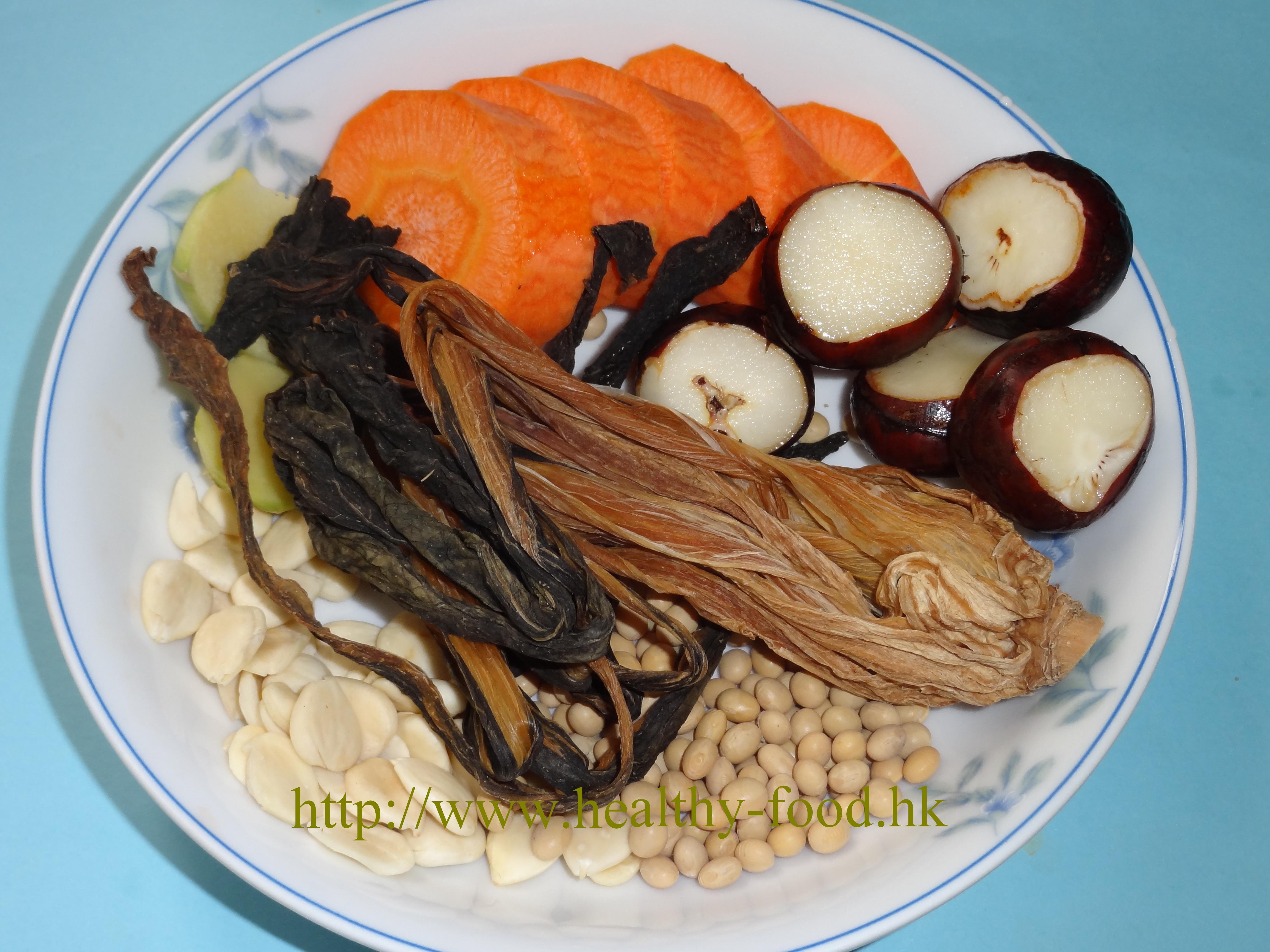
Why people make this soup
When autumn arrives, the air becomes noticeably drier. For many people, this shift brings a scratchy throat, a dry tickling cough, or that uncomfortable feeling of parched airways even when drinking enough water. In traditional Chinese food therapy, autumn is associated with dryness that can injure the lungs, which are considered the organ most sensitive to changes in the external environment. Making a gentle moistening soup regularly during the dry months is a traditional habit for protecting lung and throat health before symptoms develop.
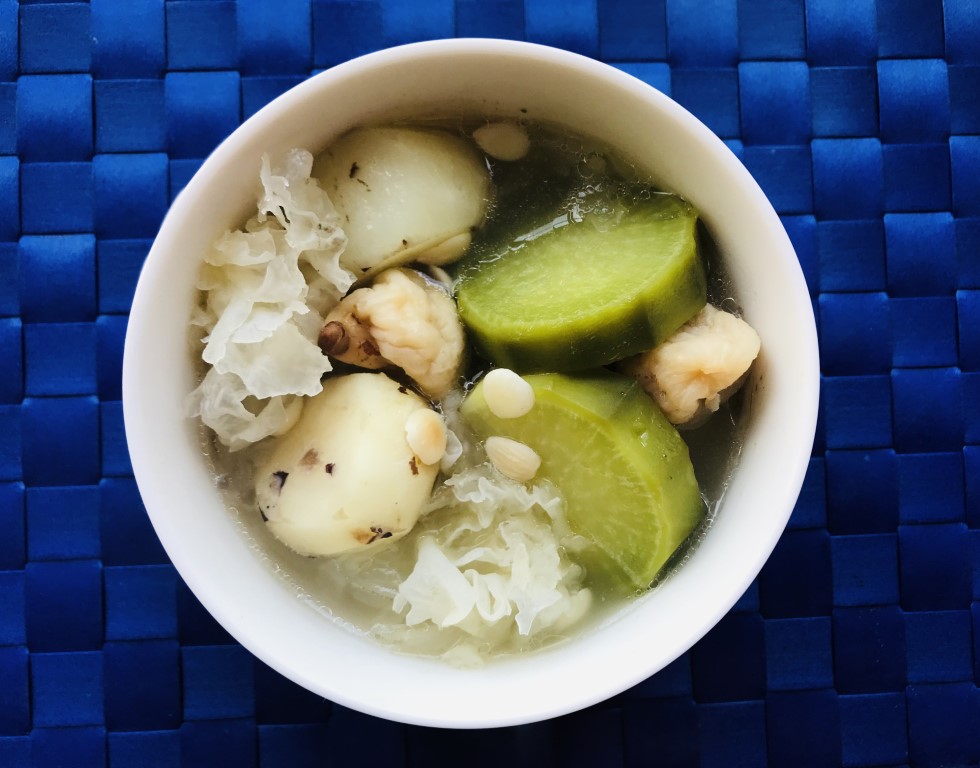
This soup is a practical, affordable autumn staple. It is neither too cooling nor too warming — making it suitable for the whole family year-round, not just autumn. Dried leafy greens provide a gentle lubricating quality; almonds are one of the classic Chinese food-therapy ingredients for moistening the lungs; soybeans provide protein and a subtle earthy richness; carrots and water chestnuts add natural sweetness and clear mild heat. Together they make a clear, naturally sweet soup with an inviting aroma.
Who it suits / who should be cautious
- Suitable for the whole family — adults, children, and elderly alike — and can be drunk throughout the year
- Particularly valuable in autumn when dry air commonly causes throat and lung irritation
- Those with eczema who cannot eat soybeans can substitute with hyacinth beans and barley — each 1 liang
- Those with monk fruit and water chestnuts available can substitute these for the carrots to make the soup even sweeter and more clearing
- No significant cautions for this mild recipe; those with active illness should address the illness directly
Why these ingredients (the food-therapy logic)
- Dried vegetable (cai gan): Sun-dried mustard greens or bok choy; drying concentrates the moistening, cooling properties of these leafy vegetables; a traditional autumn and winter staple in Cantonese cooking; considered gentle on digestion and lubricating to the respiratory tract
- Almonds, south and north mixed (nan bei xing): Southern (sweet) almonds moisten the lungs; northern (bitter) almonds help descend lung qi and relieve cough; together they are the classic pairing for respiratory health in Cantonese food therapy
- Soybeans (huang dou): Rich in protein and associated with benefiting the spleen and stomach; add body and nutritional substance to the soup
- Carrot (hong luo bo): Sweet and neutral; naturally rich in beta-carotene; considered beneficial for the lungs and eyes; adds a pleasant color and flavor
- Water chestnuts (ma ti): Sweet and cooling; traditionally used to clear heat and transform phlegm; complement the soybeans to keep the soup from becoming too rich
- Ginger (sheng jiang): A small amount of ginger balances the mildly cooling nature of the other ingredients and supports digestion
Ingredients (4 bowls)
| Ingredient | Amount | Notes |
|---|---|---|
| Dried leafy vegetables (cai gan) | 1 liang (~38 g) | Rinse and soak 20 min to rehydrate |
| Mixed almonds (nan bei xing) | 1 liang (~38 g) | Rinse briefly |
| Soybeans | 2 liang (~75 g) | Soak at least 1 hour; drain and rinse |
| Carrot | 1 medium | Peel and cut into chunks |
| Water chestnuts | 6 pieces | Peel and halve |
| Fresh ginger | 2 slices | |
| Water | 8 bowls |
Method
- Soak the soybeans in cold water for at least 1 hour (longer is better — up to 2 hours). Drain and rinse.
- Rinse and soak the dried vegetables in cold water for about 20 minutes to soften. Drain and squeeze out excess water. Roughly chop if desired.
- Peel and chop the carrot and water chestnuts.
- Place all ingredients in a pot with 8 bowls of water.
- Bring to a boil over high heat, then reduce to a gentle simmer.
- Cook for 2 hours until reduced to about 4 bowls and the soybeans are fully soft.
- Serve warm. Drink the broth and eat the solid ingredients.
Bro Niu’s tips
This soup is balanced and mild — it is neither cold nor warm, making it suitable any time of year. For autumn coughs or dry throat, you can add pork lung or pork shin to the same pot; the extra protein and collagen will increase the soup’s nourishing quality considerably. If you cannot find water chestnuts, monk fruit and corn on the cob make excellent substitutes — the soup will be just as sweet and nourishing, with no need to add honey dates. Soybeans, like all legumes, benefit from being soaked before cooking — this neutralizes enzyme inhibitors in the seed coat and makes the beans easier to digest.
Community questions answered (selected)
-
Q (Bobby): My doctor said I cannot eat soybeans because of my eczema. Can I use red beans, hyacinth beans, broad beans, peanuts, green beans, kidney beans, black beans, adzuki beans, flat beans, or barley as a substitute? And in the same 2-liang quantity? Bro Niu: For eczema, you can freely use hyacinth beans, red beans, green beans, black beans, adzuki beans, flat beans, and barley. But there is no need to pile them all in at once — for one soup, just use 2 varieties plus barley, each 1 liang. For this dried vegetable soup specifically, use flat beans and barley to replace the soybeans, 1 liang each.
-
Q (Can): I do not have water chestnuts — can I use monk fruit and corn instead? Do I need to add honey dates? Bro Niu: Yes, monk fruit and corn work perfectly as substitutes for water chestnuts. No need to add honey dates — the soup will already be naturally very sweet.
-
Q (JOvita Tang): Do the soybeans need to be soaked before cooking? Bro Niu: All seeds and legumes are best soaked before cooking. Seeds contain enzyme inhibitors in their coat — a natural protective mechanism that signals them to sprout only in the right conditions with enough moisture. These inhibitors enter the body if you skip soaking, requiring the body to use its own enzymes to deal with them. Soaking for 1 to 2 hours, then discarding that water, largely removes these inhibitors and makes the beans much easier to digest.
Published September 24, 2012 · Adapted and translated for Nourilo from a traditional home-kitchen recipe. Approx. 5 min read.