Herbal & Flower Teas
Plantain Herb and Corn Silk Tea (Che Qian Cao and Corn Silk)
traditionally used to support urinary flow, relieve damp-heat, and help manage uric acid levels
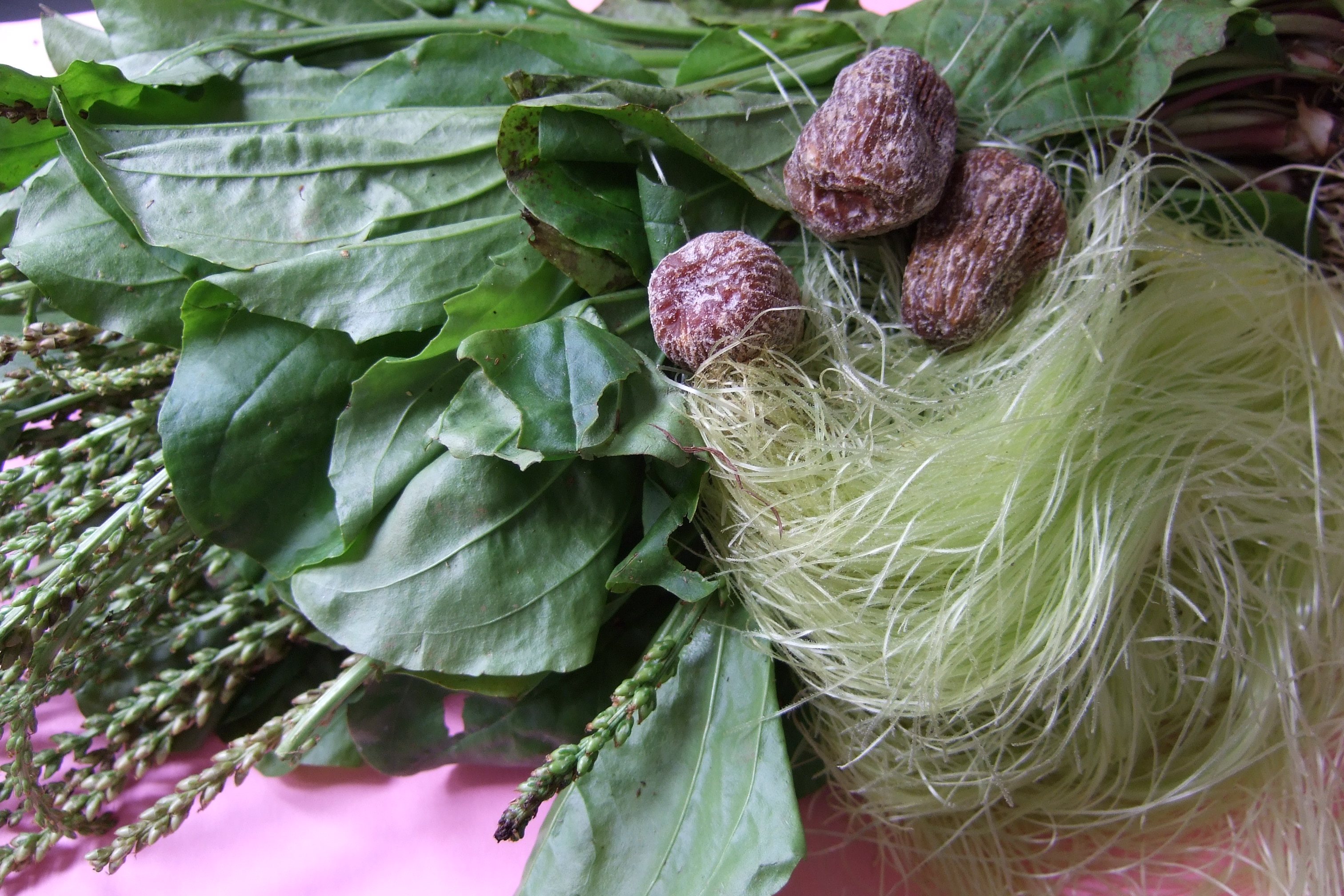
Why people make this tea
Gout arises when uric acid builds up in the joints, causing sudden, intense pain — often first felt at night in the big toe. Traditional Cantonese food therapy has long used plantain herb (che qian cao) as a diuretic herb to help the kidneys flush out excess fluid and reduce damp-heat in the body. Corn silk — the fine strands attached to fresh corn — has a similarly gentle, diuretic quality and is one of the most economical and accessible food-therapy ingredients there is. Together, they make a light, pleasant herbal tea that Bro Niu recommends as a regular drink for those managing gout or prone to urinary tract discomfort in hot, humid weather.
Who it suits / who should be cautious
- Suitable for those prone to gout, high uric acid, or urinary tract inflammation
- May help ease symptoms associated with nephritis-related water retention, urethritis, cystitis, and prostatitis (urinary urgency, frequency, and discomfort)
- Helpful for those with a damp-heat constitution who want to support a healthy weight
- Those with kidney yang deficiency — characterised by persistent cold, fatigue, and no heat signs — should avoid or reduce this tea
- Those with kidney yin deficiency may drink it in moderate amounts
Why these ingredients (the food-therapy logic)
- Plantain herb (che qian cao): The entire plant including roots is used; in TCM it is classified as sweet and cold, entering the kidney, liver, and lung meridians; traditionally used to clear heat and dampness, promote urination, and support clarity of vision
- Corn silk (su mi xu): A gentle diuretic widely used in both Chinese folk medicine and Western herbal traditions; associated with supporting the kidneys and urinary tract, reducing swelling, and improving water metabolism
Ingredients (2 bowls)
| Ingredient | Amount | Notes |
|---|---|---|
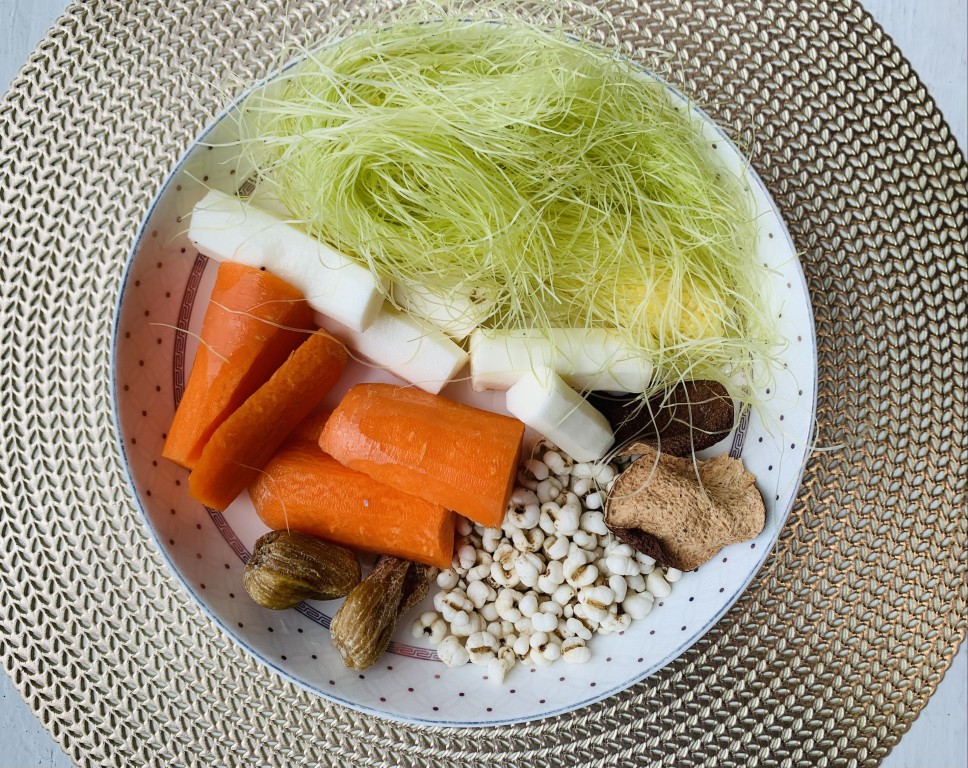
| Fresh plantain herb with roots (che qian cao) | 1 bunch (~150–200 g) | Washed thoroughly; roots included; cut into sections |
| Fresh corn silk (su mi xu) | 1 handful | Rinsed under cold water |
| Water | 5 bowls (~1.25 litres) |
Method
- Wash the plantain herb thoroughly, including the roots. Cut into sections.
- Rinse the fresh corn silk under cold water.
- Place both ingredients in a pot with 5 bowls of water.
- Bring to a boil, then reduce to a gentle simmer.
- Cook for 45 minutes until the liquid reduces to about 2 bowls.
- Strain and drink as a tea.
Bro Niu’s tips
This tea is also helpful for those with a damp-heat body constitution and can support healthy weight management. It provides additional relief for those dealing with kidney-related water retention, urinary tract inflammation, or prostate discomfort — easing urinary frequency and urgency. If fresh plantain herb is not available, dried herb can be used at half the quantity. Those who know their constitution is kidney yang deficient and do not have heat symptoms should avoid this tea.
Community questions answered (selected)
-
Q (anonymous): If fresh plantain herb is not available, can I use the dried version? Bro Niu: Yes, use the dried version at half the quantity.
-
Q (reader): I have kidney yin deficiency — can I drink this? Bro Niu: Those with kidney yin deficiency can drink it in moderate amounts.
-
Q (gigi): My mother is 96 and has a urinary tract infection — can she drink this? Would it be too cooling for her? Bro Niu: Any inflammation is a heat condition, so a cooling tea is appropriate for treatment. You can also add 1 liang of adzuki beans and 1 piece of dried tangerine peel to the brew for added benefit.
Published July 18, 2018 · Adapted and translated for Nourilo from a traditional home-kitchen recipe. Approx. 3 min read.