Soups
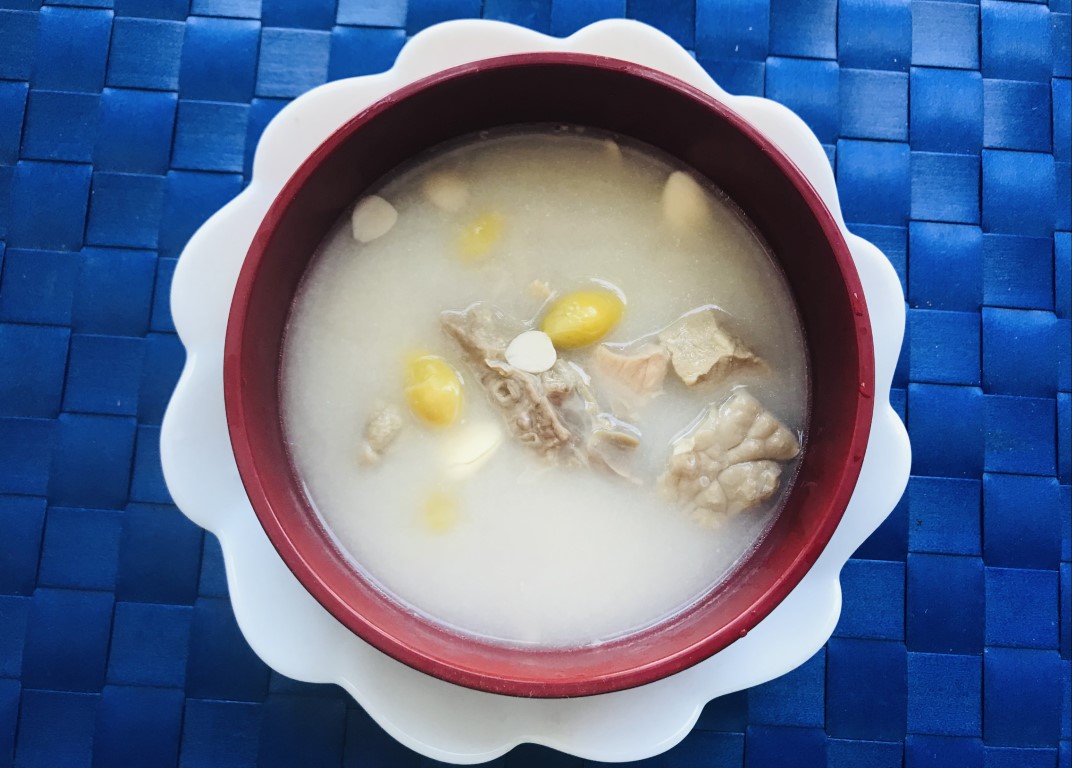
Ginkgo Nut, Walnut, Tiger Milk Lingzhi and Dried Crocodile Meat Soup
traditionally used to support lung strength, ease chronic coughing, and calm wheezing
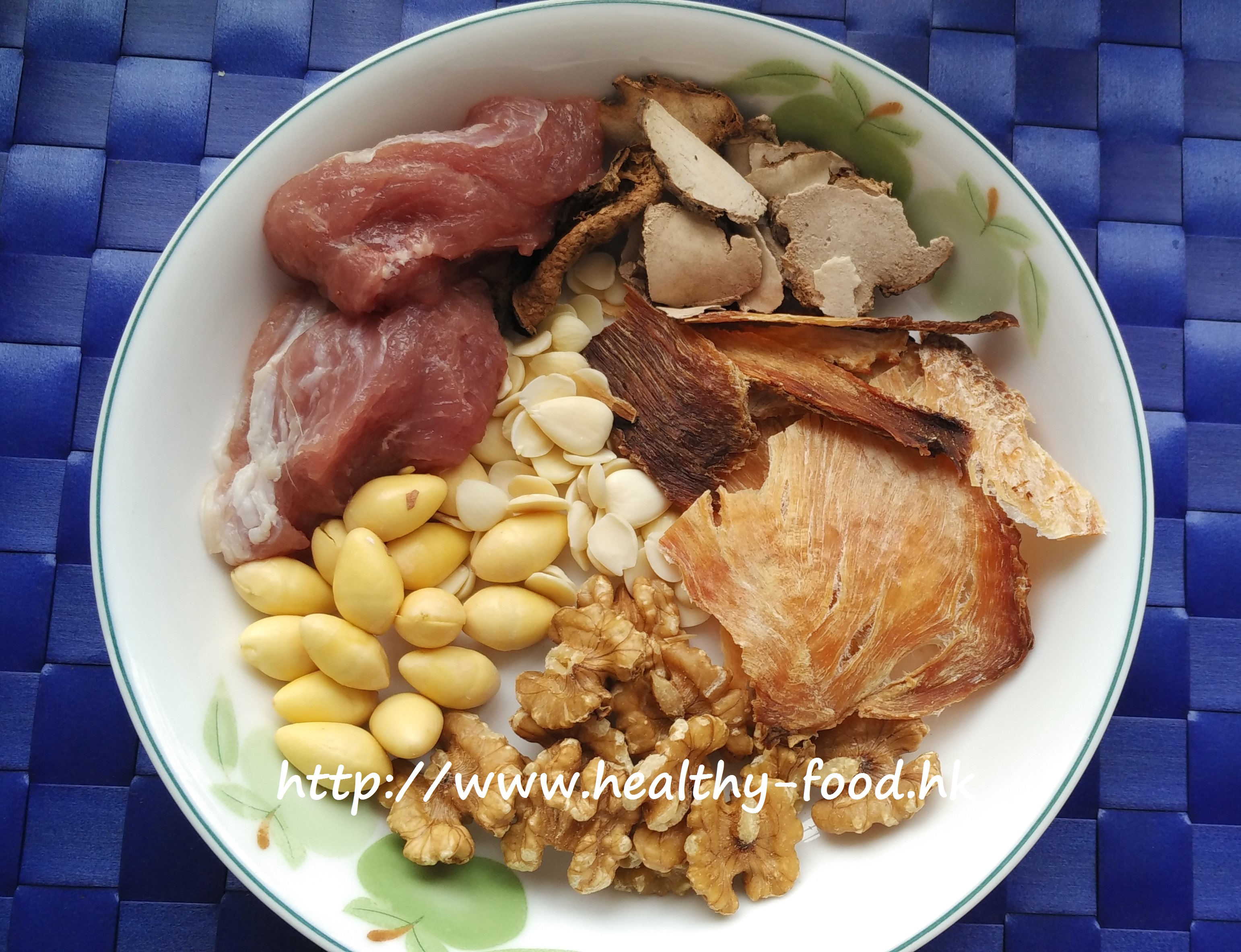
Why people make this soup
In Cantonese food-therapy tradition, dried crocodile meat (e yu rou gan) is considered one of the finest ingredients for supporting lung strength and easing chronic respiratory weakness — it has been used in Hong Kong herbal soup shops for generations. Combined with ginkgo nuts (which have a long history of use in Chinese medicine for lung and asthma-related conditions), walnuts (associated with kidney and lung tonification), and tiger milk lingzhi mushroom (a Southeast Asian medicinal fungus associated with respiratory support), this soup is aimed at people who have a naturally weak constitution, experience recurring coughs that linger well after a cold, or have mild asthmatic tendencies. Bro Niu makes this for family members who seem to catch every seasonal bug and struggle to fully recover.
Who it suits / who should be cautious
- Suited for adults and older children with a weak lung constitution, tendency to cough or wheeze without a current infection, or lingering cough after recovery from illness.
- Children should have no more than 5 ginkgo nuts in one serving; adults should not exceed 15 per serving.
- Do NOT prepare this soup during an active cold, flu, or fever — it is a tonic, not a treatment for acute illness. Wait until the infection has cleared.
- Purchase dried crocodile meat only from a reputable Chinese herb or dried seafood supplier to ensure quality.
Why these ingredients (the food-therapy logic)
- Ginkgo nuts (bai guo): The seed of the ginkgo tree, used in Chinese cuisine for centuries for its association with supporting lung qi, reducing excessive mucus, and easing wheezing. Caution: ginkgo seeds contain ginkgotoxin — they must be de-cored (the green embryo removed) and not eaten raw. Safe in modest quantities when properly prepared and cooked.
- Walnut meat (he tao rou): Traditionally associated with strengthening the lungs and kidneys, warming the lower back, and supporting the body’s foundational energy.
- South and north apricot kernels (nan bei xing): Sweet southern kernels are gentle and nourishing; bitter northern kernels are slightly stronger and associated with loosening phlegm and calming coughs. Used together for balance.
- Tiger milk lingzhi (hu ru ling zhi): A Southeast Asian medicinal mushroom (Lignosus rhinocerus) associated with supporting lung and immune function. Found in larger Chinese herb shops.
- Dried crocodile meat (e yu rou gan): A traditional ingredient in Cantonese herbal soups; considered to tonify the lungs and support recovery from chronic respiratory weakness.
- Dried tangerine peel (chen pi): Helps move qi, reduce phlegm, and improve digestion.
Ingredients (4 bowls)
| Ingredient | Amount | Notes |
|---|---|---|
| Ginkgo nuts (bai guo) | 15 pieces | Must remove the inner green core and outer skin before use |
| Walnut meat | 38 g (1 liang) | Rinse |
| North and south apricot kernels | 38 g (1 liang) combined | Rinse |
| Tiger milk lingzhi | 15 g (4 qian) | Rinse and soak briefly |
| Dried crocodile meat | 75 g (2 liang) | Rinse and soak |
| Dried tangerine peel | 2 pieces | Rinse |
| Lean pork | 300 g (half jin) | Slice; blanch briefly in boiling water |
| Water | 8 bowls (~1.6 L) |
Method
- Prepare ginkgo nuts: remove the outer shell if needed, peel off the papery inner skin, and use a toothpick or skewer to remove the bitter green core from each nut. This step is important for safety.
- Slice the pork and blanch in boiling water for 2–3 minutes. Drain.
- Rinse and soak the dried crocodile meat, tiger milk lingzhi, and dried tangerine peel.
- Add all ingredients to a pot with 8 bowls of cold water.
- Bring to a boil over high heat, then reduce to a medium-low simmer.
- Cook for 2 hours. Serve and eat both the soup and some of the solids.
Bro Niu’s tips
The ginkgo nut preparation step — removing the green inner core — is not optional. The core is where most of the naturally occurring toxin is concentrated. A news report once described a woman hospitalised after eating 60 roasted ginkgo nuts; this illustrates why strict portion limits matter. For a family of four, Bro Niu suggests 20 ginkgo nuts total with a proportionally larger pot; children under two should not have ginkgo at all, and for young children the guideline is roughly 1 nut per year of age. This soup is clear and slightly sweet in flavour — children and elderly family members generally find it pleasant.
Community questions answered (selected)
-
Q (mandy): For a family of four including a 19-month-old and an 8-year-old, how many ginkgo nuts and how much water? Bro Niu: 20 ginkgo nuts is enough for the family; use about 9 bowls of water and simmer for 2 hours to make around 4 bowls. For safety: 1 nut per year of age — the toddler gets 1 nut, the 8-year-old gets 8 nuts, and adults can have up to 15 each per day.
-
Q (Phoebe): My husband has mild asthma and a dry cough that lingers after illness. What food therapy do you suggest? Bro Niu: You could try 10 ginkgo nuts (de-cored), 1 liang walnut meat, 1 liang south and north apricot kernels, and 2 pieces of dried tangerine peel, simmered with lean pork. Take for 3 days and see if there is improvement.
-
Q (scy): Can I replace the lean pork with quail and add gordon euryale seeds (qian shi)? Bro Niu: Yes, using quail with gordon euryale seeds makes it even more nourishing.
Published November 6, 2018 · Adapted and translated for Nourilo from a traditional home-kitchen recipe. Approx. 4 min read.