Soups
Cordyceps Flower Snow Fungus Lily Conch Slice Soup
traditionally used to nourish the lungs, protect the liver, boost immunity, and ease dryness
Why people make this soup
The first hints of autumn arrive in late August — even when the days are still warm, there is something in the morning air that is different. That subtle shift is exactly when Cantonese families start thinking about moistening soups. Summer’s heat has a drying effect on the lungs, and as the season changes, the body benefits from ingredients that replenish moisture and nourish the respiratory system before the dry autumn weather sets in.
Cordyceps flower (chong cao hua) is the cultivated mycelium form of the Cordyceps fungus, grown without the wild caterpillar host. Its properties are considered similar to — though less potent than — wild Cordyceps sinensis, and it is widely available and affordable. Paired with snow fungus, lily bulb, and sweet almonds, this soup creates a beautifully moistening broth. The conch slices add an additional yin-nourishing quality and give the soup a pleasant seafood depth; lean pork or chicken are equally good substitutes.
Who it suits / who should be cautious
- Suitable for the whole family as an autumn-transition soup or regular nourishing broth.
- People recovering from illness, with a dry cough, or prone to dryness will benefit particularly.
- Do not drink during an active cold with fever, body aches, or acute infection. Nourishing soups should wait until the illness has passed.
- People with a known seafood allergy should substitute the conch slices with lean pork.
- Note on almonds: this recipe uses sweet southern almonds (nan xing / tian xing ren). Northern almonds (bei xing / ku xing ren) are slightly bitter and have a mild toxicity at high doses — if using both, keep the total quantity of northern almonds modest.
Why these ingredients (the food-therapy logic)
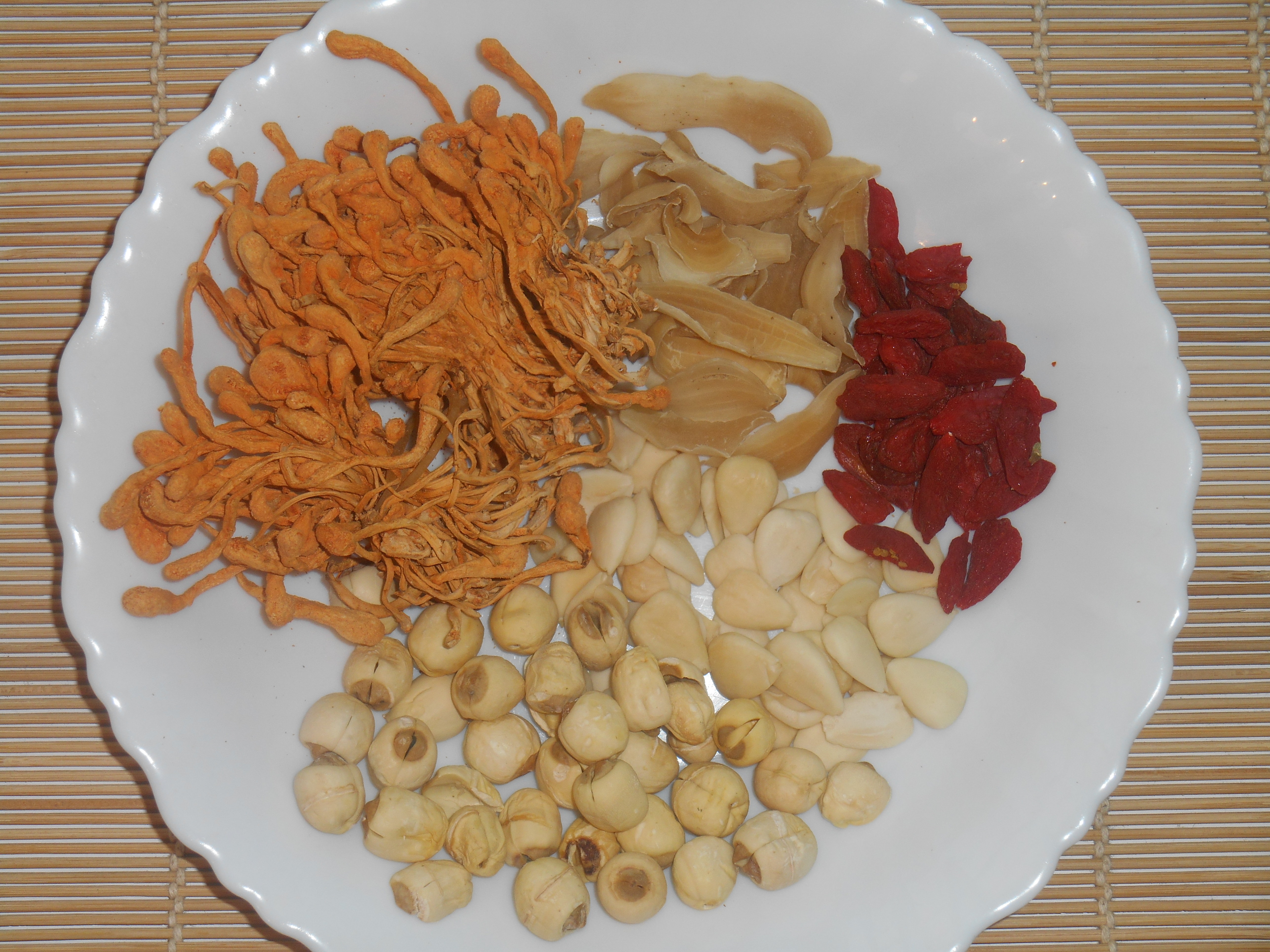
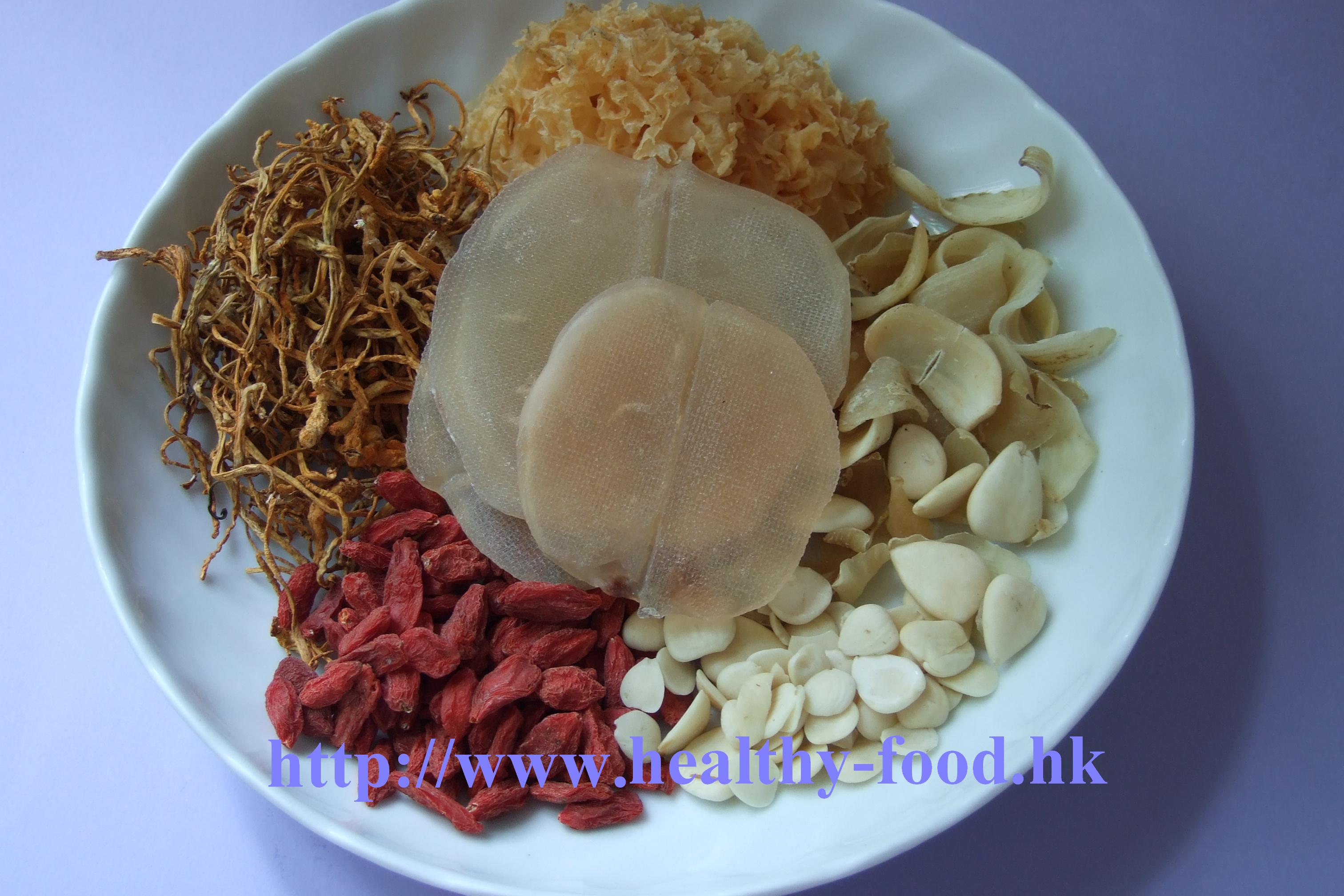
- Cordyceps flower (chong cao hua): The cultivated mycelium of Cordyceps, sharing many of the traditional associations of wild Cordyceps: nourishing the lungs and kidneys, supporting liver health, anti-ageing associations, calming the mind, supporting healthy blood pressure, and helping maintain immune function. More affordable and widely available than wild Cordyceps.
- Snow fungus / tremella (xue er): A silky white fungus associated with moistening the lungs and skin, nourishing yin, and improving complexion. Softens into a beautiful gelatinous texture when simmered. Remove the tough base (root section) before using.
- Dried lily bulb (bai he): Traditionally associated with moistening the lungs, calming the heart, and supporting restful sleep.
- Sweet almonds (nan xing): The milder of the two almond varieties used in Chinese cooking, associated with moistening the lungs and nourishing the skin.
- Goji berries (gou qi zi): Nourishing the liver and kidneys, supporting eyesight, gently building vitality.
- Conch slices (luo pian): Dried and sliced sea conch, sometimes labelled “abalone slices” in shops. The actual properties are of a yin-nourishing, moistening seafood — not as potent as real abalone or dried conch (xiang luo gan), but a pleasant and accessible option.
Ingredients (3–4 bowls)
| Ingredient | Amount | Notes |
|---|---|---|
| Cordyceps flower | 38 g (1 oz) | Rinsed |
| Snow fungus (dried) | 8 g (2 qian) | Soaked until fully expanded; tough base removed |
| Dried lily bulb | 38 g (1 oz) | Rinsed |
| Sweet almonds | 38 g (1 oz) | Rinsed |
| Goji berries | 11 g (3 qian) | Rinsed |
| Conch slices | 30–40 g | Soaked; or substitute lean pork / chicken |
Method
- Soak the snow fungus in cold water until fully expanded (about 20–30 minutes). Remove and discard the tough yellowish base. Tear into smaller pieces.
- Soak the conch slices in water for 20–30 minutes until softened. Drain.
- Rinse all remaining ingredients.
- Place all ingredients in a pot with 6 bowls (about 1.5 litres) of water.
- Bring to a boil, then reduce to a medium-low simmer and cook for 1 hour, until reduced to 3–4 bowls.
- The soup can be served as a sweet broth (add rock sugar near the end) or as a savoury soup (add lean pork at the beginning and season with a little salt). Drink the broth and eat the cooked ingredients.
Bro Niu’s tips
What is sold as “abalone slices” (bao pian) in many dried-seafood shops is often actually conch slices (luo pian) — large sea conch that has been sliced and dried. Do not worry about the mislabelling; it is still a yin-nourishing ingredient, just not as potent as real dried abalone or dried whole conch (xiang luo gan). If you cannot find cordyceps flower, simply leave it out — the snow fungus, lily bulb, and almonds alone make a beautiful moistening soup. If you live outside Hong Kong, lean pork or chicken is an excellent substitute for the conch slices.
Community questions answered (selected)
-
Q (Daphne): Can I add pork to this soup? I live in the US and do not have cordyceps flower at home. Can I omit it? Bro Niu: Yes, you can add lean pork alongside the other ingredients. If you do not have cordyceps flower, simply leave it out. The snow fungus, lily bulb, sweet almonds, and goji berries will still make a very nourishing, moistening soup.
-
Q (reader): Can someone who has had breast cancer surgery drink this soup? Bro Niu: Yes, this soup can be consumed after breast cancer surgery. If you want to enhance the immune-supporting quality, swap the cordyceps flower for ji song rong (Agaricus blazei), which has a stronger anti-tumour association in traditional Chinese food therapy.
-
Q (陈太): Can I add fu ling (poria cocos) to this soup? Bro Niu: Yes, you can add poria cocos. However, if you currently have a cold with fever or body aches, do not drink any nourishing soup — wait until the illness has resolved first.
Published August 22, 2013 · Adapted and translated for Nourilo from a traditional home-kitchen recipe. Approx. 4 min read.