Soups
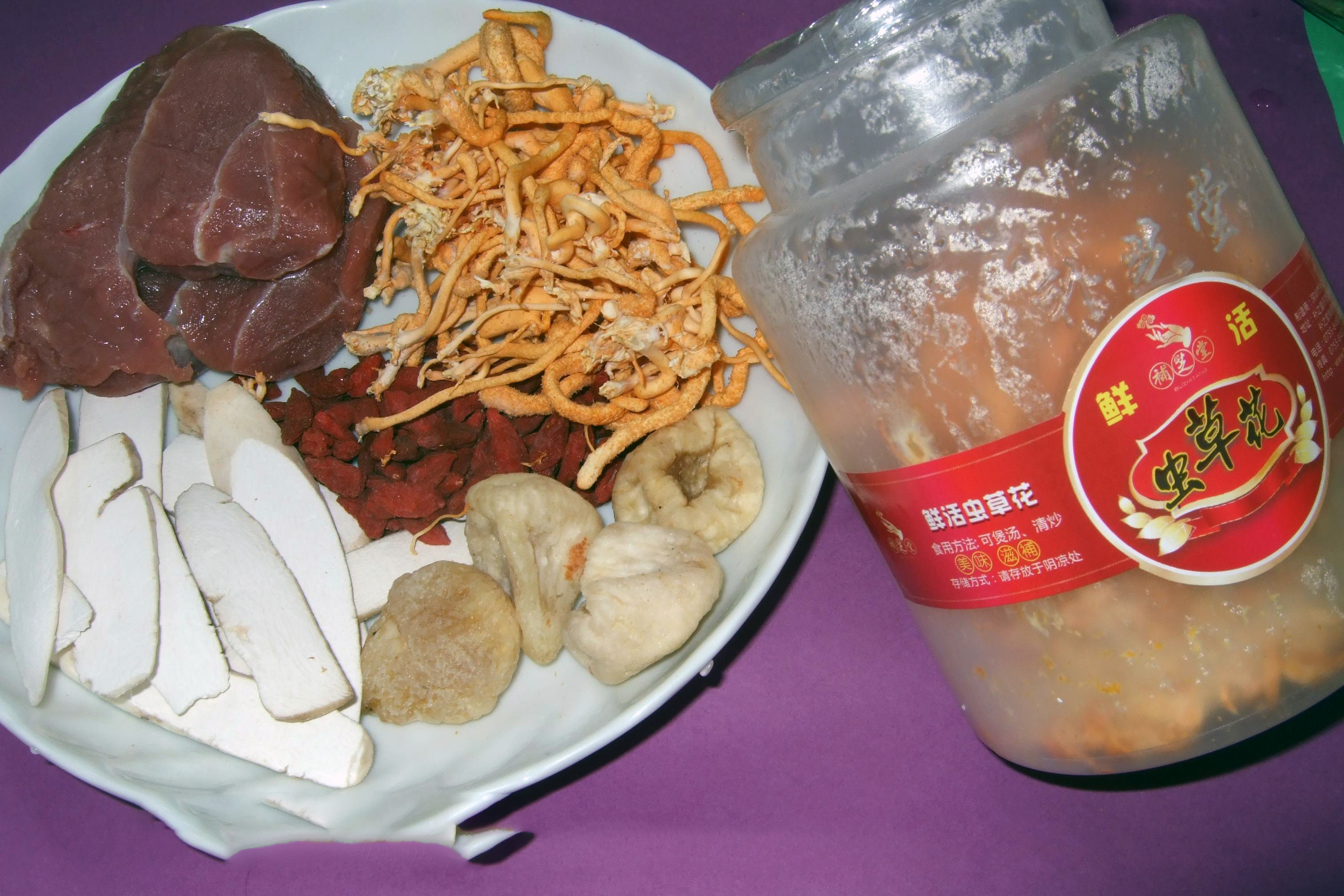
Cordyceps Flower, Huai Shan and Goji Berry Pork Shin Soup
Traditionally used to nourish the lungs and spleen, and support immunity
Why people make this soup
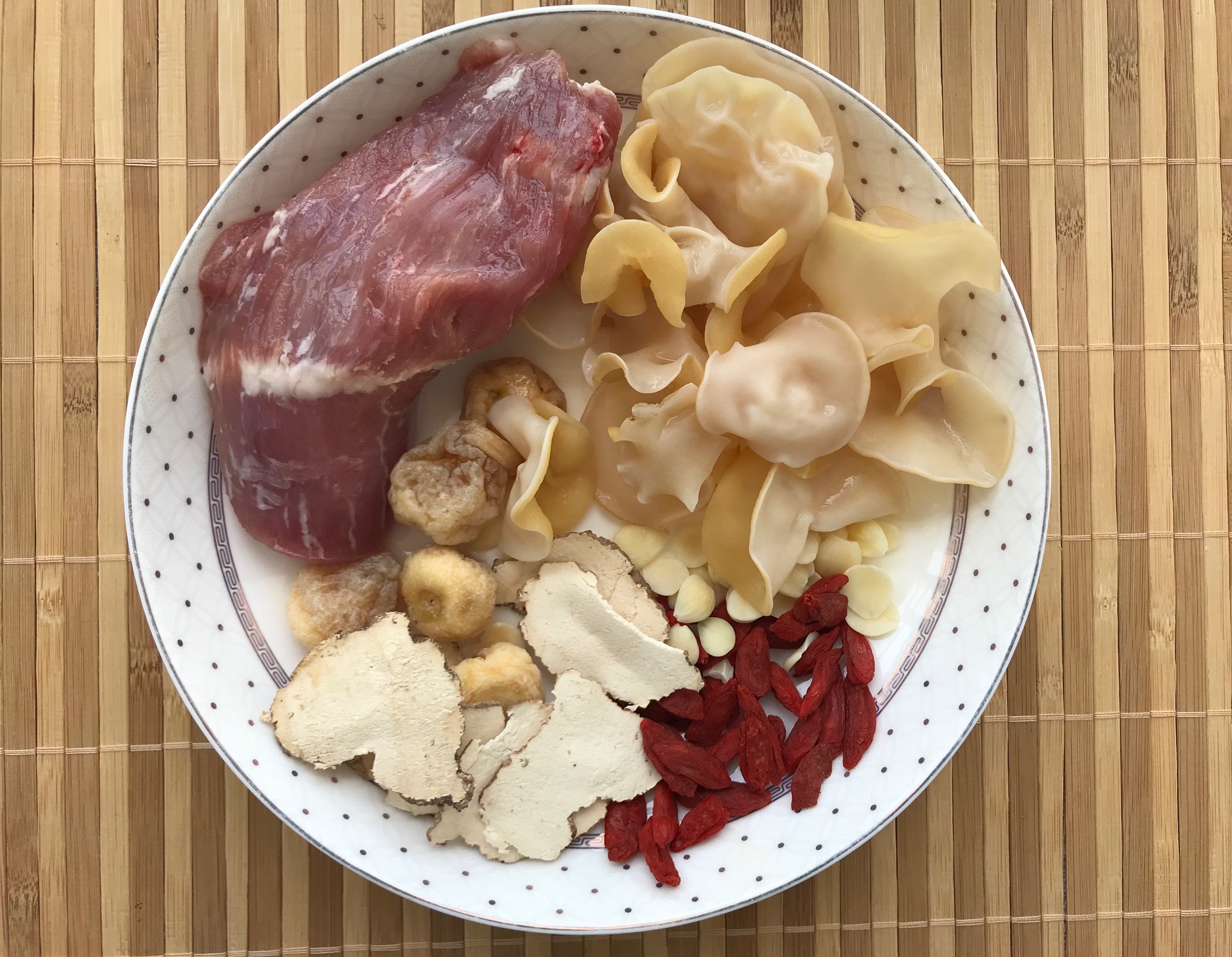
Cordyceps flower (chong cao hua) is the cultivated fruiting body of Cordyceps mycelium, not the wild caterpillar fungus, and is widely available at Chinese herb shops and Asian grocers, or online. Bright orange, lightly fragrant, and reminiscent of enoki mushrooms, it contains cordyceps polysaccharides and is traditionally regarded as nourishing for the lungs and kidneys. Simmered with huai shan (Chinese yam), goji berries, and figs in a simple pork broth, this is a mild, pleasantly sweet soup that can easily become a regular part of a wellness-minded weekly menu.
Who it suits / who should be cautious
- Suitable for those with a tendency toward mild breathlessness, easy fatigue, or recurrent respiratory complaints
- Suitable for the whole family, including those recovering from illness; can be made 2 to 3 times per week as a general wellness soup
- Pregnant women may drink this soup
- Those with mushroom or fungal sensitivities, or skin conditions that worsen with damp-heat foods, should start with a small portion and observe their response
- The dry form of cordyceps flower is generally considered better for those with a damp constitution than the fresh form
Why these ingredients (the food-therapy logic)
- Cordyceps flower (chong cao hua): The cultivated mycelium of Cordyceps sinensis; contains polysaccharides associated with immune support. Traditionally considered to nourish the lungs and kidneys and support respiratory resilience
- Chinese yam (huai shan, Dioscorea opposita): One of the most commonly used spleen-strengthening and lung-nourishing foods in Chinese dietary therapy; the sticky mucilage in fresh huai shan is also associated with cardiovascular benefit
- Goji berries (gou qi zi): Rich in antioxidants; traditionally used to nourish the liver and kidneys and support vision and overall vitality
- Dried figs (wu hua guo): A gentle, sweet ingredient that moistens the lungs and adds natural sweetness without sugar
Ingredients (4 bowls / 3–4 servings)
| Ingredient | Amount | Notes |
|---|---|---|
| Fresh cordyceps flower | ~37 g (1 liang) | Trim bases; blanch briefly; dried (5 qian) can substitute |
| Chinese yam root (huai shan) | ~37 g (1 liang) | Soak and rinse if dried; cut if fresh |
| Goji berries (gou qi zi) | ~15 g (4 qian) | Soak and rinse |
| Dried figs (wu hua guo) | 4 pieces | Rinse |
| Pork shin (zhu zhan) | 1 piece (~300 g) | Blanch in boiling water; cut into pieces |
Method
- If using fresh cordyceps flower: trim off the root ends, rinse, and blanch briefly in boiling water. If using dried: soak for 15 minutes and rinse.
- Blanch the pork shin in boiling water for a few minutes to remove impurities. Drain and cut into chunks.
- Soak and rinse the huai shan and goji berries.
- Combine all ingredients in a pot with 8 bowls (about 2 litres) of cold water.
- Bring to a boil, skim any foam, then reduce heat and simmer for about 2 hours until reduced to roughly 4 bowls.
- Serve the soup and eat the ingredients alongside it.
Bro Niu’s tips
As with any less-familiar mushroom or fungal food, do not eat a very large portion in one sitting. Dried cordyceps flower is generally preferable to fresh for those who tend toward a damp constitution. If cordyceps flower molds in the fridge, discard it immediately — moldy ingredients should never be used, as the mycotoxins penetrate throughout and cannot be rinsed away. This soup can be made 2 to 3 times per week as a general tonic.
Community questions answered (selected)
-
Q (Joey): My tongue coating is thick and white — I have a heavy damp constitution. Can I drink a soup with cordyceps flower, carrot, and corn? Bro Niu: With a thick tongue coating it is best to hold off on the cordyceps flower for now. The carrot and corn are fine. You could add fresh huai shan and 5 qian of poria (fu ling) — that combination will help strengthen the spleen and resolve dampness.
-
Q (reader, 爱家的丸子): Is dried cordyceps flower better than fresh for soups? And what is the difference between dried and fresh huai shan? Bro Niu: Dried cordyceps flower is generally better, especially for those with a damp constitution. For huai shan, both dried and fresh from Henan Province have similar therapeutic value. For fresh, look for low-temperature dried varieties without sulfur treatment. Fresh huai shan’s sticky mucilage is particularly good for those with cardiovascular concerns or diabetes.
-
Q (Joyce): If a child has a lingering cough with yellow phlegm, can they drink cordyceps flower soup? Bro Niu: Yes — use cordyceps flower 1 liang and add chuan bei (fritillaria) powder 2 qian, bai he (lily bulb) 1 liang, chen pi (tangerine peel) 1 piece, sweet-bitter apricot kernels 1 liang, and dried figs 4 pieces. Simmer with lean pork. It supports the lungs and spleen while helping to dissolve phlegm. The whole family can drink it.
Published April 5, 2010 · Adapted and translated for Nourilo from a traditional home-kitchen recipe. Approx. 4 min read.