Soups
Five-Finger Peach Root, Ginger and Lamb Soup
traditionally used to warm the body, support qi, and ease cold sensitivity and joint discomfort
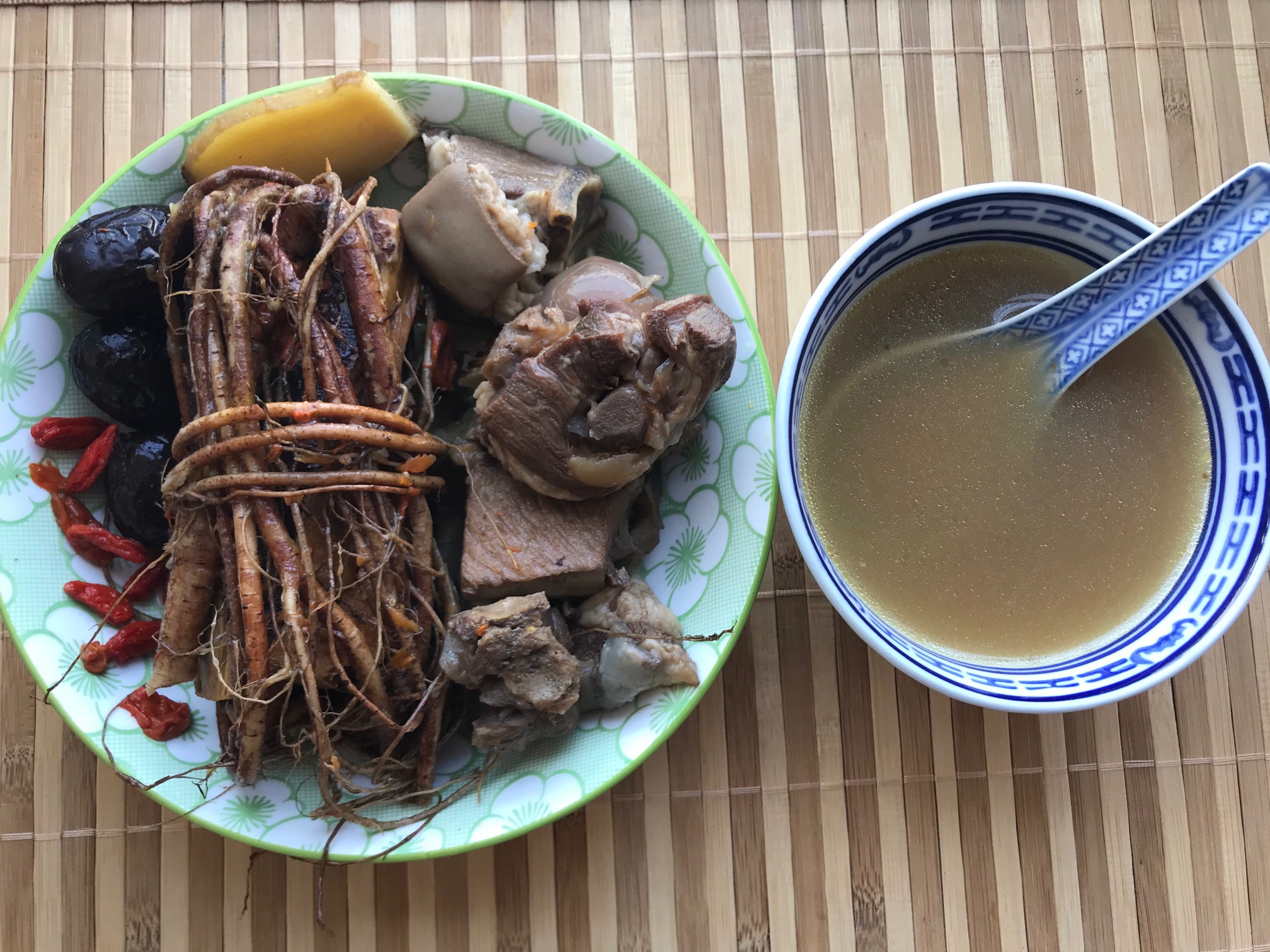
Why people make this soup
Five-finger peach root (wu zhi mao tao) is a star ingredient in Hong Kong and Guangdong kitchens — mild, gentle, and loved for the faint coconut-like fragrance it gives to soups. It has earned the nickname “Southern Astragalus” (nan qi) because its qi-supporting properties are similar to the better-known astragalus root (huang qi), though a little gentler. When this root is paired with lamb — warming, nourishing, and deeply satisfying in cold weather — and fresh ginger, the soup becomes an excellent remedy for the kind of cold that goes all the way to the hands and feet, or for someone who just feels persistently tired and chilled.
Who it suits / who should be cautious
- Suited to people who feel perpetually cold (especially hands and feet), are easily fatigued, or suffer from dull achy joints in cold and damp conditions
- Fine during pregnancy and postpartum (though lamb is fairly rich, so enjoy in moderate amounts during those periods)
- Good for the whole family in cold weather
- Those with active infections or fever should wait until recovered
- Important purchasing note: Always buy five-finger peach root in pre-bundled form from a reputable Chinese herb shop — look for roots with characteristic orange-yellow outer skin. A toxic plant (thunder god vine / lei gong teng) can grow alongside five-finger peach with similar-looking roots; never forage this yourself
Why these ingredients (the food-therapy logic)
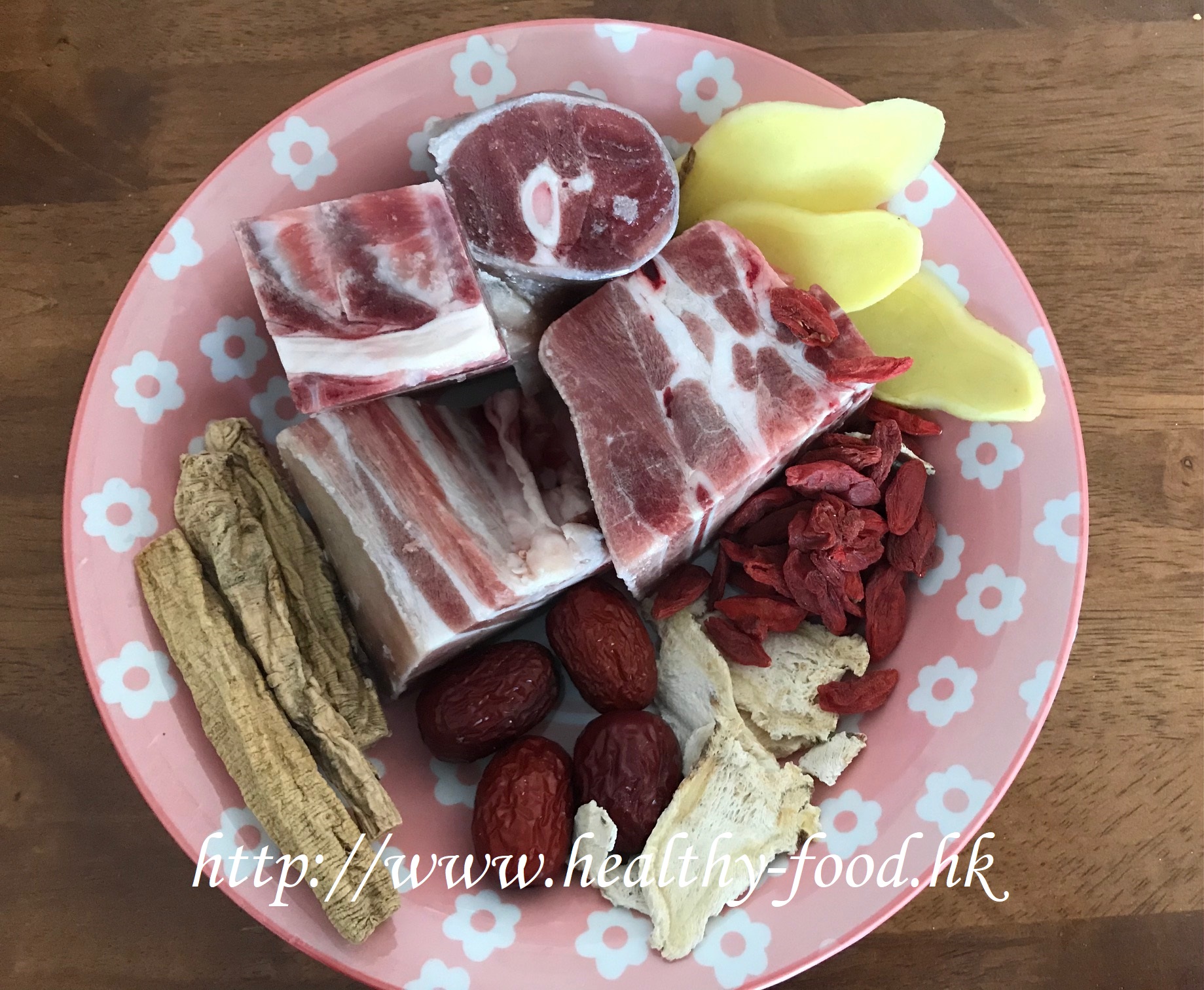
- Five-finger peach root (wu zhi mao tao, Ficus hirta): Sometimes called “Southern Astragalus”; traditionally used to support spleen qi, dispel dampness, benefit the lungs, and gently strengthen the body; gives soups a pleasant coconut-like aroma
- Lamb (yang rou): One of the warmest meats in Chinese food therapy; traditionally used to warm the kidneys and expel cold; particularly recommended in winter
- Fresh ginger (sheng jiang): Disperses cold, warms the stomach, and works with lamb to enhance the warming effect
- Goji berries (gou qi zi): Add gentle yin nourishment to balance the warming herbs; also nourish the liver and kidneys
- Red dates (hong zao): Tonify the blood and harmonise the flavour of the soup
Ingredients (4–5 bowls)
| Ingredient | Amount | Notes |
|---|---|---|
| Five-finger peach root | 1 bundle (~150–200 g) | Rinse well |
| Goji berries | ~11 g | Rinse |
| Red dates | 5 pieces | Pit and rinse |
| Fresh ginger | 3 slices | |
| Lamb leg meat | ~300 g | Rinse; blanch in boiling water |
Method
- Rinse the five-finger peach root bundle thoroughly under running water.
- Rinse goji berries and red dates; pit the dates.
- Blanch the lamb in boiling water for a few minutes; drain and discard the blanching water.
- Place all ingredients in a pot with 10 bowls of cold water. Bring to a boil over high heat, then reduce to a gentle simmer and cook for 2 hours until roughly 4–5 bowls remain.
- Serve the soup and eat the solid ingredients.
Bro Niu’s tips
Lamb can have a strong gamey smell. To minimise this, add a few water chestnuts (ma ti) and a couple of pieces of dried longan (yuan rou) when cooking — this naturally tempers the smell and improves the flavour. Fresh lamb is available at some specialist butchers and is much better than frozen. If using frozen, look for dark-skinned grass-fed lamb (black grass lamb), which has better flavour. The five-finger peach root must be bought as pre-bundled bunches with visible orange-yellow skin — do not substitute or forage.
Community questions answered (selected)
-
Q (苏太): Can this soup be drunk during menstruation, pregnancy, or postpartum? Bro Niu: Yes, this soup is suitable during pregnancy and postpartum. Lamb is quite rich and nourishing, so enjoy it in moderation during those periods — do not overeat.
-
Q (仪妹): My husband (in his 50s, with diabetes) sneezes and has a runny nose that lasts all day whenever he feels slightly cool. What food therapy can help? Bro Niu: Try steeping magnolia flower buds (xin yi hua) 3 qian as a daily tea — repeat until it is brewed pale. This is helpful for nasal sensitivity. Also make sure to keep warm.
-
Q (苏太, follow-up): After drinking the postpartum tonic soups, at what point can she drink the lamb soup and morinda-black bean soup? Bro Niu: After the postnatal discharge has reduced in the second week, she can drink warming soups. If the discharge is still heavy in the second week, stick to gentler soups like almond milk, fresh dendrobium-yam soup, and lotus root soup with dried lilies.
Published February 3, 2021 · Adapted and translated for Nourilo from a traditional home-kitchen recipe. Approx. 4 min read.