Soups
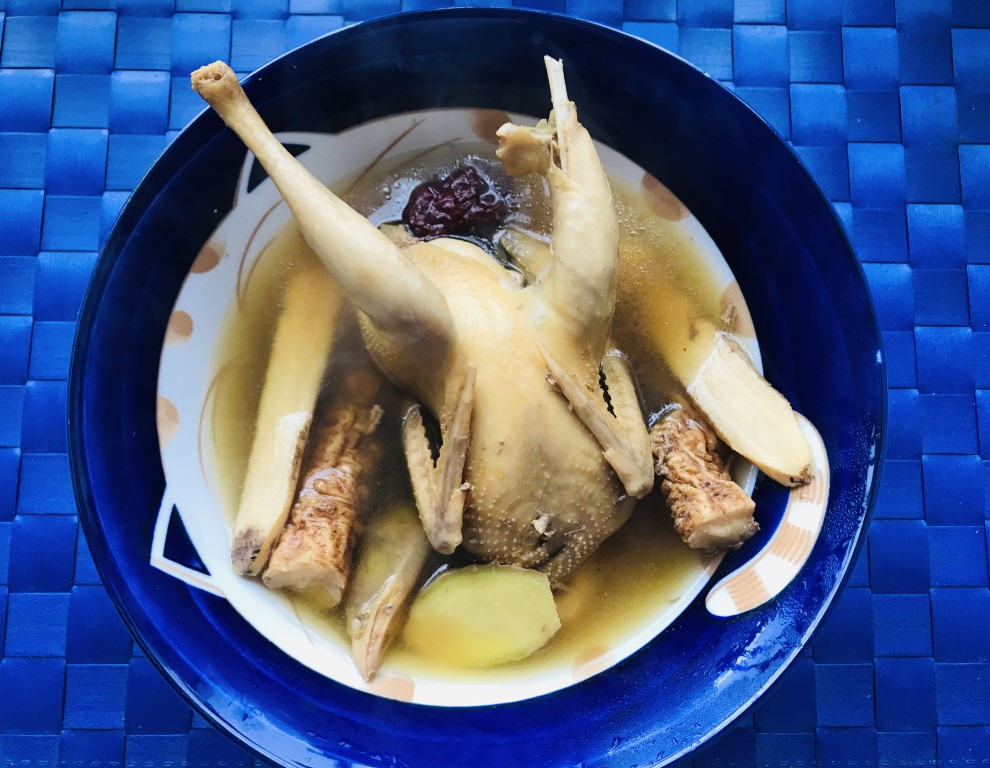
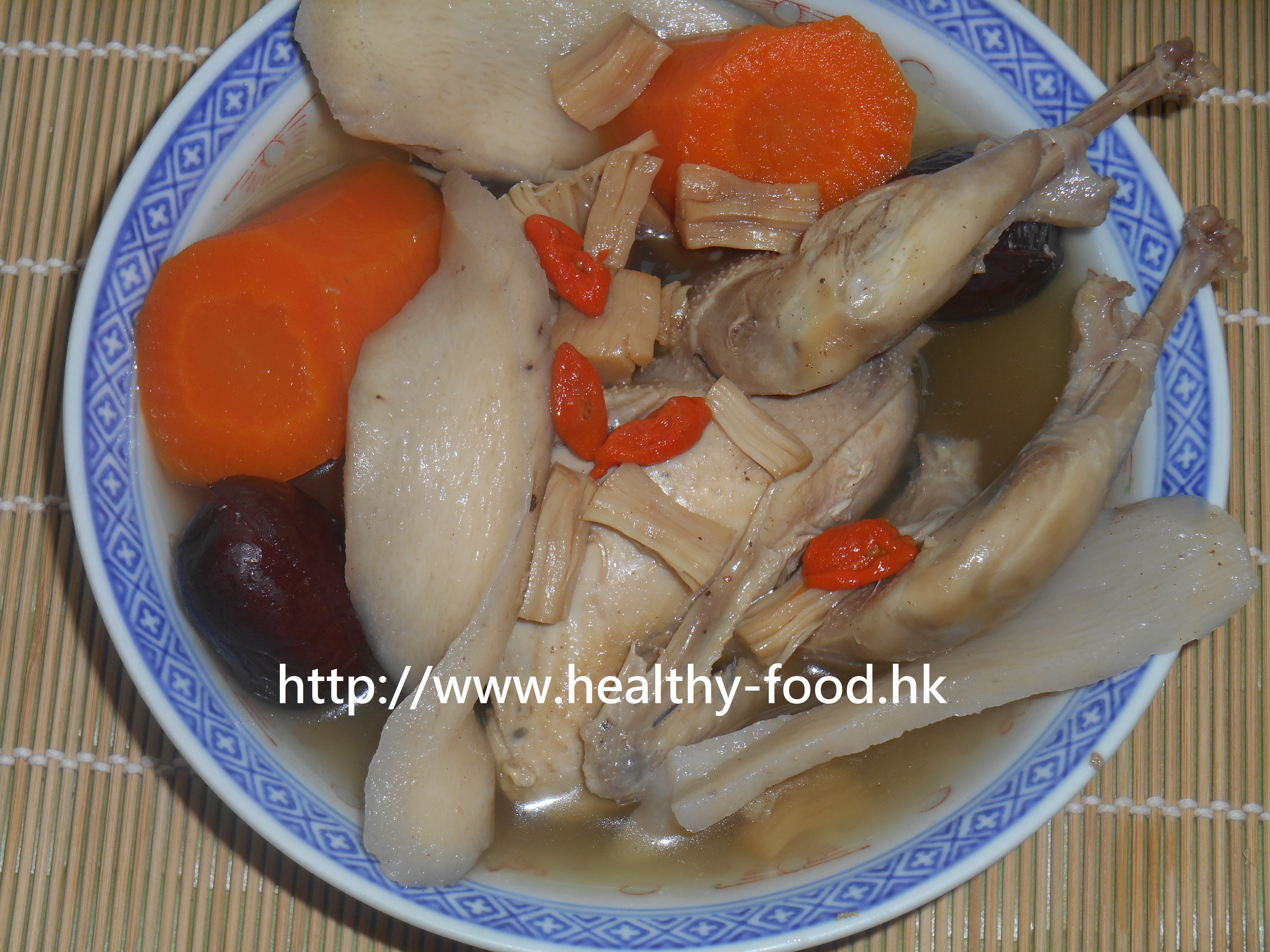
Codonopsis, Cordyceps Flower & Quail Soup
Traditionally used to strengthen immunity and support respiratory resilience
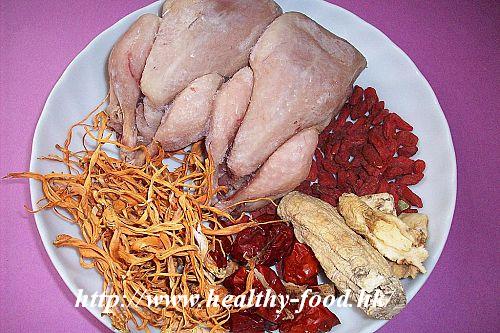
Why people make this soup
When the weather swings unpredictably between warm and cold — prime conditions for seasonal flu to spread — Bro Niu turns to this nourishing soup as a gentle preventive measure for those with weaker constitutions. Wild cordyceps (dong chong xia cao) is one of the most celebrated tonic ingredients in Chinese medicine, but its price has climbed sky-high in recent years. Fortunately, cultivated cordyceps flower (chong cao hua, also called jin chong cao) offers a practical alternative — it is the fruiting body grown from the same fungus species, widely available in Chinese herbal shops and Asian grocery stores, and sold at a fraction of the cost. Combined with codonopsis (a gentler substitute for ginseng), goji berries, red dates, and small but protein-rich quail, this soup is traditionally understood to tonify the five organs, nourish qi and blood, and help the body stay resilient when illness is going around.
Who it suits / who should be cautious
- Suited to adults and children with a tendency toward weakness, frequent colds, or respiratory fragility
- Quail can be substituted with silkie chicken (wu ji / black-boned chicken) for a more yin-nourishing effect
- Not for use when already experiencing a cold, fever, or active infection — wait until fully recovered
- For individuals with high blood pressure: codonopsis in large amounts may elevate blood pressure; limit to 2–3 qian (~8–11 g) rather than the full 5 qian
- Those with gout should use cordyceps flower cautiously, as fungal ingredients are higher in purines; cooking for just 1 hour (rather than 2) and drinking in moderation reduces the impact
- Pregnant women may drink this soup
- Chinese yam (huai shan) and chestnuts can be added for extra stomach-nourishing benefit
Why these ingredients (the food-therapy logic)
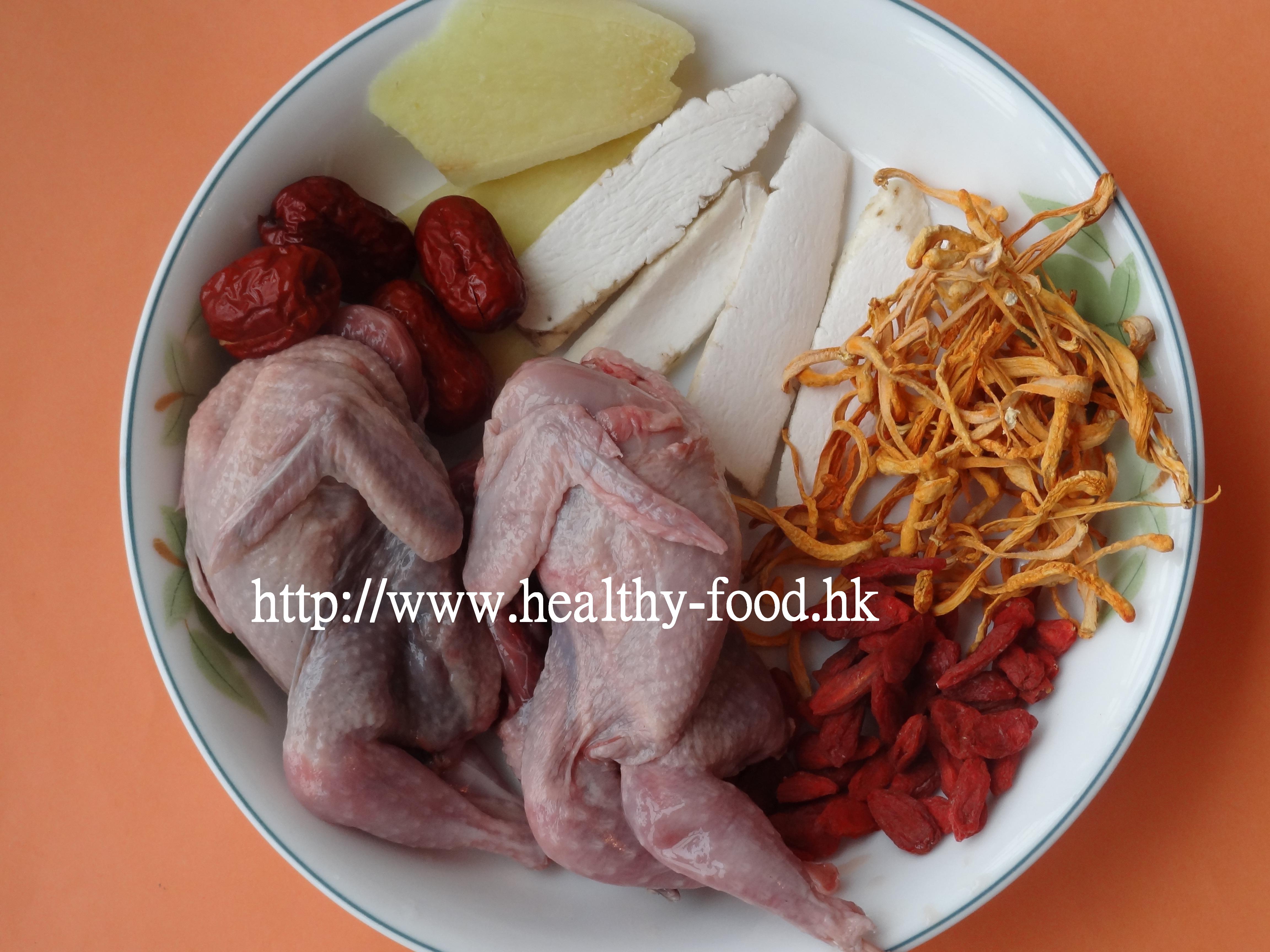
- Cordyceps flower (chong cao hua): The cultivated fruiting body of Cordyceps militaris — the same fungal genus as the legendary wild cordyceps. While not identical to wild cordyceps, it is used in traditional food therapy for similar associations: supporting lung and kidney function, and building resilience against respiratory illness.
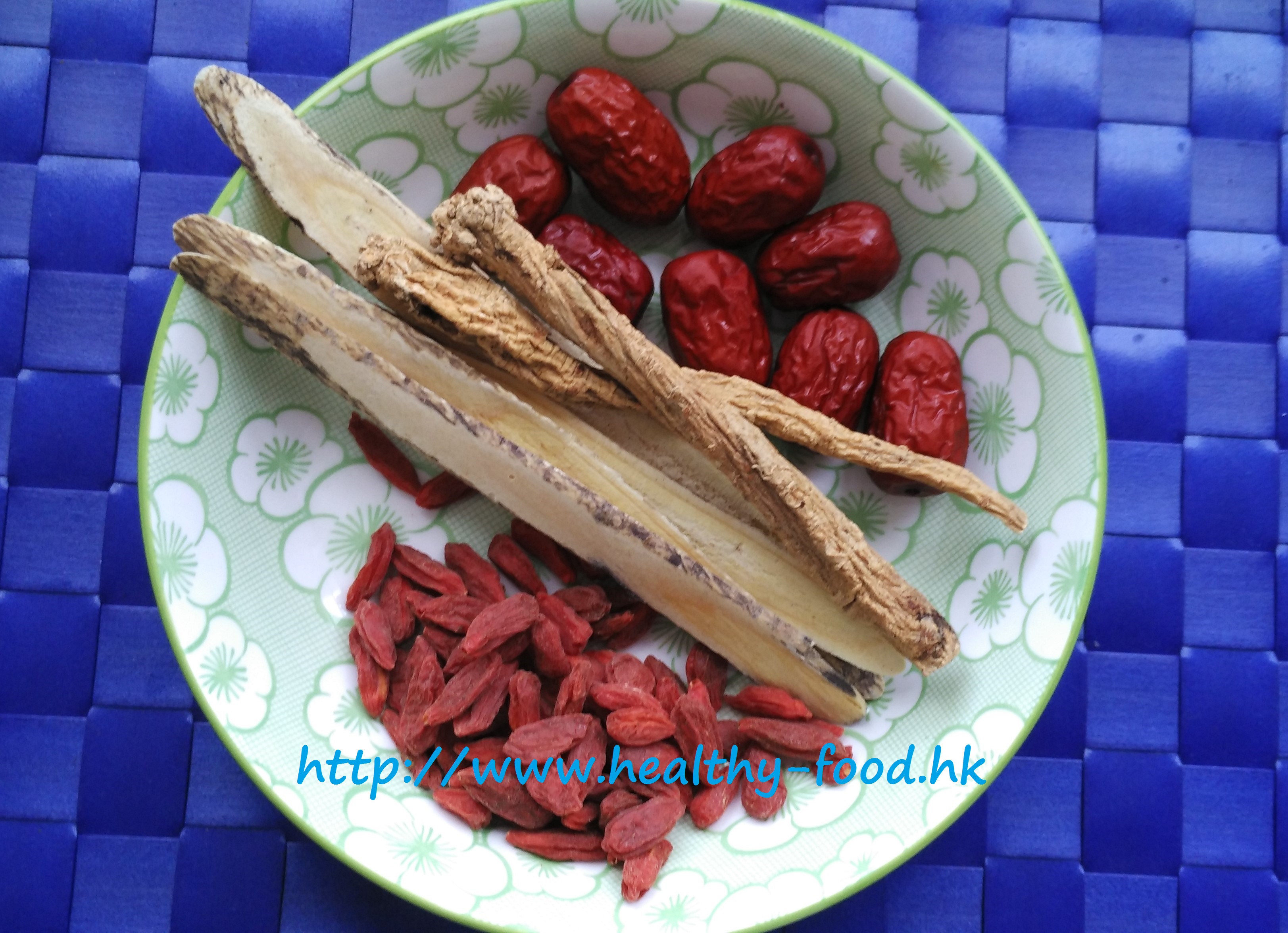
- Codonopsis root (dang shen): A gentle qi-tonifying herb that is far more affordable than ginseng. Traditionally used to support the spleen and stomach, helping the body absorb nourishment and build energy.
- Goji berries (gou qi zi): Widely associated with nourishing the liver, supporting eye health, and general vitality.
- Red dates (hong zao): A beloved food-therapy ingredient for nourishing the blood, calming the mind, and adding natural sweetness to the broth.
- Quail (an chun): Small birds that are exceptionally nutritious — traditionally considered to nourish the five organs and support healthy growth. Easier to source frozen from large supermarkets or Asian grocery stores.
Ingredients (3–4 bowls)
| Ingredient | Amount | Notes |
|---|---|---|
| Cordyceps flower (chong cao hua) | ~19 g (5 qian) | Rinse and soak briefly; available at Chinese herbal shops and many Asian supermarkets |
| Codonopsis root (dang shen) | ~19 g (5 qian) | Rinse; break or cut into pieces to help release flavor |
| Goji berries (gou qi zi) | ~15 g (4 qian) | Rinse gently |
| Red dates, pitted | 6 pieces | Remove pits |
| Fresh ginger slices | 2 slices | Helps remove gaminess from the quail |
| Frozen quail | 2 birds | Defrost, clean, and blanch in boiling water before use |
Method
- Defrost the quail completely. Rinse and blanch in boiling water for a few minutes; discard the blanching water and rinse the quail.
- Rinse all herb ingredients and soak briefly. Remove date pits.
- Place all ingredients together in a pot. Add approximately 8 bowls of water.
- Bring to a boil over high heat, skim any foam, then reduce to a gentle simmer.
- Cook for about 2 hours until the broth is flavorful and the quail is very tender.
- Drink the soup and eat the quail and other solid ingredients.
Bro Niu’s tips
- If quail is difficult to find, pork shin or lean pork can substitute; silkie chicken (wu ji) works beautifully and adds a more yin-nourishing character.
- Chinese yam and chestnuts can be added alongside the existing ingredients without any issue.
- Cordyceps flower is not heating or drying in nature — it is quite gentle and can be paired with fig (wu hua guo) to make a simple everyday tea for preventing tonsillitis.
- For those worried about gout: cordyceps flower, being a fungal ingredient, does contain purines; cook for no more than 1 hour and drink moderately, or replace with a non-fungal alternative such as Chinese yam.
Community questions answered (selected)
-
Q (郑叻): Can quail be replaced with silkie chicken? Is there a big difference in function? Bro Niu: Silkie chicken works well too — it has a nourishing, yin-supporting quality. Go ahead.
-
Q (Amy): Can someone with high blood pressure drink a codonopsis soup? My husband has hypertension. Bro Niu: For high blood pressure, use only 2–3 qian (~8–11 g) of codonopsis. In that smaller amount, even someone with hypertension can drink this soup. Astragalus (bei qi / huang qi) at 1 liang actually has a blood-pressure-lowering effect and can be used instead.
-
Q (Qchan): What if I remove the quail and just cook cordyceps flower, codonopsis, goji, and red dates as a tea? My elderly relative has joint pain from meat-based broths. Bro Niu: Drinking long-simmered meat soups frequently is indeed not ideal for gout, but cooking for only 1 hour should be acceptable. Without meat, party ingredients codonopsis, goji, and red dates can be simmered as a tea to nourish qi and blood and support immunity. For gout sufferers, cordyceps flower (fungal) is also worth limiting — omit or reduce it.
Published March 5, 2010 · Adapted and translated for Nourilo from a traditional home-kitchen recipe. Approx. 4 min read.