Soups
Coconut, Snow Fungus & Pork Rib Soup
traditionally used to nourish the lungs and support skin moisture
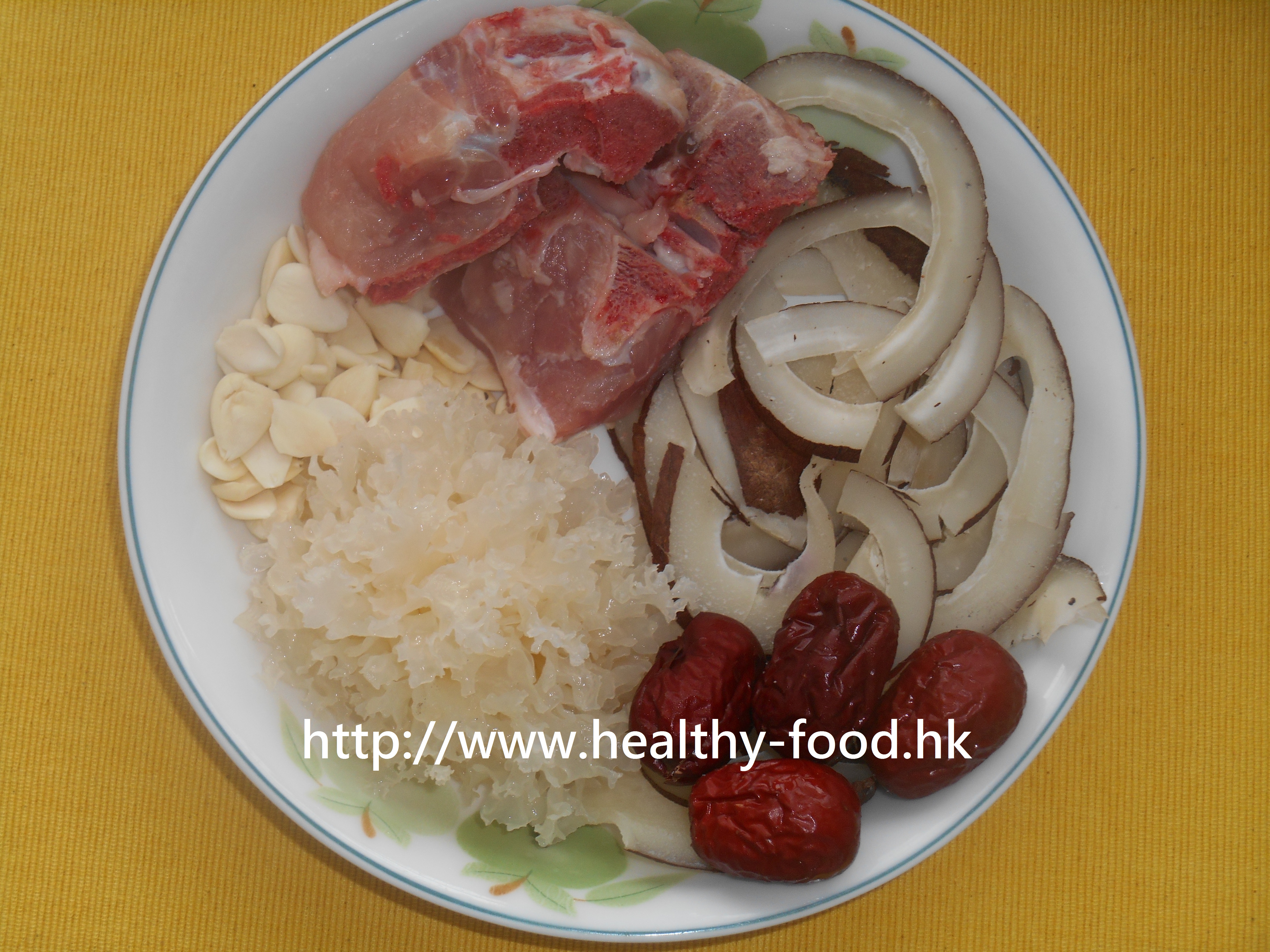
Why people make this soup
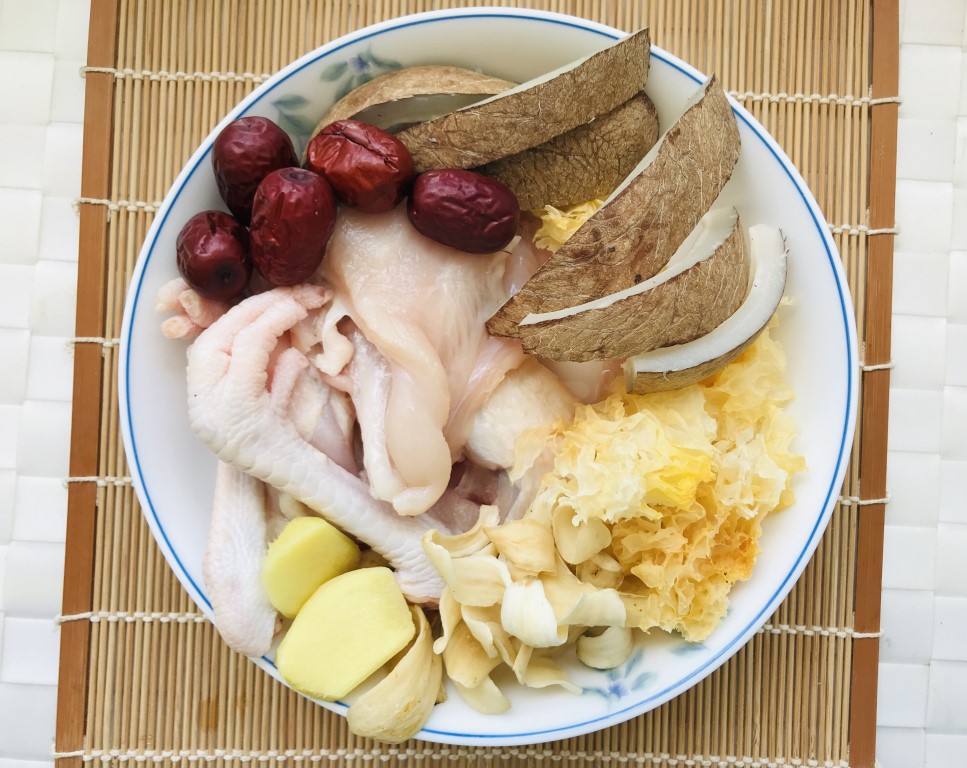
When the air gets dry in autumn and the skin starts to feel rough and tight, many families turn to a lightly sweet, nourishing soup to restore moisture from the inside out. This coconut and snow fungus combination has long been appreciated in Cantonese kitchens for keeping the lungs and skin comfortable during dry seasons. The small Indian coconut — intensely fragrant, with little or no water inside — makes a wonderfully aromatic soup base that pairs beautifully with snow fungus.
Who it suits / who should be cautious
- Well suited for most adults and children seeking gentle nourishment for dry skin, a dry throat, or a dry, unproductive cough
- Particularly supportive after childbirth when milk supply feels low, or for anyone with noticeably dry, wrinkled skin
- Those with an active cold, fever, or sore throat should wait until they recover before drinking this soup
- Snow fungus and wood ear fungus should not be cooked for excessively long periods — scoop them out once soft and eat them fresh; the remaining broth can be stored overnight without issue
Why these ingredients (the food-therapy logic)
- Indian coconut (yin du ye zi): In traditional food therapy, coconut is considered neutral in nature. It is associated with clearing heat from the lungs and providing gentle nourishment. The small Indian variety is especially rich in coconut aroma, making it an excellent soup base.
- Snow fungus (xue er, Tremella fuciformis): One of the most prized ingredients in Cantonese nourishing soups, snow fungus is traditionally associated with moistening the lungs, supporting the stomach, and promoting a smooth, well-hydrated complexion.
- North-south apricot kernels (nan bei xing): A classic Cantonese soup pairing, the mild sweet kernels (nan xing) and slightly bitter kernels (bei xing) together are traditionally used to support the lungs and ease dryness-related coughs.
- Red dates (hong zao): Added to nearly every Cantonese soup as a natural sweetener and to support blood nourishment. Removing the pits before cooking is standard practice to reduce any minor warming intensity.
- Pork ribs (pai gu): Provide body and savory depth to the broth, while contributing collagen and minerals during the long simmer.
Ingredients (4–5 bowls)
| Ingredient | Amount | Notes |
|---|---|---|
| Indian coconut | 1 small | Slice thin before use; use flesh only |
| Snow fungus (Tremella) | ~7.5 g (2 qian) | Soak until soft, remove tough stem, rinse well |
| North-south apricot kernels | ~37 g (1 liang) | Available at Chinese herb shops |
| Red dates | 6 pieces | Remove pits |
| Pork ribs | ~450 g | Blanch in boiling water first to remove impurities |
Method
- Rinse the coconut slices well. Cut into thin slices before use if whole.
- Soak the snow fungus in cold water until fully softened, then remove the tough yellow base and rinse thoroughly.
- Pit the red dates. Blanch the pork ribs in boiling water for 2–3 minutes, drain and rinse.
- Place all ingredients into a pot with 10 bowls of water (approximately 2 litres).
- Bring to a full boil, then reduce heat and simmer for 2 hours until reduced to 4–5 bowls.
- Serve warm — drink the broth and eat the soup ingredients.
Bro Niu’s tips
This soup is suitable for young and old alike. It is especially beneficial for new mothers experiencing low milk supply, or for anyone whose skin feels persistently dry or prone to fine lines. Those with a dry cough producing little or no phlegm will also find it soothing. A reminder: snow fungus should not be kept simmering for too long — once the soup is done, scoop the fungus out to enjoy right away. The broth itself is fine stored overnight in the refrigerator.
Community questions answered (selected)
-
Q (apple): The flesh inside my Indian coconut has turned grey but doesn’t smell bad — can it still be used for soup? Bro Niu: Grey-coloured coconut flesh usually means it has spoiled — best not to use it. When purchasing whole coconuts, always open and inspect the flesh first to confirm it is fresh before use. If it looks fine, slice it and use it for the soup.
-
Q (Baby): Can a pregnant woman drink this soup if she has a cold? Bro Niu: If the cold is nearly gone, it is fine to have some. However, if there is a fever, this soup is not suitable. Wait until the fever has resolved first.
-
Q (匿名访客): I heard coconut is warming and can make things too heaty — is that true? Bro Niu: Coconut is actually neutral in nature, not warming. It pairs well with black-bone chicken to nourish yin and moisten dryness. Adding yam, Solomon’s seal, and lily bulb to lean pork broth is also perfectly fine. If there is no fever, someone with a mild stomach upset can still drink this soup.
Published August 18, 2016 · Adapted and translated for Nourilo from a traditional home-kitchen recipe. Approx. 4 min read.