Soups
Coconut, Green Papaya, Snow Ear Fungus, Apricot Kernel and Organic Chicken Breast Soup
Traditionally associated with supporting lung recovery, boosting immunity, and easing post-illness respiratory discomfort
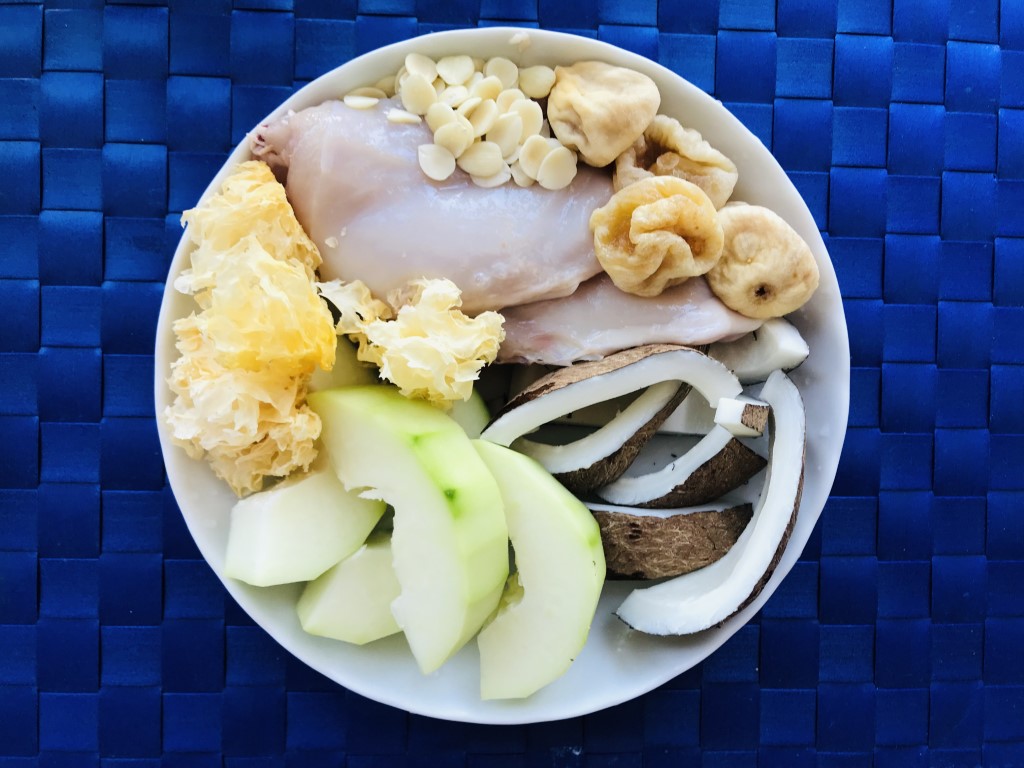
Why people make this soup
Even after recovering from COVID-19, the respiratory system often takes time to fully settle. Coughing, breathlessness, sore throat, headache, fatigue, and muscle aches are all common complaints in the weeks following infection. The inflammatory process that got started during infection doesn’t necessarily switch off completely at recovery, and supporting the body during this quieter, rebuilding phase is where food therapy can make a real difference. This soup centres on the Indian coconut — a variety with a richer, more intensely fragrant flesh than regular young coconut. Coconut is traditionally associated with cooling and moistening the lungs and dissolving phlegm, making it a natural base for a post-illness respiratory soup. Green papaya adds the spleen-strengthening, immune-supporting qualities for which it is prized in Southeast Asian and Cantonese cooking alike. Snow ear fungus and apricot kernels support lung function and skin health. Organic chicken breast keeps the protein source lean and clean. The result is a soup that smells wonderful, tastes naturally sweet, and has been put together with post-COVID recovery specifically in mind.
Who it suits / who should be cautious
- Suitable for the whole family as a regular wellness or recovery soup
- Excellent for anyone recovering from any respiratory illness, not just COVID
- Pregnant women: replace green papaya with carrot — papaya (especially green/unripe varieties) should be avoided during pregnancy
- When purchasing Indian coconut, ask the shop to cut it open for you first to check the flesh is white and fresh, with no mould — the variety can deteriorate quickly
Why these ingredients (the food-therapy logic)
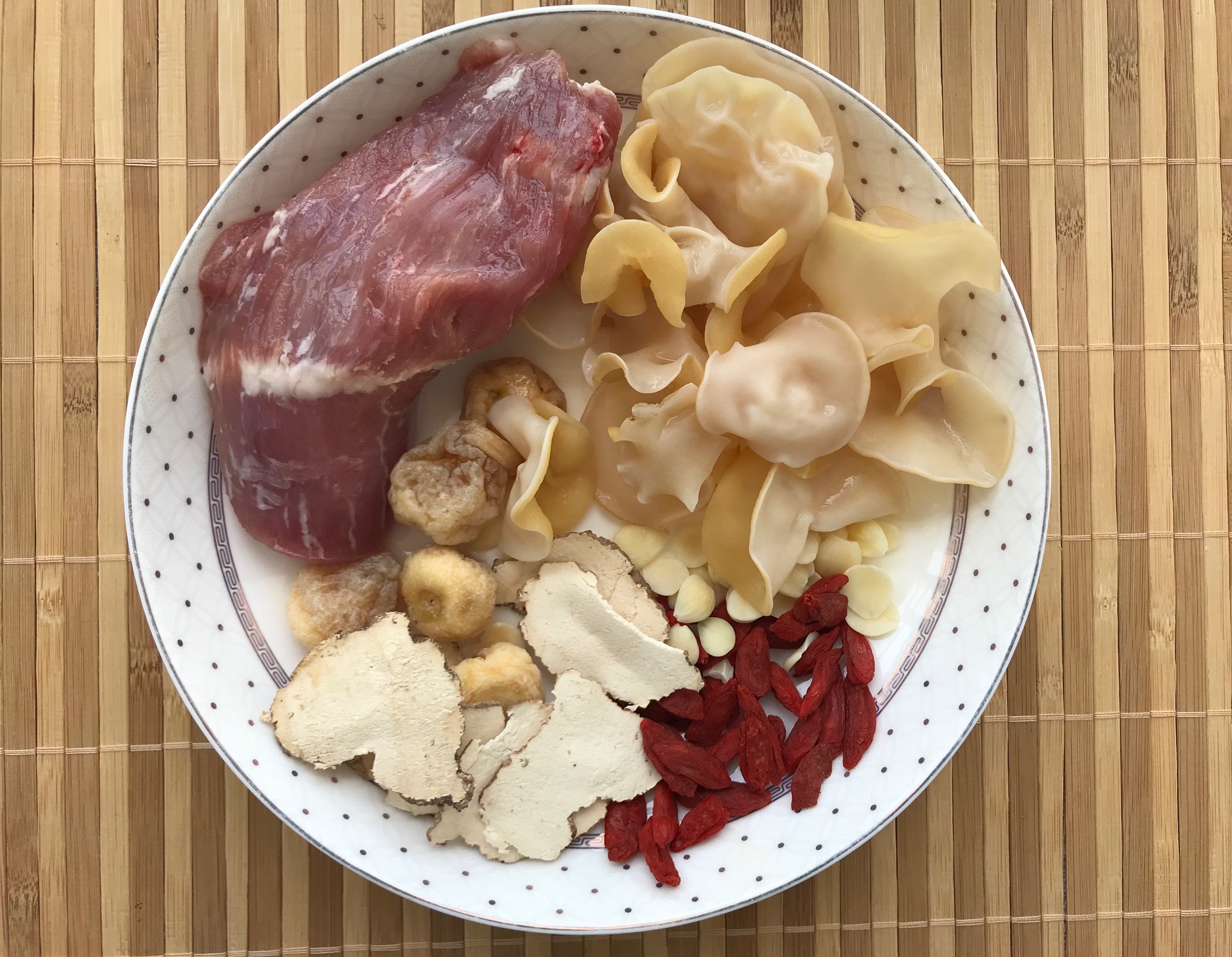
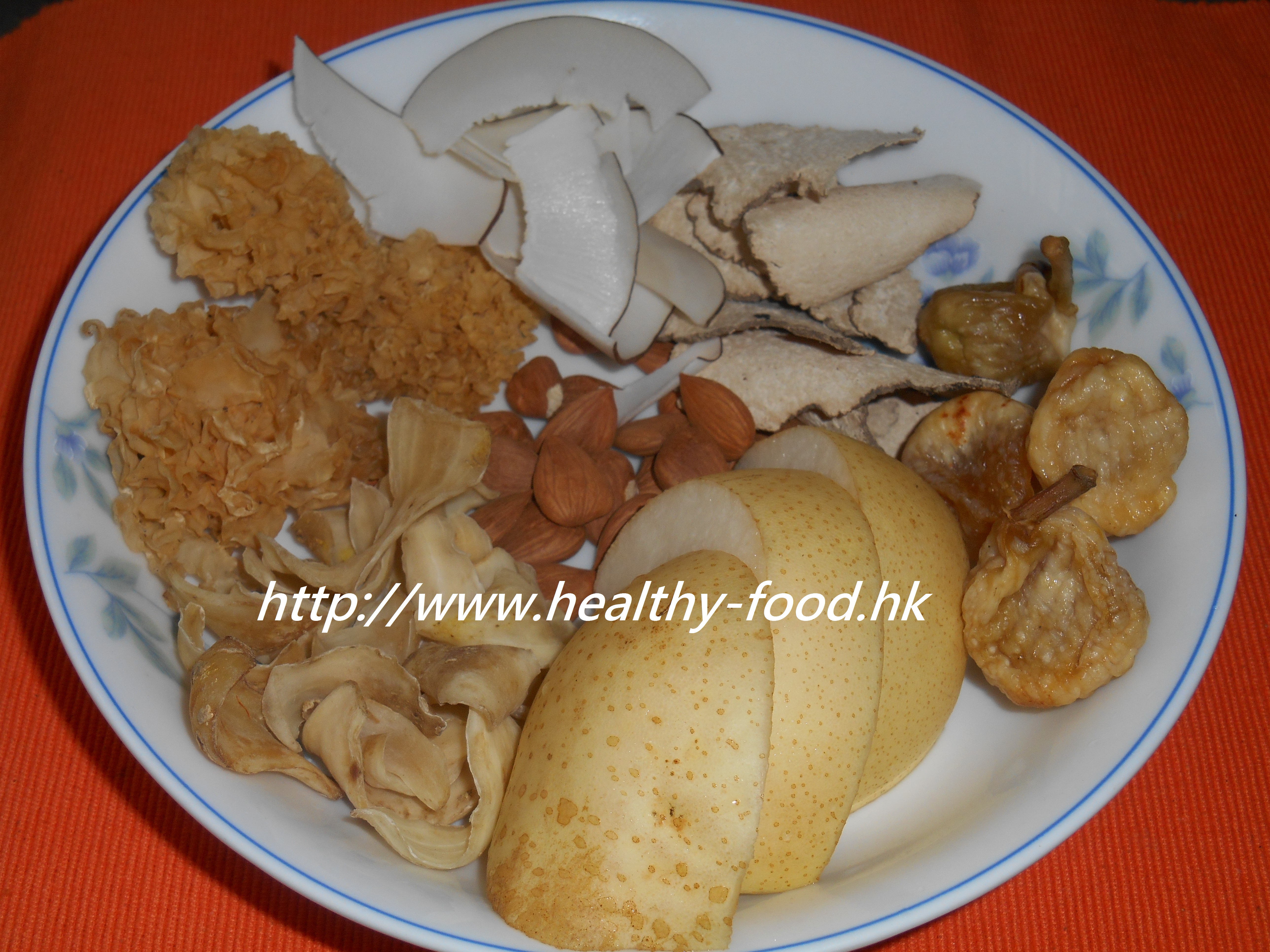
- Indian coconut (yin du ye zi): A variety of mature coconut with very fragrant, dense white flesh; in food therapy, associated with moistening the lungs, calming the heart, and dissolving phlegm; adds a rich coconut fragrance to the broth
- Green papaya (qing mu gua): Unripe papaya contains enzymes and is used in Cantonese and Southeast Asian food therapy to support the immune system, soothe the stomach, and ease cough and wheezing; also valued for its skin-brightening association
- Snow ear fungus (xue er): Lung-moistening and immune-supporting; a classic Cantonese wellness ingredient
- Apricot kernels (nan bei xing): The traditional Cantonese dual-apricot combination for lung support and easing cough
- Dried figs (wu hua guo): Gently clears heat, lubricates the lungs, and adds natural sweetness
- Organic chicken breast: Lean, clean protein; free-range organic chicken is preferred to minimise added hormones
Ingredients (4 bowls)
| Ingredient | Amount | Notes |
|---|---|---|
| Indian coconut | 1 whole | Rinse and cut into thick strips |
| Green papaya | 1 medium | Peel, seed, and cut into chunks |
| Snow ear fungus | 11 g (3 qian) | Soak until soft; remove base |
| Apricot kernels (nan bei xing) | 37 g (1 liang) | Rinse |
| Dried figs | 4 pieces | Halve |
| Organic free-range chicken breast | 1 piece | Remove skin; cut into large chunks; blanch before use |
| Water | 8–9 bowls (~2.2 L) |
Method
- Rinse the Indian coconut and cut the flesh into thick strips.
- Peel, seed, and cut the green papaya into chunks.
- Soak the snow ear fungus until soft; remove the tough base.
- Rinse apricot kernels and halve the figs.
- Remove the skin from the chicken breast; cut into large chunks and blanch in boiling water for a few minutes, then drain and rinse.
- Combine all ingredients in a pot with 8–9 bowls of water.
- Bring to a boil, reduce heat, and simmer for 2 hours until reduced to about 4 bowls.
- Serve; drink the broth and eat the soft solids.
Bro Niu’s tips
Indian coconut is quite fragrant and flavourful, but it spoils quickly. When buying, ask the shop to slice it open so you can inspect the flesh — it should be pure white, firm, and free of any discolouration or mould. This soup is naturally sweet with a pleasant coconut richness. Regular consumption is associated with strengthening the constitution, nourishing the skin, and supporting healthy ageing. The whole family can enjoy it. Remember: pregnant women should substitute green papaya with carrot.
Community questions answered (selected)
-
Q (kambe): I am a woman in my 60s. Two months after COVID, I still feel hot and cold by turns, get a stuffy nose when exposed to air conditioning, and wake up with my whole back damp with sweat. What can I do? Bro Niu: Your body has probably been weakened by the infection and is struggling to regulate temperature. Try this broth for the general recovery. For the night sweats, simmer wu wei zi (schisandra berry, 11 g), green-kernel black soybean (1 liang), fu xiao mai (unripe wheat grain, 19 g), and 5 southern dates in 5 bowls of water to 2 bowls, and take for 3 consecutive days — this is traditionally associated with calming perspiration.
-
Q (yuan): After COVID, I’ve had phlegm stuck in my throat — white in colour, sometimes comes up, sometimes doesn’t. How can I clear it? Bro Niu: Try fa xia (pinellia, 15 g), fu ling (poria, 15 g), bai zhu (atractylodes, 15 g), chen pi (tangerine peel, one piece), and gan cao (liquorice, 7 g) in 5 bowls of water, reduced to 2 bowls, taken throughout the day. Three consecutive days should help resolve the phlegm.
Published December 22, 2022 · Adapted and translated for Nourilo from a traditional home-kitchen recipe. Approx. 4 min read.