Soups
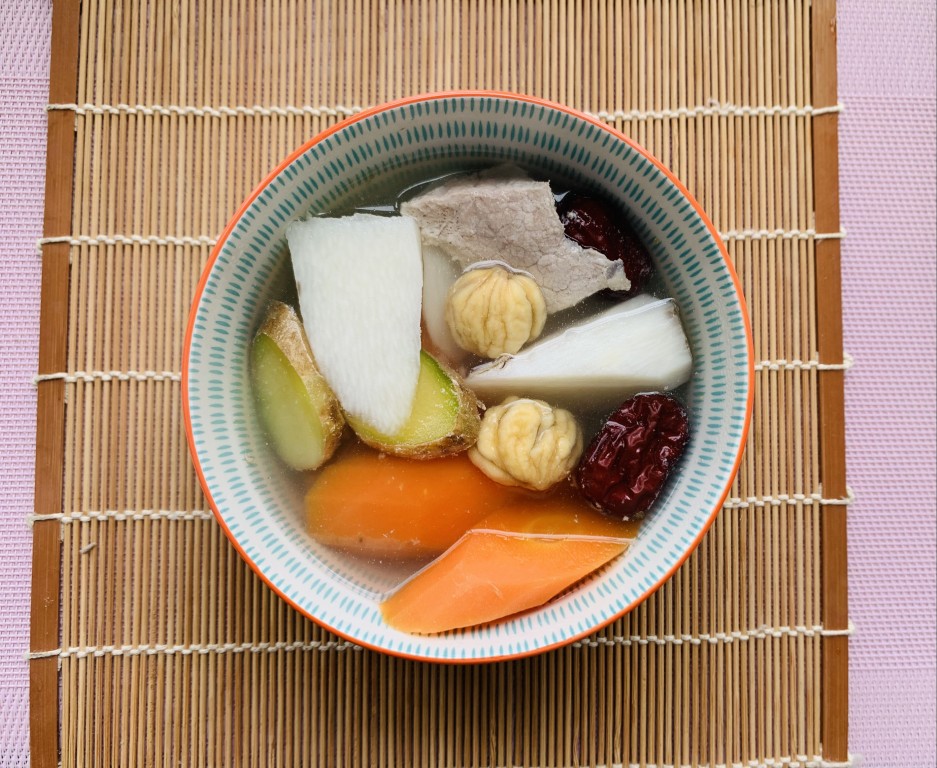
Indian Coconut, Corn and Chestnut Soup
traditionally used to nourish yin, support kidney function, and moisturise the skin
Why people make this soup
A friend of Bro Niu’s had spent years burning the midnight oil for work. Despite being in her prime, her complexion had turned sallow, and she had aged noticeably faster than her peers. She was also in that tricky position where she was too depleted to take strong tonics — anything too warming or strengthening triggered internal heat. Bro Niu’s answer: a nourishing, plant-based soup that moisturises from within without pushing the body too hard. This combination of Indian coconut, sweet corn, chestnuts, and red dates is light enough to cook frequently as an everyday restorative.
Who it suits / who should be cautious
- Particularly well suited to those who regularly stay up late, have dull skin, or feel dried out inside without being able to tolerate strong tonic herbs.
- Can be made with meat (chicken, pork ribs) for added sustenance.
- Diabetics: swap the Indian coconut for fresh Chinese yam and reduce red dates to 4 — Indian coconut may be too rich in this context.
- Choose your Indian coconut carefully; it is smaller and more aromatic than a standard coconut but spoils faster.
Why these ingredients (the food-therapy logic)
- Indian coconut (yin du ye zi): Rich in protein and B vitamins; traditionally associated with supporting heart function, neutralising stomach acid, and helping with urinary discomfort. Fragrant and moisturising.
- Corn on the cob (su mi): Gently diuretic; traditionally used to support the kidneys and reduce internal dampness. The sweetness adds natural flavour without added sugar.
- Chestnuts (li zi): Traditionally used to strengthen the spleen and kidney, support bone and muscle health, and nourish qi. A warming, grounding ingredient.
- Red dates (hong zao): Blood-nourishing and spleen-strengthening; provide natural sweetness and a balancing warmth to the soup.
Ingredients (4–5 bowls)
| Ingredient | Amount | Notes |
|---|---|---|
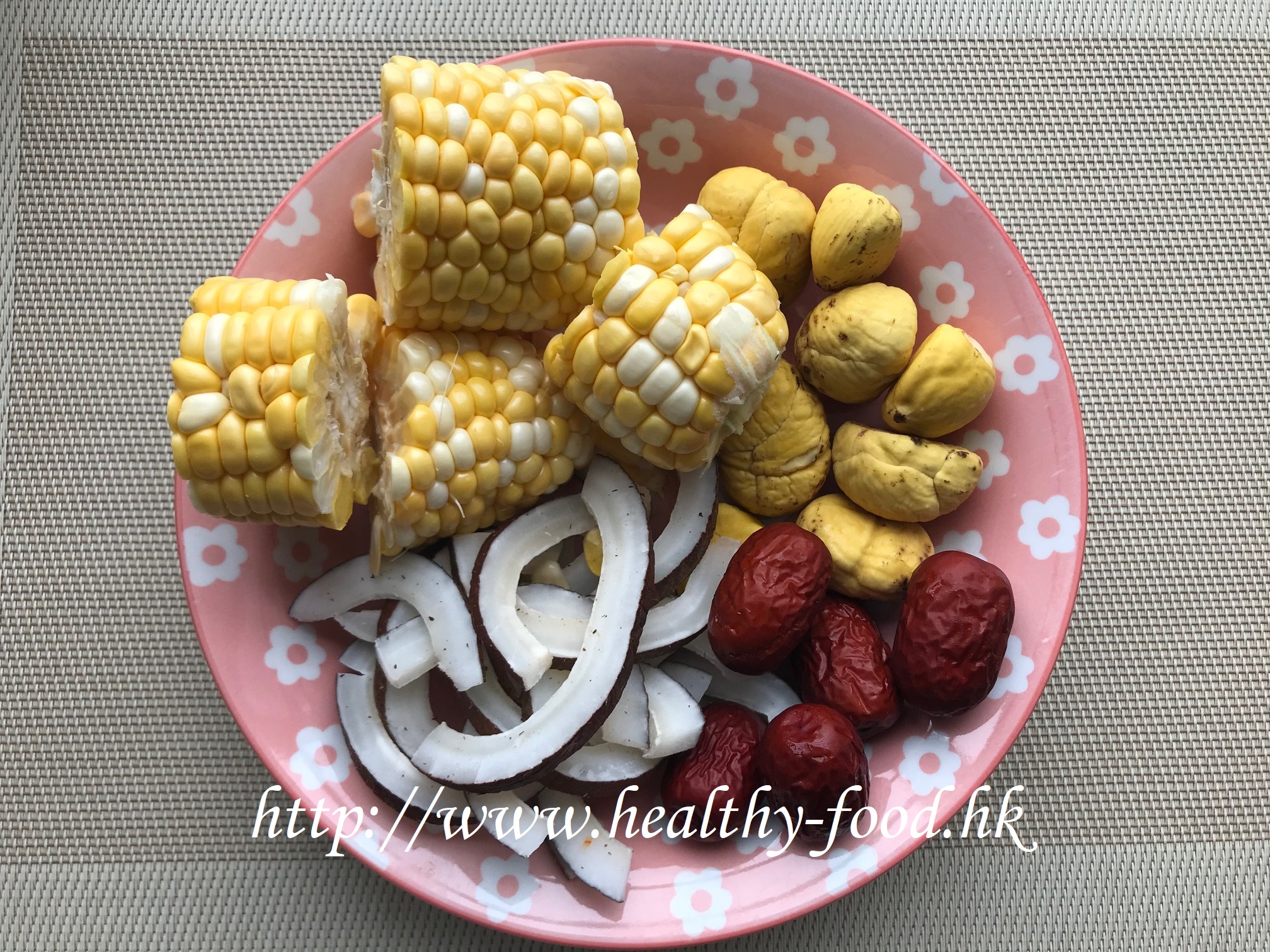
| Indian coconut (yin du ye zi) | 1 whole | Rinse and slice; choose one that feels heavy and smells fresh |
| Corn on the cob | 2 ears | Husked and cut into 3–4 sections each |
| Chestnuts | 6–8 pieces | Shell removed (blanch in boiling water to peel more easily) |
| Red dates (hong zao) | 5 pieces | Pitted |
| Water | 8 bowls (~2 litres) | Reduces to 4–5 bowls |
Method
- Rinse the Indian coconut and slice it into pieces.
- Husk the corn and cut each ear into sections.
- Remove the chestnut shells (blanching briefly in boiling water makes peeling easier). Pit the red dates.
- Combine all ingredients in a pot with 8 bowls of water.
- Bring to a boil, then reduce to a gentle simmer for about 1.5 hours, until the liquid reduces to 4–5 bowls.
- Serve and eat both the soup and all the cooked ingredients.
Bro Niu’s tips
Indian coconut has a rich, distinctive aroma, but it goes off faster than ordinary coconuts, so select carefully at the shop and use it promptly once bought. This soup is plant-based and light, which makes it a good choice for anyone who tends to feel heat easily from stronger supplements. You can of course add pork ribs or chicken to make it more substantial — the whole family can enjoy it either way.
Community questions answered (selected)
-
Q (Miss KAN): My mother is in her seventies. She recently had surgery to remove part of a kidney due to cysts, and she also has the “three highs” — particularly diabetes. Is this coconut soup suitable for her? Bro Niu: For someone with diabetes, it is better to leave out the Indian coconut. Instead, substitute one piece of fresh Chinese yam (huai shan) and reduce the red dates to 4. The rest of the family can enjoy the soup as normal.
-
Q (ms wong): My husband has irritable bowel syndrome (IBS) and frequent loose stools. Will the coconut oil in Indian coconut make things worse? Bro Niu: Excessive coconut oil is not ideal for someone with loose stools, but a small amount in a soup is generally fine. IBS is also closely linked to stress and emotional agitation, so staying calm is important. You can try simmering white peony root (bai shao, 4 qian), white atractylodes (bai zhu, 4 qian), siler root (fang feng, 3 qian), tangerine peel (chen pi, 2 qian), and liquorice root (gan cao, 1 qian) in 5 bowls of water down to 2 bowls — drinking 4 to 5 consecutive doses may help ease the symptoms.
Published March 14, 2021 · Adapted and translated for Nourilo from a traditional home-kitchen recipe. Approx. 3 min read.