Soups
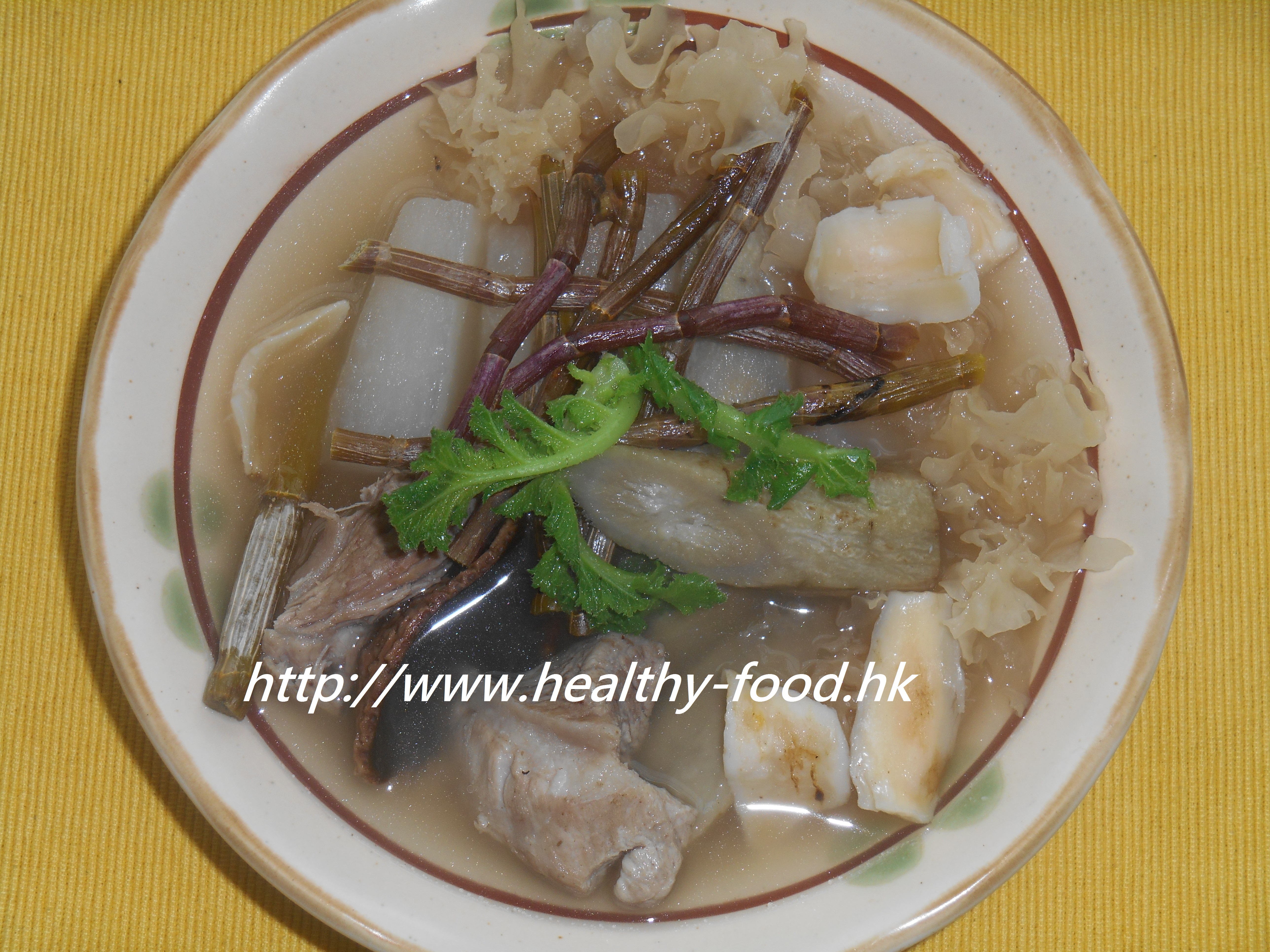
Shiitake, Snow Fungus and Soybean Soup (Dong Gu Xue Er Huang Dou Tang)
Traditionally associated with immune support and nourishing the body — used as a general wellness soup and as a dietary support for those managing illness
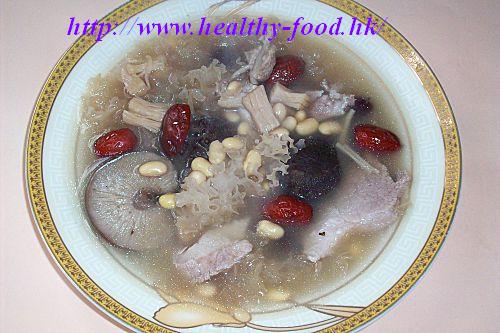
Why people make this soup
Cancer places enormous demands on the body. In traditional Chinese dietary wisdom, it is seen as a condition that depletes both the kidney essence (our innate vitality) and the digestive system’s ability to transform food into nourishment. The guiding principle for eating well during such times is to focus on foods that are easy to digest yet genuinely nourishing. This soup does exactly that: shiitake mushrooms, snow fungus, and soybeans have each been recognised in food-therapy traditions for their supportive properties, and together they produce a rich, flavourful broth that is gentle on the stomach. Families often keep this soup on regular rotation — not just during illness, but as an everyday health-building dish.
Who it suits / who should be cautious
- Suitable for most adults and children as a general wellness soup
- Particularly valued in food therapy for those managing chronic illness or recovering from treatments that have weakened the body
- Those on warfarin (blood-thinning medication) or targeted cancer therapies should consult their doctor before consuming large amounts of mushrooms, snow fungus, or black wood ear — these can have mild blood-thinning properties; small amounts in a soup are generally considered lower risk, but always check with your medical team
- If you do not eat meat, soybeans, peanuts, or cashews (about 37 g each) can be used in place of lean pork
Why these ingredients (the food-therapy logic)
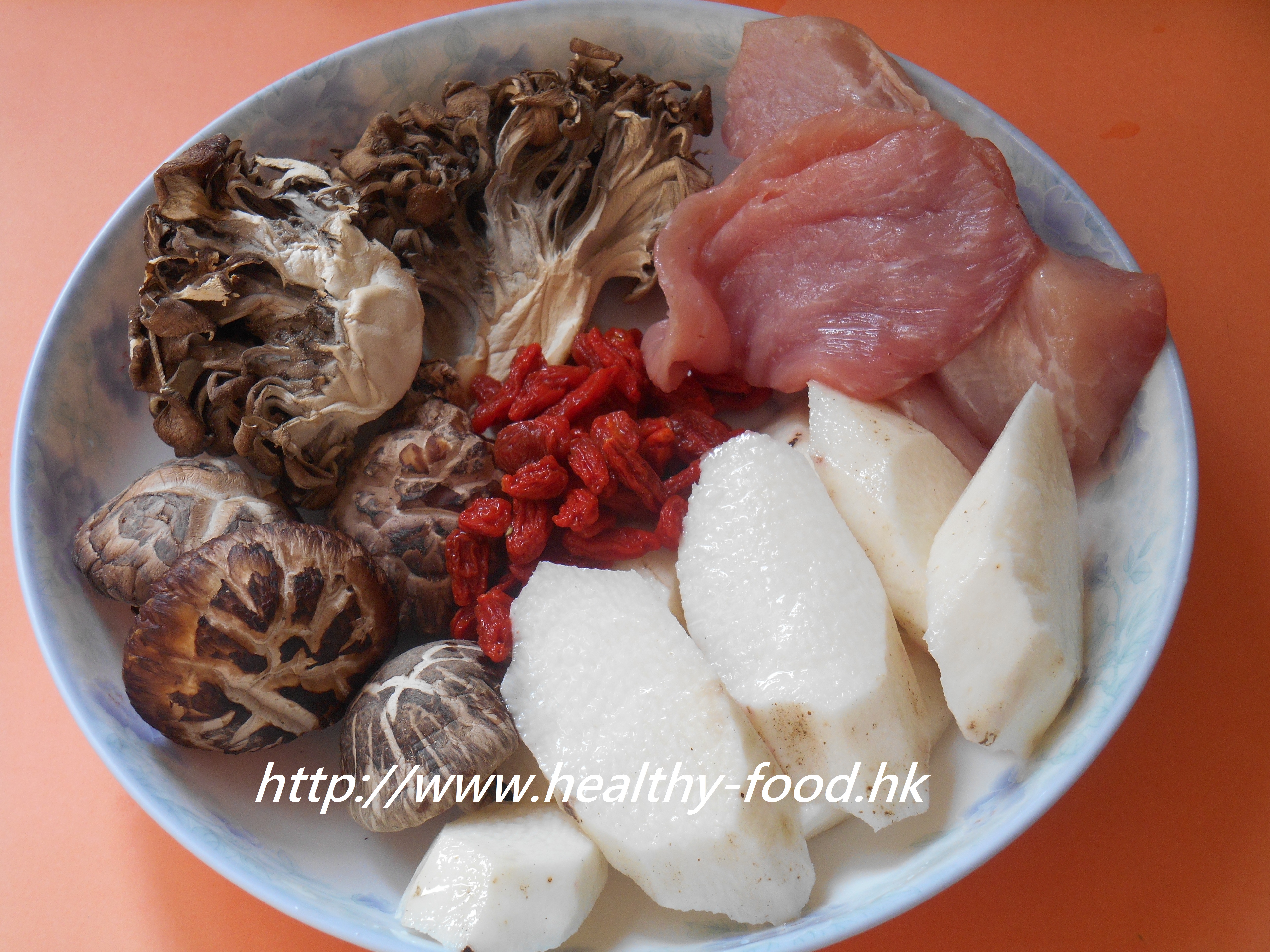
- Shiitake mushroom (dong gu): One of the most researched culinary mushrooms; in traditional food therapy it is associated with supporting immune function, nourishing the spleen and stomach, and helping the body build strength
- Snow fungus (xue er / Tremella): Valued in Cantonese tradition for nourishing the lungs and yin (the body’s cooling, moistening principle); has a pleasant, gelatinous texture that adds body to the broth
- Soybeans (huang dou): A rich source of plant protein; traditionally associated with nourishing the spleen and stomach and supporting recovery from deficiency
- Dried scallops (yao zhu): Add deep umami flavour to the broth and are traditionally considered to nourish the yin and support the kidneys
- Red jujubes (hong zao): Nourish the blood, support the spleen, and help harmonise the other ingredients in the soup
- Lean pork: Provides protein and body to the broth; adds a mild sweetness that balances the earthier mushroom flavours
Ingredients (3–4 bowls)
| Ingredient | Amount | Notes |
|---|---|---|
| Dried shiitake mushrooms (dong gu) | 6 pieces | Soak until soft, remove stems |
| Dried snow fungus (xue er) | 2 pieces | Soak until fully expanded, remove hard base |
| Soybeans (huang dou) | ~37 g (1 liang) | Rinse well |
| Dried scallops (yao zhu / conpoy) | 2 pieces | Rinse |
| Red jujubes (hong zao), pitted | 8 pieces | |
| Lean pork | ~225 g (6 liang) | Blanch briefly to remove impurities |
| Water | 8 bowls (~2 litres) |
Method
- Soak the shiitake mushrooms and snow fungus in separate bowls of cold water until fully softened. Remove and discard the stems from the shiitake. Trim away the hard, yellowish base from the snow fungus and break it into smaller pieces.
- Blanch the lean pork in boiling water for a minute or two, then rinse. This removes any impurities and keeps the soup clear.
- Rinse the soybeans, dried scallops, and red jujubes.
- Place all ingredients into a large pot and add 8 bowls of water.
- Bring to a boil over high heat, then reduce to a gentle simmer. Cook for 2 hours.
- Season lightly with salt if desired. Serve the soup and eat the ingredients together.
Bro Niu’s tips
This soup suits anyone managing a chronic or serious illness as a regular dietary supplement. The ingredients are widely available, the flavour is genuinely delicious, and the whole family can enjoy it together — there is no need to make a separate meal for the person who is unwell. If the person being cared for does not eat meat, replace the pork with an equal weight of soybeans and a small handful of cashews or peanuts. Fish (such as grass carp) can also replace pork in this recipe, though the flavour profile will be slightly different.
Community questions answered (selected)
-
Q (Yo): My mother has been diagnosed with lung cancer that has spread to her brain and has just started targeted therapy. She also takes warfarin long-term after a heart valve replacement. The doctor says she must avoid Chinese herbs. Are ingredients like shiitake, snow fungus, soybeans, and jujubes safe for her? Bro Niu: For someone on warfarin and targeted therapy, it is important to be cautious with any ingredient that has medicinal properties. Black wood ear in particular should be kept to very small amounts or used only in broth without eating the pieces. Snow fungus in small quantities should be fine, as should a few red jujubes. Mushrooms like shiitake, tea tree mushroom, monkey head mushroom, and maitake are actually encouraged for cancer patients for their immune-supporting properties. The key is to avoid large medicinal doses — everyday cooking amounts are generally acceptable, but please always consult your oncologist. For the pork, soybeans and nuts such as peanuts or cashews (about 37 g) are a good substitute. Fresh vegetables, spirulina, and turmeric are also worth incorporating regularly.
-
Q (Peony): I have been cooking soups with fresh fish lately. Can fish replace the lean pork in your soup recipes? Bro Niu: Grass carp and other fresh fish are nourishing and can certainly replace lean pork in most soups. Just be aware that fish doesn’t pair well with every flavour — in a Russian-style vegetable soup (luo song tang), for example, swapping the meat for fish would make the taste rather odd. For this mushroom soup, fish works well.
Published March 4, 2010 · Adapted and translated for Nourilo from a traditional home-kitchen recipe. Approx. 4 min read.