Home-Style Dishes
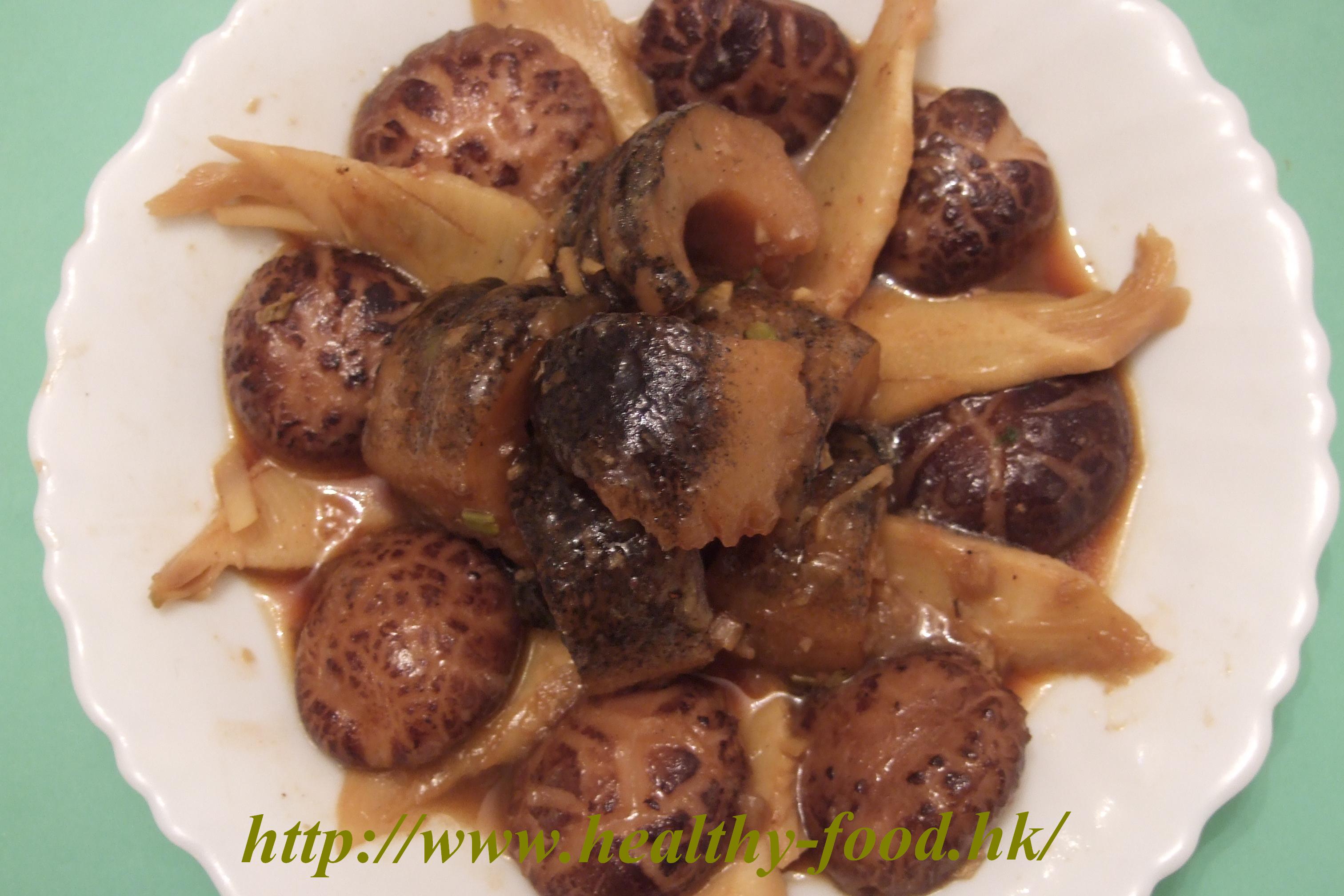
Red-Braised Pig Tail with Winter Bamboo Shoot
Traditionally used to strengthen tendons, joints and bones; rich in natural collagen
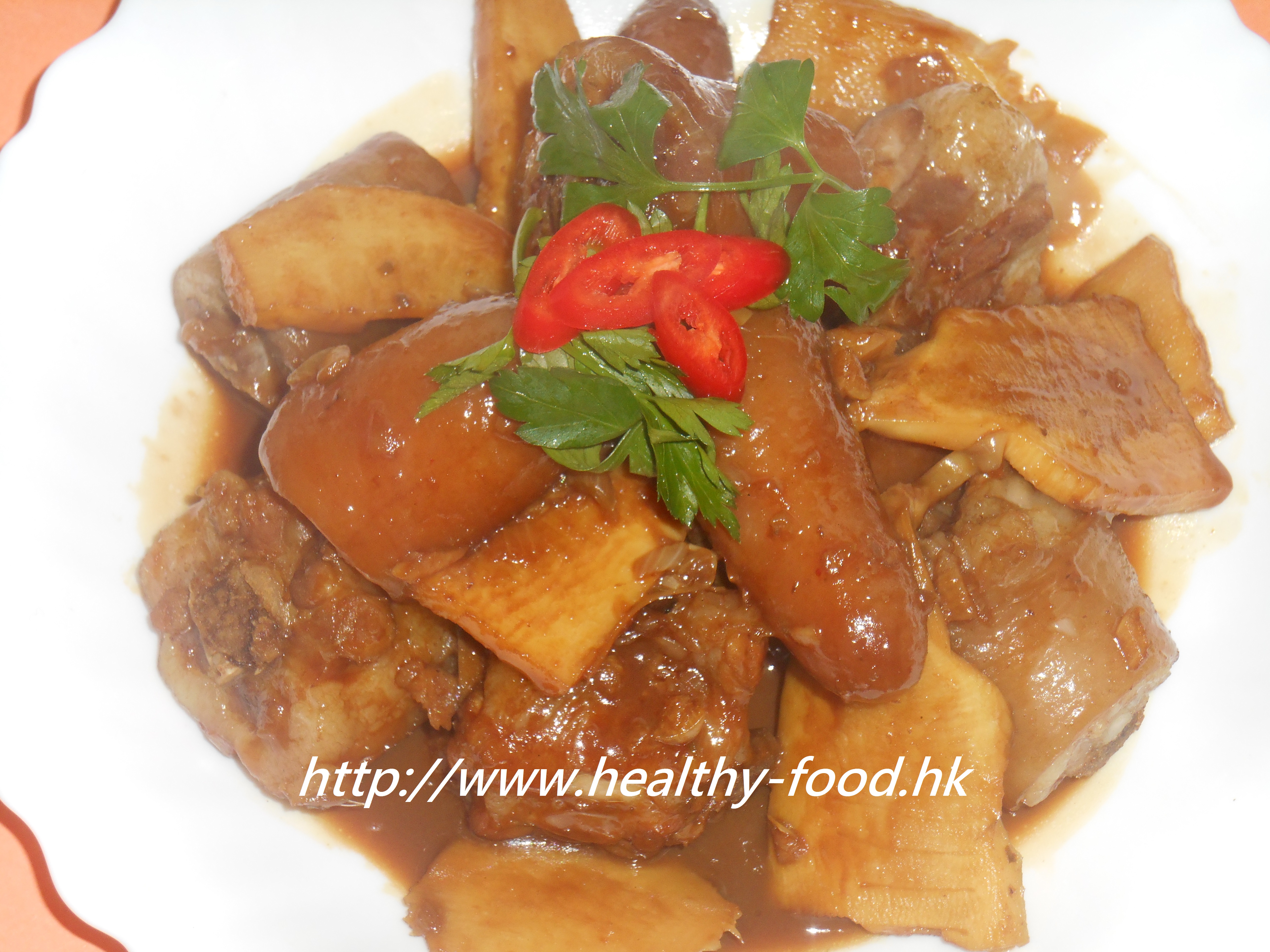
Why people make this dish
There is a particular kind of satisfaction in a properly executed red braise — the kind where the sauce clings glossily to each piece, the collagen from the skin has given the braising liquid a rich, almost gelatinous quality, and the meat falls cleanly from the bone. Pig tail, which is mostly tendon, collagen and skin, may not be a familiar cut to Western cooks, but it has been used in Cantonese kitchens for generations specifically because it is so rich in the connective tissue that is associated in traditional food therapy with nourishing the sinews and joints. Bro Niu notes that the skin-on cut — which has more collagen and good eating — is often more expensive than plain pig tail bones, but the quality justifies it.
Who it suits / who should be cautious
- Particularly suited to people with weak tendons or joints, soreness in the lower back and knees, or those recovering from bone or joint injuries
- Good for anyone who wants to increase natural collagen intake through whole food rather than supplements
- Those with a cold or weak digestive system who experience bloating after rich food should add a small amount of white pepper, fennel seeds or dried chilli to the braise — this helps with the heaviness
- People with cardiovascular conditions or high cholesterol should eat in moderation, as pig tail skin is high in saturated fat
Why these ingredients (the food-therapy logic)
- Pig tail with skin (zhu wei): Sweet and warming in nature; traditionally used for supplementing the kidneys, strengthening the lower back and knees, and nourishing tendons and bones through its high natural collagen content
- Winter bamboo shoot (dong sun): Aids digestion and helps cut through the richness of the braised meat; adds a pleasant textural contrast
- Fermented tofu (fu ru): Adds umami depth and a creamy, slightly tangy element that balances the richness of the pork; also aids digestion
- Shaoxing wine and ginger: Deglaze and add aromatic warmth; help reduce the gamey note of the pork
Ingredients (2–3 servings)
| Ingredient | Amount | Notes |
|---|---|---|
| Skin-on pig tail | 2–3 tails | Cut into pieces; blanch first |
| Winter bamboo shoot | 1 whole | Shell, blanch and slice |
| Garlic (minced) | to taste | |
| Ginger (minced) | to taste | |
| Shallot (minced) | to taste | |
| Fermented tofu | 2 cubes | Red or white variety |
| Rock sugar | small amount | |
| Light soy sauce | to taste | |
| Dark soy sauce | a dash | For colour |
| Shaoxing rice wine | a generous splash | |
| Cooking oil | for frying | |
| Water | enough to cover |
Method
- Cut the pig tail into sections. Blanch in boiling water for a few minutes, then drain and rinse under cold water.
- Remove the shell from the winter bamboo shoot, cut into slices, and blanch briefly in boiling water to remove bitterness. Drain.
- Heat oil in a wok or heavy pot over medium heat. Add the minced garlic, ginger and shallot and stir-fry until fragrant. Add the fermented tofu and mash it into the aromatics.
- Add the pig tail pieces and bamboo shoot slices. Stir-fry until the pork is lightly browned.
- Splash in the Shaoxing wine and let it sizzle for a moment. Add light soy sauce, dark soy sauce and rock sugar.
- Add enough water to just cover all the ingredients. Bring to a boil over high heat, then reduce to a medium-low simmer.
- Braise for approximately 1 hour, turning occasionally, until the sauce has reduced to a thick, glossy consistency and the pig tail is very tender.
- Taste and adjust seasoning. Serve hot with steamed rice.
Bro Niu’s tips
This dish is fragrant and delicious, but if you have a weak or cold digestive system that tends to bloat after heavy food, try adding a small amount of white peppercorns, fennel seeds or dried chilli to the braise. These warming spices help the stomach process the rich collagen content without discomfort. The braising technique matters too: once the liquid comes to a boil, resist the urge to rush it with high heat. A steady medium-low simmer for the full hour is what gives you tender, glossy pig tail rather than a chewy, unpleasant result.
Published December 27, 2015 · Adapted and translated for Nourilo from a traditional home-kitchen recipe. Approx. 3 min read.